Happy New Year 2015!

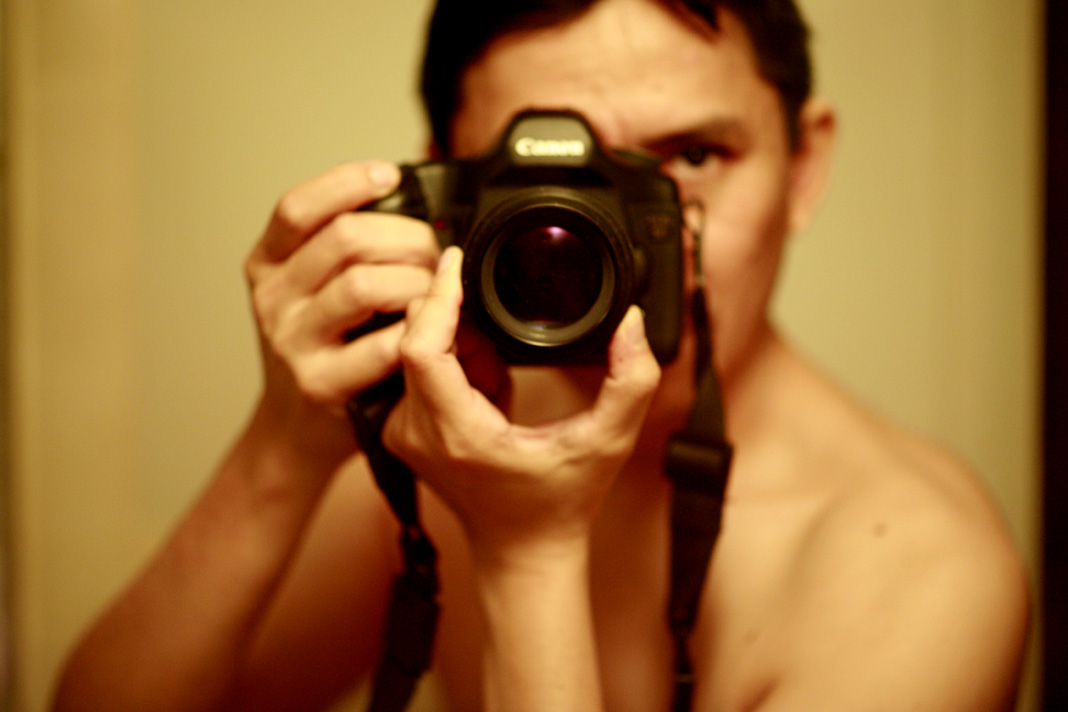
_MG_5172Sam

Happy New Year 2015 to everyone! I apologize to my good friends, the good readers and fellow Instagram cohorts for the long time lapse since the last posting. I also apologize for not getting back to some of you who have left me messages on Instagram. I will try to get back to you all.

The holidays, work and family have kept me really busy and writing a decent blog takes time so I don’t want to give you a half-assed effort.

I am working on some new stuff for you guys and gals in 2015, including more medium format, Polaroids, and film stuff, as well as some of the latest and greatest digital cameras and lenses.

In the meantime, I want to wish you all a Happy, Healthy, and Prosperous New Year. May all your photographic dreams come true!

The Polaroid One Step Rainbow

PolaroidOneStepC

The Polaroid One Step Rainbow. This camera is cheap AND iconic at the same time! A rare combination.

This may not be the greatest picture taking camera in the world, with its plastic lens and plastic build, but the iconic Polaroid One Step SX-70 Rainbow is one of the Polaroids to have if you collect cameras.

And they are quite cheap on eBay. Never pay more than $40 for one of these. As a Camera Legend though, that it is! I think this is the model that inspired the Instagram logo. I mean look at that Instagram logo…The Polaroid One Step Rainbow IS Instagram!

The Instagram icon.

With its fixed focus lens, and virtually no ability to manually control this camera, save for the lighten/darken switch, this camera is perfect for those “ugly” photos I wrote about here. You know, those washed out, faded, blurry photos that people find “artistic” 🙂

Note: The only thing this camera has in common with the original SX-70 I featured before is that it takes SX-70 film, which is much less common that the 600 series film. Other than that, the cameras are night and day in quality.

SX

The original SX-70. The differences in quality between the One Step and the original SX-70 are night and day. The one thing they share in common is that they both take SX-70 film, which today means film from the Impossible Project.

The Minolta TC-1

MTC1

The Minolta TC-1 is a compact “luxury” point and shoot camera from 1996. It features a brilliant Rokkor-G 28mm f/3.5 lens. The lens is superb, and a rare version of the lens can be found in Leica screw mount, but that lens is scarce.

The camera can be quite fragile in my opinion. I had one that died on me in four months. Fortunately, the shop in Japan where I ordered it from gave me a prompt refund.

I loved the size and jewel-like feel of the camera, but prefer cameras I can toss in my pocket and not have to baby.

Prices are trending from around $450 to over $1000 for the rare black version. Most of the vendors selling this camera on eBay are from Japan. Don’t let that put you off; I have bought many items from Japan and have always found the items to be as described, and the shipping prompt, less than a week to the USA in many cases.

I am currently looking for another one of these to give it a proper workout. I did get some great shots from the one that broke down on me, but the photos are mostly family stuff and boring test shots, so I won’t bore you with these.

The TC-1 is a beautiful camera to look at and to use, but the finish scratches easily, and again, I feel the camera is quite fragile. By that I mean the electronics, motor, and moving parts seem quite delicate. And let’s not forget, this is an older camera that may be in need of a CLA. I’ve heard that Konica/Minolta in Japan may still service the TC-1, but that it would cost close to the price of just buying another one.

All that aside, the TC-1 is one of the most desirable and collectible Minoltas ever made and a point and shoot classic.


The Koni-Omega System

KoniC

Koni-Omega Rapid 100 and 90mm f/3.5 Super-Omegon

Awesome and affordable brute of a camera.

This was my first medium format camera back in the 90s. The system itself dates back to the 50s, although the Rapid 100 was a later production model, maybe 70s or early 80s. There are numerous bodies including the Konica Press, Rapid, Rapid M, and maybe a couple older bodies. The Rapid 100 and 200 seem to be the later models and probably better buys than the older models.

In the 90s, I became interested in medium format photography after reading a book by the late Leif Ericksenn called “Medium Format Photography.”

He had some photos from the Koni-Omega that he used on a tv production and I began to seek one out.

The Koni-Omega is a rangefinder camera system that consisted of several bodies and interchangeable lenses. The lenses are sharp. They make for excellent images on 6×7 negatives or slide film.

They are not expensive, but big, bulky and a bit fussy to use, which is probably why I sold it. However, the Koni-Omega system is capable of excellent results at a bargain price. The lenses have built-in leaf shutters and the cameras do not need batteries to operate. But again, they are BULKY and I suspect that is the reason they end up getting sold by owners who sell them.

Prices are trending anywhere from $50-200, depending on body, lens, and other accessories.

If you want to get your feet wet in medium format photography without breaking the bank, this is it.

Note: Sorry I do not have any photos from the Koni-Omega to share with you. As mentioned, I got it in the 90’s and at that time, there was no such thing as a great economical home photo scanner, at least not one that could do medium format on a budget. However, I do remember having prints that were done for me by a photo lab, and if I can find them, I’ll be sure to scan them in and update this article. Thanks for stopping by.


The Hasselblad 500C and 80mm f/2.8 Planar

HassyC

I took this shot in 2005 to sell this outfit when I was broke and desperate for money. Needless to say, it worked and off she went to a better home.

However, I have fond memories of the Hasselblad 500c and 80mm Zeiss lens. It’s a modular system and a little bit fiddly to play with, especially if you’re new to medium format film cameras, but the results were superb.

79859294.0wUnA13p.HollywoodBabyPbase1

“Hassy Baby” 2005. Hasselblad 500c, 80mm f/2.8 Planar. Do not remember the film unfortunately. I used a Softar filter to give the “glow” to this photograph.

Prices are trending at $550-800 for this outfit, and $1000 or more for the 500cm with the 80mm Planar. Find the best one you can afford because if you love film, this will be a keeper…Unless you go broke like I did 🙂

This is a tribute to the days when Hasselblad were the pinnacle of medium format cameras and not the company that today sells rebadged Sony cameras as “lunar” or “anniversary” editions for ridiculously high prices.

Hasselblad is a Camera Legend with a rich legacy that I absolutely respect, so let’s forgive the Sony rebadges 🙂

The Pentax Auto 110

Pentax110C

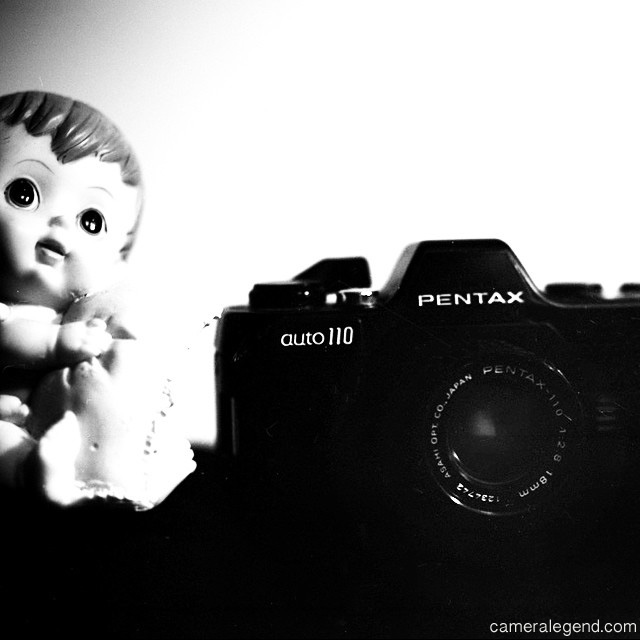
Pentax Auto 110 and Pentax 18mm f/2.8 for the Pentax System 10.

The Pentax Auto 110, introduced in 1978, is a truly iconic “little” camera. Part of the Pentax 10 system, including the Pentax Auto 110 Super, they were among the smallest interchangeable lens SLR’s ever made.

I still have memories of my Mom’s first camera which was a long, odd looking Kodak 110 camera.

Believe it or not, you can still get 110 film these days from companies like Lomography. Developing the film however, is another story! You’ll probably have to send it out to various online vendors who can develop the film for you.

As a young boy, I was fascinated by the ads I saw for the Auto 110 in the old photography magazines. When I finally saw it in real life, I could not believe it was a real camera!

There were 5 prime lenses, the 18mm f/2.8, the 24mm f/2.8, the 50mm f/2.8, the 18mm “Pan Focus,” the 70mm f/2.8 telephoto and one zoom, the 20-40mm f/2.8. Just like today’s micro 4/3’s or other small sensor interchangeable lens cameras, you have to convert the lenses to their 35mm counterparts to get the true focal length. For example, the 18mm lens would actually be a 35mm in focal length if it were a full-frame 35mm slr.

Because 110 film is pretty much dead or at best, a novelty today, you can get the Pentax Auto 110 and a few lenses pretty cheaply. Some of the lenses though, such as the 70mm f/2.8 or the 20-40mm zoom can be hard to find.

The Pentax 10 film series is no doubt the inspiration for the Pentax Q system of today and they remain a marvel of the amazing camera engineering of days gone by.

Note: Shot this a few years ago using a Speed Graphic 4×5 large format camera on Tri-X film.

Now why would anyone want to do this when you could just use your phone or digital point and shoot? I don’t know, I like to make life hard I guess 🙂

No, actually I want an easy life, as easy as possible! However, the Speed Graphic 4×5, or any large format camera requires a lot of practice to master and I was practicing the craft, so to speak.