The Rise Of The “Cheap” Brand Lenses

There was once a time, not so long ago, when brands like Samyang, Rokinon, Bower, Quantaray, Promaster, etc, etc, were laughed at by more “serious” enthusiasts and pros.

Well today, some of them may still be laughed at, but not many are laughing at the lenses being released by Samyang, and also sold under the brand names of Rokinon, Bower, or Vivitar. I’m sure the “Big Boys” of camera lens makers are not laughing at these lenses 🙂

In the past few years, Korean lens maker Samyang has been producing some amazing lenses from ultra-wides to fast telephotos that rival or exceed equivalent lenses from Canon, Nikon, or Sony.

And these lenses are also sold under a variety of other formerly “no name” or “cheap” brands such as Rokinon, Bower, and Vivitar.

Many of these lenses use exotic glass, aspherical elements, and special coatings that were once only seen on lenses from Canon or Nikon. And the best thing? Their prices are significantly lower than the Big Boys. For example, if you look around, the original 35mm f/1.4 Samyang can be found for a little over $300, whereas the Canon equivalent is over $1000.

DSC00604ZayCL

“Not Funny” 2015. Sony A7R, Rokinon 35mm f/1.4 AS UMC. Baby Zay, quite serious and not finding me amusing any more, just like the “Cheap Lenses” from Samyang, Bower, Vivitar, and Rokinon are offering serious performance for the money and no longer something to be laughed at 🙂

But there is a hitch. Well, maybe a few. First of all, these lenses are not built nearly as well as the Canon, Nikon, or Sony equivalents. Not to say the build quality of the Samyang/Rokinon lenses are bad. They’re quite good actually, but I’m not sure how durable they will be. Secondly, as of this time, the lenses being offered are manual focus only. That’s not a problem for me and many others, but surely some would prefer autofocus. And lastly, there have been reports of sample variation and quality control issues.

Still, on the whole, people seem to rave about these lenses. If you get a good copy, you will be pleased. My copy of the Rokinon 35mm f/1.4 is excellent and really surprised the heck out of me when I got it. I was a skeptic at first, but not any more.

SZC99

“Superfly” 2013. Sony Alpha A99, Rokinon 35mm f/1.4 AS UMC. Please double click to see best quality.

This is truly the “age of the people” where nearly everyone can have access to great equipment, not just pros or the “elite” 🙂

Two new Rokinon lenses have been released for those using mirrorless systems, including an incredibly fast and wide 21mm f/1.4 and a super fast 50mm f/1.2. The prices for both are $499 which is really quite a feat. I’m sure their optical performance will be amazing and I hope some of you report back if you get one of these lenses before I do.

Thanks to Samyang and all the “cheap” brands. Power to the people 🙂

Flashback Friday: The Linhof 220

114664261.NknMPisU.LinhofSamPba

From 2009, with a Linhof 220 and Tri-X 400 film. This one definitely flew over the cuckoo’s nest! 🙂

Originally written in 2009…

Note: I done told anyone who would listen that my film cameras are far more interesting than my digital gear, and this camera might well be the ‘oddest’ in my collection. It is a Linhof 220, a medium format camera that shoots 6×7, and comes with a fixed 90mm f/3.5 Linhof-Technikar lens.

It’s ‘weird’ not only in its looks, but for a few reasons. For one thing, it’s set up for use mainly for vertical photos, hence it’s more of a portrait camera than it is a landscape camera. I believe it was meant to be a press camera. Of course, you can shoot horizontal if you’d like, but it’s quite cumbersome. It’s also ‘weird’ in the fact that the shutter is a trigger on the pistol grip.

It’s quite a rare bird, but I got her very cheaply (as in less than $100) because she’s got “issues” so to speak. The rangefinder is a bit touch and go, and the camera has a real problem with film spacing, both of which I am trying to repair in my spare time. The times when I can get a good shot out of it, I’m impressed with the sharpness and contrast from the lens, it’s tack sharp.


Update 2015:

Prices for these in good working condition are usually around $400-500 USD. I was able to fix the spacing problem, but the rangefinder is still touch and go. It’s not the most fun camera to use which is why you haven’t seen me post a lot with it, but in my film camera collection it is a standout.

Your best bet to find one of these is on eBay. However, you may also find them through private sellers on Amazon while searching for Medium Format cameras.

The Pentax Q Original

156748298.RUACEOst.DSCN0009Zoe

The Pentax Q. Not just a toy camera! 🙂

The Pentax Q is a 12.4 megapixel, interchangeable lens, mirrorless digital camera first introduced by Pentax in 2011. It was and still is currently the smallest interchangeable lens camera in the world.

Since its introduction nearly five years ago, Pentax has introduced several different versions of the Q. To be clear, I am only talking about the original Q as it is the only one I have any experience with.

The Q uses a 1/2.3″ sensor and has a crop factor of 5.6x which means for an example, a 50mm lens would become a 280mm telephoto. Shallow depth of field or bokeh is hard to come by on such a small sensor. On the other hand, it’s easier to get everything in sharp focus with a small sensor so you might lose one thing, but you gain another. Only you can decide if the Q fits your shooting style.

BUILD AND HANDLING

I must admit, when I first saw the Q I instantaneously fell in love with it! Such an adorable looking camera. But the more I read about it, the less I wanted it. People were trashing Pentax for having released an interchangeable lens camera with such a small sensor. “What’s the point?” was what a lot of people said.

So I kept it out of my mind for a while until some time in late 2012 when they were having some really good Christmas deals on the Q.

So I finally got my hands on one and right away I was impressed with the solid build quality! It felt more solid than I expected for such a small camera. The body is made of high grade magnesium alloy and it feels like it.

Ergonomically, it’s excellent. With the power button, mode dial, shutter release and control wheel on the top right. The play button is on the top left of the camera, which is not typical for a digital camera, but you get used to it after a while.

The menu and dedicated buttons for ISO, flash, drive, and white balance are on the back right near the LCD. There is no optical viewfinder, no electronic viewfinder and no add on for an EVF.

The flash has a dedicated switch on the top left of the camera and pops up like a jack in the box. You won’t be blocking the flash on this tiny camera 🙂

The thing that impressed me most about the Q’s build is that they were able to build a separate SD card slot on the camera’s right side! I prefer this over the usual SD card/battery chamber that you see in most digital cameras.

The only bad thing about such a small camera as far as handling is concerned is that it might be too small. The camera feels great, but I can definitely see dropping this thing. I would probably recommend a hand strap, even though I am not currently using one. I’m still waiting to drop it 🙂

Anyway, to me the supplied strap is a bit overkill for a camera this small. It’s really pocketable, which is what I do. I did have a hand strap on it for a while, but even that felt like it took away from the camera’s unique and tiny proportions.

PERFORMANCE AND IMAGE QUALITY

The camera offers very good AF performance, quite snappy, fast if not super fast, but accurate, even in dim light using the center spot.

Even though I’m not a fan of novelty, there are some cool effects you can use to accentuate your pics including toy camera, miniature, fish-eye and quite a few more. There’s even a mode that tries to create some bokeh for you because it’s not easy to get bokeh with this camera. I have tried it and it is cool, but it doesn’t work all the time and it doesn’t substitute “real” bokeh from a fast lens and a larger sensor. Still, it’s pretty cool that they thought of this and put this effect in the camera.

IMGP0096ZPic

“Madam Z” 2013. Pentax Q, 8.5mm f/1.9 Standard Prime. An example of the in-camera bokeh effect. As you can see, it’s not quite natural, but it looks quite nice in its own way, and it’s a good option to have on such a small sensor camera.

The Pentax Q takes very good to excellent images, especially in daylight. It is very good for what it is. Don’t take that as a back handed complement. In fact, I think it speaks very highly about the Q. For a camera with such a small sensor, it provides nice looking images. It matches or exceeds what I see from most phone cameras, but there are some phone cameras today that might do better in image quality.

IMGP0186Honey

“HoneyTone” 2015. Pentax Q, 8.5mm f/1.9 Standard Prime. ISO 3200. Straight out of camera and only resized. The Q retained nice tone and detail, despite the noise present. Only you can decide whether this level of noise is objectionable to you.

It will not and cannot reproduce what you can do with a fast lens and larger sensor, but it was not designed to do that.

WHAT’S THE POINT?

So if you have an interchangeable lens system with a sensor so small that it matches or just exceeds most phone cameras, you may be asking as I mentioned earlier…what’s the point?

To be honest with you, I’m still asking myself that today! On one hand you can change lenses, but even with the fastest lens they offer, the 8.5mm f/1.9 which is equivalent to a 47mm lens, and the DOF is increased substantially due to the 5.6x crop factor, so while I can’t figure the math off the top of my head, what I can say is that you’re not getting the same shallow DOF as you would with a 47mm f/1.9 on a full frame sensor, not even close.

But you can always use the good old trick of getting in real close to your subject and coax some bokeh out that way.


I think the Pentax Q is better suited to street, environmental, and static subjects where shallow DOF is not entirely necessary, where as portraits with that “creamy bokeh” look is better suited to larger sensor cameras.

While there might not seem to be much point to it as an image maker, I think the real point of the Pentax Q is what it is…a truly small, well built, and pocketable camera that you can take anywhere and get the shots. They may not be the best technical shots, but because the Q is so small, you can always take it with you and you could get shots that you might have missed by not taking your larger systems.

Not like you couldn’t do that with your cell phone these days, but none are built like the Q, none feels like the Q and none have the charm of the Pentax Q.

Prices for these are trending from $100-250, depending on body/lens configuration. Remember, I am only talking about the original Q. More than its picture taking abilities, I think this camera belongs in any collector or gadgeteer’s collection.

BOTTOM LINE

I think that just by virtue of how unique it is, the build quality, and the overall very good image quality, the Pentax Q will become a Camera Legend. In fact, I personally think it’s one of those rare cameras that could be considered an instant Camera Legend the moment it came out.

I love the Pentax Q, I really do. In fact, I loved it so much I gave it to my kids 🙂

The Pentax Q is certainly not a toy camera, but…it could be! One thing for sure, it’s a lot of fun 🙂

The Canon AT-1: The Greatest Camera I Never Knew

CanonAT1PicFAC

In a hazy cloud of memories, I still clearly remember the first SLR I ever touched, the Canon AT-1.

This is IT. This is the camera that sparked an obsession with cameras that continues to this day. But first, let me introduce you to the camera…

The Canon AT-1 is a 35mm SLR released by Canon in 1977. It is part of the long defunct, but still highly popular Canon FD system.

The AT-1 uses the Canon FD mount and is a no frills, manual exposure only camera. It does however need a 4LR44 battery to operate, which is probably one reason it seems unpopular or overlooked by the “all manual” club of camera lovers.

The AT-1 is probably at the very low end of the classic Canon FD camera lineup, if not the lowest.

However, I have noticed a slight increase in curiosity and desirability for this camera in recent years. It could be due to the low prices these cameras command or the fact that it’s a good learning tool for the novice photographer or any number of things, but this is what I see.

I do have to admit, I am not fond of manual cameras that need batteries and the AT-1 does not just need batteries for the meter. It needs a battery to work at all 🙂

All that said, I love this camera! This is the camera that changed my life, although not necessarily for the better.

This post is not strictly about the Canon AT-1. It is not an official review of a camera a lot of people don’t know, or don’t really want to know about. It’s the story of how this humble “Plain Jane” camera played a key role in sparking the gear obsession that you see today.

FIRST ENCOUNTER

My first encounter with the Canon AT-1 was in 1981. With the help of a family friend, my parents bought a Canon AT-1 so they could take nicer pictures than what they got with their Kodak 110 camera. The funny thing is, they really weren’t interested in photography, they just wanted nice photos.

The family friend had a nice Canon system built around the highly acclaimed and (at the time) hot Canon A-1. He was really a photo-bug and was always showing people his pictures and telling us of the competitions he entered, etc, etc. He was really a very good photographer.

But to this day, knowing what I’ve come to know about cameras, I still find it questionable why this man would select the AT-1 for his friends knowing full well these two people (my parents) could not figure out an aperture or shutter speed from a door knob. Anyway, there’s more to this, but that’s a story for another posting.

Back in 1981, if any of you remember, cameras before the digital age were considered luxury items. Not everybody had a camera, and certainly not everyone could afford them, especially the SLR’s which made you look “serious.”

Today, as you can see, everyone and their Mom has a camera. Everyone is a “pro” with their DSLRs and battery grips 🙂

But back in the early 80’s this was not the case.

If you look back to cameras from the 40’s up until the mid 90’s, before the dawn of digital, you can see that many people treated them like precious jewelry. That is why you find so many with engravings.

As a collector today, I personally hate engraved cameras. Unless it was from a famous person, the engravings devalue these cameras in my opinion and makes me feel like the ghost of the person who engraved it is there with me and that’s a spooky feeling 🙂

They may still be considered luxury items today, yes, but today’s digital cameras, from the lowest to the highest of the high end cameras are known to be “disposable” inherent to their digital DNA.

My parents apparently felt the camera was so precious, they had relatives look after it and it stayed in its case and in the closet most of the time.

When we took our summer vacation in 1981, I saw the camera and asked my Mom if I could play with it. She said to “be careful” but yes.

It was one of those feelings in life that you can’t describe, that money can’t buy. It was priceless. There I was turning the shutter speed ring, twisting the knob, focusing the lens and seeing things come in and out of focus in that beautiful and bright viewfinder. Wow.

FLASHBACK TO 1982

So on our return to New York in 1981, we were allowed to bring the camera back home with us and I was thrilled.

But once back home, still a young boy not a teenager, the camera stayed again in its case in a closet for almost another year.

Now, we’re in 1982 and I was more interested in the ColecoVision video game system we just bought in the summer of 1982.

It was a clear and sunny September day in 1982. My brother and I took a ride from our humble Bronx abode to our family friend’s house in East Rutherford, New Jersey.

We always looked forward to getting away from the inner city neighborhood in which we lived. Our friends had a nice house with a backyard, plenty of space to walk and run, and the complete feeling of safety, at least to us inner city kids.

Only folks who have lived in the inner city can relate to the feeling to “being trapped” in your apartment once the night arrives. No one dared to venture out. NYC had a reputation for being BAD in the late 70’s and into the 80’s and yes, New York earned it 🙂

Anyway, after a wonderful day in Jersey, we arrived at our apartment, I’m guessing around 9-10pm.

When my mom opened the door, she was surprised it wasn’t locked. She was sure she locked it, she always did. When she flipped on the light, (whoomp!) there it is…

The house looked empty. We looked on the coffee table, the ColecoVision, gone. We looked at the stand; the stereo tuner, turntable, cassette deck, all gone.

I looked in the closet for my precious AT-1…gone.

THE TRAUMA AND THE AFTERMATH

Yes, as you can tell, we were robbed. We all stood there in shock. The place felt empty, it felt “dirty.” We were violated. Our privacy had been broken, and our property, taken.

For my brother and I, it was a shocking arrival at the reality of the world which has an effect to this day.

We all know the effect that crime and vandalism can have on our feelings of security. And we all know how much more magnified this effect can have on children. This is what happened to me.

In some ways it made me better, wiser. I’m always looking over my shoulder. Even today.

THE LEGACY OF THE CANON AT-1

So how does that Canon AT-1 fit into this? Well, after the theft and for over thirty years now, I’ve been completely infatuated with cameras.

If I were to take a psycho-analytical look at this, I would say it’s like winning a million bucks, but never getting to use even one dollar. It’s like having a fabulous meal in front of you, but dropping the plate. It’s like tasting the fruit, but getting only one bite. You want more.

So as an adult, after I started working, I started picking up cameras here and there until it got entirely out of control. I tried to remedy this by selling a bunch of cameras on eBay, but then when got the itch, I’d start buying again.

In the recent years, I have tried to curb this “sickness” with modest success. I have pretty much cured myself of the “latest and greatest” syndrome, so I’m not spending a lot of money, but I still fall deeply for old, weird, and decrepit classic cameras 🙂

In all those years that I’ve been without the AT-1, I never had a desire to buy another one until recently. I got one in 2012 for $10 bucks. I have yet to use it.

Not because I don’t want to. It feels fantastic, solid, great viewfinder, etc, etc. But at any time, I find myself using much more interesting cameras, and the AT-1 gets put in the back burner.

The Canon AT-1 is a member of the legendary Canon FD line of cameras, but it may never be a true Camera Legend as its famous and much more popular sibling, the Canon AE-1 is. However, the AT-1 had a more profound effect on me than any camera, past or present. Even if you take away the trauma of the theft, the feeling of holding my first SLR and looking through its glorious viewfinder still resonates strongly in my head today.

Still, until I am able to put a roll of film in it, you can say, without a doubt, the Canon AT-1 is the greatest camera I never knew 🙂

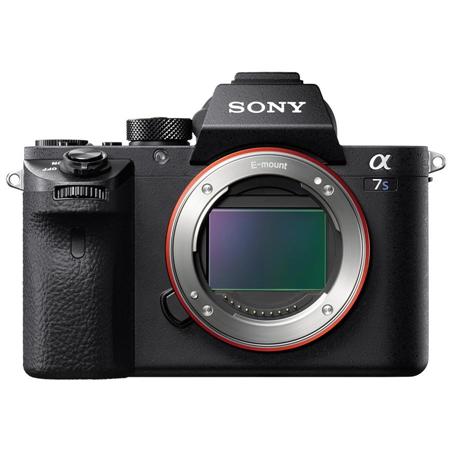
Thoughts On The Sony A7SII

Sony A7SII

The incredible new Sony A7SII.

Sony is on a roll, and I mean REALLY on a roll! In the middle of 2014, they released the A7s, a 12.2mp full-frame, interchangeable lens mirrorless camera. The camera currently sells for nearly $2500.

But wait, something sounds funny there. A 12.2mp camera in 2014 selling for $2500?

As crazy as that sounds, the A7s got rave reviews, mostly for its amazing high iso performance. But the camera could also output impressive 4K video to an external recorder.

The last 12mp full-frame camera I ever used was the Nikon D3 of 2007. And even then, I thought that camera was quite awesome at ISO 6400. The A7s is impressive up to ISO 102,400!

Now just over a year later, Sony just introduced the A7sII with the highlights being a high iso of 409,600 (!) and being able to record 4K video internally.

I’ve said many times here that I’m not a video guy (used to be in the laserdisc days!), but I have been impressed with what 4K video can do.

And I’ve always felt 12mp to be a sweet spot for full-frame ever since the original Canon EOS 5D of 2005.

I am also a big fan of low light, high iso work. I love to shoot the night. That said, we may be getting to the point where the cameras are too good! I know, I shouldn’t be complaining, and I’m not, but I’m perfectly fine with ISO 3200 and some grain 🙂

Anyway, this looks to be a really awesome camera, but I probably won’t be buying one. I’m sure it’s going to be a hot seller, the first batch will probably sell out. You can pre-order the A7SII HERE if you’d like to be one of the first to get your hands on one. Perhaps, you can give us a report back on how you like this camera?

To me, the technology has come so far, gotten so good that I am shooting more and more film 🙂

A Look Back At The Sony DSC-F707 and F717

DSC00088SamFAC

The venerable Sony DSC-F707. A killer digital camera that was only limited by the technology of its time.

The DSC-F707 is a 5.24 megapixel camera released by Sony in 2001. The DSC-F717 is the upgraded version of the same camera released in 2002.

The bulk of this article is based on my experience with the F707, but indeed I have used the F717 and their similarities are close enough, not only in looks, but in form, function and image quality.

The camera had a 38-190mm f/2-f/2.4 (35mm equivalent) lens and a 2/3″ sensor. It was an immediate sensation due to its futuristic looks and radical design.

Whether you love them or hate them, you have to admit Sony is an innovative powerhouse in the camera world. The electronics giant is well known for their attempts to dominate every area they compete in, whether it’s television sets, the video gaming world or cameras. They are competitive, and that can only mean good things for us consumers.

This is a very old camera, digitally speaking, so I’m not going into a full review with this one. I will just touch upon some key areas of interest.

CAMERA AND LENS

The camera is well built with a magnesium alloy body and light thanks to good integration of plastic parts.

The camera is certainly “different” thanks to its radical and futuristic design. No doubt this eye-catching quality helped to make it a hit with camera buyers in 2001.

DSC_0666SonyFCAMII

The Sony DSC-F707 and its upgraded, but nearly identical twin the Sony DSC-F717 were unique cameras with a radical and brilliant design, not to mention a Carl Zeiss lens.

The ergonomics are for the most part good, although as with most Sony cameras of that era, controls can be a little confusing at times. You may want to access the manual for certain features.

The camera has a 1.8″ LCD which will seem small if you’re used to today’s 3″ and larger screens, but it presents with good visibility and colors. The F707 also has an electronic viewfinder which you can access with the flick of a switch.

The body swivels 36 degrees down and 77 degrees up. A really cool feature for street work or tight situations.

The lens is a 38-190mm f/2-2.4 Carl Zeiss Vario-Sonnar. It’s interesting to note that early on in their camera history, Sony sought acceptance and credibility in the camera world by making key moves such as licensing the Carl Zeiss name on many of the lenses on their cameras.

There are many Zeiss fanatics out there, and sometimes that name alone is enough to sell cameras.


The lens on the F707 is excellent and provides wonderful colors and sharpness, but keep in mind that this is a small sensor point and shoot camera with 5 megapixels. Almost any 5 megapixel point and shoot with a decent lens will provide sharp results. In 2001, we’d be nitpicking over these things. In 2015, we won’t 🙂

That’s not to cut down the Carl Zeiss lens. On the contrary, I am just saying that I feel the lens is limited to the technology it was mated to at the time. It’s a fantastic lens, but compared to similar cameras of its time, you may have a hard time making out the differences. That said, there are certain situations where you might coax that “Zeiss look” out of the camera, thanks to the great lens, but you won’t see it all the time.

The AF is good, but not instantaneous. There is a noticeable lag when taking pictures. The Hologram AF assist works well for low light, but the camera only has an ISO range of 100-400 so it’s not like you’re going to be shooting in ISO 128,000 situations with this camera.

There is a TIFF mode, but it is slow and uses more memory. Unless you’re a real stickler for RAW, I wouldn’t bother with TIFF’s for a fourteen year old, 5mp camera. The jpegs may have some compression artifacts, but it’s not something you’d really notice or care about. You’re not using this camera for exhibitions 🙂

The camera’s biggest failing for anyone planning to use this camera today, in my opinion, is the use of Sony’s Memory Stick. The largest the camera can take is 128mb (that’s megabytes) which can be somewhat pricey for the amount of memory you get. It’s a rip-off, but basically you pay for it because it’s the price vs availability thing. I tried one of those 256mb “128mb X 2” cards, but it didn’t work on my camera.

This was supposedly remedied with Sony’s upgrade to this camera, the F717. I’ve heard that this camera can take up to 2gb Memory Sticks. However, in my limited experience with the F717, I tried a 1gb Sony branded Memory Stick, it didn’t work.

If you get an “error” message don’t give up on the camera right away, it’s probably the card. Try a lower capacity Memory Stick first.

IMAGE QUALITY

The Sony DSC-F707 is capable of excellent results, especially for daytime shots. Details are crisp, colors can be beautiful, although as with most digital cameras of its time, it has a tendency to bleed the reds. The resolution is about as good as you can expect for 5 megapixels. For best results, stick with low ISO settings.

DSC00076F707Flowers copy

“Stars” 2011. Sony DSC-F07. I stood above these flowers and shot in macro mode. Note the wonderful whites and yellows.

Bokeh is not easy to come by with a small sensor camera, but can be had with the F707, especially if used towards the telephoto end of the lens and the right situation.

F7ZCPbaC

“Summer Breeze” 2011. Sony DSC-F707, ISO 100. Autumn is right around the corner! A shot showing the sharpness, details, color, and bokeh possible with the Sony DSC-F707/F717.

The bokeh has a bit of that “nervous” look, which to me is actually quite typical of Zeiss, so feel good that you’re getting a real Zeiss lens!

Dynamic range is quite good for a small sensor point and shoot, but cannot match today’s cameras and highlights can be clipped easily if you’re not careful. Remember this is a nearly fifteen year old camera.

DIFFERENCES BETWEEN THE DSC-F707 AND DSC-F717

If shopping for one of these, prices are trending at $30-70. I would probably go for the DSC-F717, which is the upgraded version of this camera. Prices for the F717 are trending at $50-130. Go for the F717 if prices are similar, if only for the peace of mind knowing you got the one with all the upgrades. If the price is really low, go for the F707, be done with it, and never wonder about how much better your shots would look with the F717. They look the same.

IQ wise I don’t see much difference, but the F717 offers improved Auto ISO, supposedly improved autofocus, improved shutter lag time, a hotshoe for dedicated flash vs the cold shoe on the F707, and the ability to take larger Memory Sticks. The F717 also offers a higher 1/2000 shutter speed vs the 1/1000 max on the F707, but the F717 only provides this in program mode.

There are probably more improvements that I can’t think of at the top of my head. But again, IQ wise I don’t think you will see a big difference.

These cameras DO NOT have Sony’s much vaunted “Steadyshot” image stabilization.

BOTTOM LINE

When I got this camera a few years back, I initially thought it would be fun to shoot with. However, that has not been the case. Perhaps it’s the slow lag times or the small screen, I don’t know, but it’s one of those cameras that looked cool, but I hated picking it up to shoot. I can’t complain though. For the low price I paid, I think I got more than my money’s worth for a “play around” camera.

The Sony DSC-F707 and its siblings are uniquely designed and very interesting cameras that represented the best digital camera technology had to offer in the early 2000s. Even today, they offer excellent image quality in context to what they are, that is, nearly fifteen year old digital cameras.

However, these models stand out in a world of ever increasing “prehistoric” digital cameras. They will no doubt add to the Camera Legend that Sony has become.


September Gear Lustin’ :-)

SamCam

Boy the time went by fast. I almost forgot that I’ve been on this project for over a year now. It’s been a lot of fun, even if it’s hasn’t been really easy to post stuff that I think would be worth your time.

I started this blog and the Instagram page to profile the cameras I have used in my thirty plus years of gear lusting and photography loving. I hope to be able to profile more interesting gear for you in the coming weeks and months. I thank you for taking the time to read and view this man’s OCD with cameras and lenses 🙂


My friends at Adorama reminded me of the great deals going on right now, with a lot of manufacturer rebates and instant savings, and I’m just passing this info along to you guys and girls. This is a good time to stock up on new camera bodies, lenses, and accessories and save a good deal of money in the process.

I really don’t have the funds right now or I would jump on these deals! Maybe some of you can take advantage of this. Here are some quick links.

Deals on camera bodies and lenses:

CANON Camera Bodies
CANON Lenses

NIKON Camera Bodies and Lens Deals
All NIKON Savings and Instant Rebates

And some amazing deals on the incredible new Zeiss Milvus lenses, which includes a new 50mm f/2, 85mm f/1.4, and 100mm f/2. These should all be incredible portrait lenses. Here’s the link to preorder these Zeiss lenses:

Zeiss Milvus Lenses

Plus lots of other great deals at their store. Happy shopping and enjoy!

Note: Sure this is a shameless plug for one of my favorite stores, but I have been buying from them for a long time and there are some great deals going on and I have to say they ship fast! And yes, if you buy through these links I might get a small commission which would buy me a cup of coffee and maybe help me keep blogging for you guys 🙂

Anyway, Adorama is great, especially for new items, and I would never steer you guys in the wrong direction. I buy from them myself and will continue to do so. If you can get some great gear and save some money at the same time, I figure it’s a win-win 🙂

Best,
Sam

The Original Fuji X100

DSCF2479SamC

“Underdog” 2015. Fujifilm was always an “underdog” in a world of giants like Canon, Nikon, and Sony. The original X100 of 2011 helped bring the film giant into the spotlight and into the hearts, minds, and wallets of photographers and camera lovers 🙂

The X100 is a 12.3 megapixel camera released in 2011 by Fujifilm Corporation.

The camera had an APS-C sized sensor and featured a 23mm f/2 Fujinon lens, which translated to the equivalent of a 35mm lens on a full frame camera.

The X100 was an instant hit when it came out, and continues to be a hot seller for Fuji with a couple of reiterations as the X100s and the current X100t. Let’s make it clear, for this review we are only talking about the original X100.

The original X100 does NOT have the much hyped Fuji “X-Trans” sensor, so X-Trans fans should remember this when considering the older X-100.

As with so many digital cameras today, the X100 has a wealth of features built in, many of which I’m not going to cover here, just to let you know right off the bat. You’re better off going to dpreview or the instruction manual if you need a breakdown of everything. I’m just giving you my experience with the camera and how I use it.

BUILD AND HANDLING

The X100 was an eye-catcher when it first came out. One of the reasons the X100 had such appeal was because of its retro looks.

137162322.Zas0cXSR.XiCadeZoe

“iRetro” 2011. Fuji X100 12.3mp. The Fuji X100 was an instant hit for Fujifilm, no doubt a lot of it had to do with the camera’s retro looks.

I did not set out to get an X100, but I happened to be in Washington Square Park in NYC in May of 2011 when I first saw the X100 in the flesh. It was hung around some guy’s neck. I’m a sucker for cameras as you might know, but I have a special soft spot for the “weird,” “strange” and “different.” Right away, I thought I had to have one! 🙂

Fuji clearly aimed to capture the hearts of classic camera lovers when they designed the X100! The camera does indeed look like an old rangefinder camera.

The camera feels good in the hand, albeit on the lightweight side, which is actually a good thing if you’re going to be carrying the camera all day. However, as a person who has used several film rangefinders over the years, I have to admit I was a little disappointed in the way the camera felt when I first got it; light and not as solid as the film rangefinders of yore. But that’s just a personal thing as the camera has proven quite durable in the four years I’ve had it.

The controls are well laid out, with the shutter speed and exposure compensation dials on the top right of the camera. The exposure compensation dial moves out of place too easily in my experience, so be mindful of this when you move it in and out of your camera bag.

Also on the top right of the camera is the “FN” or function button, which can be customized to do a variety of things. I personally use it as my ISO button, but I believe you can use it to quickly bring up the built-in ND filter (a cool feature!) or the film simulation settings.

Another nice touch is the “self-timer thingy” on the front of the camera which is not actually a self-timer, but a lever that will allow you to switch between the EVF and optical viewfinder. The dual EVF and optical viewfinder is another great feature that you don’t see very often.

On the back are buttons for playback, AE, AF, and view mode as well as AF lock, AE lock, drive, menu, white balance, and a nifty quick RAW button.

The more I write, the more I appreciate the thought Fuji designers put into this camera!


PERFORMANCE

The X100 is sort of a mixed bag when it comes to performance. Indeed, it’s this “imperfect” quality that gives me a love/hate relationship with this camera.

The autofocus is a tad on the slow side. And not just slow, but it often missed focus, sometimes on “easy” targets. In fact, this was one of the main issues reported by users when the X100 first came out.

137897502.j5SIhluz.DSCF0483M

“Dos Caras” 2011. The original Fuji X100 was plagued with focus issues early on. As can be seen in this image, it completely missed the mark on what I would call an “easy” target. Through a series of firmware updates, Fuji has remedied this problem, but have not completely eliminated it.

To their credit, through a series of firmware updates, Fuji has addressed this and now the camera, at least mine is somewhat better in the AF department and more pleasant to use. A little faster, but no speed demon. Certainly more accurate, but still misses the shot and sometimes “easy” shots.

You can manually focus the lens, but it’s too slow a process for me to bother with.

For me, the best way to achieve accurate focus with the X100 is to use the central spot for AF and to focus the camera using the EVF. I find I get a much better hit rate of sharp shots versus just using the back LCD.

IMAGE QUALITY

One thing I can’t deny is that the X100 is capable of superlative images. At its best, it is superb, but it does not always come easy. A lot of it, again, has to do with the slow and sometimes inconsistent autofocus.

DSCF2229OldWomanC

“Camera Art” 2013. Fuji X100 12.3mp. I shot this “from the hip” as I walked by this lady on Khaosan Road in Bangkok, Thailand. I held my breath because of the X100’s quirky AF, but the camera nailed the shot.

The 23mm f/2 (35mm equivalent) Fujinon lens is somewhat soft wide open, at least on my camera, but makes for good portraits at that aperture. The lens has minimal distortion and is very sharp from about f/4 and up.

DSCF0545BugC

“Bugster” 2011. Fuji X100 12.3mp @ f/5.6, an example of the crispness possible with the X100.

The bokeh is good, not outstanding, but neutral to my eyes. The lens gives a very nice flare that I like when pointed close to a light source, i.e., the Sun.

VioletC

“Sprout” 2011. Fuji X100 12.3mp. An example of the flare and better bokeh possible with the X100.

140738504.uhRq05Dh.DSCF1641JuJuZoe1

“New Year’s Day” 2012. Fuji X100 12.3mp @ f/2. An example of the neutral quality of the Fujinon’s bokeh. And in Washington D.C., nothing changes on New Year’s Day! 🙂

You can count on great images from ISO 100-3200, even 6400 and 12800 will do pretty well when you need it.

137916975.rr7AiVam.DSCF0415PlayHere copy

“A Dollar & A Dream” 2011. Fuji X100 12.3mp. An example of a (for me) very usable ISO 12800.

The Fuji X100 is also capable of delivering bold and rich colors and tones, something Fuji has always been known for. I have not played around much with the film simulations, although I do like the Velvia and Provia presets. However, for the most part, I’m pretty much a straight shooter and I will do some post processing work afterwards in Photoshop if need be.

DSCF10051C

“Fuji Colors” 2011. Fuji X100 12.3mp. The X100 delivers rich colors and tones, something Fuji cameras have been renowned for.

On the basis of image quality alone I can’t fault the camera. Some people claim the original X100 has a certain “magic” to the images not seen in the X100s and X100t. I have not used either of those cameras so I cannot compare them. I will say at its best, I can see the “magic” but it takes the right photo op and circumstances. In other words, the X100 is also capable of very ordinary looking images, a lot of which I can blame myself for 🙂

The camera takes wonderful HD videos too, although as I’ve mentioned before I’m not a video guy so don’t take my word for it 🙂

One thing I will say about the video function is that there is no dedicated “video” button. You have to push the “wheel” near “DRIVE” up twice. Easy enough, but in the beginning I often pushed it by accident, got into video mode at the wrong time and couldn’t figure out how to get out of it fast enough. Just an FYI because this always happened to me at the wrong time!

MY LOVE/HATE RELATIONSHIP WITH THE X100

As mentioned before, I love this thing, but at times I hate it.

On one hand it looks so lovely, but when I pick it up, I feel like I’m holding a glorified digital point and shoot camera. On the other hand, it’s so well designed I appreciate the thought they put into designing it.

On one hand, it has given me some very nice images, some of which I really love. On the other hand, it has given me many lousy images due to mis-focusing and slow operation. Sometimes I hold my breath when I take a shot because I’m not sure I got the shot.

DSCF1373NakedCowboyC

“Nekkid Buck” 2011. Fuji X100 12.3mp. I took this shot of the “Naked Cowboy” as we walked passed each other in the crowd. To be honest with you, I’m surprised the X100 nailed this shot!

DSCF0393YankeeC

“Night Stalker” 2011. Fuji X100 12.3mp. I couldn’t get over the man’s intense stare at the vendor 🙂

One thing for sure, this camera has got character! And I don’t mean just the lens, I mean the camera itself feels like a spouse that you love one day, hate the other, but somehow the good outweighs the bad and you decide to stick with them 🙂

DSCF0308ZoePba

“Zig Zag Zoe” 2011. Fuji X100 12.3mp. The X100 has given me many images, such as this one, which I cherish. While a lot of it has to do with the camera’s abilities, a lot of it also has to do with the subject at hand 🙂

BOTTOM LINE

The X100, despite its quirks and maybe because of its quirks, is a standout among digital cameras.

It was an instant hit and brought Fujifilm out of the abyss and into a new era of popularity that it had never seen before. Fuji was always a cult favorite, but the X100 and its siblings helped the company grow into a major player in the digital camera field. It seems Fuji did everything right, in stark contrast to the once almighty Kodak, another film giant, which seemed to have done everything wrong in the digital arena.

DSCF0213WTC

“Out Of The Abyss” 2011. Fuji X100 12.3mp. Hard to believe that only four years ago, the Freedom Tower in NYC was still half done! Just like the Tower, the X100 took Fujifilm out of the abyss and into superstardom in the world of modern digital cameras.

If seeking an original Fuji X100, prices are trending at $350-500 depending on condition, accessories, etc.

The X100 is an enigma that is capable of superb images, yet at the same time can frustrate you with quirky operation. But the camera is unique, it has character, and I have no doubt it is a Camera Legend.

MilSamC

“X Champ” 2012. The Fuji X100 12.3mp is the original “champion” of the Fuji X clan 🙂

The Minox DCC 5.1

The Minox DCC 5.1mp digital camera from Minox. Let’s make no mistake about it, this is a toy camera and I only got one for my collection as it is cute as a button 🙂

The Minox DCC 5.1 is a 5.1 megapixel camera introduced in 2010 by the famous miniature camera maker Minox.

While it obviously mimics the looks of the legendary Leica M3, an M3 it is not. This is pretty much a toy camera, pure and simple.

The camera is clunky to use and the image quality is quite bad. You can forget about shooting it at night or in low light unless you have the accessory flash. Over the years, I have been known to take cameras to their low light limits, and if the camera is half way decent, I can get something usable out of it. But this one, for low light shots, I said “Fuggedaboutit” 🙂

Sure, you might if you are so inclined, get some cool effects with it, but it’s a novelty, not an everyday camera.

There will be no “official” reviews on this one. In fact, everything you need to know about it, I just wrote it in the sentences above.

I got it for under $50 and it’s purely for my collection as a camera buff. One thing I will say is that, just like the model holding the camera, it is cute as a button…which is why I got it 🙂

As bad as these cameras are as a “camera” they still have their appeal as collectibles and in that respect, I wouldn’t be surprised to see these “Leica” Minoxes end up as an interesting footnote in the Camera Legend of Minox.

Although the Minoxx DCC 5.1 is an older model, there are a couple of other similar cameras Minox put out, including the last 14mp model. Although I still think they are very much toy cameras, if you’re interested you may be able to get one at a good deal on here for Minox cameras.


The Rolleiflex Black Baby 4×4 Camera

SamRolleiFACBKPS

“Black & Quack” 2015. With the “Black Baby” Rolleiflex 🙂

The Rolleiflex “Baby” models are twin lens reflex cameras made by Rollei. This particular model is the post war “Black Baby” and was made in 1963. The Rolleiflex “Baby” lineage goes all the way back to 1931 and ended around 1968.

The camera takes 127 film or otherwise known as 4×4 (cm) which is considered an obsolete or “dead” format because 127 film is no longer made, at least not in bulk or by major manufacturers.

You can find 127 film quite easily on eBay, but most of these are outdated and overpriced, and usually sold by Eastern European sellers. However, hang around and I’ll tell you where you can buy some fresh 127 film.

I have not used this camera extensively so this is by no means an official “review.” I initially got this as a collector’s piece knowing that I would not be doing much shooting with it.

THE CAMERA

The camera as is stated is pretty much a “baby” Rolleiflex TLR. You focus through the waist level finder using the knob on the left hand side and wind the film with the right hand knob. It’s basically a miniature Rolleiflex TLR.

DSC00614RolleiPSC

“Size Matters” 2015. The Black Baby Rolleiflex on the left, and the Rolleiflex 2.8C Xenotar for size comparison.

The shooting lens is a 60mm f/3.5 Schneider Kreuznach Xenar which is basically a Tessar type lens that should be quite sharp and contrasty.

In my experience, you can’t go wrong with either Zeiss or Schneider lenses and on these Rollei cameras, they are top notch.

The camera feels well built, but may be a little awkward to hold and use especially if you are used to “normal” sized TLR’s.

BOTTOM LINE

The Rollei “Baby” models are quite popular with collectors, with the “Baby Grey” being the most popular and abundant. These can go anywhere from $50 to $250 if priced fairly.

The Black Baby goes for a bit more. I personally find this one to be the most desirable model because it is the one that looks closest to a modern Rollei TLR.

I got mine for a little over $300, but I’ve seen sellers asking over $1000 for them. However, those over $1000 usually do not sell. Why? Because people aren’t stupid! They know that 127 film is virtually gone and you can get a 6×6 Rollei for that price. A fair price I would say would be from $300-450 for this particular model.

Even though 127 film is basically obsolete, you can now get 127 film, fresh, from…B&H! Yes, that’s right, good old B&H. The film is only available in ISO 100 speed and is called “Rerapan 100” and it is a little pricey at $11.99 for each roll. If you go in there, tell ’em Sam sent you 🙂

Although I would greatly prefer the added versatility of ISO 400 film and a lower price, I’m happy to have at least one source of fresh 127 film.

Some folks have taken the widely available 120 medium format film, cut it down and re-spooled it into 127 film. I have not had the time, the skills, nor the inclination to do that however, not that it seems that hard.

Needless to say, at $11.99 a roll, this camera will not be a daily shooter for me. As I said in the beginning, I basically bought it for my collection, and to be able to actually shoot it is an added pleasure.

I still have my first roll of 127 film in this camera. When I get the results, and if they’re good enough, I will update you on another posting.

While most of these “Baby” Rollei cameras are sought for collections, they are also great shooters, and they are an interesting part of the Camera Legend that is Rollei.