Photo of The Day: “The Lady Of The Harbor”

13575926_10208781107637390_8169234683251568683_o

So another 4th of July has come and gone and indeed the year is more than half done. Is there any way to slow down time short of getting on a spacecraft and cruising at the speed of light? 🙂

I still remember as a kid watching on television America’s “Bicentennial” in 1976. That was a big deal the Bicentennial. Anyone remember that? Gerald Ford was the President of the United States (thanks to reader Kevin Thomas for pointing this out!). You’re telling me that was forty years ago?! Hot damn man!

Anyway, here’s one in the spirit of the 4th of July. I shot this twenty years ago in 1996, the last time I actually visited the Lady. If anything, I hear she looks better than ever!

Any New Yorker knows that you visit the Lady once or twice and then you’re content to see her from afar, i.e., from a bridge, from a boat, etc. Only tourists actually want to go there and brave the long lines 🙂

The gear I was using at that time was the Canon EOS A2E which was a semi-pro/enthusiasts camera, much like the 7D is today. It had a unique feature called “eye control” focusing which is what the “E” in A2E stood for. The camera also had a twin without the eye control feature called the A2 and was also known internationally as the EOS-5.

The camera used technology that followed your eye movements to predict focus. It didn’t work really well for me, but I heard that it was fine for others. I did try it on the EOS-3 later on and it worked much better on that body. Overall though, being somewhat of a traditionalist, I just thought it was a fun gimmick and went back to focusing the “normal” way. Choose focus point, compose, shoot 🙂

The camera was actually quite great to use. Good build quality, speedy and accurate AF. It had one fatal flaw however. That flaw was that the mode dial was prone to breaking rendering it useless. The good news is that it did take a lot of usage for that to happen. Mine happened after about five years of ownership with moderate use.

Canon did repair them at one point, but the cameras are so cheap now it’s just better to grab another one if you really want to try it.

The lens used was an el cheapo EF 75-300mm f/4-5.6 which was a decent, if not great lens. And the film I believe was Kodak Gold as it was my film of choice back in those days.

Ah those were the great days when I got by on one camera and two lenses, far from the gear lust monster I have become today. I always tell anyone starting out, if they have a decent setup like a DSLR or a mirrorless camera, to just stick to what they have and work with it. Of course, they don’t listen and I can’t blame them I guess 🙂

Recent Items

11879209_10206716226216645_7059890197031429166_o

“Patriots” 2015. Canon EOS-1D Mark III and Yongnuo 50mm f/1.8 EF lens clone. The Yongnuo deserves a review in its own right! 🙂

1N4V0577

“The Razor’s Edge” 2016. Canon EOS-1D Mark III, EF 85mm f/1.8

Hello my friends, I hope you are enjoying your Fourth Of July weekend! Just quickly a couple of items.

About ten years ago, 2006, Canon released perhaps their most controversial 1D body and that body is the 1D Mark III. Many of you will remember the whole AF “controversy” which involved the camera not focusing correctly, sometimes even on easy shots. This was a no-no for a pro sports/journalism market that had come to rely on Canon’s renowned autofocus.

Anyway, people sent in their cameras for a fix, sometimes multiple trips to Canon repair. It was a mess. Although Canon apparently fixed the issue, many are convinced even today that the camera was never “right.”

Well, you know I’m probably the king of doing the unexpected, so I got one about a year ago as the prices have come down to a price one could afford. I plan to do my own review of this camera shortly after having ample experience with it.

DSC00842

“Say Cheese” Sony A7R and Vivitar 35-105mm f/3.5 low budget lens.

I’ve also been trying out a lot of oddball lenses such as the Vivitar 35-105mm f/3.5 on my A7R. I got this lens for $5 dollars and was attracted by the constant f/3.5 aperture and of course, the low price 🙂

I have to say that I’ve been pleasantly surprised by it! It may not be the sharpest knife in the drawer, but it is sharp and has a surprisingly useful “macro” or “close range” mode which I used for the portrait above. The lens flares like crazy outdoors however and not necessarily the prettiest flare.

The lens was apparently built by Tokina, which may explain its hefty build. It’s the current “in” lens on my A7R so I hope to post more pics from it soon.

Anyway, please enjoy the rest of your holiday weekend and don’t let it pass too fast! 🙂


Tuesday Titans: The Original 11mp Canon EOS 1Ds The Camera That Killed Film

Can1DsSam.jpg

“The Mountaintop” 2005. With the 1Ds in 2005. Please excuse this funky pic! At that time, I felt I had been to the “mountaintop” and wanted to show that I, the “Ghetto-Blaster” and a mere mortal, could also hold in my peasant hands, the Camera Legend that is the Canon EOS-1Ds.

The Canon EOS-1Ds is an 11.1 megapixel full-frame digital SLR, released by Canon Inc 2002.

While not the first 35mm full-frame digital (the Contax N Digital I also reviewed is), the Canon EOS-1Ds ruled the roost as the “King” of digital photography and had a segment of the market all to itself for quite a few years.

Why? Because to have 11 megapixels and a full-frame sensor in 2002 was totally and utterly mind blowing!

It’s hard to appreciate this in today’s flooded market of 24 to 42mp full frame cameras, especially if you’re relatively new to all this. You should try to “transport” yourself back to 2001, even before the 1Ds came to market, but even then it’s not as mind-blowing as having lived through this era.

In 2002, we were still barely out of the 3mp range when it came to high end cameras. The 2.7mp Nikon D1 and the 3mp Canon EOS-D30 were the hot cameras of the day. Six megapixel cameras were coming to market. But the EOS-1Ds was on another plane altogether.

I still remember it well. The 1Ds was at a level where very few “mere mortals” like myself could reach. Not only was it incredibly expensive at $7999, but there was such an aura around the camera that made it seem untouchable for many like myself.

THE 1Ds AS A CAMERA

Since this is not meant to be a full throttle review, I will just state some of the key features and deficits of the 1Ds.

The 1Ds, as with all EOS-1 series cameras, has an impressively tough build quality and iconic looks. You know a 1D series camera when you see one, you can’t mistake it for anything else.

The 1Ds is an autofocus camera with 45 AF points. The AF system was similar to all 1D series cameras of its time (1D Classic, 1D MKII) and is derived from the EOS-1V film camera, the last and most advanced pro EOS film camera.

The AF is quick and accurate in all but the lowest of low light settings. Canon’s 1 Series cameras have always had excellent autofocusing abilities and I have nothing bad to say about this.

The 1Ds has a shutter range of 30 seconds to 1/8000 and an ISO range of 100-1250, plus a special ISO 50 (L) that can be used though it is not part of the native ISO range for the camera. The viewfinder is bright with 100 percent coverage.

Compared to today’s cameras, the 1Ds lacks amenities such as focus peaking or any other focusing aids for manual lenses. Unlike many Nikons, the 1Ds will not give you electronic focus confirmation using manual lenses. You can however buy adapters with built in focus confirmation chips on them.

12185188_10207046080182788_7327280588462997922_o

“After The Fall” 2015. Canon EOS-1Ds, Zuiko 35-80mm f/2.8

The back LCD is small and low resolution at 2″ and 120,000 pixels. Image playback magnification was available, but had to be done through a two step process that was clunky to use.

For a film camera lover, this kind of digital camera is quite appealing, despite its drawbacks and flaws. The 1Ds with manual lenses is as close you can get to a 1V film camera with manual lenses. It will make you work for that shot!

A TRUE CLASSIC

If there was a candidate for a “classic” digital camera, the original 1Ds is it.
In fact, today people refer to it as the 1Ds Classic.

That is true, and it is a digital classic, but the main reason people refer to it as the 1Ds Classic is to differentiate it from the couple of incarnations that came after it, ie, the 1Ds Mark II, and the 1Ds Mark III.

The 1Ds had a huge impact at the time of its introduction. It is often considered the camera that “killed” off film as the professional photographer’s medium of choice.

151275733.JZM0q6gX.B8BU6780Zoe

“The Champ” 2013. Canon EOS-1Ds, EF 85mm f/.12L. The 1Ds Classic became the “Champion” of digital photography in 2002.

As a film lover, I have to say that filmed being “killed” by the 1Ds may be a bit of an overstatement. I mean, of course, film is still here with us, thank God, nearly fifteen years later.

However, in some ways, it is not an overstatement at all. When you look back to 2002, the 1Ds really did have a huge impact on the perception that digital was not able to compete with film yet. It changed that notion for many photographers.

Eleven megapixels was huge in those days, kinda like 36 megapixels today, so keep that in mind when enjoying your new 42mp camera 🙂

Many who used the 1Ds back in the day were saying that not only was it as good as film, they were saying the 1Ds surpassed film in overall quality. Professional photographers who were shooting 35mm and medium format film took to the 1Ds in droves.

THE RISE OF DIGITAL AND THE LEGACY OF THE 1DS

151290885.GZluUV27.B8BU6783Rise

“Rise” 2013. Canon EOS-1Ds, EF 85mm f/1.2L. The 11.1mp EOS-1Ds helped usher in the rise of digital photography while driving film into the niche market that it is today.

I remember back in 2002-2003, many non professional photographers (myself included) were day-dreaming about owning the 1Ds and imagining the detail possible with that “titanic” 11 megapixel resolution.

The 1Ds was one the first digital cameras that really showed the true potential of digital photography. I truly believe it is one of the cameras that pushed film photography into the niche market that it has become.

The 1Ds took digital image quality to another level. You can search and find all the photographers, including very hard to please landscape photographers raving about it. Fashion, portrait, and advertising photographers also took to it.

1DsSwan

“Swan Lake” 2015. Canon EOS-1Ds, EF 135mm f/2L

But the 1Ds also reminds us that with digital cameras, you’re King for the day, and a has-been by tomorrow.

Swing over to today and think of the 36mp, 42mp, and 50 plus megapixel cameras we have now. Take the lesson from the 1Ds that eventually these “high” resolution numbers will seem like nothing 🙂

BOTTOM LINE

I sold everything to buy my first 1Ds in 2005. I bought it from a professional fashion photographer who swore by it and took some really awesome shots with it.

But for me, as a street and available light shooter? Sold it in two weeks. Hated it! Why? I was shocked at the noise in nearly all iso settings. The 12mp 5D had just been released and I had such buyer’s remorse. Got a 5D afterwards and was much happier.

I was able to get a 1Ds in 2012 as part of a trade deal, and having more experience with post-processing, as well as  appreciating “grain” I have come to love the 1Ds. Thanks to a relatively weak AA filter, it produces images with great sharpness, and the noise can actually be used as a creative part of the image. I hate to say the overused cliche “film-like” but this is one of those cameras where you can coax that elusive film-like digital image with some work.

To this day, there are people who swear the 1Ds can produce “magic” that few
cameras can. I’m not sure it can defy the laws of digital nature, but it certainly is one of the few cameras out of the many that I have used, that has an undeniably powerful aura about it. The original Canon EOS-1Ds is a true Camera Legend that had a titanic impact on the world of photography.

WHERE TO BUY?

Make no bones about it. Compared to today’s cameras, the 1Ds is severely out-dated and out performed.

But it has a few things going for it. It is a full-frame camera, which still keeps it in the top tier, even for an older digital camera. It has a weak AA filter, which I mentioned. It has 11.1 megapixels, which may not be incredible for today, but is still plenty good enough. I’ve always said anything ten megapixels and up is usable for almost anything, except for that high budget ad campaign where you need a Hasselblad H4D 60mp, that you and I won’t be doing 🙂

The great news for all camera lovers is that the 1Ds has gotten quite affordable. If seeking one of these, prices are trending at $300-450.

I would highly recommend buying from a place where there is a good return policy because the 1Ds is really old on the market. Canon no longer services these cameras and I don’t know who does. The good thing is that these cameras were built to last for a very long time. The bad news is that, as with all electronic cameras, they can fail tomorrow. For a safe purchase you may try HERE and HERE.

Photo Of The Day: “Near Miss”

10403425_10205187086492924_6368048658433125075_n

“Angry Bunnies” 2015. Canon EOS-1Ds Classic, Zuiko 35-80mm f/2.8

Easter weekend to me is about reflecting and celebrating the victory of Jesus. It’s also about spending time with the family.

Number one, Jesus, I need to work on. I need to go to church more often. I believe, I respect, and I love Jesus, but maybe that’s not enough.

Number two, I have no problem with. I’m always spending as much time as I can with my family, specifically my girls, although they may sometimes find Papa annoying, as you can see in this photo 🙂

Anyway, here’s a good example of missing the moment because you’re fiddling with equipment. I was playing around with my 11mp EOS-1Ds Classic (2001) and one of my favorite zoom lenses, the Zuiko 35-80mm f/2.8 OM lens when all of a sudden my eight year old (with a piece of gum dangling out of her mouth) and my (then) six month old went into “angry” mode!

The 1Ds is old school. It doesn’t have focus peaking or any fancy way to help with manual focus, other than your eyes. The shot wasn’t in critical focus, but I got it just enough where I could use it on Facebook or send to family. I would’ve preferred it if it were in critical focus and if I had my trusty EF 50mm f/1.8 on the 1Ds, I probably would have gotten that.

But since I was fiddling around with a manual focus lens, I barely got the moment which as you can imagine with kids, was gone right after I took the shot.

Anyway, I’m just glad I got this funny moment enough where I can have a good memory of it.

Have you ever missed a shot because you were fiddling around with a new (or old) lens? Fiddling around with a new camera or its settings?

Hey, have a blessed Easter weekend good people! 🙂

Photo Of The Day: “Evil Dead One Eye Truck”

89823685.PFjtppg3.EDTruckPba.jpg

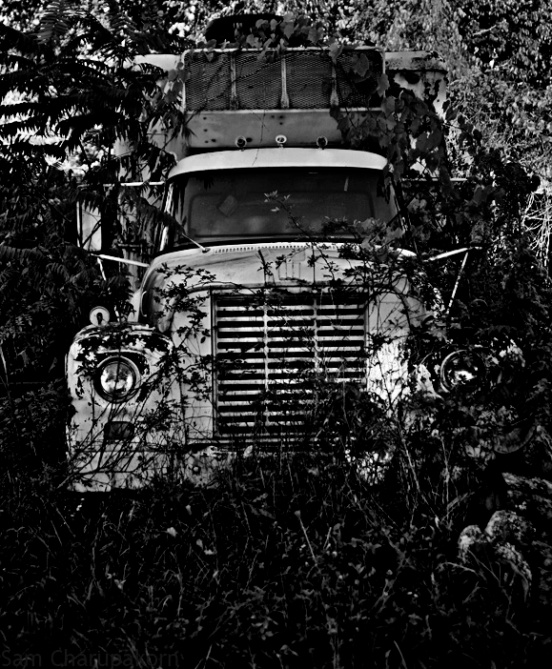
“Evil Dead Truck” 2007. Canon EOS 5D Classic, Tamron 28-75mm f/2.8 XR Di lens.

Howdy good people. Has it been a slow week? Yes, but not for a lack of new material. I must admit I have been really lazy this week 🙂

I don’t know how long it’s going to take to snap out of it, but maybe some energy bars and Gatorade are in order 🙂

I’ve seen shots of old cars and trucks from other people and I love them, but as a city guy, I’ve never come across one of these scenes until one day in 2007 when I took a ride to upstate NY for some apple picking. Right away, I knew I had to get a shot of this thing!

I did some processing to it, a little darker and more contrasty than I usually do, but I was having fun with it. Anyway, I’ve never come across one of these scenes again so I’m glad I got one.

Hope to have a new camera profiled tomorrow, have a good day folks!

Note: I have renamed this one in honor of my good friend “Radstradamus” 🙂 This guy is a Ninja, a master photographer in hiding. If he would ever like to show his work or has a link, I would sure love to show it!

***DEAL ALERT***

Some great savings on Panasonic Gear.

Also if you’re an Olympus user, take advantage of the current Olympus Lens Rebates. There’s no better time to buy lenses for your OM-D or Pen series cameras.

Breaking News: The Canon EOS-1DX Mark II

ica1dxm2

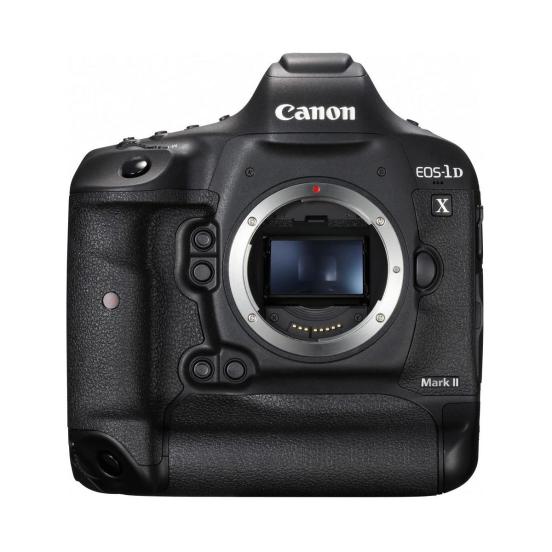
The Canon EOS-1DX Mark II. Official image courtesy of Canon Inc.

Wow, I had an article all ready for “Tuesday Titans” but I might as well go with this one because this is certainly TITANIC 🙂

Canon has just introduced, nearly five years later, the successor to the Canon EOS-1DX and that camera is the EOS-1DX Mark II.

Key features that I can see from just a quick scan of the specs: a new 20.2mp CMOS sensor with dual pixel AF, technology originally seen in the EOS 70D; the camera can do 14 fps at its top speed and an almost endless shooting in jpeg mode; new 61 point AF system; 4K video; ISO 409,600. Of course, there’s much more. You can get all the specs HERE.

I’m fine with 20.2 megapixels, but I did kind of expected a little more in this department since the original 1DX is 18.1 megs, so this is a negligible increase. However, for the press and sports photographers who will most likely buy this camera, this is a comfortable spot for megapixels.

To me perhaps the most impressive spec is the claimed shutter life of 400,000 shots! Of course, press and sports photographers can wear this out fast and this gives them a lot more than the usual 100K we usually get from pro cameras. To the rest of us who don’t spray and pray, the 400k shutter life indicates to me that Canon probably won’t be updating this camera for another five years 🙂

6a015391111a47970b01543693dfab970c

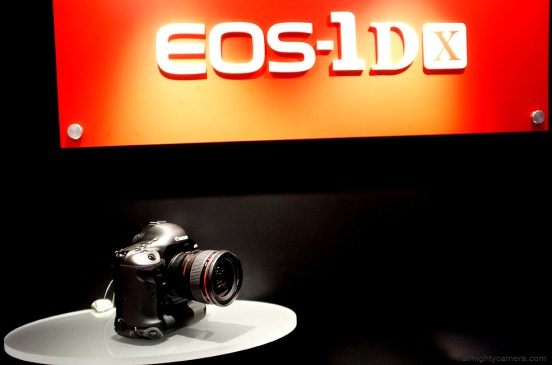
Could it be nearly five years already? From 2011, the Canon EOS-1DX 18.1mp at PhotoPlus Expo in NYC.

Here’s cool video of a real world shoot with the 1DX Mark II with sports photographer David Bergman, exclusively for our friends at Adorama. The opening is fantastic…Machine gun!!

The Canon 1DX Mark II takes the top spot as Canon’s new pro flagship camera. This proud lineage goes back to the original EOS-1Ds of 2002, and even much further back to the one that started it all, the original EOS-1 film camera which I reviewed HERE.

The EOS-1DX Mark II also appears to be the first to sport a new look for the 1D series, seemingly “sculpted” in certain areas, specifically the top (head) and the grip, making it appear more distinct than previous models.

AMAZON Valentines Day Specials.

One thing I have to say, whether we like it or not, it seems Canon and Nikon are definitely NOT embracing small mirrorless cameras. These companies are old and traditional and appear more than content to roll out these huge, bulky monster cameras.

In a good way, they are keeping the DSLR alive, in spite of the increasing mirrorless competition, and you got to admit, there’s something about the way these big cameras feel in your hand that is appealing. Their bulk makes you feel like you got your money’s worth, even if you’re not inclined to carry one around all day long.

The Canon EOS-1DX is bound to be an instant Camera Legend, just as any camera from the pro flagship would be. If you’re one of the lucky ones to get this camera, you may pre-order them from the links below. Although I’m not getting one, the one that strikes my fancy is the “premium” kit 🙂

Canon EOS-1DX Mark II Body.

Canon EOS-1DX Mark II Premium Kit.

All Canon EOS-1DX Mark II Links & Accessories.


What Cameras Were You Using Ten Years Ago?

NikJuli1

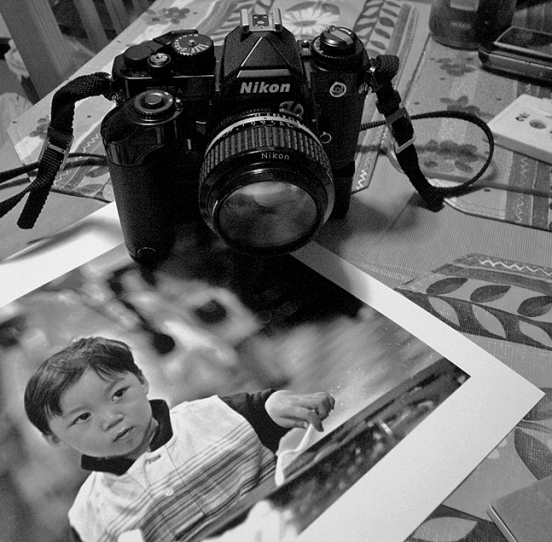
The Nikon FM3a with MD-12 Motor Drive and 50mm f/1.2 AIS Nikkor and a print from the combo. My dream kit in 2006 🙂

Hi good people. You might think with all these “extracurricular” postings that we have run out of cameras to review. Not by a long shot! But…

Just like we and Elvis “can’t go on together with suspicious minds,” I can’t go on with these long late night postings 🙂

As I’ve said before, it’s a labor of love, I get very little if anything financially from this site. Only the satisfaction that someone may have benefitted from the info posted here.

I’m not saying I’m stopping, just explaining why sometimes it takes a while before you see a new review.

But I’d like these pages to be seen as something more dynamic than your typical review site which is why I created series such as “The Best Camera I Never Knew” or the ever popular “Tuesday Titans” and now the random “Photo Of The Day” series.

With that said, today we take a look back at the cameras and lenses used back in 2006.


WHY 2006?

2006 was a very exciting year for me as far as cameras and lenses go. Digital cameras were really coming into their own. Cameras like the Nikon D1X, Canon EOS-1D Mark II, and Olympus E-1 ruled the day and indeed, the Nikon D1X and Olympus E-1 were my go-to cameras in 2006.

I got my first Canon L lens, the 70-200mm f/2.8L IS which I got off a poor college student on Craigslist. I sold this later to fund the purchase of an Epson R-D1, which was the world’s first digital rangefinder camera. While I don’t regret the R-D1, I did regret selling that Canon because subsequent copies I got were never as sharp as that first one!

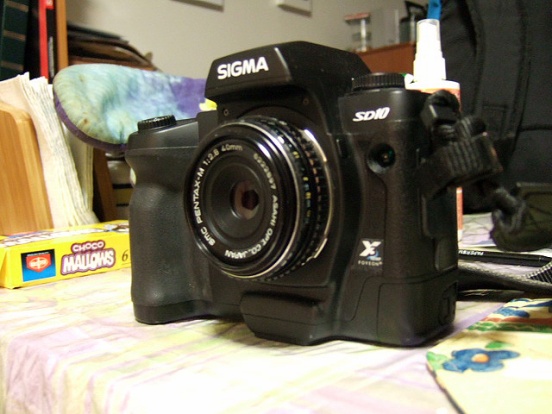
I was also fascinated by the Sigma Foveon technology and had just acquired an SD-10, which was actually released in 2003.

10687217_10204361566591626_5138072091768597222_n

“Sinner” 2006. Sigma SD-10, Sigma 18-50mm f/2.8. A man known as “Samir Abu Charupa” contemplates on why he cannot give up his bad habits. The reason? He is a mere mortal, a sinner 🙂

I loved the files, but I was not so thrilled that to get the best out of the camera you had to use the Sigma X3F (RAW) files and the slow Sigma Pro software. Surprisingly, even today ten years later, Sigma has the same paradigm: Superb files, slow processing. It’s amazing actually that they have not been able to improve this to a level competitive with today’s cameras and this is indeed the reason I gave up on Sigma.

SDPancake

Adapting lenses have taken off in recent years, in large part due to the popularity of mirrorless systems. I’ve been using adapted lenses for a long time. Here in 2006, was my Sigma SD-10 with an adapted Pentax 40mm f/2.8 Pentax-M manual focus pancake lens.

Ten years ago, I was (and still am) into film cameras. I was shooting a Bessa R3a, which I hated at first because I was getting soft focus until I fixed the rangefinder on it. I sold it off plus a few other items to buy a Nikon FM3a. I saw this camera as an investment too as it was Nikon’s last all manual classic camera. I also got a Nikon Fm2n with the 50mm f/1.2 AIS Nikkor for $90 total on Craigslist. Steal of a deal, deal of a lifetime! 🙂

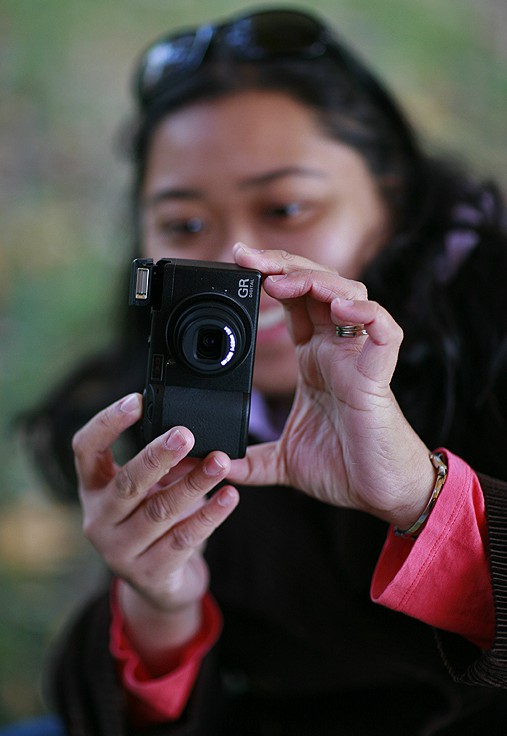
For my point and shoot, I was shooting film with my trusty Konica Hexar AF which  I got in 1997. And in 2006, I got the Ricoh 8.1mp GRD which I have written a lot about. Both are my favorite point and shoots of all time.

CelesteCan

“Take My Picture” 2006. The joy of photography with the (then) new Ricoh GR Digital 8.1mp camera.

So, ten years ago, what did you shoot with and how did it affect your photography? Take a moment to think about that and if you’re not too shy, then feel free to post your results in the comments to share with others. Thanks and have a great week!


Photo Of The Day: “Magic of Ramen Noodles”


“Magic Of Ramen Noodles” 2011. Minolta CLE with Canon 50mm f/1.5 Serenar ltm lens on Kodak Tri-X 400 developed in T-Max developer in 2011.

It might not be the best thing for you, but it sure feels good in the tummy 😀

Yes, it’s instant ramen, the ultimate poor man’s comfort food. Perfect for those times when you’re absolutely starving or when you have very little time to concoct a fine meal. Once the craving is satisfied, hunger is gone 🙂

Celebrating Ten Years Of JuJu

DSC_9567JJ

JuJu @ Six Months. 2006. Nikon D1X. Cannot remember the lens, it just shows as 300mm on the exif viewer. A straight jpeg from the D1X, no treatment done. Although it was only 5mps, I really loved the D1X!

No “Tuesday Titans” today. Instead, we are celebrating a “titan” of our personal world. He is the first kid of the new generation of our family. Today, we celebrate my nephew JuJu who just turned ten recently. He was, in a way, my first beta tester for so many of the cameras that came into my possession in the years following his birth. Thanks for joining me in the celebration and for my fellow gear heads, take comfort in the captions which will reveal some the cool cameras used during this ten year period. Happy Birthday JuJu!! 🙂

80313978.Y6P5wTjM.JoeJU1CPba

“Boy From NYC” 2006. Bessa R3a, CV 40mm f/1.4 Nokton Classic, Kodak BW400CN. I had just fixed the rangefinder on this camera, it was the first rangefinder adjustment I’d ever done. Shortly thereafter, I sold this camera, but now looking at the results from this combo, I kinda regret it!

124288972.KEsjHcuK.PenZoeJuJu1_SerenityCalamity

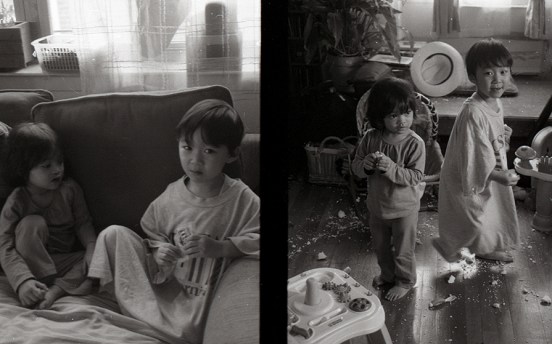
“Order & Chaos” 2009. Olympus Pen FT, Zuiko 35mm f/2.8 Pancake lens, Kodak Tri-X 400 developed in T-Max developer. Two frames from the half frame Pen FT camera showing how order can turn into chaos in a minute 🙂

1614239_10202970154807201_8424783835683906259_o

“My Brother’s Keepers” 2014. Nikon D1X, 35mm f/2.4 MIR Russian lens.

10917057_10205025856438457_737518350959434799_o

“Rockabilly Ju” 2013. Fuji X-Pro 1, Canon FD 55mm f/1.2 Aspherical lens. JuJu rocks around the clock! 🙂

10295047_10202961627314019_3801333893296660026_o

“Happy” 2014. Panasonic DMC-GF1, Lumix 20mm f/1.7 ASPH lens. Go ahead people, clap along if you feel like a room without a roof! 🙂


Tuesday Titans: The Canon EOS-1 Pro Film Camera


CEOS1

The Canon EOS-1 professional 35mm SLR of 1989. The EOS-1 is a titan with a tank like body, super speedy AF, and a futuristic design.  A true Camera Legend among 20th century cameras.

The Canon EOS-1 is 35mm SLR introduced by Canon in 1989 as the flagship camera of their (then) two year old EOS system.

Canon is no doubt one of the legendary names in the camera world. Despite non Canon fans (usually Nikon fans!) attempting to take jabs at Canon by saying things such as “Canon’s main business are its copiers and not cameras” or “Canon’s bodies are made of plastic and feels cheap” everyone that I know equates Canon to cameras first and foremost.

And the camera division is apparently a source of pride for the company. Even though, yes, they make way more selling copiers and other stuff to corporations, they do put a lot of that money back into creating awesome cameras that are often on the cutting edge of technology.

One of the greatest things about loving all cameras is that I’ve never been accused of being a fanboy, not that I know of anyway 🙂

Anyway, I’m rambling a little bit here, but the main point is that since the 1930’s Canon has had its share of legendary cameras. The Kwanon of 1934, the Canon II of the late 40s and early 50s, the Canon 7 and 7s rangefinders of the 60s, the A-1 and F-1 of the 70s, the T90 of 1986 just to name a few.

Canon is no stranger to making all kinds of cameras. However in 1987 Canon set out to do what many of their loyal customers thought to be the unthinkable; create a whole new series of lenses and cameras and letting go of their FD system which enjoyed a tremendous following and passion from professionals and enthusiasts alike. And with the introduction of the EOS-1 in 1989, Canon set out to create a new legend. Would their plan work?

dscf0648canont90mkiic

The Canon T90 of 1984 and the EOS-1D Mark II of 2004. The predecessor and successor of the EOS-1 respectively.

This was a very risky move. To take (in 1987) the nearly twenty year old, proven FD system and not only replace it with a whole new system, but also to convince their huge and loyal customer base that they should buy into the new system.

And the new EOS lens mount was NOT compatible with the FD system and vice versa. So in essence, Canon had to say…’Guess what guys? You can’t use all those lenses and accessories you’ve acquired for your A-1, AE-1, F-1, etc, etc if you buy the new EOS system’

As to be expected, it was a hard sell at first. From all I have read on this, many loyal FD fan were totally bummed, even angry at this move. They felt betrayed that their gear would now be “obsolete” and unusable on the new EOS system.

And you have to remember back then was not like today where you could use your legacy lenses on many different cameras with the right adapters. Adapters that allowed the use of one mount to a different mount were precious and few back then. I know of people who switched to Nikon because they were so outraged!

WISDOM OF FORESIGHT AND THE POWER OF TIME

Despite the initial outlash, now nearly thirty years later, I believe that time has proven Canon right in their decision to change from the FD mount to the all electric EOS mount.

With the EOS mount came cameras with super speedy autofocus, and such innovations as quiet USM “ultrasonic” motor lenses, cameras with electronically controlled wheels and dials, offering sophisticated levels of control customization. Many of these features we see on almost all serious DSLRs today. The EOS lens mount was also large enough to make way for some very unique L lenses such as the EF 50mm f/1L, the 85mm f/1.2L, and 200mm f/1.8L.

I believe Canon, as well as Nikon and other manufacturers saw the promise of the future with the runaway success of 1985’s Minolta Maxxam 7000, the first truly successful autofocus 35mm SLR.

Looking back, you have to give Canon, its camera designers and engineers credit for having the courage and foresight to create a whole new system that not only embraced the technology that was available then and but would also be able to take advantage of technology yet unseen in 1987.

THE EOS-1 FILM CAMERA

Two years after the introduction of the EOS system and the enthusiasts’ friendly EOS 650 camera, Canon decided the new system was successful enough to introduce their new pro flagship, the EOS-1 professional system camera.

The EOS-1 is a big brute of a camera and was very much reminiscent of the T90 of 1986 in its design.

However, being designed with professional photographers in mind, the EOS-1 was built to a much higher standard with an extra tough aluminum frame wrapped inside a polycarbonate plastic shell, and weather proofed with o rings, seals, and gaskets.

I remember in the mid 1990s reading an article on the Canon EOS-1 vs the Nikon F4s. I can’t recall if it was Modern Photography or Popular Photography magazine, but it was a great article on the pros and cons of both cameras, and included opinions from two professional photographers who used these cameras for their livelihood.

I also remember at that time, opinions and doubts about Canon’s use of polycarbonate materials on their pro bodies, especially from “heavy metal” camera lovers and pros.

Today, with the power of time, polycarbonate and other hard plastics have been proven to be as durable, if not more so, than the all metal bodied cameras of yore.

The EOS-1 is an all electronic camera and it operates on one 2CR5 battery. It will not operate without a battery. The electronics in the EOS-1 series of cameras have stood the test to time. The shutter speeds range from 30 secs to 1/8000th of a second and the camera can do a maximum of 5.5 frames per second with the optional Power Booster E-1. The viewfinder has 100 percent coverage. The camera had only one autofocus point which was cross-type and in the center of the frame.

USER EXPERIENCE

I got my first EOS-1 in the mid 90s. I still remember vividly the first time I held the camera. It was one of those magic moments on my camera journey!

I remember the sense of pride and amazement that I had in my possession this huge and powerful pro Canon in my home. Holding my first pro grade body ever was a feeling that, many many cameras later, comes very rarely today. It would take a lot to excite me these days 🙂

After I got over the initial excitement, I was quickly disappointed to find that the EOS-1’s AF, which was very fast and speedy outdoors and in good light, struggled and hunted in low or even moderately bright indoor lighting.

On top of that, the single central point AF did not have the red light indicator. That feature came with the EOS-1’s 1994 successor, the EOS-1n.

After a few months of use, I quickly sold the camera and moved up to the EOS-1n which was a much better camera in all aspects.

imgCan1Zoe293

“The One” 2012. Canon EOS-1, EF 50mm f/1.8 lens.

THE LEGACY AND LEGEND OF THE EOS-1

Despite my disappointment with the EOS-1, I eventually got another one when the prices became real cheap.

As with many other cameras, I can now appreciate its strengths while avoiding or trying to avoid its weaknesses.

Armed with a very strong selection of Canon EF lenses, the EOS-1 helped Canon to finally take over their rival Nikon in the 1990s as the professionals choice. It would take Nikon many years later to catch up and regain equal footing.

With the EOS-1 came many innovations such as dual input dials, wheels, and the use of polycarbonate and hard plastics on a professional grade body. All these features have made its way to many mid and high end cameras that came after the EOS-1.

The Canon EOS-1 is a true Camera Legend of the modern camera world. The EOS-1 is not only legendary, but has historical significance as the first pro body of the EOS line.

All the pro film EOS bodies that came after the EOS-1, including the 1n/1V/3 are all much better performers having taken all the best features of the EOS-1 and refining it to much higher levels, but if you want to experience that early EOS experience, warts and all, and want to pay the lowest price you can for a pro EOS film body, then the EOS-1 is a great choice, even if only to appreciate its design and/or to appreciate the technology of its day.

Note: The Tuesday Titans series was created to profile the huge “Big Guns” or monster sized cameras.

WHERE TO BUY

If shopping for an original EOS-1 film camera, prices are trending from $50-150 with an average under $100.

For a safe purchase with a good return policy, both Adorama in their USED section or Amazon periodically have the camera in stock.

IF YOU’RE JUST READING THIS AND PREFER MODERN CANON CAMERAS

Our friends at Adorama have some great deals for you, just in time for the holidays! Please check the links below to see the savings.

Canon EOS Rebel T5i DSLR Camera with EF-S 18-55mm f/3.5-5.6 IS STM Lens – Special Promotional Bundle – $399 after IR/MIR

BUY HERE

Canon EOS Rebel T5i DSLR Camera with EF-S 18-135mm f/3.5-5.6 IS STM Lens – Special Printer Promotional Bundle – $499 after IR/MIR

BUY HERE
Canon EOS 70D Digital SLR Camera Body – Special Promotional Bundle – $679 after IR/MIR

BUY HERE.

Canon EOS 6D DSLR Camera Body with Special Promotional Bundle – $1449 after IR/MIR

BUY HERE