Photo Of The Day: “Lost”

114443080.G37qNIS4.S2AFlowerIISmall

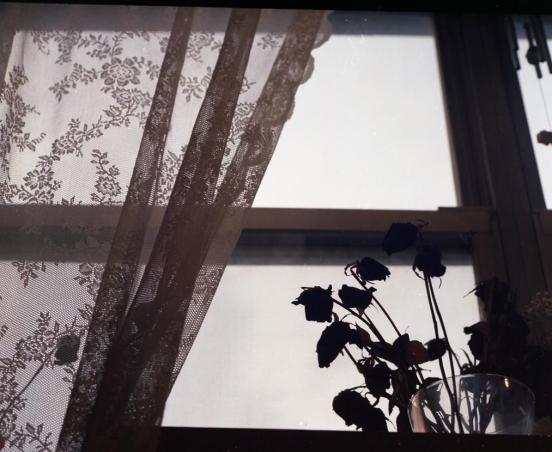
“I once was lost, but now am found, was blind but now I see” -John Newton. I’m not particularly religious, but I do think Amazing Grace is an amazing song. Shot with a Zenza Bronica S2A, 75mm f/2.8 Nikkor-P, Fuji Neopan 400 developed in T-Max developer.

The Lowly Vivitar PS-20 Point & Shoot Camera

Vivitar PS-20

We live in a different age, different time. Everything is better. Cars, television sets, cameras. Heck, even the camera on your phone is likely better than many of the high end cameras you once had. Here’s a camera I wrote about in 2009:

This is my Vivitar PS-20 from 1987. Bought it for $20 bucks at a now defunct chain store called “Caldor”. This camera took me through the late 80’s and half of the 90’s, providing some of the most memorable (if techincally poor) images of my life.

It was part of my two camera kit in my simpler (and poorer) days of the 80s when I had only the Minolta X-700 and one lens, the MD 50mm f/1.7 plus this camera, the Vivitar PS-20. Somehow, I feel like I was much more focused than I am now with the countless cameras I have used. I long for those two camera days, and who knows, maybe that’s going to be a project for me…get rid of everything, use two cameras, and be a happy photographer again 🙂

Ladies and gentlemen, this camera is the quintessential point ‘n shoot. It is what I would call a “SLC” or a “Super Low Class” camera. It is the ULTIMATE “Poor Man’s Camera!” It is poor, it is cheap, it is what people used to think of when they think of a point ‘n shoot camera. In fact, it says “Point ‘N Shoot” on the top of the camera! 🙂

IT’S NOT ABOUT THE CAMERA

Today, lucky us, we have point and shoot cameras that can do so much more than this old Vivitar. Yet in some way, these new point and shoot cameras seem to have lost track of what it means to be a point and shoot!

That’s why I love this old Vivitar PS-20. It can’t do 30 megapixels. It doesn’t have a Zeiss or “GR” lens. It can’t do HDR. It can’t do HD Video. It’s not a “luxury” point and shoot. It makes no pretenses about being anything other than a point and shoot camera 🙂

140343323.fVR6yepL.DSC_1288Zoe

“Joy Of Point ‘N Shootin” 2009. Baby Z gets a kick out of Papa’s old camera 🙂

While this article is about the Vivitar PS-20, it is really not about the camera itself. It’s a tribute to the lowly point and shoot cameras of yore. To the thousands of lousy, but charming old point and shoots out there. The ones that are worth next to nothing, but have more heart and soul than a $3000 point and shoot.

The Vivitar PS-20 “Point ‘N Shoot” may never be a Camera Legend, but taken as a collective with its thousands of peers, they all could be considered Camera Legends.

SPECIAL NOTE ABOUT THIS CAMERA

This is the funniest thing, except it’s really not funny. A few years ago, some seller on Amazon apparently decided to swipe (steal) this pic from my Flickr stream and use it. You can see the Amazon ad in this link HERE.

I never made a big deal out of it because it’s not an award winning picture or anything and this camera is worth next to nothing. In fact, before I wrote about this camera back in 2009, I don’t believe there was any information on it anywhere on the web because I always do a little research before writing about anything.

As I said, I’m not mad or anything, but I do find it humorous. But if I, by some chance, had an award winning shot and someone used it without my permission, sure I would be pissed.

But this, nah, it’s something I’ve accepted as part of the deal when you post pics on the internet. When you post something to the internet, remember this is part of your “contract.” I’m sure the person who used the photo didn’t know any better.

The main thing people should remember here is, just as Napster once opened the MP3 Pandora’s box, so too do you when you post pictures to the internet.

I’ve always accepted that once you post something, it’s subject to theft or anything by anyone. So please, if you feel you have an award winning picture, DO NOT post full sized images. Put some kind of watermark or something.

If it’s just an average, everyday picture no need to do anything, no one will care. I hate watermarks or copyright logos actually. The only reason I put them here is so that people can remember the website, which is always a wise thing when you’re running a relatively new site.

More cameras to come, have a great week! 🙂


Celebrating The Olympus Pen

PenFC

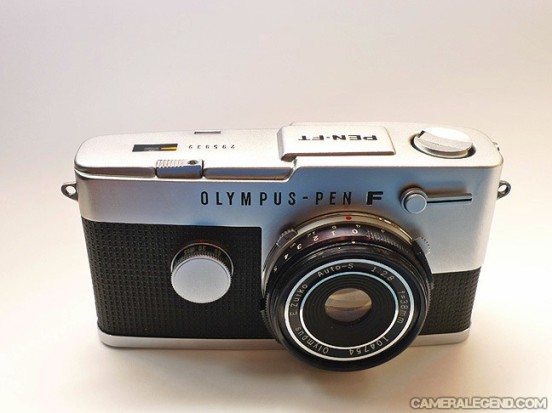
The Olympus Pen FT and Zuiko 38mm f/2.8 pancake lens.

With the release of the new Olympus Pen-F digital, I thought this would be a good time to celebrate the old Olympus Pen film series and the original “Digital Pen” the Olympus E-P1 🙂

Before we do that, just a few notes on the new Pen-F digital. It is a 20mp mirrorless camera in the Micro 4/3’s format. It has a built-in 5-axis image stabilizer in the body, much like the OM-D (which I love) series or the EP-5. 1080P HD Video. Nice touches include the electronic viewfinder (EVF), the 80/50mp (raw/jpeg) high-res mode, and customizable modes. There’s a lot more to it of course.

The funny thing is that when Olympus released the E-P1 in 2009, they marketed it as the new “Digital Pen” yet with this new Pen F, we are being told (as seen on the Dpreview video) that this is a whole new class of Pen cameras, and priced accordingly at $1199. Yeah, ok 🙂

OlympusC

“Decade Of Digital” From left, my first digital camera bought in 1999, the Olympus C-3000 Zoom and the Olympus E-P1 from 2009.

Anyone who knows me knows I’m a huge Olympus fan going way back. I’m sure the new Pen F digital will be awesome and just on the specs alone, it looks to be 1000 times better than the original E-P1, but I probably won’t be getting one any time soon. Not now anyway. Price is an issue, yes. Don’t have, and don’t want to shell out that much for a Micro 4/3’s camera.

And nothing against Olympus, but coming from the old film school, while I love the new Pen’s retro looks, I just see it as a digital camera dressed up in a film camera’s suit. Much like the Fuji X series, Nikon DF, or any number of cameras riding on the retro wave. This has been an enormously successful formula for many companies and more power to them. While I love the way they look, I’m just not as easily pulled in by it.

In addition, it’s really hard for me to get excited about the latest and greatest these days. The truth of the matter is that most of the cameras from the last five years (and going back even further actually) have been extremely capable.

I may sound a little less than enthusiastic, but I’m still young enough to realize that whether it looks like a film camera or not, whether I like the retro looks or not, learn to love it because (and my fellow film fanatics might not like this) let’s face it…This IS the “Digital Era.” Film may be around for a long time, who knows. But the “Film Era” has passed and it will never be the film era again.

But if you got the dough for the new Pen F, I’m sure it’s going to be an awesome new toy for you!

If you want to see all the new Olympus cameras, you can do so right HERE which is an easy link to everything. You can also pre-order there or here Olympus PEN-F if you want to be among the first to get one. My favorite might be that “Faux Leather” OM-D EM10 II!! 🙂

Below are some images from the Olympus Pen F and FT half-frame film cameras and the Olympus E-P1. I’ll dig up more if I can find them. I’ll keep shooting with these oldies until I can save enough for the new digital Pen F 🙂

12522944_10207474007440702_2584785228760462622_n

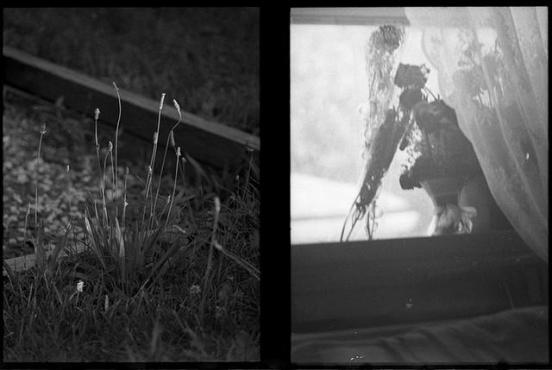
“Order & Chaos” 2009. Olympus Pen FT, Zuiko 38mm /2.8 pancake lens, Tri-X. These two sequential frames from the half-frame Pen FT shows how order can turn into chaos in a minute if Grandma is babysitting you 🙂

540628_3716236796857_375587103_n

“On Life & Love” 2010. Olympus Pen F, Zuiko 100mm f/3.5, Tri-X. As in life, love grows like the weeds, is full of hope and promise, but eventually grows old like last week’s bouquet of roses 🙂

531200_3410784400738_2009729031_n

“Beauty & The Beast” 2009. Olympus Pen FT, Zuiko 38mm f/1.8, Tri-X. Both a little scared, neither one prepared, beauty and the beast 🙂

OLYMPUS DIGITAL CAMERA

“Aging In a Digital World” 2010. Olympus E-P1, Lumix 20mm f/1.7

OLYMPUS DIGITAL CAMERA

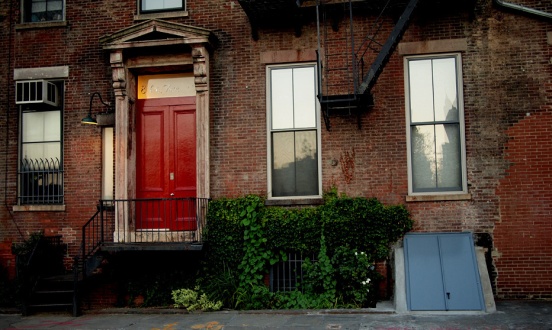
“RGB” 2010. Olympus E-P1, Lumix 20mm f/1.7, Brooklyn, NYC.

OLYMPUS DIGITAL CAMERA

“Sex & Religion” 2010. Olympus E-P1, Lumix 20mm f/1.7, Atlantic City, NJ. You might not be able to see it, but there’s a gentlemen’s club on the left and a church on the right. I’m still trying to figure out why WordPress is not letting me post larger pics.

120946458-1.c6ZnWIqs.EP1ZoeSamBuddies1.jpg

“Digital Buddies” 2009. Olympus E-P1, Lumix 20mm f/1.7 ASPH. Had a little fun with this one 🙂

What Cameras Were You Using Ten Years Ago?

NikJuli1

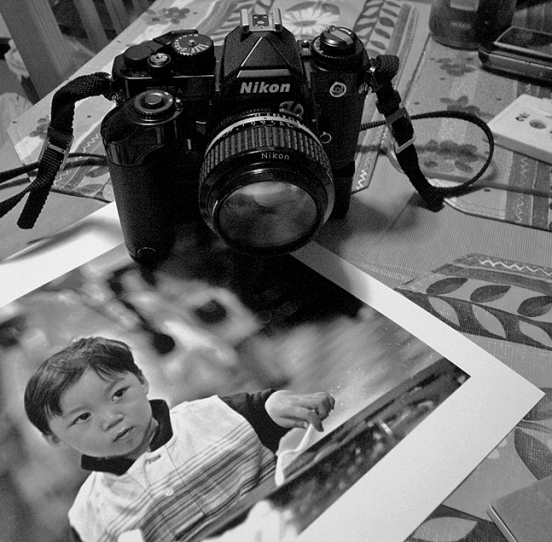
The Nikon FM3a with MD-12 Motor Drive and 50mm f/1.2 AIS Nikkor and a print from the combo. My dream kit in 2006 🙂

Hi good people. You might think with all these “extracurricular” postings that we have run out of cameras to review. Not by a long shot! But…

Just like we and Elvis “can’t go on together with suspicious minds,” I can’t go on with these long late night postings 🙂

As I’ve said before, it’s a labor of love, I get very little if anything financially from this site. Only the satisfaction that someone may have benefitted from the info posted here.

I’m not saying I’m stopping, just explaining why sometimes it takes a while before you see a new review.

But I’d like these pages to be seen as something more dynamic than your typical review site which is why I created series such as “The Best Camera I Never Knew” or the ever popular “Tuesday Titans” and now the random “Photo Of The Day” series.

With that said, today we take a look back at the cameras and lenses used back in 2006.


WHY 2006?

2006 was a very exciting year for me as far as cameras and lenses go. Digital cameras were really coming into their own. Cameras like the Nikon D1X, Canon EOS-1D Mark II, and Olympus E-1 ruled the day and indeed, the Nikon D1X and Olympus E-1 were my go-to cameras in 2006.

I got my first Canon L lens, the 70-200mm f/2.8L IS which I got off a poor college student on Craigslist. I sold this later to fund the purchase of an Epson R-D1, which was the world’s first digital rangefinder camera. While I don’t regret the R-D1, I did regret selling that Canon because subsequent copies I got were never as sharp as that first one!

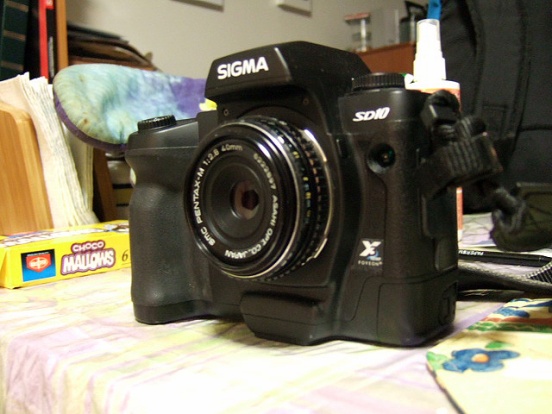
I was also fascinated by the Sigma Foveon technology and had just acquired an SD-10, which was actually released in 2003.

10687217_10204361566591626_5138072091768597222_n

“Sinner” 2006. Sigma SD-10, Sigma 18-50mm f/2.8. A man known as “Samir Abu Charupa” contemplates on why he cannot give up his bad habits. The reason? He is a mere mortal, a sinner 🙂

I loved the files, but I was not so thrilled that to get the best out of the camera you had to use the Sigma X3F (RAW) files and the slow Sigma Pro software. Surprisingly, even today ten years later, Sigma has the same paradigm: Superb files, slow processing. It’s amazing actually that they have not been able to improve this to a level competitive with today’s cameras and this is indeed the reason I gave up on Sigma.

SDPancake

Adapting lenses have taken off in recent years, in large part due to the popularity of mirrorless systems. I’ve been using adapted lenses for a long time. Here in 2006, was my Sigma SD-10 with an adapted Pentax 40mm f/2.8 Pentax-M manual focus pancake lens.

Ten years ago, I was (and still am) into film cameras. I was shooting a Bessa R3a, which I hated at first because I was getting soft focus until I fixed the rangefinder on it. I sold it off plus a few other items to buy a Nikon FM3a. I saw this camera as an investment too as it was Nikon’s last all manual classic camera. I also got a Nikon Fm2n with the 50mm f/1.2 AIS Nikkor for $90 total on Craigslist. Steal of a deal, deal of a lifetime! 🙂

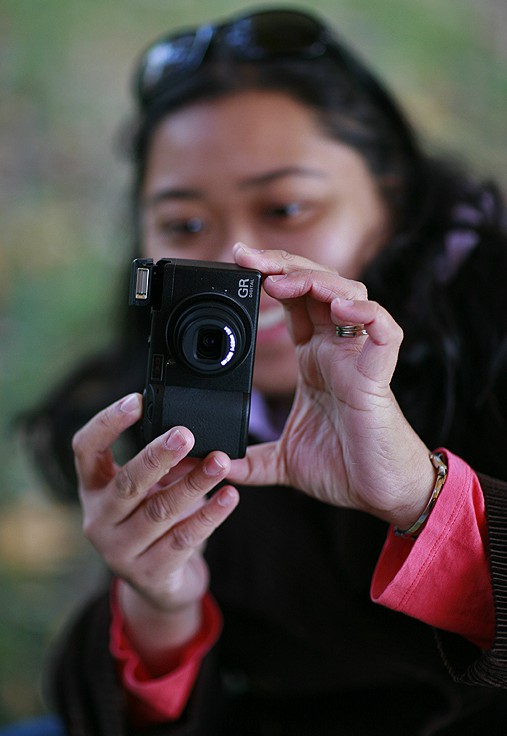
For my point and shoot, I was shooting film with my trusty Konica Hexar AF which  I got in 1997. And in 2006, I got the Ricoh 8.1mp GRD which I have written a lot about. Both are my favorite point and shoots of all time.

CelesteCan

“Take My Picture” 2006. The joy of photography with the (then) new Ricoh GR Digital 8.1mp camera.

So, ten years ago, what did you shoot with and how did it affect your photography? Take a moment to think about that and if you’re not too shy, then feel free to post your results in the comments to share with others. Thanks and have a great week!


Remembering My Father


10413336_10204156415782984_995436047699998225_n

“The Shoe” 2007. Epson R-D1, Jupiter-8 50mm f/2 lens.

My dad passed away in the hospital five years ago this morning around 4:43am in NYC.

Although the years have passed by quickly, it still feels like yesterday to me. We had been keeping vigil, spending all nighters at the hospital for about a week. From diagnosis to death, it was the saddest six weeks of my life.

481627_4621084217477_433803356_n copy

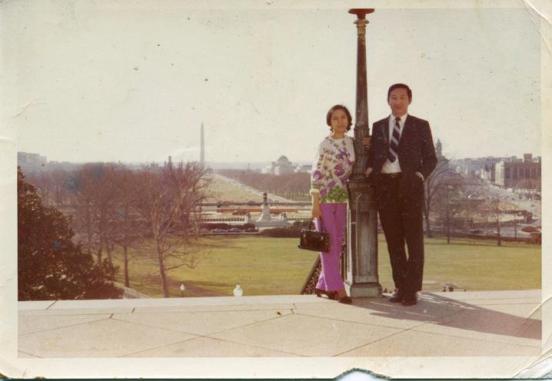
“Newcomers” Circa 1970. Mom & Dad in Washington D.C. As with many young couples, their lives had just begun. Before you know it, it’s 2011 and he passed away, and their romance is over.

Just a few days before he passed, he had a day of unusual liveliness, talking about good times and how he was hungry for his favorite dishes. The next day his condition took a turn for the worst and he seemingly slipped into a deep sleep from which he never woke from. It really does happen as people say…they get a second wind right before they pass away.

His passing from terminal lung cancer taught me a very hard life lesson because it was the very first death of someone so close. I mean, I’ve had relatives, grandparents, uncles, aunts who passed away before, but their deaths seemed distant. It didn’t hit me the way dad’s death did.

It made me see my own mortality in a completely different light. In a positive way, it helped me to make healthier lifestyle changes. I quit smoking, I ate healthier. But in a negative way, I’ve been secretly obsessed with the thought of dying. It’s better now with the passage of time, but at one point, it was almost as if I was not living because I was always obsessed and worried about every little thing regarding my health.

I worked with the geriatric population on a daily basis for years. Seeing their quality of life in their golden years and seeing how my dad died makes me think that there’s not a lot of hope in getting older. If you live long enough, you’re probably going to come down with something and the thought of that is locked in my mind and to be honest with you, it scares me.

When you see someone close to you dying of cancer, it’s one of the most difficult things to witness because you just see the life going out of them. They get frail, they get weak, they get to the point where they can’t do anything for themselves. I used to think cancer was something “somebody else” got until cancer came to our home.

I’ve often heard older and otherwise healthy people tell me “If the time comes, I’m ready.” After seeing my dad die, I’m not sure these people really know the true meaning of what they’re saying. It’s easy to say that when you’re feeling ok, but when your body is dying and you know it, hmm, that’s a tough one.

All I know is that even though dad was 78, (which is the average lifespan of a male in the USA) he did not want to die. He often expressed how he did not want to sign the DNR (do no resuscitate) clause. He wanted to live. I’m not even sure he knew how bad his cancer was. That was such a sad thing to witness.

We all know that no one lives forever and everyone will die someday. I only wonder, when that time comes and you know it, how will you really feel? Will there be a sense of relief that your pain will come to an end? Or will there be a deep fear of death and leaving this world and your loved ones?

994166_10200797288966913_919818551_n

“Grandpa” 2008. Nikon D2X, 50mm f/1.8 AF Nikkor.

My dad was a good man who loved his family more than anything else. Today, I’m just taking this moment to remember him. Sorry for the long discussion, there’s more to life than cameras 🙂

Rest in Peace my Papa. We love you and we still think of you ever day. Thanks for everything you gave to us.

***NEW ITEMS***

Our friends at Adorama are proud to introduce a new line of exciting house brand products! Not only are they of very high quality, but they also have the benefit of lower cost versus brand name items. Be sure to check it out.

A LIST OF NEW ITEMS.


Photo Of The Day: “Strong Coffee”

MamZoeI

“Strong Coffee” 2015. Mamiya C330, Mamiya-Sekor 65mm f/3.5, Tri-X 400 developed in Caffenol straight scan, no enhancements. Messy, dusty, but it worked! 🙂

If you’re in the blizzard zone and stuck home this weekend, I hope this will give you extra reading material 🙂

I’ve been developing film for quite a few years and although I don’t consider myself an expert at all, I’m familiar with traditional developers such as Rodinal, D76, T-Max, HC-110, etc, etc.

One developer that I’ve heard about, but never tried till recently was a home brew called “Caffenol.”

This is a process where you use instant coffee, washing soda, and vitamin C powder to concoct a mix that actually develops film.

When I first heard about this years back, I laughed it off thinking it was a big joke. When I investigated further, I was totally shocked that you can develop film with instant coffee!

The photo above is a result of my first Caffenol experiment. Now I know it’s far from an award winning result, probably not the kind of result anyone wants, but to be honest with you, I’m just thrilled that it worked! 🙂

MamZoeII

A 100 percent crop of the above image. I am unsure why, but I am not getting the option to show the image full size as I used to have. I am trying to get to the bottom of this and will fix it, if possible. If you could see it, you would see the glitter around the glasses well resolved.

Above is a 100 percent crop of the original scan. I adjusted the contrast levels to better show the details. I was quite amazed that the result, while messy, actually holds a lot of details!

The image was shot in 2015 with a Mamiya C330 and a banged up Mamiya 65mm f/3.5 lens that I got for $23. The film was Kodak Tri-X 400 which is my go-to for an easy to develop, classic film.

If you search the web, you will find many fine examples from Caffenol connoisseurs who have posted results much better than this.

As I said, I’m no expert at this. The hardest part is finding “washing soda” so I made it myself by heating up baking soda, not certain whether I did everything right. Also in the darkroom, I made the mistake of turning on the lights when I didn’t have cover on the tank with film in it, allowing for possible light contamination. Something I’d never done in all the years that I’ve developed film. Because of these issues, I was even more amazed that it actually gave me something at all!

I am now eager to experiment more and to perfect this process. However, that would mean I would have to waste a lot of rolls of precious memories so I have to be sure that each roll I process with Caffenol is really “disposable” to me, so to speak.

If you haven’t tried this process, take a roll of film that you think you could part with and try it out. It’s a lot of fun and could potentially save you money from buying traditional developers. It’s quite a kick to take the instant coffee on your kitchen shelf and turn it into a film developer, it really is! 🙂

Have a blessed day and I hope you stay safe in you’re in the zone of this major blizzard.

Best, Sam

Note: I’m not sure if I’m doing something wrong or something changed with WordPress, but people used to be able to click on the photos to see a larger version, but now it doesn’t give me that option. If anyone can tell me why, I would appreciate it!

Tuesday Titans: The Minolta 9xi

MinC

The Minolta 9xi is a 35mm film SLR introduced by Minolta in 1992.

I got this camera in 2007 when I found one real cheap (less than $100) at that time. Today, you could probably get two of them for $100 if you try hard enough.

This was a camera I lusted for since the 90s, but they were too expensive for me at the time when film still dominated the market.

I was going to do a long write up on this, but I saw that Wikipedia has an awesome and unusually informative page up on this one. It must’ve been written by an enthusiast because a lot of Wiki or Camerapedia pages on cameras are not this in-depth! Here is a link to the Minolta 9xi page on Wikipedia.

After reading this, I feel that there is very little I can add other than to give you my impressions and post some photos.

MINOLTA 9xi IMPRESSIONS

I must admit, this is one of those cameras I loved simply because of its looks. I know people who think this camera is ugly, but I’m not one of them. It’s squatty, but its thick and strong profile is strangely attractive to me 🙂

The 9xi was apparently another attempt by Minolta to get to the top of the pro market and the 9xi is built to high quality standards. At the time of its release, it was touted as having the “world’s fastest autofocus” system.

While the outer shell appears to be polycarbonate, the innards contain a metal frame, reenforced shutter/mirror box, and the camera is sealed for dust and moisture protection.

When I first got this camera, I was pleasantly surprised at its swift, speedy, and accurate AF! It didn’t feel like AF you would expect from 1992 and I felt it was better and more accurate than the original Canon EOS-1 pro camera I recently reviewed.

Ergonomically the camera felt great in the hands, beefy with the right proportions, but like the EOS-1, controls can be a bit confusing as it relies on mostly buttons and the front dial to make inputs into the camera. I prefer cameras where shutter speeds and other controls are easy to find and these cameras usually have dedicated knobs and dials for such functions. The 9xi does not, but that does not make it a bad camera.

The 9xi has the usual P-S-A-M (with shift) modes. It also had a headline grabbing 1/12000 top shutter speed!! That was great for people trying to film a golf swing or water dropping into a cup, but I’ve never used that shutter speed although it was great to know the 9xi had it.

Minolta was a very innovate and creative company and that creativity sometimes led them to strange “innovations” such as the “eye-start” feature on the 9xi. What happens is you put the camera to your eye and it triggers a sensor to start the camera right away. Sometimes I forgot about this and it would freak me out when the camera started focusing as soon as I put it to my eye! Fortunately, you can stop this by using your fingers to cover the sensors on the front grip, although I’m not sure there is a dedicated control to turn it off.

JJXI

“Don’t Tase Me Bro” 2007. Minolta 9xi, Minolta 50mm f/1.7 AF, Kodak BW400CN. The gimmicky “eye-start” feature on the 9xi actually helped me get this fleeting moment when I was about to be “tasered” by the kid’s stinky socks 🙂

Another example (and perhaps a negative aspect) of Minolta’s creativity  was that with earlier cameras they tried to sell you on their “creative cards” which were basically pre-programmed expansion cards with modes (i.e., Sports, Portrait, Night) that we all take for granted today because they’re included in almost every camera.

I personally never liked these “modes” because I find them gimmicky and I never want to give total control to the camera, especially a sophisticated camera, but I can see how it can be useful for beginning and casual photographers. There was apparently a “custom function” card for the 9xi though I never had or used one.

The good news is apparently many advanced functions can be accessed without any cards, through the camera’s “Quick” button. There’s a lot you can do with it, bracketing, multiple exposures, etc. Do a little research if you’re really interested in this.

Despite some of these innovations, they were eventually seen, as I said, gimmicky. Totally unnecessary stuff for an already great camera. As I mentioned in other articles, while I admire creativity, sometimes being too creative might not be such a good thing 🙂

The highly touted 14 “honey-comb” pattern metering provided nearly perfect exposures in all the rolls I put into this camera. Minolta was known for their superb metering and the 9xi did not disappoint in this respect.

JPC

“Jon Butcher” 2007. Minolta 9xi, Minolta 85mm f/1.4 G lens, Fujicolor Press 800 film. I had a dedicated film scanner at the time vs the flatbed that I use today. If you ever doubted that film could get as sharp as digital, this photo might be a good advocate for film! Sharp right down to the pores! The colors may seem a little funny, but the man’s skin is actually a deep shade of red/brown 🙂

The camera is also able do wireless flash with dedicated flash units such as the 5400xi, but the camera does not have a built-in flash unit.

BOTTOM LINE

If you don’t mind fidgeting a little to figure this camera out, and you love electronic cameras, the Minolta Maxxum/Dynax 9xi is one of the best bargains you can get today for a high-spec, speedy, and interesting 35mm autofocus SLR.

The Minolta 9xi may be largely forgotten today, but its high spec and high performance makes it one of the best auto-focus 35mm film cameras ever released by any manufacturer. The camera consistently provided me with sharp focus and accurate exposures.

It is a modern classic that reminds us to never forget the Camera Legend of Minolta, a company long gone but was at one time, one of the world’s greatest camera manufacturers.

PS: People tend to forget that (if you think about it) Minolta very much lives on in the Sony A system (not the mirrorless E system) cameras. If you block out the Sony name in your mind for a minute, you can appreciate that the lens mount is the same as that on the Maxxum 7000 of 1985!

WHERE TO BUY?

If shopping for the 9xi, prices are trending at $30-130 with an average of around $50 for one in decent condition.

These cameras tend to stay in decent shape, although like many Minolta AF cameras and lenses, they tended to develop this nasty looking white “film” thingy, kind of like dried milk.

The cheapest ones can be found on eBay where they used to be plentiful, but now seem less so and the ones that are there tend to be a little on the pricey side.

As you can see in my pages, camera collecting can be fun and doesn’t have to be expensive. You don’t need to pay over $100 for this camera, so be patient.

For a safer purchase than eBay, you can find them HERE and HERE in the USED section. In fact, there’s one in the first link for $13 plus shipping!

***NEW LEICA CAMERA ALERT***

The new Leica X-U (Typ 113) is out and it looks like another killer cam from the German rangefinder giant.

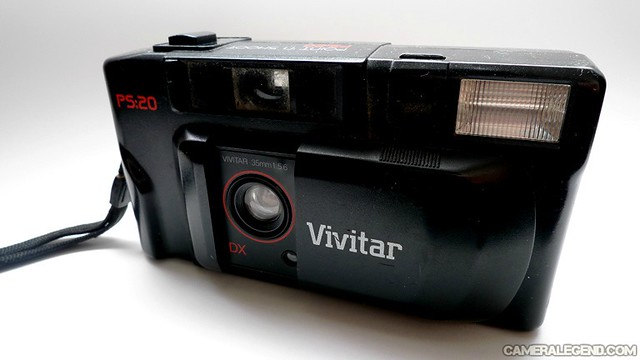
Photo Of The Day: “Magic of Ramen Noodles”


“Magic Of Ramen Noodles” 2011. Minolta CLE with Canon 50mm f/1.5 Serenar ltm lens on Kodak Tri-X 400 developed in T-Max developer in 2011.

It might not be the best thing for you, but it sure feels good in the tummy 😀

Yes, it’s instant ramen, the ultimate poor man’s comfort food. Perfect for those times when you’re absolutely starving or when you have very little time to concoct a fine meal. Once the craving is satisfied, hunger is gone 🙂

The Casio QV-10

Casio1C

The Casio QV-10 is a digital point and shoot camera released by Casio in 1995.

Even with a paltry resolution of 320 x 240 dots, the QV-10 consistently comes up on lists and polls of the “most important” digital cameras of all time.

And the reason for that is simply because the QV-10 is considered the first digital camera with an LCD on it. Wow, why didn’t anyone think of that?! 🙂

All kidding aside, I’m sure someone must have, but the ever quirky and interesting Casio, better known for their watches, were the first to put one on a mass market consumer digital camera and as you know, that back LCD changed digital cameras forever.

CasioIIC.png

The back LCD of the Casio QV-10. A feature that has become standard on all digital cameras and as the first camera to feature an LCD for composition and playback, it is the LCD that made the QV-1o a Camera Legend.

As a camera, the QV-10 features a 5.2mm (60mm full frame equivalent) f/2.8 lens that swivels, another innovation in 1995. The revolutionary LCD viewing screen is a 1.8 inch TFT screen with a resolution of 61,380 pixels.

The camera runs on four AA batteries and stores about 96 images on the built in 2mb flash memory.

You need a special serial cable to transfer these images, and with today’s technology, you probably need an adapter too for viewing these low resolution images.

I don’t have one unfortunately, but trust me, viewing these super low resolution images would simply be fun for novelty and nothing else.

If seeking one of these, be aware that there is a QV-10A and QV-10B. I couldn’t find much about the differences, if any, online. Just know that the QV-10A is the one you want for camera collecting purposes.

Prices on these are trending at $10-60 and the only place I’ve ever seen them is on eBay. While not particularly valuable monetarily, they are somewhat rare, but they do show up sporadically.

The Casio QV-10 was the first digital camera to feature an LCD that could be used to compose and playback pictures. This is a feature that has become standard and expected on all digital cameras. As a pioneering camera in the history of digital photography, the first to implement the now essential digital camera LCD, the Casio QV-10 is without hesitation a Camera Legend.

***DEAL ALERT***

Some new and exciting Leica lenses have been released! They are:

LEICA SUMMICRON-M 28MM F/2.0 ASPH BLACK.

LEICA SUMMICRON-M 35MM F/2.0 ASPH BLACK.

LEICA SUMMICRON-M 35MM F/2.0 ASPH SILVER.

LEICA 28 2.8-M ELMARIT-M ASPH BLACK.

For any Leica M shooter, this is awesome stuff!


Photo Of The Day: “Faded Love”

10931567_10205003951930858_4609622440519139540_o

“Faded Love” 2009. Rolleiflex 2.8C Xenotar lens, Kodak Portra 400 color film for this near monochromic scene. Just like the roses once bloomed and that Sun that was once bright, the love is fading into the night 🙂

In celebrating twenty years (1996-2016) on the net, I will be sprinkling photos here and there, hopefully to enhance your Camera Legend experience. The images may contain cameras and lenses not yet profiled, but which may be in the near future. Thanks for looking and I wish you a year of great photos 🙂

Best, Sam