Tuesday Titans: The Contax AX Film Camera

ConAXCC

The Contax AX. A camera that could “autofocus” manual focus lenses. Totally unique, but it didn’t always work well. Note the tripod attachment on the very bottom is not an original part of the camera.

Today, I present to you good readers a double whammy:

“Tuesday Titans” and “The Best Camera I Never Knew” and the recipient of this honor is the legendary Contax AX 🙂

THE CONTAX AX

The Contax AX is a 35mm single lens reflex film camera introduced by Kyocera in 1996. At the time of its introduction, the AX made camera headlines due to its unique ability to autofocus manual focus lenses.

Although probably more technical than this, in a nutshell, AF was achieved by moving the film plane, the distance from lens to film. The official company description of this was “Automatic Back Focusing.” This was a remarkable achievement and still something unmatched in the camera world today.

THE CONTAX AX BODY

The Contax AX is a big, bulky, OX of a camera! The extra bulk was needed to accommodate the mechanism that would drive the film plane to focus.

The camera feels well built, sturdy, and again, bulky. Like most Kyocera made Contax SLR cameras, it gives the feel and impression of quality.

Ergonomically, the AX is pure Contax. That is, controls are well placed with knobs and dials, things I really like on a camera.

On the left top plate you have a mode shifter for AV/TV/P/M/X/B and the shutter speed dial which runs from 4s to 1/4000. Also on the left is where you can change ISO values as well as play around with the cameras Custom Functions. I can’t remember these off hand, but I think the only one I used was the function to leave the film leader out.

On the top right plate of the camera you have the on/off switch, the film counter lcd, the exposure compensation dial, the focus switch which includes macro, manual focus, continuous, single af. Also on the right is a dial for drive, i.e., single shot, continuous, even double exposure.

Again, all these are on switches, knobs and dials that are well labeled which I really love on a camera.

WHY IT DIDN’T JIVE WITH ME?

I tried two of these. The problem? Well, the first one I got couldn’t autofocus to save my life! It would just rack back and forth. Then it would get close, but seemingly give up. I sent that one back. I eventually got another one and it did autofocus…when it felt like it 🙂

Actually, I’m being unfair. Maybe not. Anyway, it did autofocus, and when it did, I got some nice shots. However, the AF was very fidgety. On certain targets, it would be great, but in general, the AF was inconsistent. It would rack back and forth, sometimes never getting the focus, even on easy targets. Sometimes it would be so out of focus and give up. Pre-focusing the lens seemed to help, but again, it wasn’t consistent.

The autofocus was also somewhat slow, but that’s to be expected and I’m not blaming the camera for that. You have to remember this was a camera that was attempting to autofocus manual focus lenses.

ConAXJPBabyI305

“Olympians” 2011. Contax AX, 50mm f/1.4 Zeiss Planar lens, Kodak Tri-X 400 developed in HC-110. When the AX managed to focus, it focused well, but it was inconsistent. Shooting in daylight seemed to help.

And speaking of manual focus, you can do that with the AX and if you use the camera that way, it’s a pleasure to use, but maybe not to carry around due to its bulk.

ConAXZoe304

“Fix My Hair” 2012. Contax AX, 50mm f/1.4 Zeiss Planar, Kodak T-Max 400 in HC-110. Aside from trying to capture the moment, I was actually testing the autofocus system on the AX. The problem is that, with the AX, I always seemed to have to be “testing” it 🙂


BOTTOM LINE

So why does this “Titan” of a camera get a “Best Camera I Never Knew” badge? Because autofocus was its selling point. It was an admirable attempt by Kyocera, and like I said, if and when it worked, it’s great. But most of the time, for me, it didn’t hit its mark.

Ultimately though, I just could not rely on the AF to get the shots I wanted and decided that the AX was better as a manual focus camera. And if I wanted a manual focus Contax, I much prefer the (also big, but more portable) RX or the smaller ST (my favorite Contax body).

The Contax AX was a titanic attempt by Kyocera to bring autofocus to their fine line of manual focus Carl Zeiss lenses by doing something no one else had ever done before. It was made at a time when AF had already become the standard for 35mm SLR cameras.

However, company was not ready to join the AF race and wanted to keep their loyal customers happy. They eventually came out with a true autofocus SLR cameras, in 2001 with the introduction of the Contax N1 and the NX in 2002. Unfortunately, the company folded in 2005.

Kyocera and their Contax/Yashica line were something unique in the camera world. They were innovative and sought to bring the philosophy of high quality cameras and lenses to the masses and market themselves as an alternative to a “luxury” camera market that was ruled by the German giant Leica.

Kyocera and their Contax brand were the Lexus/Acura/Infiniti of the camera world. Unfortunately, many of their cameras, such as the AX, while beautiful, did not deliver the expected performance nor were they as reliable as a Lexus or Acura, or in this case, Leica.

They do, however, hold a special place in my heart and in the hearts of millions of camera fanatics around the world. The Contax brand still has a huge and loyal following. The AX may not have lived up to my expectations, but as I said it was an admirable attempt by a Camera Legend. In some ways, it was ahead of its time with technology that wasn’t quite ready for prime time. If only it worked better than it looks 🙂

WHERE TO BUY?

Due to its unique technology, the Contax AX is still quite popular among camera collectors.  I think most people will seek one out based on curiosity, as I did, only to find its headlining autofocus abilities clunky in real world use.

If seeking one of these, and I’m not sure that’s a good idea, prices have been trending steady at $200-300 dollars. Mid to low two hundreds are a good price on the AX. I got my first malfunctioning one about five or six years ago at around $300. As mentioned, I sent it back for a refund. I got my second one, which was sold as a parts camera because the battery chamber lock was broken, for $80. I replaced the battery chamber lock with a lock from a tripod and was more than happy with my $80 AX 🙂

If seeking one make sure your seller has a good return policy because I’ve said many times that the electronics in Contax cameras DO NOT age well. For a safe purchase try HERE and HERE.


“Zay 365” :-)

943965_10207781371004599_6061259851650362211_n

Zay @ three months. Canon EOS 5D Classic, EF 50mm f/1.8

Have to take a moment to say Happy 1st Birthday Zay!! Thanks for a year of new adventures, happiness, fun, and diapers. Looking forward to seeing you grow, but don’t grow up too fast..Love you lots! Pops 🙂

OLYMPUS DIGITAL CAMERA

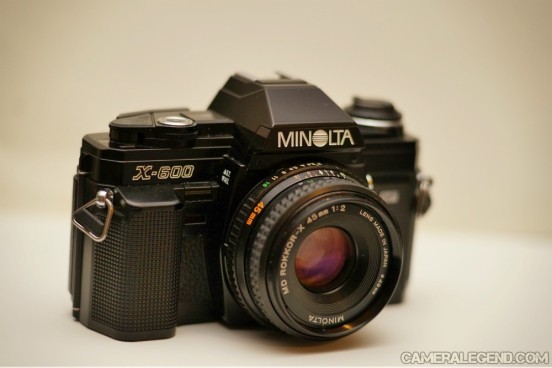
Monday Mystery Camera: The Minolta X-600

MinX600CC

Just when I thought that, as Bob Seger might say, I had nothing left to burn and nothing left to prove, I have another camera to profile for you 🙂

THE MYSTERIOUS MINOLTA X-600

In 1994 there was an article in Popular Photography magazine regarding the “mysterious” Minolta X-600. In fact the title of the article was “The Mysterious Minolta X-600.”

In that article, I remember the late, great Herbert Keppler wrote of how in 1983 he received an express package from Minolta Research and Development headquarters in Osaka, Japan. He went on to say that in the box contained a camera he had never seen or heard of before: the Minolta X-600.

Now before I continue, let me just say that I really loved Mr. Keppler’s articles and his candid and sometimes brash way of writing. I’m can’t remember if he was Pop Photo’s editor or associate editor, but if you read the magazine long enough, you can tell that he was “The Boss” or “The Man” at that publication.

He was a legend in the photography business and to me, his articles were the main reason I was reading Popular Photography. I was somewhat awestruck actually when he sent me a hand written response to a question I sent in, back in the 90s.

I also have to say, I’ve read over the years, so many people bashing that magazine. To me though, it was better than a lot of other photography magazines out there, but that’s a topic for another day.

Now back to the X-600. After reading the Pop Photo article on it, I got the impression that this was not a production camera and I never thought about it again until I came across one, quite unexpectedly, from a local seller’s collection.

WHAT MAKES THE X-600 SO MYSTERIOUS?

Ok, there’s not a lot of information about this camera on the web, but there is some. So I will try to break down what I have read and what I know of the camera, now that I have one.

The camera was produced as far back as 1983. Contrary to what I deciphered from the Pop Photo article, which gave me the impression that the camera was never released to the public, the X-600 was actually sold/given/leaked to the public, perhaps up to 10,000 units (according the the great Rokkor Files website), and sold in Japan only. Obviously, some have made it around the world 🙂

Now what makes the X-600 special? Now you might have a little chuckle when you read this because we’re so used to it by now…

The X-600 was a manual focus camera that had focus confirmation via a green led dot in the viewfinder that appeared once you have achieved focus. That’s it!

So what’s the big deal you say, all my Nikons have done that for years. In fact, nearly all serious cameras, and even non serious cameras have some kind of focus confirmation. It’s a prerequisite. But back in 1983, this was a BIG deal. In fact, if I recall correctly, they made a big deal about focus confirmation in the Contax RX, a manual focus SLR, and that was in 1994, more than ten years later.

No one knows for sure why Minolta abandoned the X-600 project. If you search around the web you may come across something about patent infringement, but I could not confirm this in any way so I can’t state that as truth.

Anyway, the X-600 was apparently a “pre-autofocus” experiment by Minolta, an experiment that may have led to the creation of the very successful Minolta Maxxum 7000 of 1985, the runaway first hit of the autofocus era of SLR cameras.

The success of the Maxxum 7000 ushered in the era of autofocus to the masses, with Canon and Nikon following shortly thereafter.

HANDS ON

12744392_10207750558474305_6305584978195444372_n

“The X-Man” aka the “Ghetto-Blaster” hands on with the X-600. Not a narcissistic selfie, only trying to show that the X-600 is out there in the hands of the public 🙂

I’ve only had this one for a short time, a few months, still have film in it. Based on my limited experience, and allow me to say that this may change with time, here are my impressions:

The initial impression upon seeing and handling one is that the camera looks and feels like the X-700. But after you hold it for a short time, you realize that this is NOT the X-700.

The X-700 was my first “real” camera which Mom bought for me in 1985 as a geeky teen with a thirst for photography. I used it for almost ten years straight before I got into all this G.A.S. stuff, and I still have it 31 years later so the X-700 is a camera I know a little about 🙂

The good news for most folks? The X-700 is a much better camera. Not only in looks, but in ergonomics and operations. The X-700 is cheaper and easy to find. The bad news about the X-700? It’s not an X-600 🙂

The X-600 is a much more basic camera, which can be a good thing, but it doesn’t have some of the things that made the X-700 so nice. For example, it doesn’t have a shutter speed dial on top as in the X-700. Instead, the shutter speeds appear in a counter on the top right plate of the camera and appears much like a film counter, which under certain conditions can be hard to see and hard to read.

There is no exposure compensation dial. No ASA/ISO indicator. Shutter speeds range from 1s to 1/1000 plus B. There is an Aperture Priority mode which can be engaged via the AUTO settting in the shutter speed selection dial.

The camera uses two AAA batteries, which I actually like better than the usually hearing aid type batteries seen in the X-700 and other cameras.

One great thing I noticed is that the X-600 does not drain the batteries the way my X-700 did. I have accidentally left the X-600 in the “On” position for days and it still doesn’t show battery drain.

The viewfinder shows shutter speeds with red line indicators. The focus “window” is a long slit right in the center of the viewfinder. There are right and left red arrow focus indicators and a green spot in the middle which will light up once you have achieved focus. Anyone who has used the focus confirmation feature on Nikon cameras will be familiar with this method of manual focusing.

The “special” focus confirmation feature works, but it needs good light to work well. According to info I have read on the web, the camera needs later MD lenses with an extra pin or post on the rear lens mount which was apparently needed by the X-600, which has two focus aid sensors in the body.

But wait…I am using the X-600 with three lenses, one which has the pin and two which do not have that extra pin, yet the camera is giving me a focus confirmation signal on all three lenses when I achieve sharp focus! Whether this is reality or not, I will have to report back when I am finished with the film. Only then will I know if the focus confirmation system actually worked with these lenses.

BOTTOM LINE

In today’s world, I must say that there is nothing outstanding about the X-600 as a camera, other than its rarity and its history which I have tried to relay to you here.

I’m not trying to take anything away from the X-600. It’s a very basic camera that uses batteries. Usually a no-no in my book. And focus confirmation is something so basic now that we just take it for granted.

But we must, in respect to Minolta, remember that this was new stuff back in 1983 and they should be given credit for doing something that moved the camera (as a species, not just the X-600) further up the ladder of evolution.

The X-600 is the missing link, the “Lost Testament” of Minolta’s development and refinement of autofocus. The Maxxum 7000 autofocus SLR of 1985 changed the world forever, but to get to the 7000, Minolta had to create the X-600.

Just as the Apollo astronauts who did the test runs never got the glory of the astronauts who landed on the moon, the X-600 is a rare and largely unknown camera, but just like those forgotten astronauts, without the X-600, it’s safe to say there would be no Maxxum 7000.

The Minolta X-600 is most certainly a Camera Legend. It is a camera pioneer. To appreciate that, you must take into account its history. Once you do that, you can then realize that this is indeed a very special camera.

WHERE TO BUY?

The X-600 is a rare camera, based on the low production numbers and the limited information that there is on this camera.

The good news is that they show up every now and then on eBay and I have seen it once at KEH camera. And even better news is that when they do show up, they do not cost a lot. The bad news? You never know when they show up. It could be tomorrow, it could be six months from now. That’s the nature of rare collectibles.

I’m not sure how to say this. You may think I’m just a guy with no life who does nothing, but seek out these odd cameras, and you might have well been justified in your thinking, but honestly, and I’ve said this before…I don’t seek out these cameras, they come to me! 🙂

Seriously! As with so many other cameras and lenses I’ve come across, I found the X-600 when I wasn’t even looking for it. This is a camera that no one hears or talks about simply because not many know about it. When you don’t know about it, you’re not looking for it.

Based on the fact that this is a rare camera, if and when you do find one, you’ll probably come across it the same way I did…when you’re not looking for it.

But assuming you do find one, based on my research, prices are trending at $90-135 on eBay, but you might do a little better if you find one locally. I got mine for $60 with a little haggling 🙂

If you have one of these Camera Legends, I’d sure love to hear about it!

Note: As this is already a late posting, you can safely assume that there won’t be a “Tuesday Titans” tonight 🙂

All content are © 2014-2016 CameraLegend.com


Photo Of The Day: “That Smile”

SummarZC

My little “Country Bumpkin” in 2008.

This could be considered a “Flashback Friday” post. This is my elder daughter in 2008, just a little more than a year old.

Shot with an Epson R-D1 and a seventy plus year old 50mm f/2 Leica Summar lens. I had just gotten this lens in rough condition on eBay for under $100. I was so enamored that it was giving me these (to me) beautiful soft/sharp images, just what I’d been looking for!

The Epson R-D1 was a 6.1mp camera, the world’s first digital rangefinder, and one of my favorite old school digital cameras ever. I’ve been meaning to do a flashback review of this camera, but this is one of those cameras that I love so much, I would need a lot to time to do it justice. Time I simply don’t have tonight. But I’ll get to it, eventually 🙂

Have a good Friday and a good weekend everybody!

Best, Sam

Breaking News: The Pentax K-1 Full-Frame Digital

K-1_004_2470_hood-3a-wm_WM

The K-1 full frame digital camera, the new “King Of Pentax.” Pictured with the HD Pentax-D 24-70mm f/2.8 SDM WR lens. Pure Pentax heaven! Picture courtesy of Ricoh/Pentax Corporation.

Ho! I thought I was on a week long sabbatical but this one is a must! Ricoh/Pentax has finally introduced their full-frame digital called, appropriately the K-1.

Just from looking at the specs, key features: 36.4mp CMOS sensor, no AA filter (better sharpness), built in 5-axis stabilization, ISO 204,800, 1080p 24/30fps HD video, rugged build and tilting screen. Of course, there’s a lot more to it.

All the cameras we have today are like super computers in many ways. They have like gazillion features and you know I’m not the kind of guy who wants to repeat all the technical specs. If you’re interest in the technicalities you can read them HERE.

I’m sure there will be a lot of Pentax fanatics who will be picking this thing up. In fact, I KNOW some fanatics who will be looking hard at this one 🙂

THOUGHTS ON THE PENTAX K-1

Everything seems right with this camera. Specs are great, however things seem familiar. 36.4 megapixels? Hmm, probably that Sony sensor we saw in the Nikon D800/D800E and Sony A7R. No AA filter? Cool, seems like everyone is doing away with that “wicked” AA filter that used to be so important for the first fifteen years of digital. ISO 204,800? Cool, but I never go anywhere near that ISO so I wouldn’t know.

I guess what I’m saying is…the specs are great, awesome even, but many of these things we have seen since 2012 so it’s not mind-blowing anymore (to me anyway). Nothing against Pentax, as I’ve said a few times before, it’s really hard for me to get excited about the latest and greatest these days. But I love the build and handling of the top Pentax cameras and this one looks to be the best of the best.

PentaxK01C

“Pentax Camera Art.” Before the K-1, we had a funky little thang called the K-01! Wow, what a close call with the names 🙂

Despite what I said about the specs, the main thing that we should remember is that while the rest of the world have seen these high specs before elsewhere, Pentax users have not had these specs till now so this is enough reason for Pentaxians to rejoice.

And heck, based the fact that all your Pentax lenses in the 35mm format can now be used as they were intended and even based on the specs as they are, this could probably be the only Pentax digital anyone could ever want or need! Here’s a cool and interesting video on the new K-1:

As I said in an article not too long ago, many have waited for this day since we heard about the Pentax MZ-D in 2000. The first full-frame Pentax digital that never was. Today, nearly sixteen years later they have officially announced the K-1. Whether it succeeds or fails this camera is bound to be a Camera Legend. All I can say is…Pentax, thank you.

Note: The Pentax K-1 was introduced with three new lenses. You can check out all the specs to the K-1 and see the new lenses HERE.

WHOA, WAIT A MINUTE, THERE’S ALSO THE CANON EOS 80D 

I didn’t put this in the headlines because I didn’t want to take anything away from the Pentax K-1, which many have waited so long for and is in a different league of cameras, but I’m sure many Canon fans will be happy to hear that there’s a new “enthusiast-class” body out, the EOS 80D.

Just quickly off the specs: new 24mp sensor, 45 point AF, updated dual-pixel AF, mirror vibration control.

I don’t really want to get too much into it, but I’m sure it’s going to be a killer little camera.

You can check out the specs HERE.

Valentine’s Day Love

122533546.tN6S22se.CanonDreamZoeWrite

“Love Letters” 2010. Canon 7 rangefinder, 50mm f/0.95 Canon “Dream Lens,” Tri-X 400 developed in T-Max developer. My baby girl used to write me love letters. The good news is, six years later, she still does! 🙂

Howdy good people. Still here. Hanging on by a thread 🙂

Hope you all had a fabulous Valentine’s Day! To me though, every day should be filled with love in our hearts. Some images of my loves for today. I’ve been blessed, I can’t complain.

12523044_10207543199410458_7724152690828587620_n

“Zay & Zoe” from 2015 and 2008, respectively.

12493960_10207505823756090_5058694940956853165_o

“Bundled Up” 2015. Olympus OM-D EM-5, Zuiko 45mm f/1.8 lens.


Tuesday Titans: The Leica R8 (R9)

SLRCam

I might as well call this “Tuesday Night Titans” as a tribute to the old WWF (now WWE) rasslin’ show 🙂

The Leica R8 is a 35mm film SLR introduced by Leica in 1996. The R9 was introduced in 2002 and was the last film SLR made by Leica for their R series which was discontinued in 2009.

Although the R9 was marketed at the time as a new model, it is pretty much an upgraded R8. The bulk of this review is based on my extended use of the R8. R9 differences will be pointed out later on in this article.

While the R8 appears much like an autofocus camera, it is not. It’s an electronic camera that relies on batteries for everything, and it is pure manual focus.

THE LEICA R8 BODY

The Leica R8 (and R9) look radically different from any Leica single lens reflex before it. It is huge, it is massive, it is a TITAN!!

I remember reading about the R8 in one of those cool British photography magazines in the late 90s. I remember thinking it was huge and cool and even a little crazy. I never thought about getting one until I started picking up R lenses to use on my 5D in the mid 2000s.

After seeing how great these lenses were, I found a great deal on an R8 in 2008 and although I’ve sold off a whole load of stuff since then, I still hang on to the R8.

99388588-wrfjkuxc1

“Lots Of Love” 2008. Leica R8, 90mm f/2 Summicron-R, Ilford XP2.

The camera feels great in the hand. Heavy, robust, and well put together. The controls are definitely in the Leica bloodline, spartan and uncluttered.

The Mode dial is on the top left. It has all your usual modes, manual, aperture priority, shutter priority, and a very unusual “F” flash metering mode. I could write about this, but it would take a whole half page and I’ve never used it. In a nutshell, the mode is used in conjunction with the camera’s pc socket and your flash which can be a dedicated flash unit or a number of studio strobes. You trigger the flash (or strobes) in “F” mode and it will help you determine flash exposure values which you can see on the back LCD without actually taking a shot, saving you from wasting film. At least that’s how I understand it.

On the top right of the camera is the shutter speed dial which runs from 16s to 1/8000th of a second. A good rule to remember when buying cameras is that any camera with 1/8000 means serious business even if 99 percent of the time we never use that shutter speed!

The 93 percent coverage viewfinder is bright and clear, but appears smaller and not as easy to focus as that on the older Leicaflex SL series. You probably would’ve expected 100 percent viewfinder coverage on a camera like this, and so did I.

RLMC

“Man In Black” 2015. Leica R8, 80mm f/1.4 Summilux-R, Tri-X 400 developed in Ilford ID-11 developer. My man Mr. Louis Mendes, NYC fixture, icon, and friend. I don’t know how many times I’ve photographed Lou over the years, but I never tire of it. Awesome guy, awesome photographer!

Funny thing, when I first got the R8 I felt as if I could never be sure if I had things in critical focus or not, having been spoiled by the SL viewfinder. I was a little obsessed about it to the point that I had even contacted several highly regarded Leica “people” including repair expert Don Goldberg (DAG) and famed Leica nature shooter Doug Herr. Both gentlemen were extremely helpful. However, in the end, I never did anything to the viewfinder.

My fears dissipated when roll after roll, 80-90 percent of the images were always in sharp focus, which is actually better than a lot of other manual focus bodies I have used.

“Baby Love” 2008. Leica R8, 90mm f/2 Summicron-R, Ilford XP2. Despite my fears, I was able to manually focus well enough on the R8 to get roll after roll of mostly sharp shots. The color cast is the result of a drug store scan, which I have not bothered to correct.

Don’t let me scare you though. What happened to me was that the images looked “in focus” in the R8 viewfinder, but it didn’t have a reassuring “snap” to it the way the SL did and that concerned me. I don’t know if the screen in my R8 is original stock, but it doesn’t have a split-image focusing screen in it, which always helps if you’re unsure.

But again, my fears were unwarranted so I no longer have issues focusing on the R8. Most of the time, if it looks in focus, it probably is.

treec

“Lonely Still” 2008. Leica R8, 90mm f/2 Summicron-R, Ilford XP2.

The shutter is well damped and smooth in its sound. Always a sign of a high quality camera.

ISSUES

In the first few years that the R8 was out on the market, there were numerous reports on reliability issues. Leica reportedly, at that time, fixed these issues free of charge.

All I can say is in the eight years I’ve had the camera, knock on wood, I never had a problem with it.

It is likely, but not certain, that if you buy one today and it’s in working condition, it’s probably fine.

If you’re worried about this, that’s one good reason to buy an R9 which apparently fixed everything. However, the R9 on the used market is a good $500 more than a used R8.

Here’s a good page on R8 ISSUES including suspected serial number ranges.

IS THE LEICA R8/R9 THE ULTIMATE LEICA CAMERA?

If Leica had not discontinued their R system bodies, lenses, and accessories, it is my opinion that the Leica R could stand out as the ultimate Leica film body, even when compared to their beloved rangefinders.

Whether you love it or hate it, it’s a standout body. There’s nothing in their film range of cameras that looks like it. I’ve compared a lot of these monstrous cameras to the Canon EOS-1, but I can’t even compare the R8 to that behemoth in its looks. It stands alone.

LeicaR8FlowerLFICrop

“Past Imperfect” 2010. Leica R8, 80mm f/1.4 Summilux, Tri-X.

I know people who think this camera is butt ugly, and I can’t remember if I was one of them, but what I can tell you is that most people who love the R8 end up loving it after they have held and used one.

To me now, it feels and looks awesome and it produces great results, roll after roll.

THE UNIQUE LEICA DIGITAL MODULE R (DMR)

The Leica R8 and R9 have the distinction of being the only 35mm film camera that could be converted to a digital body by replacing the film back with a digital back that Leica made called the “Digital Module R” otherwise known as the “DMR.”

The DMR used a 10mp Kodak CCD sensor and was highly praised by those lucky enough to use it. I was not one of them. They were and are always pricey and scarce on the used market.

At the dawn of the digital era, around 1996 or so, there were dreams of turning film cameras into digital. You may have remembered reading about this. If you forgot the main company pushing this idea at the time, they were called “Silicon Film.” Do a Google search if you’re interested.

Anyway, although it held great promise, the “digital film” concept never materialized in production.

To this date, only the only 35mm cameras that could be turned into digital are the R8 and R9 bodies, again, assuming you can find, or really want to buy a 10mp digital back for over $2000 used.

LENS COMPATABILITY

To further complicate things, the Leica R8/R9 are recommended to be used only with Leica 3-Cam or ROM lenses. The 1-CAM or 2-CAM lenses can damage the ROM contacts on the R8/R9 bodies. You can get these lenses converted to 3-CAM or ROM by a specialist. As a disclaimer, me being foolhardy and cheap, I’ve used 2-CAM lenses on the R8 with no issues, but I don’t recommend it and don’t blame me if you try this and it ruins your camera 🙂

LEICA R9 DIFFERENCES

The R9 is 100g lighter than the R8. The R9 has a special edition “Anthracite” model, in addition to the black model. The R9 has an LCD frame counter on the top plate, the R8 has the frame counter on the back LCD.

There were also some changes in the electronics, mainly to better support Metz’s flash units. Reliability is supposedly better with the R9. Do a little research on this if this interests or concerns you.

Overall though, they are pretty much the same camera.

BOTTOM LINE

The Leica R8/R9 were the climatic highlight of the Leica R System, a system which was never as popular as Leica’s own M System and a system which is now dead.

The R lenses were, in most cases, every bit as good as their M counterparts, but the R bodies were not. The R8 and R9 were said to be the only electronic R bodies which had nothing to do with Leica’s partnership with Minolta. But sadly, it’s too little, too late for the R system.

Ironically, digital photography and the popularity of adapted lenses have resurrected the R system lenses from the dead, at least on the used market and prices are dramatically higher than they were only a few years ago. I’m so glad I got my R lenses when the tide was low.

The R8 and R9 are eye-catchers in terms of looks, but more importantly, they are superb shooters which can produce fantastic results. Although they now belong to a technically dead system, the Leica R8 and R9 represented the pinnacle of Leica’s foray into the 35mm single lens reflex arena and they are true Camera Legends which serves to remind us of Leica’s past and gave us a glimpse into Leica’s future.

NOTE FOR POTENTIAL BUYERS

While I love the R8 and the R System lenses, I would not recommend you start with an R8 or R9 if its your first foray into this system. I certainly would not recommend the DMR unless you have money to burn.

The reasons are many…

It’s a dead system. I’m not sure if Leica will still repair the R8/R9. I’m pretty sure they don’t repair the DMR any longer.

The ability to adapt the R lenses to many, many systems including many full-frame systems negate the purpose of the DMR, which remains pricey on the used market.

If wanting to get your feet wet in the Leica R System, spending as little as you can, the all manual Leicaflex SL is a much better choice. No batteries necessary, better viewfinder, and cheaper. Body should be $100 or less. A good lens to start with is the 50mm f/2 Summicron-R and for the SL, you could probably find a 1-CAM version for around $300 or under. That’s the cheapest way to get into the Leica R System.

WHERE TO BUY?

If you really have your heart set on an R8 or R9, I can’t blame you after all the stuff I just wrote about it 🙂

Prices are trending at $350-500 for the R8 and $650-1000 or more for the R9. And for delicate electronic cameras you really should buy from a place with a good return warranty.

For a safe purchase try HERE and HERE in the USED section.

Happy hunting and if you do get one, please be sure to drop me a note, would sure love to hear about it!

***DEAL ALERT***

For those of you into more modern stuff, there are some great savings on Panasonic Gear.

Also if you’re an Olympus user, take advantage of the current Olympus Lens Rebates. There’s no better time to buy lenses for your OM-D or Pen series cameras.

The Smallest Nikon: Nikon S01 Digital Camera

NikonS01C

“Baby Nikon” The smallest Nikon camera, the S01 🙂

Probably not what you expected after going missing for a few days, but I’ve never really done what people expected of me 🙂

The Nikon S01 is a 10.1 megapixel point and shoot digital camera introduced by Nikon in 2012.

Though I can’t confirm it, it is probably the smallest Nikon camera ever made, film or digital.

I first saw the S01 at Best Buy some years back and thought it was a cool novelty and nothing more. In fact, the first time I saw it, I just walked past it.

Maybe a year later, I saw it again and I was intrigued enough to pick it up. I thought it was cool, but at nearly $100, it was a pass for me.

Somehow I ended up with one in 2014 as a gift. Now that I like!

Toy Camera?

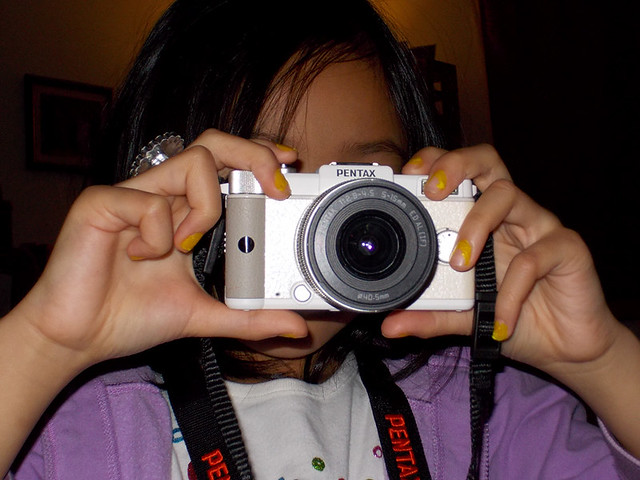
“Toy Camera” 2014. The Pentax Q original shot by another “Mighty-Mini” the Nikon S01 🙂

As I said, I consider this camera a novelty so I’m not going in too deep with this one. It might be a “quick review” or “mini review” but not a full review. In fact, if anyone did a full review of this camera, I would say you’re nuttier that I am! 🙂

There are some cool features on it though, such as a touch screen, and some cool creative filters, but the S01 is pretty much an auto point and shoot digital with no manual controls.

The touch screen is something many of us have come to enjoy, after using smartphones and tablets all these years.

The good news is that it’s there on the S01. The bad news is that it’s clunky to use and not iPhone fast. Not the most refined touchscreen out there.

The camera comes with 7.3gb of built in flash memory and has no slot for SD card upgrades. It comes with no charger, only a USB cord to charge via your computer.

The picture quality is decent to good. Don’t expect too much out of it in that area. This camera is all about size and perhaps cuteness 🙂

Nikon S01 Soft Filter Effect

“Soft & Dreamy” 2015. Nikon S01 using the “SOFT” filter effect.

In fact, if you’re already walking around with a smartphone, which seems like 90 percent of the people out there, then the camera on your phone is probably better than the S01.

Again, you don’t get the S01 to use as your main or secondary or even your third camera. You get it if you love cameras, as I do, and if you get a good shot out of it, even better!

If seeking one for your collection, prices are trending at $25-75 on the used market. Nikon replaced this camera with the S02, which is technically a little bigger, but roughly the same small camera.

The Nikon S01 is cute, sweet, and fun. It may not be the greatest picture taker and it’s certainly not a Camera Legend, but it’s the smallest Nikon out there and I’m happy to have it in my collection 🙂

Photo Of The Day: “Evil Dead One Eye Truck”

89823685.PFjtppg3.EDTruckPba.jpg

“Evil Dead Truck” 2007. Canon EOS 5D Classic, Tamron 28-75mm f/2.8 XR Di lens.

Howdy good people. Has it been a slow week? Yes, but not for a lack of new material. I must admit I have been really lazy this week 🙂

I don’t know how long it’s going to take to snap out of it, but maybe some energy bars and Gatorade are in order 🙂

I’ve seen shots of old cars and trucks from other people and I love them, but as a city guy, I’ve never come across one of these scenes until one day in 2007 when I took a ride to upstate NY for some apple picking. Right away, I knew I had to get a shot of this thing!

I did some processing to it, a little darker and more contrasty than I usually do, but I was having fun with it. Anyway, I’ve never come across one of these scenes again so I’m glad I got one.

Hope to have a new camera profiled tomorrow, have a good day folks!

Note: I have renamed this one in honor of my good friend “Radstradamus” 🙂 This guy is a Ninja, a master photographer in hiding. If he would ever like to show his work or has a link, I would sure love to show it!

***DEAL ALERT***

Some great savings on Panasonic Gear.

Also if you’re an Olympus user, take advantage of the current Olympus Lens Rebates. There’s no better time to buy lenses for your OM-D or Pen series cameras.

Breaking News: The Canon EOS-1DX Mark II

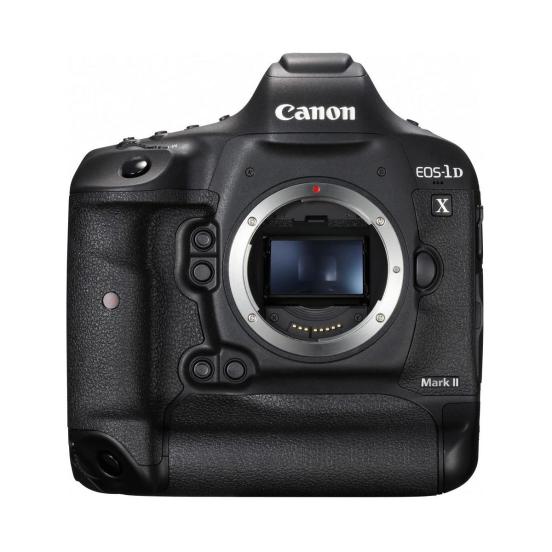
ica1dxm2

The Canon EOS-1DX Mark II. Official image courtesy of Canon Inc.

Wow, I had an article all ready for “Tuesday Titans” but I might as well go with this one because this is certainly TITANIC 🙂

Canon has just introduced, nearly five years later, the successor to the Canon EOS-1DX and that camera is the EOS-1DX Mark II.

Key features that I can see from just a quick scan of the specs: a new 20.2mp CMOS sensor with dual pixel AF, technology originally seen in the EOS 70D; the camera can do 14 fps at its top speed and an almost endless shooting in jpeg mode; new 61 point AF system; 4K video; ISO 409,600. Of course, there’s much more. You can get all the specs HERE.

I’m fine with 20.2 megapixels, but I did kind of expected a little more in this department since the original 1DX is 18.1 megs, so this is a negligible increase. However, for the press and sports photographers who will most likely buy this camera, this is a comfortable spot for megapixels.

To me perhaps the most impressive spec is the claimed shutter life of 400,000 shots! Of course, press and sports photographers can wear this out fast and this gives them a lot more than the usual 100K we usually get from pro cameras. To the rest of us who don’t spray and pray, the 400k shutter life indicates to me that Canon probably won’t be updating this camera for another five years 🙂

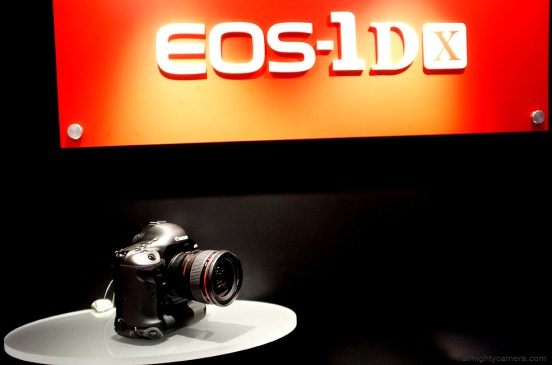
6a015391111a47970b01543693dfab970c

Could it be nearly five years already? From 2011, the Canon EOS-1DX 18.1mp at PhotoPlus Expo in NYC.

Here’s cool video of a real world shoot with the 1DX Mark II with sports photographer David Bergman, exclusively for our friends at Adorama. The opening is fantastic…Machine gun!!

The Canon 1DX Mark II takes the top spot as Canon’s new pro flagship camera. This proud lineage goes back to the original EOS-1Ds of 2002, and even much further back to the one that started it all, the original EOS-1 film camera which I reviewed HERE.

The EOS-1DX Mark II also appears to be the first to sport a new look for the 1D series, seemingly “sculpted” in certain areas, specifically the top (head) and the grip, making it appear more distinct than previous models.

AMAZON Valentines Day Specials.

One thing I have to say, whether we like it or not, it seems Canon and Nikon are definitely NOT embracing small mirrorless cameras. These companies are old and traditional and appear more than content to roll out these huge, bulky monster cameras.

In a good way, they are keeping the DSLR alive, in spite of the increasing mirrorless competition, and you got to admit, there’s something about the way these big cameras feel in your hand that is appealing. Their bulk makes you feel like you got your money’s worth, even if you’re not inclined to carry one around all day long.

The Canon EOS-1DX is bound to be an instant Camera Legend, just as any camera from the pro flagship would be. If you’re one of the lucky ones to get this camera, you may pre-order them from the links below. Although I’m not getting one, the one that strikes my fancy is the “premium” kit 🙂

Canon EOS-1DX Mark II Body.

Canon EOS-1DX Mark II Premium Kit.

All Canon EOS-1DX Mark II Links & Accessories.