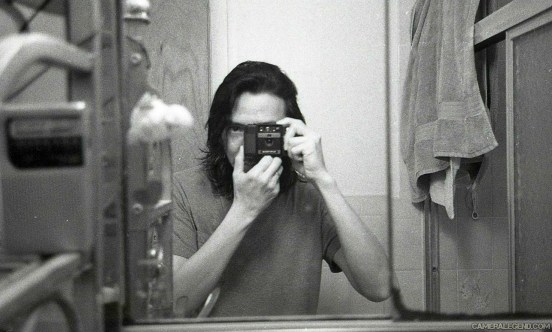
Photo Of The Day: “The Wacky Bunch”

12901527_10208127113367942_6646974305405231931_o

“The Wacky Bunch” 2016. Lomo’Instant Wide, 90mm f/8 lens.

This is a recent photo from the Lomography ‘Instant Wide camera. I reached out to Lomography to see if I could get a sample camera for review, but I never heard back from them. I didn’t expect to, but it would’ve been nice. Fortunately, when you love cameras you usually have friends who do too 🙂

Just some brief general impressions: the camera looks great, but feels less great than it looks. I’ll reserve judgement on its build and durability until I can have more time with it.

The camera relies on zone focusing which isn’t really my thing, but I’ve been pleasantly surprised at the shots I got. The lens is slowish at f/8 and you will be using the built-in flash a lot, but these factors also help to keep the shots sharp.

The lens cap which doubles as a self-timer/remote control is a brilliant touch! That’s what I used to take the shot above after placing the camera on a tripod.

Lomography Instant Wide Camera

The main thing about the Lomo’Instant Wide that appeals to many people (and to me) is that it takes the widely available and larger sized Fuji Instax Wide film, plus it offers a bit more manual control over the picture taking process than any Fuji Instax camera to date.

I have read some reviews on this camera on the net and read many comments about its image quality. I think I have a good idea now of what the lens quality is and I have some thoughts about the Lomo’s  overall image quality, but to be fair I’ll save them until I can take further test shots.

It’s one of the more interesting instant film cameras to have come out in recent years and I hope to get one for a longer period of time. Heck, I might even get one of my own! 🙂

Photo of The Day: “The Lady Of The Harbor”

13575926_10208781107637390_8169234683251568683_o

So another 4th of July has come and gone and indeed the year is more than half done. Is there any way to slow down time short of getting on a spacecraft and cruising at the speed of light? 🙂

I still remember as a kid watching on television America’s “Bicentennial” in 1976. That was a big deal the Bicentennial. Anyone remember that? Gerald Ford was the President of the United States (thanks to reader Kevin Thomas for pointing this out!). You’re telling me that was forty years ago?! Hot damn man!

Anyway, here’s one in the spirit of the 4th of July. I shot this twenty years ago in 1996, the last time I actually visited the Lady. If anything, I hear she looks better than ever!

Any New Yorker knows that you visit the Lady once or twice and then you’re content to see her from afar, i.e., from a bridge, from a boat, etc. Only tourists actually want to go there and brave the long lines 🙂

The gear I was using at that time was the Canon EOS A2E which was a semi-pro/enthusiasts camera, much like the 7D is today. It had a unique feature called “eye control” focusing which is what the “E” in A2E stood for. The camera also had a twin without the eye control feature called the A2 and was also known internationally as the EOS-5.

The camera used technology that followed your eye movements to predict focus. It didn’t work really well for me, but I heard that it was fine for others. I did try it on the EOS-3 later on and it worked much better on that body. Overall though, being somewhat of a traditionalist, I just thought it was a fun gimmick and went back to focusing the “normal” way. Choose focus point, compose, shoot 🙂

The camera was actually quite great to use. Good build quality, speedy and accurate AF. It had one fatal flaw however. That flaw was that the mode dial was prone to breaking rendering it useless. The good news is that it did take a lot of usage for that to happen. Mine happened after about five years of ownership with moderate use.

Canon did repair them at one point, but the cameras are so cheap now it’s just better to grab another one if you really want to try it.

The lens used was an el cheapo EF 75-300mm f/4-5.6 which was a decent, if not great lens. And the film I believe was Kodak Gold as it was my film of choice back in those days.

Ah those were the great days when I got by on one camera and two lenses, far from the gear lust monster I have become today. I always tell anyone starting out, if they have a decent setup like a DSLR or a mirrorless camera, to just stick to what they have and work with it. Of course, they don’t listen and I can’t blame them I guess 🙂

Photo Of The Day: “The Beach”

126201481.u153YzWj.BroniRFZoeBeachPS

Oh yes my friends, Summer is now officially here! If it sound a little late, it’s because I actually started this draft on June 20th! Almost a week late and seven dollars short 🙂

Anyway, this is the time all kids look forward to. Do you remember your summers as a kid? Parents, while they may not happy having the rowdy kids home full time, they too will enjoy the summertime as an excuse to bring their kids somewhere that they too may have wanted to go to.

I used to love summers as a kid, but now as an adult I much prefer the spring time. I don’t really enjoy hot weather and from a photographic perspective, I also think the spring is prettier.

Anyway, this is a shot from 2010 taken with a Bronica RF645, 65mm f/4 Zenzanon lens on Kodak T-Max 400 film and developed in T-Max developer. The Bronica Rangefinder or RF (as most people call it) was one of those cameras that I did not expect to like, but ended up loving.

Why did I not expect to like it? As some of you may know, I love fast lenses. The fastest lenses for the RF start at f/4. Of course, you can still get shallow DOF and that medium format look, but f/4 is still f/4 as fas as light transmission goes and I’m always shooting in less than ideal light conditions.

On this shot however, it was in the late afternoon sun and it was good enough for the Zenzanon lens to do its thing.

Also there aren’t many lenses for this system. You’re limited to about three lenses, I think. Having used a Fuji GA645 before, I also was not fond of the default “portrait” orientation on these cameras even though I do a lot of portraits. I’ve gotten used to tilting the camera vertically when I want to do a portrait.

The Bronco RF645 was made during the period when Tamron owned the company so I’ve always wondered if Tamron made the lenses since they are also a well renowned lens manufacturer. Tamron has always made great lenses, most of which were sharp with a modern look. I was concerned that if Tamron made these lenses, they would be sharp but perhaps lack character.

The only reason I got this camera was because I got a very good deal as part of a trade with a photo forum member. I also remember being impressed with some portraits from this camera from some talented shooters on Flickr. I wouldn’t have bought this camera as an outright purchase, but buying and selling works if you want to try other stuff!

I ended up loving the camera and Zenzanon lens because they gave me that “look” that few cameras deliver consistently. The camera and lens, especially when shot on Kodak T-Max 400 always delivered for me.

To me, the shot above has a good balance of sharp focus and just the right amount of bokeh to show the environment. In this case, you can see the hotels on the left side of the picture, in the bokeh zone. If you look hard enough, you may also just barely make out the famous Wildwoods roller coaster in the far distance to the right of the baby. See how the  Zenzanon lens’ focus “melts” from the foreground to the background without getting too “nervous” like some lenses can get. This was shot on Wildwoods Beach on the Jersey Shore.

While I love super shallow bokeh, it is somewhat overplayed in my opinion. The Bronica RF645 and 65mm f/4 Zenzanon is great for environmental portraits which show your surroundings while still giving a very nice and smooth transition from sharp to soft.

This is one combo that I regret letting go! Well, there are quite a few I regret, but I will say again that this combo gave me very consistent results that I loved. Consistent is the key word here! I have a large print of this image on my wall an it looks just as it does here, maybe even better as details are more apparent.

If funds permit and I can find the right one, I may give it another go in the future. I also plan to do a more in depth review of this camera so keep an eye out if you’re interested in the Bronica RF645.

Thanks for looking and enjoy your Summer weekend everybody!


The Minolta AF-C

SonMinAFCCC

The Minolta AF-C is a compact, autofocus point and shoot 35mm film camera introduced by Minolta in 1983.

The AF-C comes from the late 70s/early 80s era of small, boxy compact cameras such as the Nikon L35AF or Pentax PC35AF, and just like those cameras, it features a fixed 35mm f/2.8 lens.

The camera most closely resembles the Lomo LC-A or Cosina CX-2 and like those cameras, the camera is turned on when you open the sliding cover which protects the lens. Unlike the Lomo or Cosina which rely on scale focusing, the AF-C is an autofocus camera.

THE AF-C CAMERA

As a camera, the Minolta AF-C is completely automatic. It is a point and shoot camera where to take pictures you simply point and shoot 🙂

As I’ve said in previous articles, today’s advanced point and shoot digital cameras can do almost everything. From 4k video to in-camera editing to wifi sharing. Many of these cameras have astonishing lenses, such as the Leica Q, and price tags to match. However, it seems to me that they’ve lost the soul of what it means (or meant) to be a point and shoot camera.

And what is that you might ask? Well, for me, a point and shoot camera has to be simple. It has to be humble; all you need is a good, decently sharp lens, not a lab chart killer with an astronomical price tag. And lastly, it has to be cheap. By having a good/great little lens and not a lens with some “premier” name on it, they can do that.

And they did all this with the Minolta AF-C. It meets all the criteria I stated: Simple, humble, good/great lens, cheap. The lens on the AF-C is a 35mm f/2.8 Minolta lens and it is a very good, even excellent one. There is no “Rokkor” or “Rokkor G” designation on the lens, so it has no pretenses of being anything more than it is 🙂

The lens is a 6 elements/6 group design and has an aperture range of f/2.8 to f/17 and again, all automatically chosen by the camera.

Don’t let any “premium” designation fool you. It’s not that hard for any decent camera/lens manufacturer to make a great 35mm f/2.8 lens so it’s not necessary that it be expensive. I’ve used the Nikon 35ti and it’s a better looking camera, but I do not think the Minolta lens on the AF-C gives up anything to the 35ti.

The Minolta AF-C relies on active infrared autofocus. There is no way to manual focus this camera, so tinkerers and gadgeteers get that out of your mind.

If you want some control of the camera, it will let you wind/rewind it using a thumbwheel on the rear of the camera. The camera has no autowind/rewind function. Additionally, you can adjust the ISO in 1/3 values.

The Minolta AF-C runs on four SR44 or LR44 button batteries or two CR1/3N batteries. I used the cheaper 675 hearing aid batteries bought at CVS and they worked fine, no exposure problems.

PERFORMANCE

The Minolta AF-C is small and compact, perhaps not as small as many of today’s digital point and shoot cameras, but still pocketable as long as you don’t have the accessory flash attached.

13307426_10208561580469348_5066008620393003786_n

“Princess Of Messy” 2016. Minolta AF-C, Ilford Delta 400, D76 developer. This is a crop from a larger picture. The AF-C displays good sharpness despite the film grain.

The AF-C has two leds in the viewfinder. The green light, which indicates correct focus and the red light, which is a low light warning.

When shooting with the AF-C, the autofocus is so quiet, I wasn’t sure the camera was working properly, whether it was actually focusing at all. But knowledge is power and I have read before acquiring one that this is exactly how the camera focuses and you simply have to learn to trust it.

MinBearAFCC

“Redrum” 2016. Minolta AF-C, Ilford Delta 400, D76 developer. Check out the nice contrast and range of b&w tones. It seems no one is safe from harm in NYC! Ouch, love hurts! 🙂

When I developed my first roll, any fears I had were laid to rest. Indeed, the majority of the time, the camera achieved correct focus. The shots that had blurriness were due to movement and the camera correctly choosing slow shutter speeds in low light (something I have a habit of doing to challenge my cameras and myself).

Even better was that nearly every shot on the roll was correctly exposed. Not surprising for me as I’ve always known Minoltas to provide excellent metering.

MinNYCFunk

“That Funky Building” 2016. Minolta AF-C, Alford Delta 400, D76 developer. This is the IAC (InterActive Corp building) as seen from NYC’s West Side Highway. This has always been an intrigueing eye sore for me whenever I see it.

BOTTOM LINE

The Minolta AF-C is a brilliant example of beauty and simplicity that represents the best of the early 1980s era of compact autofocus cameras.

MinSamAFCC

“The Evil Camera Boy” 2016. Minolta AF-C, Ilford Delta 400, D76 developer. He’s evil and he loves cameras. The Evil Camera Boy is back! 🙂

It delivers excellent results most of the time under the right conditions. I guess you could see the slick caveat right there “under the right conditions.” What does that mean? That means if you use the camera as it was intended, the right amount of light, the right film, flash if necessary, then the camera will generally deliver excellent results. If you try to challenge it too much, i.e., low light, slow film, you might get less than excellent results 🙂

I read somewhere that it was thought of as the ultimate film street camera by some European magazine and I can’t disagree. While some will of course refer to the Ricoh GR-1 (which I love and have reviewed here) as the “Ultimate” I have to say the AF-C betters it in some ways. The AF is much quieter and the manual winding and rewind  makes it even quieter still, both of which are benefits for unobtrusive shooting.

The Minolta AF-C takes you back to a time when “point and shoot” cameras were point and shoot cameras. Give it a little love and faith and this little camera will produce. Today, the AF-C enjoys a cult following among camera lovers, but is largely forgotten by the masses as are many of its peers. But should you come across one, get it because you will have in your hands a point and shoot Camera Legend that will deliver the goods without a lot of fuss or headaches.

WHERE TO BUY?

If seeking one of these, prices are trending at $20 to $100, with $100 being a bit on the high end. The most abundant place for the Minolta AF-C is obviously eBay.

However, you may also find them in flea markets, garage sales, and Craigslist. If you’re lucky, you may even find one for $5 or maybe free 🙂

***NEW CAMERA ALERT***

The hot new 24mp APS-C AA-less Pentax K-70 is now available for pre-order.

Pentax appears to be really upping the ante with their hot pro K-1 and now the K-70. We will keep an eye on this new Pentax, but just from the specs it appears to be an awesome new camera!


The Worst Cameras Of All Time Part I: The Nikon N70

SonNikonN70C

The Nikon N70 film camera of 1994.

In this new series, we will take a look at cameras that somehow didn’t make the cut, but beyond just that, they had something about them or their design that made them less than pleasurable to use.

What separates this from “The Best Camera I Never Knew” series? I don’t know, it’s a thin line between love and hate as the song says! 🙂

First up…

THE NIKON N70 CAMERA

The Nikon N70 (also known as the F70 overseas) is a 35mm SLR film camera introduced by Nikon in 1994.

At the time, it was Nikon’s top enthusiast model. Indeed, I think this camera set the stage for future “Number 7”  enthusiast’s models from Nikon, such as the Nikon D70/D70s digital slr of 2004, the pro/semi-pro D700 full-frame DSLR of 2008 and the D7000 of 2010, just to name a few as the “7” naming scheme continues to this day with Nikon.

As a camera, the N70 is an autofocus film camera which offers a shutter speed range of 30 seconds to 1/4000 plus bulb. The camera has a built in drive capable of 3.7 fps in high speed mode. It has matrix, center-weighted, and spot metering.

The camera is powered by two CR123A batteries.

MY RECOLLECTION OF THE N70

I got one of these in 1995 and I remember being smitten by this new toy. It came at a time when my interest in photography had been renewed after using my Minolta X-700 for ten years previously.

The N70 looked and felt nice and feels good in the hand. But that’s where it all ends, ergonomically.

The N70’s claim to fame was its unique “fan” wheel of sorts. It is actually a control panel that has become known as the FAN. But this is also its achilles heel. Now before any N70 fans (yes, there are some) out there start bashing me, I will say that once you do get the hang of the FAN it works pretty well and some like it.

SonNikonN70CS

The Nikon N70 is distinguished or perhaps cursed by its very unique, very funky electronic FAN control panel. Once you can figure it out, it will “allow” you to take good pictures 🙂

I remember being very happy with the results. The camera provided speedy AF and seemed to deliver perfect or near perfect exposures.

So why do I appear to be bashing it now? It all comes down to, once again, that FAN my friends!

Ok, yes, in 1994 I was twenty-two years younger and enjoyed fiddling around with electronic gadgetry trying to figure out how to work this camera. In 2016, I am twenty-two years older and have very little patience to try and figure this camera out again. Ok, that’s not the camera’s fault 🙂

And more so today, when you can get a camera like the Nikon N90s from the same era or even the older N8008s for the same price, anyone actually wanting to use the N70 I think has too much time on their hands!

I could try to break down how to use this “fan” shaped thingy, but that would take way too much time and I’d have to write a whole book on it!

BOTTOM LINE

Ok, it’s not the worst camera ever, I will give it that. It delivers great results, I will give it that.

I think the Nikon N70 came at a time when Nikon was facing some very strong competition from Canon’s all electronic EOS series and they allowed its designers some very liberal creative freedoms.

As I said a few times before (as in my Rollei A110 and Rollei Rolleimatic reviews), being creative is a good thing, but being too creative might not be such a good thing. And this time, I can’t even blame it on Heinz Waaske!

Nikon is known for cameras with great ergonomics that are easy to use and quick to figure out. This is one of the reasons pros love Nikons. The N70 is radically different from any Nikon economically. Its design was never seen before or since, which makes me think that even Nikon knew it was too funky!

I’ve said many times, one of my prerequisites for a good camera is a camera that you can figure out how to use without an instruction manual. Maybe not for everything, but for at least 80 to 90 percent of its functions. You will need a manual if you want to figure out all  the Nikon N70/F70 can do. That says everything!

The Nikon N70 is a camera that actually will allow its users, indeed reward its users with the ability to take a picture once you can figure it out. For that “FAN” design alone, I would call it a Camera Legend, but maybe not in a good way 🙂

It is one of my contenders for the “Worst Camera Of All Time” and indeed, it might be the worst designed Nikon ever, but being that I have a soft spot for Nikons, I don’t think it’s the worst camera I’ve ever used.

If you like funky cameras, you can’t do much better than a Nikon N70. Buy one if only for that FAN! 🙂

WHERE TO BUY?

If seeking one of these to use, and again I’m repeating to use, I’m not sure that’s a good idea, but prices are very good! They go anywhere from “free” to $50.

I recently picked up one for nostalgia’s sake for $3 dollars. I don’t intend to use it. I just marvel at the FAN 🙂

If you want one to use, you may find a good selection HERE.

***DEAL ALERT***

There are some great deals going on now on CANON gear. Interesting to me is the hot new Canon EF-M 28mm f/3.5 macro for the EOS-M series with built in ring-light! This is one lens that I’m interested in getting for myself. Check it out in the links for great deals and prices.

SPECIAL NOTE

I would like to apologize to my fellow bloggers and readers of this site. I know I come on sporadically and I know it’s slowed down quite a bit.

The truth of the matter is that I never meant this to be a daily blog. I wanted this to be a long term project, which is what it is. When writing about Camera Legends like the Polaroid 180 or the Canon T90 or the Nikon F5, for example, I realize this information will be out on the internet for a long time and with that in mind, I try to take care on what I write and what I say.

As the body of articles build up, these pages become more like a book on cameras, which is closer to my original goal.

I do want to thank the small, but loyal folks and friends who read this blog. I do this blog for me, and I do it for you too. Thanks 🙂


Tuesday Titans: The Polaroid 180 Land Camera

photo copy

“Cat’s Meow” 2016. The Polaroid 180 Land Camera with Portrait Lens kit attached, is an instant film Camera Legend and to me, the Cat’s Meow! 🙂

I was debating to myself whether this camera belongs in the “Tuesday Titans” series. Half of my mind says no, but the other half says, well, this IS a rather big and awkward camera to use, once unfolded out of its protective shell. However, it is not heavy, where most of the Titans reviewed before are. Ah well, what’s done is done I guess.

I’ve wanted one of these for a long time. I’ve played with them, seen prints from them, but never owned one till recently.

I got one through a trade deal which involved me getting rid of some digital gear and a lens. Now it would seem perplexing, maybe even dumb to get rid of digital gear which I could use for a long time for an instant film camera whose main “food” is the recently discontinued Fuji FP-100C, which was the last remaining production instant packfilm made.

But most of you who follow this blog already know I have a habit of doing things that you, nor I, would ever expect. Not that this is something to brag about, it’s just the way I do things.

THE POLAROID 180 LAND CAMERA BODY

The Polaroid 180 is much like other Land Cameras that came before it. It’s a simple but delicate mix. The bellows is probably the most delicate part of these cameras.

I used a Polaroid 360 that was given to me by a friend in college many years back, but I never really liked it. The fiddly operation, the slow f/8.8 lens was disadventageous to me as someone used to 35mm, medium format, and digital cameras.

Plus I have to admit, I was never a huge fan of the Polaroid lo-fi look. I think it only works well for certain subjects, and for a select group of artists of which I am not one of them.

I started enjoying instant cameras more in the late 2000’s when I got myself reacquainted with the medium through the Polaroid 600SE which is probably one of, if not the most desirable packfilm cameras. I really enjoyed the prints I got with this camera and Fuji FP-3000B, also now discontinued.

The Polaroid 180 is also very high on the list of desirable Polaroid cameras. The camera body is genuine Polaroid unlike the 600SE which is really a Mamiya Universal clone, but with an incompatible lens mount to the 600SE.

The 114 f/4.5 Tominon lens on the 180 however was made by Tomoika of Japan. It is roughly the equivalent of a 35mm lens on  full frame camera. At f/4.5 the lens is one of the fastest available for instant packfilm cameras. Only the f/3.8 Tominon on the Polaroid 190 and 195 is faster. Needless to say these lenses are still no f/1.2 speed demons, but in the Polaroid world of f/8 and up, yes these lenses are “fast.”

While many see the 195 as the highest model, I prefer the 180 due to its integrated rangefinder and Zeiss finder. The 195 has separate viewfinder and rangefinder windows, much like the old Leica screw mount cameras, which to me makes it more inconvenient, certainly less speedy to use although I’ve heard some people say they prefer the 195’s arrangement because framing may be more accurate.

The 190 is probably the ultimate because it combines the 180’s finder with the 195’s faster lens.

All these cameras are fully manual and do not need a battery conversion, which a camera like the heretofore mentioned 360 Land Camera does.

The 180 offers aperture settings from wide open at f/4.5 to f/90, shutter speeds from 1 second to 1/500 plus bulb. There is a lever near the lens for M (bulb), X (flash), and V (self-timer).

IN USE AND ISSUES

As mentioned earlier, the 180, while well built has a bit of a delicate feel, but this is due to the nature of the beast, as with many folding cameras. To open the camera, you need to pull out and extend the top “arm” until it makes a noticeable click. You need to be careful not to poke or damage the bellows in any way or you will have light leaks.

The Polaroid 180 uses rangefinder focus and many of you are probably familiar with this, but for those who are not, you simply move the sliding focus bars on the camera until the image in the center is aligned to achieve focus. You cannot focus by physically moving the lens on this camera.

Especially if buying from eBay, you should right away upon receiving the camera, check the overall structure of the camera to ensure that there is no physical damage. Next check the rangefinder and see if it’s aligned. It should give you a good idea, although the real test is with some film in the camera. Check the aperture and shutter speeds, make sure they’re working properly. And check that bellows for any pits, holes, or wrinkles.

It’s a simple camera to use, although somewhat awkward at first if you’re not familiar with the Land Cameras.

As I completely forgot about the way these cameras worked, I lost a couple of shots due to film jamming in the camera back. That seems to be the main issue with this camera. If you run into this issue, this remedy works nearly all the time…

After you take a shot and pull the film tab, if there is a lot of tension, do not force it or you will most likely break the tab and lose the first and/or second shot. Instead, if you pull hard and it does not seem to be moving, open the bottom of the camera very slightly, then pull again until you feel it move. Once you do feel that movement, close the back again and pull until the film comes out. You need to close the back because the film has to come out through the rollers to “distribute” the chemicals that will develop the film.

Do not be afraid that you will ruin the film by opening the back slightly. If you do it right, there won’t be any issues. Admittedly, this requires some practice so be ready to lose a few shots. I know it’s not easy as packfilm is now so expensive! For extra safety measures, you can try to do this in the dark or subdued light if you’re really worried, but I’ve done it in daylight with no light leaks or film fogging.

The problem with film jamming apparently has to do with the metal clips inside the film back putting so much tension on the plastic that Fuji’s packfilms are encased in. Some have had success by pushing the clips in and in some cases, completely removing the clips. I really didn’t want to butcher the camera.

Also, when pulling out the film, I prefer to collapse the bellows back into the camera before proceeding as it keeps the bellows safe during a potentially “violent” experience of pulling out that film 🙂

A good practice is to clean the rollers with a napkin before loading each pack of film. No need for super wet cloth, just a dry or slightly damped napkin will do. This should keep film coming out smoothly.

When folded, the camera is very compact for a camera of this size, and it’s not a heavy camera the way the 600SE is.

IMAGE QUALITY

I’ve been shooting the 180 with expired FP-3000B. I have yet to put FP-100C in it. I find the lens quality of the Tominon to wonderful for what I want, probably very good to excellent if you want a more magazine friendly description.

photo copy 2

“Baby Is Here” 2016. Polaroid 180 Land Camera, 114mm f/4.5 Tominon wide open. I did add contrast to this image, perhaps too much. The original image is of much lower contrast, but this is just to give you an idea of how you can adjust contrast to your tastes.

The lens has a good soft/sharp quality wide open and becomes very sharp as you stop down, as with most lenses.

The Tominon seems to have lower contrast than many of you may want, especially when compared to modern lenses, but this actually works very well for black and white images. Plus you can always add more contrast during your post processing workflow if you’re planning on posting your images online or just like a higher contrast look.

The results on FP-3000B have that classic look that I’m a big fan of. Again, this may not be everyone’s cup of tea, but I fell in love with photography by seeing black and white prints from my parents photo albums back in the 70s and 80s and a camera like the Polaroid 180 is capable of giving me that look straight from the camera.

BOTTOM LINE

Why did I get rid of digital gear for the Polaroid 180 which could be a camera living on borrowed time? Because I have other digital gear which makes it redundant.

Plus, I have hope that even if packfilm goes extinct, these cameras are too good not to have someone come up with something to keep them running.

As many of you know, Impossible film’s co-founder Mr. Florian Kaps (who is no longer with the company) recently met with Fujifilm’s representatives in Japan trying to save Fuji FP-100C. While I don’t believe there is a definitive answer yet, I’m not really holding out for Fuji. I thinking of new companies and new films for the future.

The Polaroid 180 Land Camera is an instant film Camera Legend and as I said, this camera is too good to let die.

Just like the innovative Cubans who drive around in classic American cars of the 50s and 60s, I do believe someone will come along with a solution to keep these cameras running. Whether it’s new packfilm or modifying them for convenient use with Instax film, I believe it may take some time, but it’s going to happen. Fingers crossed, of course! 🙂

WHERE TO BUY

If seeking one of these prices are trending on eBay at $200-600, with $600 being on the high end, and $300 being average. On the low end of the price spectrum, it seems to be for body only. On the high end, it seems to be the complete kit with the add on portrait and close-up lenses, plus case and extras. I’m talking about a genuine Polaroid 180 Land Camera, not one of the many modified “tribute” clones you see on eBay.

The most abundant place for these cameras is eBay. You may also find them from time to time HERE.

The gear I traded for this camera comes down to under $300, and for that price I got the whole shebang, portrait/close-up lenses, case, so I’m very happy with this trade. I could easily make this money back if and when I sell it.

But make no mistake, this is not an easy camera to sell as it serves a niche, but very dedicated market. I know of camera dealers who slashed prices on these cameras the week that Fuji discontinued FP-100C film. On anonymous dealer told me: “It’s very hard to sell a camera that they don’t make film for.”

So unless you’re foolish and a hopeless romantic like me, this is actually a very good time to SELL your Polaroid 180. Even as I hold out for hope, there is still the very real possibility that there will be no film left for these cameras in the not so distant future.

If that happens, well, I got my stock of packfilm and I will use it with reserve until it finishes. That means no test shots of brick walls, no focus test on trees or nearby buildings. I will most likely use the camera for portraits of my kids because they are my most precious gifts in life and I would like them to someday look back on these prints and know their images were made on something classic and historic and hopefully relive the magic of instant photography. And if you’ve got one of these babies, don’t forget to stock up on that film before it’s all gone!


The Fuji Instax Mini 90 Neo Classic

InstaxC

The Instax Mini 90 Neo Classic is an instant film camera introduced by Fujifilm in 2013. The Mini 90 Neo Classic uses Fuji’s Instax Mini film.

I first saw the Mini 90 or Neo Classic (whichever short name you want to use) at its introduction at the PhotoPlus Expo in the fall of 2013. After seeing it in the flesh and speaking with the nice Fuji representative, I knew I had to have one! What I didn’t think of was why? But we’ll get to that later on.

I got one as soon as they were released in 2013 and at Urban Outfitters of all places.

THE INSTAX MINI 90 CAMERA BODY

Upon first glance, you can see why Fuji named this camera “Neo Classic.” It really looks like an instant classic, literally and figuratively! It looks beautiful.

Upon first touch, your feelings may change a bit. Now here’s a camera that I would say looks better than it feels. It feels lighter and I don’t know how to say this nicely, but it feels “cheaper” than it looks. Maybe it’s better to say, it looks like a metal camera of yore, but feels like a plastic camera. It doesn’t feel like a cheap camera, but as I said, cheaper than it looks.

The Mini 90 has a very smooth power on. With the flick of the little switch, the lens protrudes very smoothly and quietly. I just love the way it works. The only negative might be that it’s very easy to hit the switch accidentally so be mindful of this if you have the camera in your bag of goodies.

Like most instant cameras, the Mini 90 has a slow 60mm f/12.7 lens making it hard to not use flash indoors or get any kind of bokeh unless you get really close. Fortunately, the camera has a built in macro mode which lets you get as close as around 11 inches from the subject.

The Mini 90 is probably the most full-featured of the current Instax camera line. In addition to the built in macro mode, it offers a stronger flash, the ability to turn off the flash (not available in some other Instax models), double exposure, bulb, brightness adjustment, kids mode (for moving subjects), party mode (brightens the background), and landscape mode.

For the most part, this is an automatic camera. You cannot control the aperture or shutter speed, except for bulb. Keep that in mind and feel good knowing that the camera generally produces good results without your help 🙂

IMAGE QUALITY

The image quality coming out of the Mini 90 and Fuji’s Instax Mini film is generally excellent. But here’s the pun…it is excellent for what it is.

12495092_10208121118098064_15376029093850989_n

“Cheeri-O” 2016. Fuji Instax Mini 90 Neo Classic. Macro mode used to get in closer for a more effective portrait. Baby Zay believes in the power of a good breakfast. She starts her day off with a healthy dose of Cheerios and works her way up from there 🙂

Remember when I wondered WHY I got one? Well, my main issue is with Instax Mini film in general. The 2.13″ x 3.4″ credit card sized prints are just a little too small for me to really enjoy.

IM90SZC

“Vanilla Fudge” 2016. If you’re a fan of that old vintage look, you can do it with the Instax Mini 90 Neo Classic. This was taken recently, but it looks almost like a print from the 70s!

That said, I think that’s kind of the whole point of it. It’s supposed to be small and fun, not some kind of “artistic” tool that we photographers always think we need. But sure, you can definitely put your artistic twist to the pics as with any camera. Me, I just use it as a point and shoot instant film camera for family fun snapshots. It is superb for that purpose.

1017530_10202304147717440_345656896_n

“Beauty & The Beast” Part II, 2013. One of my first shots from the Mini 90 Neo Classic. It wasn’t going to win me any awards, but I knew it was going to be a fun camera 🙂

All Instax Mini film at this time is ISO 800. There is also an Instax Wide format film which at 3.4″ x 4.25″ is more to my liking and closer to the size of packfilm. Unfortunately, Fuji does not make a camera currently in this format that is as sophisticated, spec wise, as the Mini 90 Neo Classic.

I find the Instax film to be very consistent, maybe clinical at times, but very consistent in color and stability. I cannot say the same for the Impossible film that I have used.

BOTTOM LINE

In the age of digital, analog photographers should be very happy with the success of the Instax Mini line of cameras. They are so popular that you can find them almost anywhere, from Target to Toys ‘R Us. I read somewhere that Fujifilm’s latest financial release apparently shows Instax sales growing, while digital sales have stalled or are declining. Don’t quote me on this, but do some research if you’re interested.

The funny thing is, while so many photographers (myself included) were raging over the discontinuation of Fuji’s FP-100C instant packfilm, there’s a general consensus that the Instax line is not as well loved by seasoned photographers.

Why? Well, camera selection is one thing to be sure. As I said, there aren’t many models, if any at all, designed for the photo enthusiast.

The second reason, and this is my own personal take, is that people just love retro and hard to find stuff man! The Instax cameras are not rare and they are widely available. People may cross it off their list for that reason alone.

As I said, people just love retro. In fact, it’s probably the Mini 90’s retro looks that caught my attention in the first place.

But yeah, people. You give them a high quality audio CD and they will find that the scratchy analog records sound better. You give them a modern car with all the amenities and they will say, “They don’t build ’em like they used to.” You give them 42 megs and the ease of digital, and they’ll want to shoot an old film camera and deal with the hassles of development and scanning dusty, scratchy negatives.

Sure, I’m being a little sarcastic, but not really because I am also one of those “nostalgic” folks 🙂

Anyway, again, I think all analog photography lovers should really be glad that Fuji is still even making instant cameras and instant film.

If you can live with the small sized prints, the Mini 90 Neo Classic is truly a wonderful instant camera that is full featured and fun to use. I do believe it will be a classic, and who knows, maybe one day a Camera Legend.

WHERE TO BUY

The great thing about Fuji’s Instax Mini cameras is that they are very easy on the wallet. Even the Mini 90 Neo Classic runs close to $150 new and around $90-100 used. For the small difference, I’d say just save your pennies and buy new unless you can get one for $50.

For a good selection, you may try HERE and HERE. Thanks for supporting CameraLegend.com!

***DEAL ALERT***

For you Canonites, we have a really nice deal on a Canon EOS 5D Mark III bundle from our friends at ADORAMA. Here’s what you get:

Bundle includes:

Canon Speedlite 430EX II Flash, USA,
Canon EOS 5D Mark III DSLR Camera Body with EF 24-105mm f/4 Lens
Canon PIXMA PRO-100 Professional Photo Inkjet Printer
Canon SG-201 Photo Paper Plus Semi-Gloss, 13×19″, 50 Sheets
Lowepro Nova Sport 17L AW Shoulder Bag, Slate Gray
Sandisk Extreme 32GB microSDHC Class 10 UHS-I Memory Card -BULK IN JEWEL CASE

Damn, that looks like a killer package! If you were wanting to get into the professional photography business, ie, portraits, weddings, etc, or you just want the complete package and you have the cash to spend, this is it!

The Vivitar Ultra Wide & Slim Film Camera

UWSPic

The Vivitar Ultra Wide & Slim and its virtual clone, the Superheadz Yellow Peace. Cult camera favorites of toy camera fanatics.

The Vivitar Ultra Wide & Slim is 35mm point and shoot film camera made by Sunpet Industries of China and distributed by Vivitar under their own name. The camera has an almost exact clone from Superheadz in different colors and different nicknames.

The actual year of manufacture is unknown or undocumented. At least, I cannot find it in my research. I suspect it was made in the 1990s or late 1980s.

The Ultra Wide & Slim is an all plastic camera with a plastic lens and low quality build. However, the camera has achieved cult camera popularity primarily due to its 22mm f/11 “Ultra Wide” lens which is unusual for a fixed focus point and shoot, even today.

As a camera, the Vivitar “UWS” has only one aperture, f/11 and only one shutter speed, 1/125. This makes it primarily usable as a daylight camera using higher speed film.

This was and is intended to be a cheap camera. However, the camera has become very popular with the toy camera, Holga, Lomography, etc, crowd for whom lens distortion, light leaks, and imperfect photos are much desired.

If you love cameras as much as I do, you’re bound to collect some cameras that you have yet to use. This is one (or two) of them!

Actually, I did get a roll of film through the Superheadz but when I developed the film the whole roll came out black. I’m not ashamed to admit that it was probably my mistake in development. I added too much water to Ilford ID-11 which is not a developer I use often, though some say D76 (which I have used often) is the same. However, I’m can’t be 100 percent sure if it was me or the camera so I will try again.

Any camera with a 22mm lens is bound to give you some very dynamic looking photos and I don’t mind the flaws, especially for the price. If you know what to expect, you won’t be disappointed.

If seeking one of these, prices used to be very cheap, but now is trending at $25-50 for the Vivitar in used condition, and from $24-60 for the Superheadz version, price dependent on the model and seller. For example, the black version called the “Slim Devil” runs near $40 from most sellers. You may find a good selection of the Superheadz version HERE.

I got my Vivitar on eBay for under $10 and paid $25 new for my “Yellow Peace” Superheadz clone. These cameras probably cost a few bucks to make, so even buying it for $25 is probably too much in principle. But since we don’t make these cameras (and no one else does) we have no choice 🙂

Don’t go too crazy with these cameras. As I said, they were intended to be cheap and fun cameras, but now some may argue that they are Camera Legends in the toy camera department. Take that out of your head, they ARE cheap cameras. Try to find one cheap! 🙂

***DEAL ALERT***

One great thing about Spring, other than the weather, are all the photographic deals going on. Some great deals and savings on Nikon Lenses are going on right now. If you’re going to buy, please buy through the link and help support this site. I greatly appreciate it, thanks!

Fujifilm Instax Mini Instant Film, 10 Sheets x 5 packs

Olympus has a very cool Trade Up program where you can trade in virtually any used camera and get monetary value towards the purchase of new Olympus gear including the OM-D series and the awesome new Pen cameras.

The Fuji FP-100C Discontinued: The End Of Pack Film

imgPolaroid110BZoeC016

“Peace” 2012. Polaroid 110B converted for pack film, 127mm f/4.7 Ysarex, Fuji FP-100C.

Periodically, I go through periods where I need a mental break from it all. I’m sure there’s more than a few of you who feel the same if you’ve been blogging or posting photos on the internet for some time. “C-B-R” I call it. Crash. Burn. Rise (or try to rise) again 🙂

As mentioned before, putting up a blog with any kind of quality content takes effort and I would rather not post unless I could put up something interesting for you.

Anyway, almost two weeks ago it was announced that Fujifilm would be discontinuing the FP-100C, the last commercially produced 3.25×4.25″ peel-apart pack film. The announcement caused a bit of an uproar in the film community.

The discontinuation of this film has more implications than it first seems. It goes without saying that those who truly enjoy pack film and use it regularly will be most affected. But they are not the only ones affected. With no more pack film, here are just some of the after effects:

  1. People who ever wanted to try a “Polaroid Back” with their film camera will be affected when there is no more pack film because virtually all Polaroid backs, especially for medium format systems, take the 3.25×4.25″ peel apart films. And for the Polaroid backs that do not take this film, such as the 545 backs, film is virtually non-existent, except for really old batches sold on eBay or the cool, but expensive New55 films.
  2. The announcement rendered all Polaroid Land cameras and any other camera that takes this film useless. Well, not really useless right now, but living on borrowed time.
  3. People who make a living selling pack film photos on the streets or at fairs, events, etc, will be affected. Admittedly, there are more people these days shooting with a digital camera and a portable digital printer than there are those using pack film, but I do know a couple of really cool photographers whose unique work was directly a result of shooting with vintage cameras and instant pack film, and some who even make a living from this.
  4. Folks who, over the years, have resurrected vintage Polaroid cameras and have made a living restoring and modifying old Polaroid cameras to take pack film. There was a good market for this, just check eBay. They will definitely be affected by this. Some of these people have started converting cameras to use Instax film, but they’re just beginning. I hope they will continue and wish them success with this.

The surprising thing about Fuji’s discontinuation? Well, from all accounts Fuji’s own line of Instax instant cameras and film are booming! These instant cameras are incredibly popular and according to some accounts, making a better profit over Fuji’s own line of renowned digital cameras.

I’ve read people saying maybe Fuji did not want the pack film market to compete or hinder the sales of Instax cameras so they discontinued the FP-100C. This however doesn’t make sense because Fuji had no competition. There was no other company left that was making pack film.

So why not just shoot Instax? Because at this time, there are no Instax cameras that offer decent manual/advanced user capabilities. Actually, there is the Lomo Instant Wide which takes Instax Wide film and offers more manual controls than what Fuji is offering, but reports on this camera are mixed. I hope to get one for review in the near future. However, so far none of these Instax cameras have anything like the great Tominon lenses on the Polaroid 180/195 Land cameras or the Ysarex lens on the Polaroid 110A and 110B.

MY EXPERIENCES WITH PACK FILM

Personally, as an available light and night shooter, I much preferred the Fuji FP-3000B, the amazing ISO 3000 black and white version. It was amazingly sharp with beautiful tones. Sadly, this film was discontinued in 2013, but can still be found albeit at ridiculous prices.

For the FP-100C, I find my best results outdoors with plenty of sunlight. The FP-100C needs lots of light. If you have a studio setup, it’s cool, but I’m an available light shooter. I could and have done portraits with flash, but for those Polaroid “party” shots with flash, I’d just prefer to shoot with a One Step.

The great thing with Fuji’s peel apart instant film is that you get two images for the price: an instant print and a negative which you can reclaim through scanning or a bleaching process.

12507240_10207518823561077_5350476564941216045_n

“Friend” 2009. Polaroid 600SE, 127mm f/4.7 lens, FP-3000B scanned negative side.

Not all is rosy with pack film though. I’ve had issues with broken tabs, film jamming and losing the first couple of shots and sometimes, the whole pack which makes you feel really lousy because these films have become really expensive.

At its best, it’s an awesome feeling because there’s nothing like seeing an instant print develop before your eyes. And with the right camera/lens combo, you can get really excellent pics that can’t quite be duplicated digitally, even with the best “film” filters. At its worst, the film jamming, the underexposed shots, the expense, the gunk, it sometimes makes me say, why bother?

PRICE AND AVAILABILITY

As soon as Fuji announced FP-100C’s discontinuation, the price gouging began. The film was selling for around $10 earlier, all of a sudden it went up to $14.99, then $18.99, now $24 and even over $30 in some places.

This is nuts and capitalism at its best, or worst. Strange thing is that the film was never out of stock whenever I looked, before the announcement. Now, it’s out of stock in most places. I know what you’re saying, supply and demand.

People are panicking. But I look at it this way. The Fuji FP-3000C was discontinued in 2013, but you can still find it even today on B&H, albeit at about three times the price before it was discontinued. Surely, once the entire stock is gone, it’s gone. But apparently Fuji had enough stock that, three years later, is still being sold.

Hopefully, Fuji made enough stock of FP-100C to last us a few more years.

THE BITTER END

In Fuji’s press release, they cited declining sales as the reason for discontinuing the film. This is the only thing that makes sense. Fujifilm is a business after all and just like all businesses they’re here to make money, not to appease a niche market of enthusiasts. Perhaps it cost more to produce the film and maintain the equipment that makes the film than they saw worthy.

Ironically, it is this niche market of old film cameras that Fuji borrowed the analog styling for its very successful line of retro styled digital cameras.

There are online petitions to save the Fuji FP-100C with thousands signed. The same was done when the FP-3000B was discontinued in 2013, it yielded no results. I expect the same here.

12764683_10207745492307654_8311477229874032163_o

“Mini Me” 2016. Pentax 6×7, 105mm f/2.4 Takumar, Fuji FP-3000B.

Some have wondered in the Impossible Project may take up this opportunity and buy out Fuji’s equipment to continue making pack film. I certainly hope they could. They really did do the impossible with Polaroid 600 and SX-70 film and I applaud their efforts. However, I personally feel that they won’t because they are probably already stretched thin as it is, although if any company can do the “impossible” they can!

Fujifilm has always been a different breed and have always made cameras, films, and decisions that were different and often unique. This time, sadly, they did what any corporate business would do and I think all analog photographers have lost something special because of it.


Tuesday Titans: The Contax AX Film Camera

ConAXCC

The Contax AX. A camera that could “autofocus” manual focus lenses. Totally unique, but it didn’t always work well. Note the tripod attachment on the very bottom is not an original part of the camera.

Today, I present to you good readers a double whammy:

“Tuesday Titans” and “The Best Camera I Never Knew” and the recipient of this honor is the legendary Contax AX 🙂

THE CONTAX AX

The Contax AX is a 35mm single lens reflex film camera introduced by Kyocera in 1996. At the time of its introduction, the AX made camera headlines due to its unique ability to autofocus manual focus lenses.

Although probably more technical than this, in a nutshell, AF was achieved by moving the film plane, the distance from lens to film. The official company description of this was “Automatic Back Focusing.” This was a remarkable achievement and still something unmatched in the camera world today.

THE CONTAX AX BODY

The Contax AX is a big, bulky, OX of a camera! The extra bulk was needed to accommodate the mechanism that would drive the film plane to focus.

The camera feels well built, sturdy, and again, bulky. Like most Kyocera made Contax SLR cameras, it gives the feel and impression of quality.

Ergonomically, the AX is pure Contax. That is, controls are well placed with knobs and dials, things I really like on a camera.

On the left top plate you have a mode shifter for AV/TV/P/M/X/B and the shutter speed dial which runs from 4s to 1/4000. Also on the left is where you can change ISO values as well as play around with the cameras Custom Functions. I can’t remember these off hand, but I think the only one I used was the function to leave the film leader out.

On the top right plate of the camera you have the on/off switch, the film counter lcd, the exposure compensation dial, the focus switch which includes macro, manual focus, continuous, single af. Also on the right is a dial for drive, i.e., single shot, continuous, even double exposure.

Again, all these are on switches, knobs and dials that are well labeled which I really love on a camera.

WHY IT DIDN’T JIVE WITH ME?

I tried two of these. The problem? Well, the first one I got couldn’t autofocus to save my life! It would just rack back and forth. Then it would get close, but seemingly give up. I sent that one back. I eventually got another one and it did autofocus…when it felt like it 🙂

Actually, I’m being unfair. Maybe not. Anyway, it did autofocus, and when it did, I got some nice shots. However, the AF was very fidgety. On certain targets, it would be great, but in general, the AF was inconsistent. It would rack back and forth, sometimes never getting the focus, even on easy targets. Sometimes it would be so out of focus and give up. Pre-focusing the lens seemed to help, but again, it wasn’t consistent.

The autofocus was also somewhat slow, but that’s to be expected and I’m not blaming the camera for that. You have to remember this was a camera that was attempting to autofocus manual focus lenses.

ConAXJPBabyI305

“Olympians” 2011. Contax AX, 50mm f/1.4 Zeiss Planar lens, Kodak Tri-X 400 developed in HC-110. When the AX managed to focus, it focused well, but it was inconsistent. Shooting in daylight seemed to help.

And speaking of manual focus, you can do that with the AX and if you use the camera that way, it’s a pleasure to use, but maybe not to carry around due to its bulk.

ConAXZoe304

“Fix My Hair” 2012. Contax AX, 50mm f/1.4 Zeiss Planar, Kodak T-Max 400 in HC-110. Aside from trying to capture the moment, I was actually testing the autofocus system on the AX. The problem is that, with the AX, I always seemed to have to be “testing” it 🙂


BOTTOM LINE

So why does this “Titan” of a camera get a “Best Camera I Never Knew” badge? Because autofocus was its selling point. It was an admirable attempt by Kyocera, and like I said, if and when it worked, it’s great. But most of the time, for me, it didn’t hit its mark.

Ultimately though, I just could not rely on the AF to get the shots I wanted and decided that the AX was better as a manual focus camera. And if I wanted a manual focus Contax, I much prefer the (also big, but more portable) RX or the smaller ST (my favorite Contax body).

The Contax AX was a titanic attempt by Kyocera to bring autofocus to their fine line of manual focus Carl Zeiss lenses by doing something no one else had ever done before. It was made at a time when AF had already become the standard for 35mm SLR cameras.

However, company was not ready to join the AF race and wanted to keep their loyal customers happy. They eventually came out with a true autofocus SLR cameras, in 2001 with the introduction of the Contax N1 and the NX in 2002. Unfortunately, the company folded in 2005.

Kyocera and their Contax/Yashica line were something unique in the camera world. They were innovative and sought to bring the philosophy of high quality cameras and lenses to the masses and market themselves as an alternative to a “luxury” camera market that was ruled by the German giant Leica.

Kyocera and their Contax brand were the Lexus/Acura/Infiniti of the camera world. Unfortunately, many of their cameras, such as the AX, while beautiful, did not deliver the expected performance nor were they as reliable as a Lexus or Acura, or in this case, Leica.

They do, however, hold a special place in my heart and in the hearts of millions of camera fanatics around the world. The Contax brand still has a huge and loyal following. The AX may not have lived up to my expectations, but as I said it was an admirable attempt by a Camera Legend. In some ways, it was ahead of its time with technology that wasn’t quite ready for prime time. If only it worked better than it looks 🙂

WHERE TO BUY?

Due to its unique technology, the Contax AX is still quite popular among camera collectors.  I think most people will seek one out based on curiosity, as I did, only to find its headlining autofocus abilities clunky in real world use.

If seeking one of these, and I’m not sure that’s a good idea, prices have been trending steady at $200-300 dollars. Mid to low two hundreds are a good price on the AX. I got my first malfunctioning one about five or six years ago at around $300. As mentioned, I sent it back for a refund. I got my second one, which was sold as a parts camera because the battery chamber lock was broken, for $80. I replaced the battery chamber lock with a lock from a tripod and was more than happy with my $80 AX 🙂

If seeking one make sure your seller has a good return policy because I’ve said many times that the electronics in Contax cameras DO NOT age well. For a safe purchase try HERE and HERE.