Tuesday Titans: The Pentax MZ-S

PMZSCPSII

The Pentax MZ-S of 2001. Perhaps the best 35mm SLR Pentax ever made.

The Pentax MZ-S was a high end 35mm autofocus SLR introduced in 2001 by Pentax Corporation.

The MZ-S was the last 35mm flagship film SLR from Pentax and was marketed as a professional camera.

THE MZ-S CAMERA 

The first thing about the MZ-S that you’ll notice right away is the somewhat odd and futuristic look to this camera. The MZ-S was apparently supposed to be the Pentax “MZ-D” which was to be the first Pentax full-frame digital SLR and at that time, it would’ve been the first Pentax DSLR full-frame or not. The prototype was shown in 2001, but never materialized in production.

In many ways, the MZ-S looks and feels like a modern digital SLR. Strong, sturdy, but feels somewhat lighter than a comparable film camera such as a Nikon F-100. If the MZ-S was indeed a digital camera, it’s my opinion that this would be the coolest looking Pentax DSLR ever!

With Ricoh/Pentax’s recent (actually a couple of years now) teasers on a full-frame 35mm digital and thinking back to the MZ-D, it does make you wonder nearly fifteen years later on now, will we ever see a full-frame Pentax DSLR?

Of course, we know they have the technology, but one has to wonder what’s taken them so long. Fifteen years and counting guys 🙂

Anyway, back to the MZ-S. The body is strong with a magnesium alloy chassis and to me it looks great, especially with the BG-10 battery grip attached. But I have heard differing opinions.

This is a story within itself, but aside from their classic M42 and K mount cameras, Pentax has not been known for making the prettiest looking cameras in the modern era. I’ve heard people say that Pentax AF cameras look “atrocious” and “horrific” to, on the other side of the coin, “fantastic” and “magnificent.”

There’s not much of a grey area when it comes to Pentax AF bodies. You either love them or you hate them.

The Pentax MZ-S with the BG-10 battery grip attached has a very aggressive look, not unlike the Canon EOS-1 I profiled earlier. In an odd way, it does look like a Pentax version of a Canon 1 Series camera.

Unlike the EOS-1, the MZ-S feels noticeably lighter. And with the grip off, it is a very nice and more portable body. While marketed as a pro body, the MZ-S actually feels closer to a semi-pro or advanced enthusiast class body such as the Nikon F-100 or Canon EOS-3, although I must say these two cameras do feel more rugged to me than the MZ-S. The MZ-S however looks more interesting than the other two 🙂

The MZ-S featured a 6 point AF system and has a shutter speed range of 30-1/6000s and a flash synch of 1/180s. The camera has mirror lock-up and can do auto-bracketing and multiple exposures.

The MZ-S without the battery grip runs on two lithium CR2 batteries. With the BG-10 attached, the camera will run on four AA batteries.

HANDLING AND OPERATIONS

The MZ-S feels excellent in the hand. Solid, tight, but not too heavy. Controls are well laid out for the most part, but it’s an odd mix of good and confusing.

There are dedicated buttons and switches for AF, Drive, Metering, etc, etc. There is also a dedicated MF/AF switch near the lens mount. When you have clearly marked dedicated dials and buttons, it’s always a good thing.

The cool circular LCD actually has a dial around it that serves as your controller for changing shutter speeds, modes, etc. The funky looking dial on top left of the camera is actually two dials, for ISO, exposure compensation, auto-bracketing, and multiple exposures. This left dial is probably the most confusing part of the camera, but it all makes sense once you get to know it. The camera also has 19 custom functions. This is truly a pro spec’d camera!

PMZSIII

The top deck of the MZ-S. A strange mix of good yet confusing controls, highlighted by that top LCD in a cool circular dial. That’s Pentax for you! Sorry for the dust. I could, if I tried, maybe take a nice studio type shot of this, but I live in the real world and in the real world, there’s dust 🙂

This camera offers quite a comprehensive feature set and I don’t feel like writing a manual on it. But if you want to figure out all the MZ-S can do, you will probably need a manual for this camera.

While you can figure out many things without an instruction manual, again I will say that I think you do need a manual to completely figure this camera out so it’s not the most intuitive camera I’ve ever used, but to be fair, most complex electronic cameras of the modern era fall in the came category.

PERFORMANCE

imgMZSZoeSmile1051 copy (1)

“Sunday” 2010. A smile to transform an ordinary Sunday into something extraordinary 🙂 Pentax MZ-S, Pentax FA 35mm f/2 AL lens, Arista Premium 400 film.

The Pentax MZ-S performed very well in the several rolls I’ve shot with it. The camera was quick to focus, albeit a little noisy when focusing. It will sometimes hunt in low light and the noise can be a little disturbing. AF was for the most part accurate.

MJ

“Joe Young” 2010. Pentax MZ-S, Pentax SMCP-FA 77mm f/1.8, Arista Premium 400.

I’ve only used two AF lenses with this camera. The SMC Pentax-FA 35mm f/2 AL, which is an excellent lens, and the SMCP-FA 77mm f/1.8 Limited, which is a superb performer by any standards.

The MZ-S offers six segment, multi-pattern, center-weighted, and spot metering. I usually leave it at the six segment setting where exposures are usually spot on.

MZSZC

“Barbizon” 2010. A star in the making? 🙂 Pentax MZ-S, Pentax SMCP-FA 77mm f/1.8 Limited, Arista Premium 400.

BOTTOM LINE

Pentax has always been a bit of an eccentric in camera world. They have always been the under-dog company that offered a much needed alternative to a world ruled by two or three big dogs.

They created a legacy that includes not only great 35mm cameras and lenses, but they have also been a force in the medium format world with iconic cameras such as the Pentax 6×7 and now in the digital era with the Pentax 645z, beloved by today’s pros. That’s something neither Canon nor Nikon has done. A true Camera Legend company, no doubt.

As far as camera collecting, the Pentax M42 mount cameras and lenses are hugely popular as well as K mount manual focus bodies and lenses. The Pentax AF 35mm film bodies, not so much.

But the MZ-S is different. It is a highly capable body and in my opinion, perhaps the only Pentax 35mm AF body worth collecting. I hope I’m not offending any Pentaxians out there, but cameras such as the ZX-5n and *ist film bodies, while very capable, are hardly what one would consider collectible.

In recent years, Pentax has had a resurgence of popularity, thanks in part to its merger with Ricoh and great cameras such as the Pentax K-5 of 2010.

The MZ-S may have been the most full-featured and capable film SLR that Pentax ever created. It is a well designed camera that can perform to a very high level and has almost everything you might need. And of course, it is capable of using the fantastic Pentax AF and manual focus lenses, one of the largest and most abundant collection of lenses available for any system.

The Pentax MZ-S may have started its life as the would-be Pentax full-frame digital that never materialized, but ended its life as the last great Pentax camera of the film era. It is without a doubt, a Camera Legend and one of the best cameras ever made by Pentax.

WHERE TO BUY?

If looking for the MZ-S, prices are trending at $150-350, with average prices of around $250 or less. There was a time when these cameras commanded close to $400, but it seems the prices have fallen on these babies in recent years.

You can find them quite easily on eBay, where most of them are being sold from Japan.

KEH Camera has them from time to time, prices are usually a bit higher there, but you would probably get the best one for your money, plus a great warranty and return policy.

I got my first one there, sold it and missed it. Found my second one at Adorama in their used section for around $200 in EX+ when they were going for over $300 at the time. And you can sometimes find a good deal from sellers on Amazon.

Note: Sorry a little late with this post, but I got it in before Tuesday was done 🙂

Doing this blog is a labor of love, but these late nights were killing me and I really needed to get myself together. Thanks for your continued support my friends, appreciate it!


Tuesday Titans: The Canon EOS-1 Pro Film Camera


CEOS1

The Canon EOS-1 professional 35mm SLR of 1989. The EOS-1 is a titan with a tank like body, super speedy AF, and a futuristic design.  A true Camera Legend among 20th century cameras.

The Canon EOS-1 is 35mm SLR introduced by Canon in 1989 as the flagship camera of their (then) two year old EOS system.

Canon is no doubt one of the legendary names in the camera world. Despite non Canon fans (usually Nikon fans!) attempting to take jabs at Canon by saying things such as “Canon’s main business are its copiers and not cameras” or “Canon’s bodies are made of plastic and feels cheap” everyone that I know equates Canon to cameras first and foremost.

And the camera division is apparently a source of pride for the company. Even though, yes, they make way more selling copiers and other stuff to corporations, they do put a lot of that money back into creating awesome cameras that are often on the cutting edge of technology.

One of the greatest things about loving all cameras is that I’ve never been accused of being a fanboy, not that I know of anyway 🙂

Anyway, I’m rambling a little bit here, but the main point is that since the 1930’s Canon has had its share of legendary cameras. The Kwanon of 1934, the Canon II of the late 40s and early 50s, the Canon 7 and 7s rangefinders of the 60s, the A-1 and F-1 of the 70s, the T90 of 1986 just to name a few.

Canon is no stranger to making all kinds of cameras. However in 1987 Canon set out to do what many of their loyal customers thought to be the unthinkable; create a whole new series of lenses and cameras and letting go of their FD system which enjoyed a tremendous following and passion from professionals and enthusiasts alike. And with the introduction of the EOS-1 in 1989, Canon set out to create a new legend. Would their plan work?

dscf0648canont90mkiic

The Canon T90 of 1984 and the EOS-1D Mark II of 2004. The predecessor and successor of the EOS-1 respectively.

This was a very risky move. To take (in 1987) the nearly twenty year old, proven FD system and not only replace it with a whole new system, but also to convince their huge and loyal customer base that they should buy into the new system.

And the new EOS lens mount was NOT compatible with the FD system and vice versa. So in essence, Canon had to say…’Guess what guys? You can’t use all those lenses and accessories you’ve acquired for your A-1, AE-1, F-1, etc, etc if you buy the new EOS system’

As to be expected, it was a hard sell at first. From all I have read on this, many loyal FD fan were totally bummed, even angry at this move. They felt betrayed that their gear would now be “obsolete” and unusable on the new EOS system.

And you have to remember back then was not like today where you could use your legacy lenses on many different cameras with the right adapters. Adapters that allowed the use of one mount to a different mount were precious and few back then. I know of people who switched to Nikon because they were so outraged!

WISDOM OF FORESIGHT AND THE POWER OF TIME

Despite the initial outlash, now nearly thirty years later, I believe that time has proven Canon right in their decision to change from the FD mount to the all electric EOS mount.

With the EOS mount came cameras with super speedy autofocus, and such innovations as quiet USM “ultrasonic” motor lenses, cameras with electronically controlled wheels and dials, offering sophisticated levels of control customization. Many of these features we see on almost all serious DSLRs today. The EOS lens mount was also large enough to make way for some very unique L lenses such as the EF 50mm f/1L, the 85mm f/1.2L, and 200mm f/1.8L.

I believe Canon, as well as Nikon and other manufacturers saw the promise of the future with the runaway success of 1985’s Minolta Maxxam 7000, the first truly successful autofocus 35mm SLR.

Looking back, you have to give Canon, its camera designers and engineers credit for having the courage and foresight to create a whole new system that not only embraced the technology that was available then and but would also be able to take advantage of technology yet unseen in 1987.

THE EOS-1 FILM CAMERA

Two years after the introduction of the EOS system and the enthusiasts’ friendly EOS 650 camera, Canon decided the new system was successful enough to introduce their new pro flagship, the EOS-1 professional system camera.

The EOS-1 is a big brute of a camera and was very much reminiscent of the T90 of 1986 in its design.

However, being designed with professional photographers in mind, the EOS-1 was built to a much higher standard with an extra tough aluminum frame wrapped inside a polycarbonate plastic shell, and weather proofed with o rings, seals, and gaskets.

I remember in the mid 1990s reading an article on the Canon EOS-1 vs the Nikon F4s. I can’t recall if it was Modern Photography or Popular Photography magazine, but it was a great article on the pros and cons of both cameras, and included opinions from two professional photographers who used these cameras for their livelihood.

I also remember at that time, opinions and doubts about Canon’s use of polycarbonate materials on their pro bodies, especially from “heavy metal” camera lovers and pros.

Today, with the power of time, polycarbonate and other hard plastics have been proven to be as durable, if not more so, than the all metal bodied cameras of yore.

The EOS-1 is an all electronic camera and it operates on one 2CR5 battery. It will not operate without a battery. The electronics in the EOS-1 series of cameras have stood the test to time. The shutter speeds range from 30 secs to 1/8000th of a second and the camera can do a maximum of 5.5 frames per second with the optional Power Booster E-1. The viewfinder has 100 percent coverage. The camera had only one autofocus point which was cross-type and in the center of the frame.

USER EXPERIENCE

I got my first EOS-1 in the mid 90s. I still remember vividly the first time I held the camera. It was one of those magic moments on my camera journey!

I remember the sense of pride and amazement that I had in my possession this huge and powerful pro Canon in my home. Holding my first pro grade body ever was a feeling that, many many cameras later, comes very rarely today. It would take a lot to excite me these days 🙂

After I got over the initial excitement, I was quickly disappointed to find that the EOS-1’s AF, which was very fast and speedy outdoors and in good light, struggled and hunted in low or even moderately bright indoor lighting.

On top of that, the single central point AF did not have the red light indicator. That feature came with the EOS-1’s 1994 successor, the EOS-1n.

After a few months of use, I quickly sold the camera and moved up to the EOS-1n which was a much better camera in all aspects.

imgCan1Zoe293

“The One” 2012. Canon EOS-1, EF 50mm f/1.8 lens.

THE LEGACY AND LEGEND OF THE EOS-1

Despite my disappointment with the EOS-1, I eventually got another one when the prices became real cheap.

As with many other cameras, I can now appreciate its strengths while avoiding or trying to avoid its weaknesses.

Armed with a very strong selection of Canon EF lenses, the EOS-1 helped Canon to finally take over their rival Nikon in the 1990s as the professionals choice. It would take Nikon many years later to catch up and regain equal footing.

With the EOS-1 came many innovations such as dual input dials, wheels, and the use of polycarbonate and hard plastics on a professional grade body. All these features have made its way to many mid and high end cameras that came after the EOS-1.

The Canon EOS-1 is a true Camera Legend of the modern camera world. The EOS-1 is not only legendary, but has historical significance as the first pro body of the EOS line.

All the pro film EOS bodies that came after the EOS-1, including the 1n/1V/3 are all much better performers having taken all the best features of the EOS-1 and refining it to much higher levels, but if you want to experience that early EOS experience, warts and all, and want to pay the lowest price you can for a pro EOS film body, then the EOS-1 is a great choice, even if only to appreciate its design and/or to appreciate the technology of its day.

Note: The Tuesday Titans series was created to profile the huge “Big Guns” or monster sized cameras.

WHERE TO BUY

If shopping for an original EOS-1 film camera, prices are trending from $50-150 with an average under $100.

For a safe purchase with a good return policy, both Adorama in their USED section or Amazon periodically have the camera in stock.

IF YOU’RE JUST READING THIS AND PREFER MODERN CANON CAMERAS

Our friends at Adorama have some great deals for you, just in time for the holidays! Please check the links below to see the savings.

Canon EOS Rebel T5i DSLR Camera with EF-S 18-55mm f/3.5-5.6 IS STM Lens – Special Promotional Bundle – $399 after IR/MIR

BUY HERE

Canon EOS Rebel T5i DSLR Camera with EF-S 18-135mm f/3.5-5.6 IS STM Lens – Special Printer Promotional Bundle – $499 after IR/MIR

BUY HERE

Canon EOS 70D Digital SLR Camera Body – Special Promotional Bundle – $679 after IR/MIR

BUY HERE.

Canon EOS 6D DSLR Camera Body with Special Promotional Bundle – $1449 after IR/MIR

BUY HERE

The Best Camera I Never Knew Part Four: The Exakta 66 Mod III Medium Format Camera

ModIICCC

The Exakta 66 Mod III. A dream camera of West German/Russian heritage and one of the best cameras I never knew 🙂

Sometimes your lust over-rides your head and clouds your better judgement. This was certainly the case with the next camera in “The Best Camera I Never Knew” series.

THE EXAKTA 66 MOD III

The Exakta 66 MOD III (model III) is a medium format camera introduced in 1997. Though the original Exakta 66 was produced by West German company Ihagee, the exact origins of the MOD II and MOD III are somewhat unclear.

The main thing you need to know is that all these Exakta models are a variation of the Pentacon Six, so they are all 6×6 mechanical SLR cameras that use 120 medium format film. They resemble, from afar, the Pentax 6×7 and look like a giant 35mm camera on steroids.

There is a great website http://www.pentaconsix.com that will tell you the differences between the models, and anything else you might want to know about them.

In the context of my story here, just know the MOD III was considered the “ultimate” as far as variations of the venerable Pentacon Six goes. It was the last model so it technically had all the upgrades and enhancements that was done to the basic Pentacon that it’s modeled after. One enhancement was the inclusion of a mirror lockup.

Another reason for its desirability is that the Exakta 66 Mod III is sometimes paired with the superb 80mm f/2.8 Schneider Xenotar lens, though the Exakta 80mm f/2.8 or 80mm Russian Volna or Biometar lenses are more commonly seen.

WHY IT DIDN’T JIVE WITH ME?

Ok, so in 2013 I came across the Exakta 66 Mod III body on KEH Camera’s website. A used body only for around $300.

I hesitated at first, knowing that it was basically a glorified Pentacon Six or Kiev 60, but the camera lust took over me and I thought I had to have it! That, despite the fact that I already had a Pentacon Six TL and a Kiev 60. Both bodies combined, cost me less than the Exakta alone!

I’m drawn to extremes…the best camera, the worst camera, the last model, the smallest model, the strangest one…you get the idea 🙂

Anyway, I said to myself…if I get the Mod III, I won’t need any other Exakta or Pentacon. And perhaps I could cut my losses by selling the Pentacon and Kiev once I got the Exakta.

Ok, this is getting too long, so to cut to the chase…

I got the MOD III. I press the shutter. The mirror goes up. Stays up. No big deal. If I recalled correctly, the Pentacon did that too. All that it requires is for you to wind the lever and the mirror comes back down. So I did that.

Surprise! The film advance lever won’t move so the mirror won’t come back down!!

So without damaging the camera, I was trying all the emergency remedies I knew. Tried to gently move the mirror down, it didn’t move. Tried to toggle the mirror lockup, no go. Tried to press the shutter release again, nothing.

I then took out my Pentacon Six and pressed the shutter release. Mirror goes up. Stays up. I wind the film advance, mirror came back down. Now I knew for sure something was wrong with the Exakta.

Knowing that I would probably have to return it to KEH, I stopped myself from messing with it further. I did some research online and found the email of a noted authority on repairing these cameras. For the sake of privacy, I will refrain from leaving a name, but if you need one of these cameras repaired drop me a line and I will give you his contact.

Anyway, his advice was to first try to gently bring the mirror down with my fingers which I had already done. I don’t remember everything else he told me, but he tried the best he could to help me through email and I appreciated that very much, but nothing worked.

Finally, he told me I should return the camera because they were well known to have “issues” and he had seen a fair share of them for repair. He said these cameras go bad quite easily and parts are no longer available and/or are hard to find.

I believe him, though I wished I had seen something online about that before I purchased it. I did not find much negative on this camera in my pre-purchase research. Indeed, I did not find much positive feedback either!

I recall finding only a few nice shots of the camera on Flickr from some proud owners, but other than that there wasn’t much as far as real world users. In fact, if you did a search now you will see a few of the pretty pictures I’m talking about 🙂

THE REVELATION

Ok, so I really wanted to keep this camera! Never mind that I didn’t have the elusive 80mm f/2.8 Xenotar. I could use the Biometar and other Pentacon Six lenses I already had first.

So before I wrapped it up to return to KEH, I decided to take one last shot at making this thing work. I played with the advance lever. I felt that this was the root of the problem. I had a thin nail file and I poked it in the thin sliver underneath the film advance lever. It hit something and wallah…

The film advance moved and the mirror came down! 🙂

But, this does not have a happy ending. When I pressed the shutter again, the mirror became stuck once again. The nail file worked once again,  but there was no way I was going to use the camera if I had to do this for every shot!

So back it went to KEH, and before I shipped her off, I took this shot. I should’ve taken more, but I took this at a Fedex Kinko and making a review of this camera two years later was the last thing on my mind.

To show you how much I wanted to keep this camera, I even told KEH if they could repair it, I would take that over a refund. They tried, but in the end they gave me a refund.

Just want to put in a good word about KEH Camera. They are the best used camera dealer out there, I even prefer them over eBay because of their great products, prices, and return policy.

Even though this Exakta 66 Mod III turned out to be a dud, I cannot blame them. Things happen and especially so when you’re dealing with the kind of photographic volume that they deal with on a daily basis. I’ve been buying from them for maybe twenty years or more and over 90% of my purchases have been satisfactory or better. They took this camera back with no hassles.

BOTTOM LINE

If looking for one of these, and I’m not sure that’s a good idea, prices are trending at over $1000 for the body and Exakta, Volna or Biometar 80mm lens and probably quite a bit more with the 80mm f/2.8 Xenotar lens.

I am certainly no camera repair expert and I am sure it’s a good possibility that I just got a bad sample and there’s a lot of good working models out there.

However, based on the information I got from the veteran Pentacon/Kiev/Exakta camera repair man, I would have to say Exakta 66 cameras are not a good buy in my opinion.

You are better off with a Pentacon Six or Kiev 60. They are not without issues either. Many have the same problems with film advance, film spacing, etc. However, they are much cheaper than the Exaktas and parts more readily available should you need a repair.

The Exakta Mod II and Mod III may be cooler, prettier than the brutes that the Pentacons or Kievs are, but they are in essence the same cameras.

I knew this before I made the purchase. However, I went ahead and bought it anyway. I should’ve listened to my head but as Emily Dickinson and Woody Allen said…”The heart wants what it wants” 🙂

If you’re looking at the Pentacon Six or Kiev cameras, then the Exakta 66 Mod III is the ultimate medium format camera from that West German/Russian/Eastern European heritage.

However, it gave me nothing but headaches and wasted time and became one of…the Best Cameras I Never Knew.


The Best Camera I Never Knew Part II: The Rollei A110

DSC01007A110CA

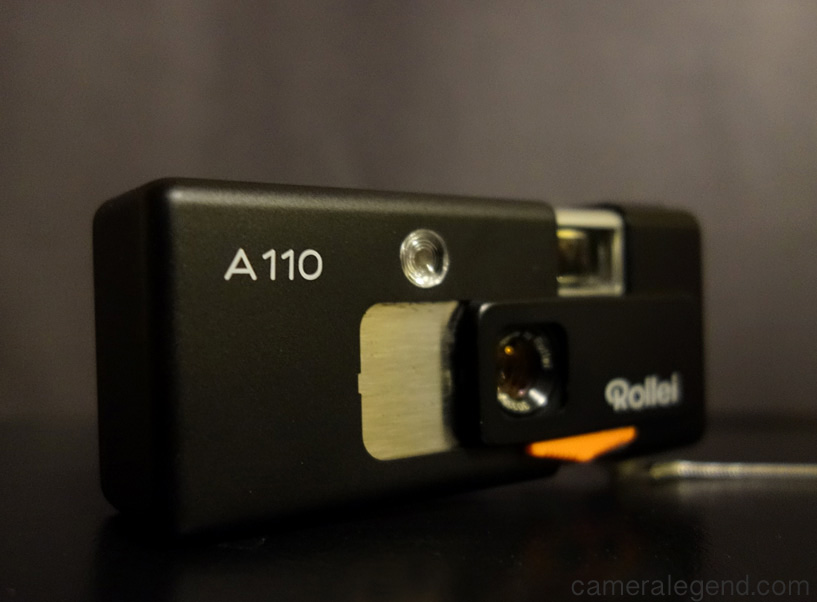
The Rollei A110. One of the Best Cameras I Never Knew 🙂

I will have more from this year’s PhotoPlus Expo I promise you, but today I’m going back to the core of this site, which is classic, collectible, and interesting cameras.

The first in this series was a camera from Rollei called the Rolleimatic. It was a camera designed by Rollei camera design legend, Heinz Waaske.

Today’s “best camera I never knew” is also…a Rollei! And also designed by Mr. Waaske and his design team 🙂

It is called the A110 and it is a super cool looking miniature, pocket camera that takes 110 film. I know a lot of people who think 110 film is extinct, but you can still readily get it through Lomography or Amazon.

Lomography will also do the developing if you send the film to them or drop it off in one of their stores.

THE CAMERA

The Rollei A110 was introduced by Rollei in 1975.

The camera is a funky little thing. The camera relies on scale focusing and has a focus range of about 3.2 ft to infinity. There is an orange focusing slide below the 23mm f/2.8 Tessar lens. In the viewfinder are symbols to give you an idea of what you should choose to focus on depending on how far away your subject is. The symbols include one person, a group of people, and a mountain (infinity).

Pulling the camera “apart” and closing it advances the film and cocks the shutter. This is definitely a Waaske design trademark!

The camera is auto exposure only and originally took a 5.6v PX27 battery. The modern day replacement for the battery is a S27PX silver battery that is 6 volts. This small difference could effect the exposure, but with the wide dynamic range of most films you should still, in theory, get a usable shot.

WHY IT DIDN’T JIVE WITH ME?

Why? Why you ask? I got two of them from eBay. Both didn’t work! 🙂

The sellers swear they were working, but I suspect both sellers did not know much about the camera. Many are probably found in their parents or grandparents camera collection and being auctioned off by people who have no idea what they are selling.

Fortunately, I got both of them cheap. First one for ten dollars, second one fifteen. If seeking an A110, they usually run from $10-50, with an average of around $30. They usually come with a presentation case and a cool chain. If you’re lucky, you can get the whole shebang with presentation case, leather case, chain, and flash.


WHY BOTHER?

With the exception of hardcore film lovers, and I do count myself as one, this camera doesn’t make a lot of sense.

It takes 110 film which is not widely available and of which development is only available in select speciality stores.

The image quality will not exceed what you can get with 35mm film or even today’s higher end cell phones.

So why did I want one? First, I am a camera hunter and I love old, classic cameras, and even more so if I can find them cheap. The A110 fits that bill. The very first camera I ever used was my Mom’s Kodak 110 camera from the 70s, so there’s a bit of nostalgia in it too.

Secondly, I’m a fan of Tessar lenses, so again, the A110 fits that bill. And lastly, even if the image quality would be less than 35mm, the A110 could possibly give me a unique film look, which is something I’m always after.

So guess what? I’m on my third A110, which I got for $30 and this one IS working! Got film in it now, but it is unfinished. Then when the film is done, I still have to send it out for developing and that might take a while.

So until that day when I can see the results from the quirky, eccentric, classic camera, the Rollei A110 will remain…The Best Camera I Never Knew 🙂

Note: If you want to see a great review of a WORKING sample of this camera, please check out this review at DOWN THE ROAD a great blog by Jim Grey who also reviews classic cameras with excellent photo samples, as well as elegantly and honestly sharing his personal life experiences. It’s a great blog worth checking out!

Leica R Images

As a follow up to last night’s article on the Leica SL (Typ 601) mirrorless full frame system from Leica, tonight I am posting some Leica R images, both film and digital that I have taken over the years.

The Leica R system was Leica’s 35mm SLR system. Though it had its own large and cultish following, it never set the world on fire the way Leica’s M system did.

That said, Leica R lenses were every bit as good as their M system equivalents and at one time commanded much lower prices. But through online forums, the internet, and the popularity of alternative lens adapters, the prices for the R lenses have gone way up.

I had an almost complete collection of the “essential” R lenses, including the 28mm f/2.8 Elmarit-R, 50mm f/2 Summicron-R, the 80mm f/1.4 Summilux-R, the 90mm f/2 Summicron-R, the 90mm f/2.8 Elmarit-R and the hard to find 35mm f/1.4 Summilux-R.

While I had to sell most of them when I hit rock bottom, the one I regret selling the most was the 35mm f/1.4 Summilux-R. I had a persistent overseas buyer who offered me twice what I paid for it. I needed the money. That was five years ago. I have yet to find another one as their prices have skyrocketed to the point where I don’t even consider it.

Still, you may find bargains in the R lens lineup that you won’t with the M lenses. So for your Throwback Thursday, I present you a small set of Leica R images that I hope will show some of the characteristics of these fantastic lenses. Please click on the images for a better view. Thanks for lookin’

Best Regards,
Sam

SLZoePepsiCAFA

“Blue Bayou” 2008. Leicaflex SL, 90mm f/2 Summicron-R, Kodak Portra film.

99388588.WRfjkUXc

“Lots Of Love” 2008. Leica R8, 90mm f/2 Summicron-R, Ilford XP2.

BirdJunC

“Bonnie & Clyde” 2008. Leica R8, 90mm f/2 Summicron-R, Ilford XP2.

CLeicaZ80C

“UFO” 2012. Leica R4, 80mm f/1.4 Summilux-R, Tri-X film.

TreeC

“Lonely Still” 2008. Leica R8, 90mm f/2 Summicron-R, Ilford XP2.


CZoeC

“Those Eyes” 2008. Canon EOS 5D, 90mm f/2.8 Elmarit-R

SL90Plants

“The Entrance” 2008. Leicaflex SL, 90mm f/2 Summicron-R, Fuji Superia X-Tra 800.

17600_10200941212084901_1335241629_n

“Ordinary Day” 2013. Canon EOS 1Ds, Leica 28mm f/2.8 Elmarit-R. The focus was off, but I kinda liked it.


Flashback Friday: The Nikon EM

DSC00987NikonEMC

“The Nikon EM” 2015. Nikon’s smallest, lightest, and cheapest 35mm SLR from 1979 seen here with the 50mm f/1.8 Series E lens, which is a great match for the camera.

The Nikon EM is a 35mm SLR introduced by Nikon Corporation in 1979. It was at the time, considered the smallest SLR Nikon had ever produced, and also the cheapest.

The camera was supposedly meant to be marketed to beginners and women in particular, but it wasn’t a hit for either targets. Apparently, many women avoided it with the belief that Nikon’s position of selling them an “easy to use” camera was sexist and insulted their intelligence. You got to remember, this was the late 70’s early 80’s! 🙂

In addition, it alienated some hard core Nikon users who felt the lower quality build of the EM was a sign of bad things to come, especially for a company known for their tough and heavy duty professional cameras.

The Nikon EM is basically an entry-level camera. It relies on two S76/A76 or one 1/3N battery. The camera features aperture priority only camera with no full manual mode. However, it does have something lacking on many Pro cameras and that is an emergency 1/90 mechanical shutter which can be called upon in case of battery failure.

With the EM, Nikon also introduced a set of lenses that matches the EM’s position for price and lowered quality. These lenses were called the “E Series” lenses. While lower priced than Nikon’s AI or AIS equivalent lenses, these E series lenses have developed  cult following for their price to performance ratio.

I have used the Series E 50mm f/1.8 and the 75-150mm f/3.5 zoom and they are both excellent lenses, optically anyway.

While there is nothing particularly special about the EM, I believe that time has helped the EM to achieve a “cute” status when people think of it. I mean, even for me, when I thought of what to profile tonight, the Nikon EM came to mind and I said…oh yeah, that cute little Nikon from the 80s 🙂

IN THE HAND

Despite the negatives, when you actually use the EM, it feels nice in the hand. Small, light yet adequately solid. This is a Nikon that you wouldn’t mind carrying around all day.

And while Aperture Priority may seem limiting, it is in fact the mode that seems to be preferred by most photographers. The fact that it has no manual override, well that I don’t like.

If the camera is too small for you, you can “bulk it up” by using the MD-14 motor drive which not only makes the camera grippier, but also has the added benefit of being about to do about 3.2 frames per second.

MY CONNECTION WITH THE EM

Cameras, like music, are objects that have the very good ability to bring you back to another time in your life.

I remember in 1981, as a kid, my Mom’s brother came from overseas with a couple of friends. They went downtown and came back with a camera, the Nikon EM. I believe it was one of my first encounters with a Nikon camera. My very first Nikon experience actually was being in Rockefeller Center in NYC and seeing this huge Nikon telephoto/telescope which was a 2000mm f/11 Cassegrain telescope. Same as the one being sold in this eBay auction.

http://www.ebay.com/itm/251761280659?_trksid=p2060353.m1438.l2648&ssPageName=STRK%3AMEBIDX%3AIT

BOTTOM LINE

The Nikon name evokes powerfully passionate emotions from photographers and even those who don’t know cameras, they know the Nikon name. It was, is, and probably will always be one of the greatest names in photography.

And while the Nikon EM is not the best representative of a classic manual Nikon SLR, it is a Nikon nonetheless, an interesting one, and perfectly usable in capable hands.

DSC00988NikonEMF4SC

“David & Goliath” 2015. The Nikon EM on the left shown for size with brute of the Nikon family, the F4s. Sorry for the poor quality photo. I didn’t feel like dragging out the studio lights tonight 🙂

Prices on the EM go anywhere from $10-40 and don’t pay any more than that.

The Nikon EM itself may never be a Camera Legend, but it is an interesting tidbit, and time capsule into Nikon’s direction going into the 1980’s.


Some Film Images Part II

I had so much fun going down memory lane last night, I decided to do it again, one more night. This time the focus is on people and portraits. Back to reviewing cameras soon, I promise 🙂

Again, captioned with these images are equipment that I have profiled or am planning to profile. Most of the gear I no longer have, except for the negatives and memories I have of them.

And again, while I love reviewing equipment, I love the equipment even more if it helps me take a decent pic!

Also as mentioned in the last article, a lot of these photos were posted for photo sharing sites long before I started blogging on WordPress. As such, some were resized much smaller than I’d like, but it would take me forever to locate the originals and work on them again. I thank you kindly for taking a look.

141123443.euHZ8DVy.imgT3MamaQuilin243I

“Separate Your Colors” 2011. Contax T3, Fuji Reala. Manila, Philippines.

72199654.3VurRO0j.BNwaPB

“The NWA” 1990. Minolta X-700, miscellaneous brand 80-200mm. No this is not Dr. Dre and the “West Coast” NWA. This is “Nature Boy” Ric Flair and the original NWA 🙂

1186234_10201381547813019_1521540462_n

“The Young & The Restless” 1988. Minolta X-700, 50mm f/1.7 MD lens. Los Angeles, California. I was at the Farmer’s Market in L.A. and checking out magazines at a newsstand when I spotted two (then) very popular soap opera stars, Tracey E. Bregman and Doug Davidson, who were also checking out magazines. They must have been on a break from their show which was being filmed at CBS Studios nearby. I asked them for a photo and they graciously obliged. I was most impressed that they had no movie star “issues” and smiled for a geeky teenager with a camera 🙂

10924621_10205004028452771_2700291808193830651_o

“The Gentle Giant” 2011. Nikon F4s, 28mm f/2.8 AIS Nikkor, Kodak Portra 160. I ran into NYC icon Louis Mendes, a photographer well known for his old school Speed Graphic camera and sharp retro outfits. Lou takes unique Polaroid portraits and has made a living and a legend out of it. I’ve bumped into Mr. Mendes a few times over the years and he has always been a willing a gracious subject for my cameras. Thanks Lou!

CPBrideC

“Bangkok Bride II” 2005. Olympus Stylus Epic, 35mm f/2.8, Kodak High Definition 400 film. Bangkok, Thailand.

160432330.BUW2hQF2

“Native New Yorker” 2015. Leica M4P, 50mm f/2 Summicron-M, Kodak T-Max 400 developed in D76. NYC is a melting pot of cultures. No matter where you come from, you can quickly transform into a New Yorker!


Some Film Images Part I

No dear friends and readers, I have not run out of Camera Legends to profile for you. However, from time to time, I’d like to put up some images I’ve taken over the years, if only to remind myself that I still love photography and also so that readers of this site can see that I actually DO use the gear profiled 🙂

Like many of you out there, I really love cameras and lenses. But just as importantly, I love the equipment more if it helps me take a decent picture.

The photos below are a random sampling of the gear and the photos I’ve taken with them. Some of the cameras used to take these shots have been profiled. Some are previews of possible future postings.

They are not masterworks or anything. Many are from my attempts to learn or test equipment. Most were taken for just the pure joy of photography.

I thank you for taking a look. And not to worry, I have more great gear to profile and review for you coming soon 🙂

Note: Most of these images were posted elsewhere on the web years ago, long before I knew anything about WordPress. As such, some were resized to dimensions much smaller than I’d like to show you, but as I cannot find the originals at this time, this is what I can post. Sorry about that.

139139642.TI4xz9k1.MomDC

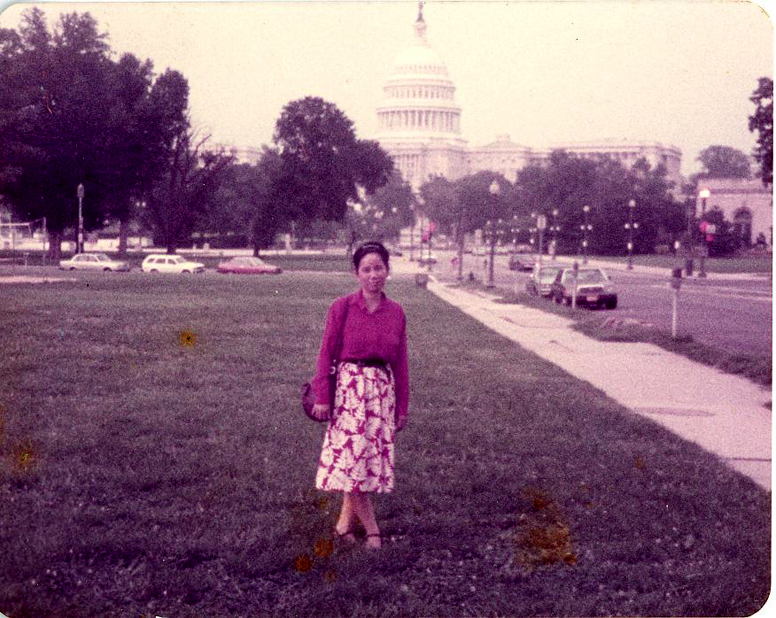
“Mom in DC” 1984. Kodak Disc Camera. This image represents one of my earliest attempts at photography, at least the ones I could find. Shot with the long defunct and defiled Kodak Disc Camera, a camera that was bashed by critics and consumers alike. However, I have to say, I really loved that camera and this image brings back a lot of memories.

80259812.xfdWo77e.JoeLit150Pba1

“Ghetto Blaster” 1985. Minolta X-700, 50mm f/1.7 MD lens. My brother and father with our Cutlass Supreme which we called the “Ghetto-Blaster” with its missing hubcap 🙂 Thirty one years in time, but I’ll be darned if that golden light on the print doesn’t still look as golden as the day I took this shot.


86420863.ICEBHFzI.CPhotogPBase

“Bangkok Bride” 2005. Olympus Stylus Epic, 35mm f/2.8, Kodak High Definition 400 film. Shot in Bangkok, Thailand.

80650042.mP0bUQUa.LotusPba

“Holy Petal” 1995. Contax G1, 28mm f/2.8 Zeiss Biogon, Fujichrome Velvia. Taken at a temple in Bangkok, Thailand.

80067916.oS3X1lKl.AddictOM1Pba

“Portrait Of An Addict” 1997. Olympus OM-1, Zuiko 50mm f/1.8, Kodak Tri-X. An attempt to self document one man’s horrible addiction to cigarettes. This photo was accepted to Flickr’s “Film Is Not Dead It Just Smells Funny” group, which is quite a selective bunch so I was honored by their acceptance of this pic.

72203117.MOYkwQ46.BMannequinsPbase1

“Mannequin Fantasy” 2006. Ricoh GR1, Fujicolor Press 800.

99388588.WRfjkUXc

“Lots Of Love” 2008. Leica R8, 90mm f/2 Summicron-R, Ilford XP2. I was honored that this image was profiled on Leica’s LFI “Analogue Masters” Gallery a few years ago.

130716115.ggt0qYRJ.3994821952_832dcc1cda_z1

“Rainy Day Blues” 2009. Leica CL, Canon 50mm f/1.2 LTM, Kodak Tri-X 400 developed in HC-110. I was sloppy and something went wrong with the development and I got the blues after seeing the ‘damaged’ roll . But since photography is such a subjective, sometimes emotional thing, I developed a liking for the look of some of the ‘ruined’ images.

995636_10204084737871081_7481577152814577026_n

“Masked Shooter” 2008. Contax RX, Carl Zeiss 50mm f/1.4 lens. The man with the clandestine figure, the Masked Shooter, has probably shot nearly a thousand cameras 🙂


Flashback Friday: The Olympus M-1 Film Camera

DSC_0669M1CamFAC

The Olympus M-1 35mm slr. Basically an OM-1 with a few external and internal differences. The most obvious give away is the “M-1” logo on the top plate of the camera. Otherwise, the M-1 and OM-1 are cosmetically and functionally the same.

The Olympus M-1 is a 35mm SLR introduced by Olympus in 1972. It is the original OM-1.

The M-1 was originally a part of the Olympus “M System” as they called it. They were all set to go, even having a full set of lenses made to support the M-1. Only one thing they forgot…Leica already had an “M System” out!

From all accounts, Olympus changed the designation of the M-1 to the “OM-1” because Leica protested the use of the “M” and “M System” as it conflicted with their M series rangefinders and their lenses.

The M-1 is basically an OM-1, which is among the finest and most iconic systems camera ever made. A modern masterpiece from the brilliant mind of the late great Yoshihisa Maitani, the genius camera designer of Olympus.

There are some differences between the M-1 and OM-1. Main thing you need to know is that the M-1 says “M-1” on the top plate and it cannot accept a motor drive.

There is a wonderful page that tells you everything you need to know about the M-1 if you google “Olympus M-1 film camera.”

As a camera, it has an all manual 1s-1/1000s plus bulb shutter and originally took a PX-13 mercury battery, which has long been outdated/outlawed. The battery is only needed for the meter and yes, the camera can operate without a battery. You can use a replacement battery and my recommendation would be the Wein MRB625 Zinc battery which at 1.35v is closest to the original mercury cells.

RARITY, PRICE AND COLLECTABILTY

This one is not as easy as it looks. While the M-1 is certainly not as common as the OM-1, I don’t think I would call it rare either. “Rarer” would be a better word I guess.

They don’t seem to come up for sale often, but you do see them at fairly regular intervals on eBay, usually by sellers who stress that it’s “RARE.” I know that sounds like an oxymoron, but you know what I mean 🙂

I got mine for $40. It is not in perfect condition, eyepiece and focus screen looks to need replacing, viewfinder needs cleaning, but the shutter works though I haven’t tested it for accuracy. It’s going to be a fixer-upper for me which should be fun.

I have seen people asking up to $500 for this camera, usually on eBay, but they ain’t getting $500! 🙂

Most camera lovers will know or search and find out that the M-1 is basically an OM-1, a camera you can get anywhere from $10-150 dollars depending on condition and how much you want to spend.

A more consistent and fair price for this camera I think is around $150-250 in excellent condition and preferably with a lens thrown in.

SamOM

“Zuikoholic” 2009. With the black Olympus OM-1 and 40mm f/2 Zuiko lens. As far as I know, the M-1’s were only made in chrome.

Of course, for a collector with money, and if you are a true Zuikoholic you probably wouldn’t mind paying extra just to have that “M-1” in the house 🙂

BOTTOM LINE

The Olympus OM-1 is one of my favorite manual SLR’s of all time. The beautiful styling, mechanical shutter and all manual exposure makes it a pleasure to use just for the pure joy of photography.

When I gave up on my Minolta X-700 from 1985 and after trying Canon and Nikon in the 90s, I settled on a couple of OM-1’s and it carried me through the rest of the decade giving me thousands of precious memories on film. And as the 90s came to an end and digital was dawning, my first digital camera was an Olympus C-3000.

The M-1 being the “rarer” version of the OM-1 makes it just a little more special.

These cameras live on in their OM-D incarnations although I think all the OM-D’s lack the true heft and feel of the classic film OM cameras. As imagers, I think the OM-D’s are great!

DSC_0671M1OMDFAC

“Generations” 2015. The Olympus M-1 film camera on the left and the OM-D EM-5 on the right. Yes, I know that OM-D needs a little dusting off 🙂

In closing, there is no doubt that the Olympus M-1 (and OM-1) is a true Camera Legend that inspired a whole generation of photographers and continues to influence photographers and camera designers, even today.


The Rolleiflex Black Baby 4×4 Camera

SamRolleiFACBKPS

“Black & Quack” 2015. With the “Black Baby” Rolleiflex 🙂

The Rolleiflex “Baby” models are twin lens reflex cameras made by Rollei. This particular model is the post war “Black Baby” and was made in 1963. The Rolleiflex “Baby” lineage goes all the way back to 1931 and ended around 1968.

The camera takes 127 film or otherwise known as 4×4 (cm) which is considered an obsolete or “dead” format because 127 film is no longer made, at least not in bulk or by major manufacturers.

You can find 127 film quite easily on eBay, but most of these are outdated and overpriced, and usually sold by Eastern European sellers. However, hang around and I’ll tell you where you can buy some fresh 127 film.

I have not used this camera extensively so this is by no means an official “review.” I initially got this as a collector’s piece knowing that I would not be doing much shooting with it.

THE CAMERA

The camera as is stated is pretty much a “baby” Rolleiflex TLR. You focus through the waist level finder using the knob on the left hand side and wind the film with the right hand knob. It’s basically a miniature Rolleiflex TLR.

DSC00614RolleiPSC

“Size Matters” 2015. The Black Baby Rolleiflex on the left, and the Rolleiflex 2.8C Xenotar for size comparison.

The shooting lens is a 60mm f/3.5 Schneider Kreuznach Xenar which is basically a Tessar type lens that should be quite sharp and contrasty.

In my experience, you can’t go wrong with either Zeiss or Schneider lenses and on these Rollei cameras, they are top notch.

The camera feels well built, but may be a little awkward to hold and use especially if you are used to “normal” sized TLR’s.

BOTTOM LINE

The Rollei “Baby” models are quite popular with collectors, with the “Baby Grey” being the most popular and abundant. These can go anywhere from $50 to $250 if priced fairly.

The Black Baby goes for a bit more. I personally find this one to be the most desirable model because it is the one that looks closest to a modern Rollei TLR.

I got mine for a little over $300, but I’ve seen sellers asking over $1000 for them. However, those over $1000 usually do not sell. Why? Because people aren’t stupid! They know that 127 film is virtually gone and you can get a 6×6 Rollei for that price. A fair price I would say would be from $300-450 for this particular model.

Even though 127 film is basically obsolete, you can now get 127 film, fresh, from…B&H! Yes, that’s right, good old B&H. The film is only available in ISO 100 speed and is called “Rerapan 100” and it is a little pricey at $11.99 for each roll. If you go in there, tell ’em Sam sent you 🙂

Although I would greatly prefer the added versatility of ISO 400 film and a lower price, I’m happy to have at least one source of fresh 127 film.

Some folks have taken the widely available 120 medium format film, cut it down and re-spooled it into 127 film. I have not had the time, the skills, nor the inclination to do that however, not that it seems that hard.

Needless to say, at $11.99 a roll, this camera will not be a daily shooter for me. As I said in the beginning, I basically bought it for my collection, and to be able to actually shoot it is an added pleasure.

I still have my first roll of 127 film in this camera. When I get the results, and if they’re good enough, I will update you on another posting.

While most of these “Baby” Rollei cameras are sought for collections, they are also great shooters, and they are an interesting part of the Camera Legend that is Rollei.