Tuesday Titans: The Mighty Minolta XK Motor

DSC00181XKMotorCCC

The Legendary Minolta XK Motor of 1976. Sorry for this funky Instagram pic, I’ll probably replace it 🙂

Hi everybody. Let’s start 2016 off with a bang with this ultra-rare Camera Legend, where info is scarce even on the best Minolta/Rokkor sites…

Somewhere in the deep, dark corridors of my camera memory lurks a giant. A giant that frightened and fascinated me at the same time. That giant is the Minolta XK Motor.

The XK Motor is a 35mm SLR introduced by Minolta in 1976. It was marketed as a professional camera and was Minolta’s answer to the Canon F-1 and Nikon F/F2.

The XK Motor is ultra-rare and hard to find in today’s market.

MY MEMORIES AND DREAMS OF THE MINOLTA XK MOTOR

As a kid, I still remember seeing this gigantic brute of a camera in magazine articles and ads. It was a camera that seemed frighteningly large, muscular, and complicated to a young boy. Yet at the same time, for a skinny young kid, this camera’s muscular build signaled “power” in my mind.

I wanted it bad, but I knew I’d never get one. Or so I thought…


HOW I CAME ACROSS THE MINOLTA XK MOTOR CAMERA

Fast forward some thirty plus years. About four years ago in 2012, I saw two XK Motors listed on KEH Camera in BGN (bargain) condition, priced at about $500 each. Right away, knowing the rarity of these cameras, I had to get one!

Fortunately, it was one of those rare times when I actually had enough in the bank. Sure it still hurt to part with $500, but hey man, this was the Minolta XK Motor! Gotta have it! 🙂

So I got one, and if I had the funds, I’d probably have gotten the other too, but I didn’t have any funds left and it quickly went to someone else.

Though I can’t check 24/7, I do check KEH’s site fairly often. I’ve never seen the XK Motor before or since on KEH’s site. My theory is someone sold these two from their collection to KEH and it quickly went up for sale.

THE XK MOTOR BODY

When I first got the camera, I was in awe. This thing was solid, heavy, and just as in my dreams, seemingly powerful.

The body feels blocky, much like other cameras of its time such as its slated competitors, the Nikon F/F2 and the Canon F-1.

Unlike those two cameras, the motor drive is permanently attached on the XK Motor. The motor drive was capable of a (then) “high” of 3.5 frames per second at its top speed.

The camera required two EPX-76 or S-76 alkaline or silver batteries for the body and ten, count ’em, TEN AA batteries for that motor drive. With batteries installed, this camera got heavy fast!

The camera had electronic shutter speeds of 16 seconds to 1/2000th of a second and mechanical shutter speeds of 1/100 and B.

ISSUES

Shortly after I got the XK Motor, I realized it is not without issues. While my first roll of film went off without a hitch, I quickly realized there was one glaring achilles heel (or heels in this case) with this giant.

That fault is…the battery clips that hold the epic ten batteries are brittle and worse, they eventually break rendering the great “motor” portion of the camera virtually useless. They broke off on both sides of my XK Motor and believe me I did not do anything rough to cause it.
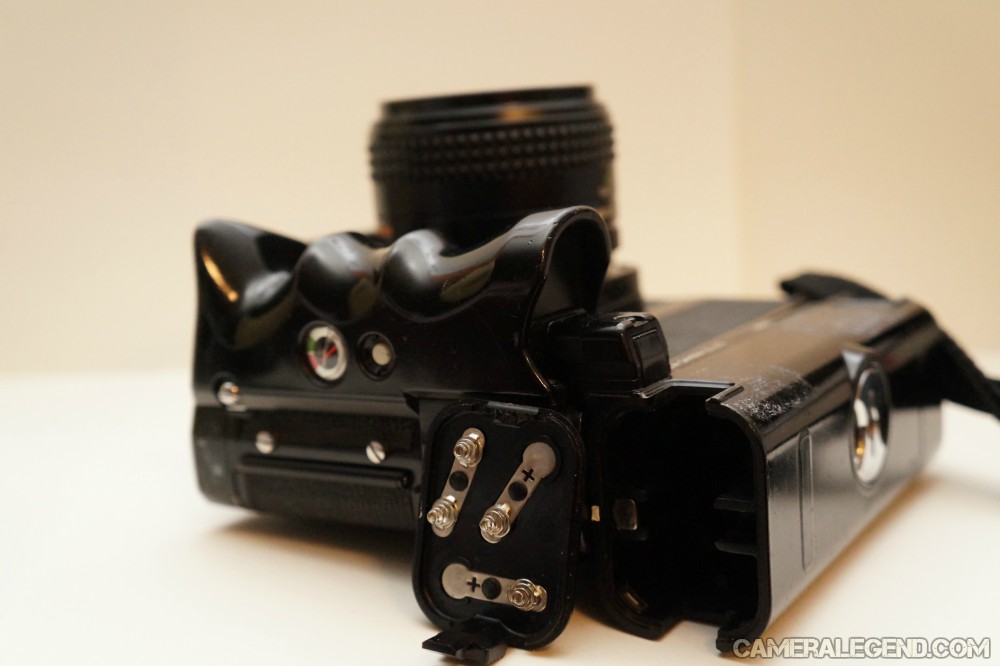
DSC00184MC

“Chipped Clips” The battery clip issue is the main thing that ruined my XK Motor experience. If seeking one of these cameras, be aware that this is an unfortunately common thing with these cameras.

And if that wasn’t enough, trying to find a replacement for these clips is harder than finding a needle in a haystack!

Sure, I have tried the old fashioned method of taping the broken clips. As you can see from the pics, that is exactly what I did but it didn’t work well. The tape would eventually come off and one time the battery compartment on one side got incredibly hot and I had to quickly remove the batteries for fear of fire.

If you think the broken battery clips were just my error, take a look at this link from KEH BLOG from 2011.

They had an XM Motor for sale in EX+ condition for $1950 with one catch…”battery door broken” 🙂

WHY I SOLD THE XK MOTOR

I recently sold this camera to a private buyer who was willing to buy it as is for the same price I bought it for. The great thing about these old legendary cameras is that you could almost always sell them without much of a loss.

It may seem unscrupulous to sell the camera in worse condition for the same price I bought it, but these babies are rare and the last one I saw was on eBay where it was sold as a parts camera. Bidding went over $500, so I definitely think I gave a fair price.

It became an unusable paperweight for me and the climax of a dream that became a nightmare.

This camera could have easily become one of my “Best Cameras I Never Knew” but it’s such a rare camera that I was honored to have had a chance to hold and use one in the flesh, fulfilling one of my childhood fantasies.

X-1 XK XM DIFFERENCES

There is actually a non motor driven version of this camera. The ones sold is the USA are known as the XK and known elsewhere around the world as the XM or X-1.

While the XK Motor is ultra-rare, the standard XK/XM/X-1 are not as rare. Many people mistakenly buy these thinking they are the XK Motor, but they are not, and they do not command the same high prices.

Cool you say, couldn’t I just buy an old motor drive and turn my XK/XM/X-1 into an XK Motor? In theory, you could’ve, but sorry there was no motor drive option for these cameras which is one of the reasons the XK Motor still holds its place among the Camera Legends of Minolta.

BOTTOM LINE

The Minolta XK Motor was a dream camera for a young boy that turned into hard reality for a grown man.

It was Minolta’s answer to the Canon F-1 and Nikon F/F2. Unlike the Canons and Nikons, the Minolta XK Motor had one glaring and seemingly incomprehensible fault…weak battery clips!

Despite their ability to make some of the world’s finest cameras and lenses, there IS a reason why Minolta never made it to the top in the world of Canon and Nikon pro bodies. A flaw such as weak battery clips is totally unacceptable for a professional grade body such as this.

If you search the internet for the XK Motor, you will find precious little information from actual users. You will not see much on the battery clip issue either. Why? Because there is not much info on this camera in general, it’s that rare.

In usable form, the Minolta XK Motor is a dream camera to hold and use. It was a culmination of Minolta’s dream to rule the professional camera world. It was a dream ruined by flawed execution, but that doesn’t matter in the end. The Minolta XK Motor represented the power of Minolta and what could have been. It is, without a doubt, a Camera Legend.

WHERE TO BUY?

If looking for an XK Motor, and I’m not sure that’s a good idea, prices are very hard to calculate due to its rarity on the market.

I got mine for $500 at KEH Camera in Bargain condition. But they also had one five years back in EX+ condition for $1950. The last one I saw on eBay was an “as is” parts camera which went for over $500 in 2013.

So I would say in pristine working condition, these cameras could easily fetch anywhere from $1500-2000 and maybe more.

If you want a taste of the XK Motor without using a fine toothed comb, you could easily get the ‘regular’ XK/XM/X-1. Prices for these can go anywhere from $50-300. I would not pay more than $100 for one. In fact, I got one of these for $56 bucks! 🙂

Note: I do have pics from my test roll with this camera and the 50mm f/1.2 Rokkor. But it’s not on a hard drive, it’s on a photo CD and I can’t find it. I do not think these test pics are worthy of your time, but I am still looking for them and may or may not post them. But it is proof that at one time, the Mighty XK Motor worked and gave me some nice pics!


Double Vision :-)

1848_10207398793600403_5835771834651744186_n

“Double Vision” 2015.

OLYMPUS DIGITAL CAMERA

“The Eye” 2016. Olympus OM-D EM-5, Zuiko Digital 45mm f/1.8

Just trying out the WordPress mobile app 🙂

Happy New Year everyone!

Tuesday Titans: The Pentax MZ-S

PMZSCPSII

The Pentax MZ-S of 2001. Perhaps the best 35mm SLR Pentax ever made.

The Pentax MZ-S was a high end 35mm autofocus SLR introduced in 2001 by Pentax Corporation.

The MZ-S was the last 35mm flagship film SLR from Pentax and was marketed as a professional camera.

THE MZ-S CAMERA 

The first thing about the MZ-S that you’ll notice right away is the somewhat odd and futuristic look to this camera. The MZ-S was apparently supposed to be the Pentax “MZ-D” which was to be the first Pentax full-frame digital SLR and at that time, it would’ve been the first Pentax DSLR full-frame or not. The prototype was shown in 2001, but never materialized in production.

In many ways, the MZ-S looks and feels like a modern digital SLR. Strong, sturdy, but feels somewhat lighter than a comparable film camera such as a Nikon F-100. If the MZ-S was indeed a digital camera, it’s my opinion that this would be the coolest looking Pentax DSLR ever!

With Ricoh/Pentax’s recent (actually a couple of years now) teasers on a full-frame 35mm digital and thinking back to the MZ-D, it does make you wonder nearly fifteen years later on now, will we ever see a full-frame Pentax DSLR?

Of course, we know they have the technology, but one has to wonder what’s taken them so long. Fifteen years and counting guys 🙂

Anyway, back to the MZ-S. The body is strong with a magnesium alloy chassis and to me it looks great, especially with the BG-10 battery grip attached. But I have heard differing opinions.

This is a story within itself, but aside from their classic M42 and K mount cameras, Pentax has not been known for making the prettiest looking cameras in the modern era. I’ve heard people say that Pentax AF cameras look “atrocious” and “horrific” to, on the other side of the coin, “fantastic” and “magnificent.”

There’s not much of a grey area when it comes to Pentax AF bodies. You either love them or you hate them.

The Pentax MZ-S with the BG-10 battery grip attached has a very aggressive look, not unlike the Canon EOS-1 I profiled earlier. In an odd way, it does look like a Pentax version of a Canon 1 Series camera.

Unlike the EOS-1, the MZ-S feels noticeably lighter. And with the grip off, it is a very nice and more portable body. While marketed as a pro body, the MZ-S actually feels closer to a semi-pro or advanced enthusiast class body such as the Nikon F-100 or Canon EOS-3, although I must say these two cameras do feel more rugged to me than the MZ-S. The MZ-S however looks more interesting than the other two 🙂

The MZ-S featured a 6 point AF system and has a shutter speed range of 30-1/6000s and a flash synch of 1/180s. The camera has mirror lock-up and can do auto-bracketing and multiple exposures.

The MZ-S without the battery grip runs on two lithium CR2 batteries. With the BG-10 attached, the camera will run on four AA batteries.

HANDLING AND OPERATIONS

The MZ-S feels excellent in the hand. Solid, tight, but not too heavy. Controls are well laid out for the most part, but it’s an odd mix of good and confusing.

There are dedicated buttons and switches for AF, Drive, Metering, etc, etc. There is also a dedicated MF/AF switch near the lens mount. When you have clearly marked dedicated dials and buttons, it’s always a good thing.

The cool circular LCD actually has a dial around it that serves as your controller for changing shutter speeds, modes, etc. The funky looking dial on top left of the camera is actually two dials, for ISO, exposure compensation, auto-bracketing, and multiple exposures. This left dial is probably the most confusing part of the camera, but it all makes sense once you get to know it. The camera also has 19 custom functions. This is truly a pro spec’d camera!

PMZSIII

The top deck of the MZ-S. A strange mix of good yet confusing controls, highlighted by that top LCD in a cool circular dial. That’s Pentax for you! Sorry for the dust. I could, if I tried, maybe take a nice studio type shot of this, but I live in the real world and in the real world, there’s dust 🙂

This camera offers quite a comprehensive feature set and I don’t feel like writing a manual on it. But if you want to figure out all the MZ-S can do, you will probably need a manual for this camera.

While you can figure out many things without an instruction manual, again I will say that I think you do need a manual to completely figure this camera out so it’s not the most intuitive camera I’ve ever used, but to be fair, most complex electronic cameras of the modern era fall in the came category.

PERFORMANCE

imgMZSZoeSmile1051 copy (1)

“Sunday” 2010. A smile to transform an ordinary Sunday into something extraordinary 🙂 Pentax MZ-S, Pentax FA 35mm f/2 AL lens, Arista Premium 400 film.

The Pentax MZ-S performed very well in the several rolls I’ve shot with it. The camera was quick to focus, albeit a little noisy when focusing. It will sometimes hunt in low light and the noise can be a little disturbing. AF was for the most part accurate.

MJ

“Joe Young” 2010. Pentax MZ-S, Pentax SMCP-FA 77mm f/1.8, Arista Premium 400.

I’ve only used two AF lenses with this camera. The SMC Pentax-FA 35mm f/2 AL, which is an excellent lens, and the SMCP-FA 77mm f/1.8 Limited, which is a superb performer by any standards.

The MZ-S offers six segment, multi-pattern, center-weighted, and spot metering. I usually leave it at the six segment setting where exposures are usually spot on.

MZSZC

“Barbizon” 2010. A star in the making? 🙂 Pentax MZ-S, Pentax SMCP-FA 77mm f/1.8 Limited, Arista Premium 400.

BOTTOM LINE

Pentax has always been a bit of an eccentric in camera world. They have always been the under-dog company that offered a much needed alternative to a world ruled by two or three big dogs.

They created a legacy that includes not only great 35mm cameras and lenses, but they have also been a force in the medium format world with iconic cameras such as the Pentax 6×7 and now in the digital era with the Pentax 645z, beloved by today’s pros. That’s something neither Canon nor Nikon has done. A true Camera Legend company, no doubt.

As far as camera collecting, the Pentax M42 mount cameras and lenses are hugely popular as well as K mount manual focus bodies and lenses. The Pentax AF 35mm film bodies, not so much.

But the MZ-S is different. It is a highly capable body and in my opinion, perhaps the only Pentax 35mm AF body worth collecting. I hope I’m not offending any Pentaxians out there, but cameras such as the ZX-5n and *ist film bodies, while very capable, are hardly what one would consider collectible.

In recent years, Pentax has had a resurgence of popularity, thanks in part to its merger with Ricoh and great cameras such as the Pentax K-5 of 2010.

The MZ-S may have been the most full-featured and capable film SLR that Pentax ever created. It is a well designed camera that can perform to a very high level and has almost everything you might need. And of course, it is capable of using the fantastic Pentax AF and manual focus lenses, one of the largest and most abundant collection of lenses available for any system.

The Pentax MZ-S may have started its life as the would-be Pentax full-frame digital that never materialized, but ended its life as the last great Pentax camera of the film era. It is without a doubt, a Camera Legend and one of the best cameras ever made by Pentax.

WHERE TO BUY?

If looking for the MZ-S, prices are trending at $150-350, with average prices of around $250 or less. There was a time when these cameras commanded close to $400, but it seems the prices have fallen on these babies in recent years.

You can find them quite easily on eBay, where most of them are being sold from Japan.

KEH Camera has them from time to time, prices are usually a bit higher there, but you would probably get the best one for your money, plus a great warranty and return policy.

I got my first one there, sold it and missed it. Found my second one at Adorama in their used section for around $200 in EX+ when they were going for over $300 at the time. And you can sometimes find a good deal from sellers on Amazon.

Note: Sorry a little late with this post, but I got it in before Tuesday was done 🙂

Doing this blog is a labor of love, but these late nights were killing me and I really needed to get myself together. Thanks for your continued support my friends, appreciate it!


Twas The Night Before Christmas

ZoeC

“Oh Holy Night” 2012. Canon EOS 5D Classic, EF 50mm f/1.8

Just want to keep in touch with readers to let you know we still have more cameras and reviews coming your way 🙂

I know quite a few of you were starting to enjoy the “Tuesday Titans” series on big badass cameras and I thank you for that!

I had another big brute camera that I was going to profile yesterday, but between nursing a cold, wrapping Christmas gifts, and the big brute camera, sadly the cold and wrapping gifts won out 🙂

I never actually meant it to be a weekly series, despite the fact that I did the postings two weeks in a row. It may become a weekly thing, but so far that is not part of the plan although I do love those big cameras and it is a lot of fun for me to write about them!

I do have plenty more stuff coming your way so you need not worry. In the meantime, I wish you all a very Merry Christmas and I hope there’s a cool new (or old) camera in one of your gift bags come Christmas day!

Best,
Sam

THE BEST AFTER CHRISTMAS DEALS

There’s tons of deals on the top cameras of 2015 on AMAZON right now. Take your time and scroll through Amazon’s list to find the best deal for your needs.

Get huge savings and hundreds off some fantastic Rokinon lenses during the Rokinon Holiday Weekend Sale. Prices are only to 12/27! If you were ever thinking of picking up any of these fantastic lenses, this is the time to do so.

Get 10% back on lens purchases from Adorama Rewards.

Get a Transcend 32GB Class 10 SDXC/SDHC UHS-I U3 Memory Card (95/85 MB/s Read/Write Speed) for $15.99 with free shipping!

The Force Awakens: The Konica AiBorg aka “Vader Cam”

KVC

The Konica AiBorg from 1991, also known as the “Darth Vader Camera” for its dark and menacing looks.


In honor of the release of Star Wars: The Force Awakens, today we pay tribute to the Force with the camera affectionally called the “Darth Vader Camera” or as I prefer to call it “Vader Cam.”

That camera is the Konica Aiborg, a 35mm point and shoot camera introduced by Konica in 1991.

The AiBorg features a 35-105mm f/3.5-8.5 lens and is distinguished by its futuristic and indeed Darth Vader-like good looks 🙂

This is one of the funkiest cameras I’ve ever seen! I give Konica a lot of credit for allowing its designers to not only create this monstrosity, but to then manufacture this thing, and then release it for sale to the general public!

I got this camera a few months ago for $10 and I wasn’t even looking for it! That happens to me a lot, I guess the cameras come to me 🙂

I wish I could tell you more about it, but I got this baby in non working state and after leaving it in my “junker” bin for a few months, I just started fiddling with it recently. I cleaned the battery compartment and it came back to life!

The Force did indeed “awaken” but I am not sure it’s functioning properly. If you’re really interested in this camera, there are a couple of good reviews on this camera if you do a search.

What I can say is that the AiBorg is definitely a unique and menacing looking camera, in some ways, not unlike the Canon EOS-1 that I profiled on the last posting. A cross between beauty and butt ugly. It’s big and bulky, almost like a bridge camera.

KonVCamBack

The rear controls on the AiBorg. Good luck trying to figure this out without referring to the instruction manual! It ain’t gonna happen 🙂

The ergonomics and controls look like you’d need a star map to figure this camera out! I’ve always said, one of the hallmarks of a good camera is when you can figure it out without referring to the instruction manual. The AiBorg definitely needs a manual if you want to figure out all of its functions.

If I can confirm this camera is working properly, I’ll pop a roll of film in it and report back to you on these pages.

Other than looking like Darth Vader, the AiBorg is not particularly valuable or collectible. If seeking one for your collection, prices are trending at $10-70 and it really depends on what you’re willing to pay. Personally, I wouldn’t pay more than $10 and I didn’t 🙂

In the meantime…May The Force Be With You!!

Tuesday Titans: The Canon EOS-1 Pro Film Camera


CEOS1

The Canon EOS-1 professional 35mm SLR of 1989. The EOS-1 is a titan with a tank like body, super speedy AF, and a futuristic design.  A true Camera Legend among 20th century cameras.

The Canon EOS-1 is 35mm SLR introduced by Canon in 1989 as the flagship camera of their (then) two year old EOS system.

Canon is no doubt one of the legendary names in the camera world. Despite non Canon fans (usually Nikon fans!) attempting to take jabs at Canon by saying things such as “Canon’s main business are its copiers and not cameras” or “Canon’s bodies are made of plastic and feels cheap” everyone that I know equates Canon to cameras first and foremost.

And the camera division is apparently a source of pride for the company. Even though, yes, they make way more selling copiers and other stuff to corporations, they do put a lot of that money back into creating awesome cameras that are often on the cutting edge of technology.

One of the greatest things about loving all cameras is that I’ve never been accused of being a fanboy, not that I know of anyway 🙂

Anyway, I’m rambling a little bit here, but the main point is that since the 1930’s Canon has had its share of legendary cameras. The Kwanon of 1934, the Canon II of the late 40s and early 50s, the Canon 7 and 7s rangefinders of the 60s, the A-1 and F-1 of the 70s, the T90 of 1986 just to name a few.

Canon is no stranger to making all kinds of cameras. However in 1987 Canon set out to do what many of their loyal customers thought to be the unthinkable; create a whole new series of lenses and cameras and letting go of their FD system which enjoyed a tremendous following and passion from professionals and enthusiasts alike. And with the introduction of the EOS-1 in 1989, Canon set out to create a new legend. Would their plan work?

dscf0648canont90mkiic

The Canon T90 of 1984 and the EOS-1D Mark II of 2004. The predecessor and successor of the EOS-1 respectively.

This was a very risky move. To take (in 1987) the nearly twenty year old, proven FD system and not only replace it with a whole new system, but also to convince their huge and loyal customer base that they should buy into the new system.

And the new EOS lens mount was NOT compatible with the FD system and vice versa. So in essence, Canon had to say…’Guess what guys? You can’t use all those lenses and accessories you’ve acquired for your A-1, AE-1, F-1, etc, etc if you buy the new EOS system’

As to be expected, it was a hard sell at first. From all I have read on this, many loyal FD fan were totally bummed, even angry at this move. They felt betrayed that their gear would now be “obsolete” and unusable on the new EOS system.

And you have to remember back then was not like today where you could use your legacy lenses on many different cameras with the right adapters. Adapters that allowed the use of one mount to a different mount were precious and few back then. I know of people who switched to Nikon because they were so outraged!

WISDOM OF FORESIGHT AND THE POWER OF TIME

Despite the initial outlash, now nearly thirty years later, I believe that time has proven Canon right in their decision to change from the FD mount to the all electric EOS mount.

With the EOS mount came cameras with super speedy autofocus, and such innovations as quiet USM “ultrasonic” motor lenses, cameras with electronically controlled wheels and dials, offering sophisticated levels of control customization. Many of these features we see on almost all serious DSLRs today. The EOS lens mount was also large enough to make way for some very unique L lenses such as the EF 50mm f/1L, the 85mm f/1.2L, and 200mm f/1.8L.

I believe Canon, as well as Nikon and other manufacturers saw the promise of the future with the runaway success of 1985’s Minolta Maxxam 7000, the first truly successful autofocus 35mm SLR.

Looking back, you have to give Canon, its camera designers and engineers credit for having the courage and foresight to create a whole new system that not only embraced the technology that was available then and but would also be able to take advantage of technology yet unseen in 1987.

THE EOS-1 FILM CAMERA

Two years after the introduction of the EOS system and the enthusiasts’ friendly EOS 650 camera, Canon decided the new system was successful enough to introduce their new pro flagship, the EOS-1 professional system camera.

The EOS-1 is a big brute of a camera and was very much reminiscent of the T90 of 1986 in its design.

However, being designed with professional photographers in mind, the EOS-1 was built to a much higher standard with an extra tough aluminum frame wrapped inside a polycarbonate plastic shell, and weather proofed with o rings, seals, and gaskets.

I remember in the mid 1990s reading an article on the Canon EOS-1 vs the Nikon F4s. I can’t recall if it was Modern Photography or Popular Photography magazine, but it was a great article on the pros and cons of both cameras, and included opinions from two professional photographers who used these cameras for their livelihood.

I also remember at that time, opinions and doubts about Canon’s use of polycarbonate materials on their pro bodies, especially from “heavy metal” camera lovers and pros.

Today, with the power of time, polycarbonate and other hard plastics have been proven to be as durable, if not more so, than the all metal bodied cameras of yore.

The EOS-1 is an all electronic camera and it operates on one 2CR5 battery. It will not operate without a battery. The electronics in the EOS-1 series of cameras have stood the test to time. The shutter speeds range from 30 secs to 1/8000th of a second and the camera can do a maximum of 5.5 frames per second with the optional Power Booster E-1. The viewfinder has 100 percent coverage. The camera had only one autofocus point which was cross-type and in the center of the frame.

USER EXPERIENCE

I got my first EOS-1 in the mid 90s. I still remember vividly the first time I held the camera. It was one of those magic moments on my camera journey!

I remember the sense of pride and amazement that I had in my possession this huge and powerful pro Canon in my home. Holding my first pro grade body ever was a feeling that, many many cameras later, comes very rarely today. It would take a lot to excite me these days 🙂

After I got over the initial excitement, I was quickly disappointed to find that the EOS-1’s AF, which was very fast and speedy outdoors and in good light, struggled and hunted in low or even moderately bright indoor lighting.

On top of that, the single central point AF did not have the red light indicator. That feature came with the EOS-1’s 1994 successor, the EOS-1n.

After a few months of use, I quickly sold the camera and moved up to the EOS-1n which was a much better camera in all aspects.

imgCan1Zoe293

“The One” 2012. Canon EOS-1, EF 50mm f/1.8 lens.

THE LEGACY AND LEGEND OF THE EOS-1

Despite my disappointment with the EOS-1, I eventually got another one when the prices became real cheap.

As with many other cameras, I can now appreciate its strengths while avoiding or trying to avoid its weaknesses.

Armed with a very strong selection of Canon EF lenses, the EOS-1 helped Canon to finally take over their rival Nikon in the 1990s as the professionals choice. It would take Nikon many years later to catch up and regain equal footing.

With the EOS-1 came many innovations such as dual input dials, wheels, and the use of polycarbonate and hard plastics on a professional grade body. All these features have made its way to many mid and high end cameras that came after the EOS-1.

The Canon EOS-1 is a true Camera Legend of the modern camera world. The EOS-1 is not only legendary, but has historical significance as the first pro body of the EOS line.

All the pro film EOS bodies that came after the EOS-1, including the 1n/1V/3 are all much better performers having taken all the best features of the EOS-1 and refining it to much higher levels, but if you want to experience that early EOS experience, warts and all, and want to pay the lowest price you can for a pro EOS film body, then the EOS-1 is a great choice, even if only to appreciate its design and/or to appreciate the technology of its day.

Note: The Tuesday Titans series was created to profile the huge “Big Guns” or monster sized cameras.

WHERE TO BUY

If shopping for an original EOS-1 film camera, prices are trending from $50-150 with an average under $100.

For a safe purchase with a good return policy, both Adorama in their USED section or Amazon periodically have the camera in stock.

IF YOU’RE JUST READING THIS AND PREFER MODERN CANON CAMERAS

Our friends at Adorama have some great deals for you, just in time for the holidays! Please check the links below to see the savings.

Canon EOS Rebel T5i DSLR Camera with EF-S 18-55mm f/3.5-5.6 IS STM Lens – Special Promotional Bundle – $399 after IR/MIR

BUY HERE

Canon EOS Rebel T5i DSLR Camera with EF-S 18-135mm f/3.5-5.6 IS STM Lens – Special Printer Promotional Bundle – $499 after IR/MIR

BUY HERE

Canon EOS 70D Digital SLR Camera Body – Special Promotional Bundle – $679 after IR/MIR

BUY HERE.

Canon EOS 6D DSLR Camera Body with Special Promotional Bundle – $1449 after IR/MIR

BUY HERE

Tuesday Titans: The Nikon D2H and D2Hs

46820_4866905122846_2053977932_n

In 2006 with the Nikon D2Hs. At that time I proclaimed it “Number One” 🙂

The Nikon D2H is a 4.1 megapixel camera introduced by Nikon in 2003. The D2Hs is an “updated” version of the D2H introduced in 2005. For all practical purposes, they are pretty much the same camera with some minor differences, hence the bulk of this review applies to both models, but I will note the differences where and when it is necessary.

Many of you reading this blog have probably followed cameras as long as I have, and some even longer.

So do you remember when Nikon announced the D2H in 2003? And wow, can you believe it is now near the end of 2015? Time marches on, but this is sick! It felt like yesterday to me and now it’s twelve years later. Man, I feel sick to my stomach at how fast time is flying by. Seriously! 🙂

Anyway, I still remember when they released this camera. The hardcore Nikon fans loved it, of course. But there were also people who complained that 4 megapixels was too small, too little resolution.

THE CAMERA

The Nikon D2H/D2Hs is a professional grade camera, replacing the D1H (2.7mp) of 2001.

Somehow those two years from 2001 to 2003 felt a lot longer to me and I think two years meant more back in the early days of digital than it does today. It looks much more modern than the D1H (and D1X) which sprang from the era of the 1999 D1 pro camera.

The build quality is superb as expected from a pro Nikon body. If you’re a fan of today’s smaller, sleeker bodies such as the Olympus OM-D, Sony A7 series, Fuji X-T1, etc, then the D2H might freak you out because baby this thing is a brute! It is a big, bold, and beautiful monster of a camera 🙂

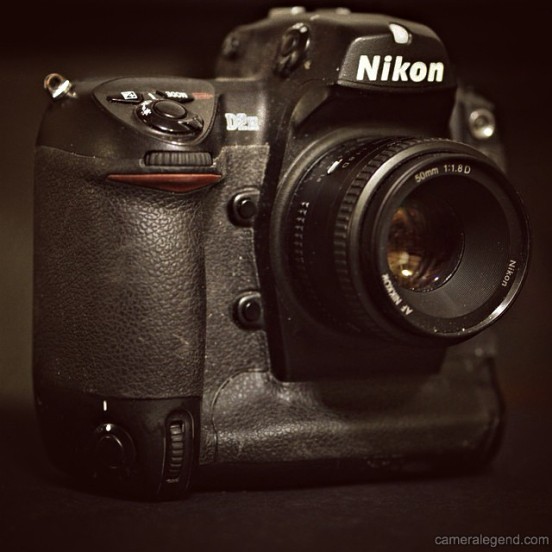
NikonD2H

A well used, well loved Nikon D2H 🙂

Actually, not a lot has changed with regards to Nikon or Canon pro cameras as far as build. The current D4s flagship camera is still a huge monster DSLR. I think this all dates back to the F4/F5 and EOS-1 series film cameras of the late 80s and early 90s.

Some people like this because they feel that “power” while holding a big DSLR. I’m not joking, I actually have a few friends who feel this way. Some will even get grips on their non pro cameras just to feel that “power”…crazy stuff! 🙂

THE SENSOR

The D2H sensor deserves a special mention. It was a 4.1 megapixel sensor that Nikon called the JFET-LBCAST sensor and it is a sensor unique to the D2H and D2Hs. According to the Nikon it was “a completely new type of image sensor, different from CCD and CMOS sensors…”

I won’t go into all the technical details on this, but the sensor was said to be designed for faster image signal read, better color, less image noise, and more efficient power consumption. Nikon apparently took over ten years to develop this sensor.

And the initial response to their creation? The LBCAST (for short) was blasted by critics and folks on the forums who were disappointed with the image noise levels above ISO 400, especially compared to the Canon competition at that time. I very well remember reading posts on Dpreview and Fred Miranda forums on this.

In fact, the D2Hs was created to curtail these criticisms because one of its main selling points was the promise of better jpegs and better high iso images than the D2H.

Without getting into all the details, the camera has excellent ergonomics with well laid out dials and buttons, two control wheels, and horizontal and vertical shutter releases. Everything feels like it’s in the right places. The menus are well organized and easy to navigate. Some of the custom functions might be a little confusing though so check the instruction manual if necessary.

PERFORMANCE

The D2H is a speedy performer. The camera uses the Multi-Cam 2000 autofocus unit, has an AF system with 11 areas, 9 of them cross type, and its AF is fast and accurate. The camera was designed with press and sports photographers in mind and it can do a blazing 8 frames per second in continuous shooting mode.

I come from the film era of shooting and even then I never really liked using motor drives for “spray and pray” shooting, but it’s good to know that the D2H has the capability if needed.

ND2HBoon

“Babs” 2012. Nikon D2H, 85mm f/1.8 AF Nikkor.

I almost always use single shot AF and use the center spot for focusing and the D2H rarely misses a shot for me.

IMAGE QUALITY

Despite having only 4.1 megapixels, the D2H produces very sharp images with generally great color reproduction especially when paired with a good lens and good lighting.

ND2HSZC

“Strike A Pose” 2013. Nikon D2H, Nikkor 105mm f/2 DC lens.

The sensor is quite contrasty and perhaps because of this, images appear more detailed and sharper than you might expect from 4.1 megapixels.

Skin tones can be excellent with flash, studio, or controlled lighting, but can be “off” and take on a yellow-orange tone in low or available light.

Image quality at the ISO 200 base is the best, but ISO 400 and up to ISO 1600 images do take on more noise and loses color saturation, but I like “grit” so I do not find it particularly objectionable. Files like these can be coaxed into that elusive “film-like” digital file with the right kind of treatment in your post processing.

ND2HSTigerC

“Tony Tiger” 2012. Nikon D2H, Tokina 80-400mm f/4.5-5.6 ATX lens.

D2HSMonkeyC

“The Wise Old Man” 2012. Wise beyond his years was this one-eyed monkey master 🙂

You can get ISO 6400 on both cameras via ISO boost, but it looks horrific to me, not film-like, but something you’d expect from a really old digital camera.

The D2H, as with most cameras of that era, can clip highlights quite easily so be careful with exposure.

I have made 13×19 prints from the D2H and D2Hs and they look excellent, even by today’s standards.


DIFFERENCES BETWEEN THE D2H AND D2HS

As mentioned at the start, these two cameras are pretty much the same camera. According to Nikon, the D2HS offers better in camera jpegs, ISO 6400 versus ISO 1600 on the original D2H firmware, faster AF, larger image buffer up to 50 jpegs vs 40 on the D2H, a slightly higher resolution rear LCD (232, 000 dot vs 211, 200 dot), though the size remains the same at 2.5 inches

There may be other differences I didn’t mention so do some research if there is something I missed.

The jpegs are better on the D2Hs, but I can’t say it was a major difference based on my experience with both cameras. If shooting RAW (NEF), the D2H image quality is exactly the same as the D2Hs.

_DCS0026JettFA

“Boy Po” 2014. Nikon D2Hs, Sigma 50mm f/1.4 EX DG HSM.

HOW TO TURN YOUR D2H INTO A D2HS

Well, almost! If your D2H has the last 2.02 firmware or you update any older firmware to the last version, you will have most of the D2Hs improvements on your D2H such as supposedly faster AF, ISO 6400, etc, etc, except the larger image buffer and slightly higher rear LCD resolution.

ISSUES

The Nikon D2H is notorious for its well known, but not deadly “ERR” blank shot issue.

What happens is you turn the camera on, take the first shot and it is blank while the camera gives you an “ERR” error code. This freaks a lot of people out, especially if this is their first experience with the camera.

But take another shot, and the camera is fine for the rest of the day. If you buy a D2H and get this error, it is very common, generally not serious, and you can continue to use the camera as is.

I’ve heard of people sending the D2H for repair for this issue, and after it is “fixed” the issue reappears after some time.

This is generally not something to worry about as it usually affects only the first or second shot. I’ve had it happen to me on two different D2H cameras.

The problem was apparently fixed with the D2Hs and I’ve not encountered this problem when using the D2Hs.

BOTTOM LINE

I got my first D2H in 2006. I sold that first one and got a D2Hs that same year, which I eventually sold and flipped a profit on.

When they became cheap, I missed the camera and went back to the standard D2H which I used as a “fun” camera for several years. But it’s more than a fun camera, the Nikon D2H is a pro powerhouse capable of image quality that was good enough for print and speed fast enough to capture the moment and not let that moment slip by you.

ND2HSEyeTigerC

“Eye Of The Tiger” 2012. Nikon D2H, Tokina 80-400mm f/4.5-5.6 ATX.

If looking for one of these monster Nikons, prices are trending at $100-300 for the original D2H and $300-$500 or more for the D2Hs. The Nikon D2H is quite abundant on the used market, the D2Hs not as abundant.

You can actually find the D2H for under $100 on auction sites, but these tend to be well used, but hey if it works, it’s a great deal. I got my last D2Hs sample a couple of years ago for $150. It had some minor cosmetic issues, but I fixed it up by replacing the camera skin. As mentioned before, I am a camera hunter and I like cheap 🙂

Remember that many of these cameras have been pro workhorses that have been used and abused for years. I would just buy the cheapest one in working condition and not worry whether it’s a D2H or D2Hs. Take my word for it, they are pretty much the same camera and you can certainly get the exact same image quality if you shoot RAW.

The Nikon D2H (and D2Hs) is an amazingly fun camera to shoot with. Working within its comfort zone, images can be crisp, colorful, and look better than anything you’d ever expect from a 4.1 megapixel camera. The small files are a joy to work with in a 40+ megapixel world.

With its unique sensor and all that Nikon pro bodied goodness, the Nikon D2H (and D2Hs) is an unforgettable Camera Legend that took the digital slr out of its infancy to give photographers a more mature product at the time of its introduction. The D2H can still provide amazingly good files even today.

WHERE TO BUY

The cheapest place to find the D2H/D2Hs would be eBay obviously, but there are some seriously beat-up and ugly samples out there on that auction site with no guarantee. If you’re willing to take a risk, go for it.

If you want a safer purchase with a good return policy, then I would check KEH Camera, Amazon or Adorama in their USED section.

Camera Spotting Part I

SonyA6000C

Spotted this Sony A6000 while walking around Best Buy. Wow, this camera looked so much better in silver/black than I thought it would! I personally find silver digital cameras a little cheesy looking, but this one is HOT! 🙂

I was going to do this one as a Flashback Friday post, but I really can’t because these are not “flashback” cameras. Instead, they are very current cameras that are riding on this “retro” trend that we have seen in the past few years. Anyway, I am not in the market for these cameras at the moment, but I liked seeing them.

Have you seen a camera at a shop or hanging on someone’s neck that really caught your eye? If so, I would sure love to hear about it or drop me a link to your photo pages.

I hope to expand this series in upcoming postings. Have a good weekend my friends 🙂

CanonG9XCC

Spotted a new Canon G9X is silver/orange trim. Cool and funky and indeed “dramatically different.”

SOME NEW CAMERA DEALS

Our friends at Adorama passed along some current deals they are having. Just quickly running through them, I said, wow wish I had the money. Especially on that G16, that’s a very nice price for a hot camera!

Some serious savings in here if you’re in the market for any of this stuff. I’m just going to pass along the information as I got it:

Canon PowerShot G16 Compact Digital Camera Bundle

$249 after $350 MIR

CANON G16.

This is quite a deal, every other place has the G16 for at least $379!

___

Canon EOS Rebel T5i DSLR Camera with EF-S 18-55mm f/3.5-5.6 IS STM Lens

$399 after rebate

Canon EOS Rebel T5i and EF-S 18-55mm Kit.

___

Canon EOS Rebel T5i DSLR Camera with EF-S 18-135mm f/3.5-5.6 IS STM Lens

$599 after Rebate

Canon T5i and EF-S 18-135mm Kit.

___

Canon EOS Rebel SL1 DSLR Camera with EF-S 18-55mm f/3.5-5.6 IS STM Lens

+ Canon EF 75-300mm lens

$399 after rebate

Canon SL1 with EF-S 18-55mm f/3.5-5.6 STM.

____

Free Assassin’s Creed Syndicate & 32GB Evo+ MicroSD Card with the Purchase of Select Samsung SSD Drives.

Black Friday pricing is still active on the SSD’s!

Link to all:

Free Assassin’s Creed Syndicate & 32GB Evo+ MicroSD Card with the Purchase of Select Samsung SSD Drives.

Free Shipping. Expires Sunday 12/06

Hope some of you can take advantage of these savings!

Book Review: A History of Photography in 50 Cameras

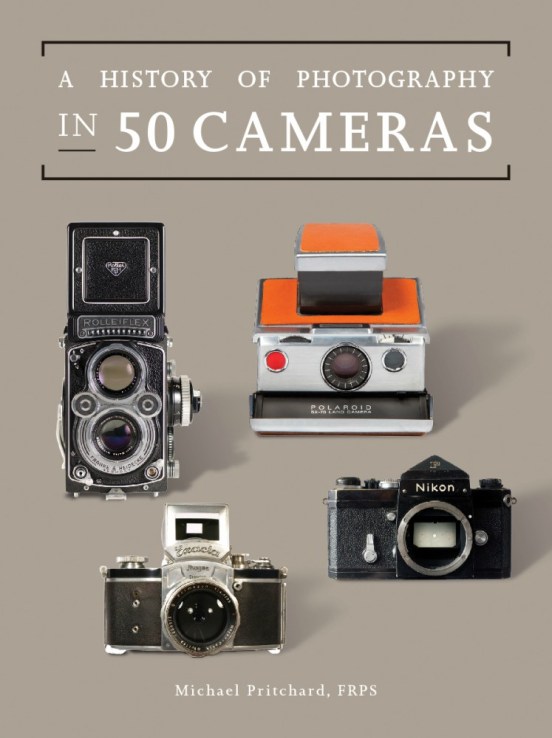
CamerasC

Photo courtesy of Firefly Books.

I love cameras, I really do. Chances are, if something led you to this site, you probably love cameras too. Ok, so now that we agree that we love cameras, how many of us REALLY love cameras?

I received a copy of this book for review and let me tell you, the author of this book REALLY loves cameras, but more importantly, he knows them too!

So you would think that with a site called “Camera Legend” intended to profile legendary, classic, and collectable cameras that I would already have this book. Unfortunately, I didn’t.

I used to collect photography magazines and maybe a handful of photography books, but like many of you, the internet changed me into a “virtual reader” who enjoys reading off the screen. When I received the book, I must say it felt so good to hold and read a real, physical book again!

THE AUTHOR

The author of this book is Michael Pritchard, who is the current director of the Royal Photographic Society, which has the distinction of being one of the world’s oldest photographic societies and is based in the UK.

THE BOOK AND ITS CONTENT

The book is attractive with four iconic cameras on the cover which are the Rolleiflex, the Polaroid SX-70, the Kine Exakta and the Nikon F.

Starting from the world’s first production camera, the Giroux Daguerreotype of 1819, the author, Mr. Pritchard takes us on a chronologically fascinating journey of the cameras and the photography they created through words and through the inclusion of some great illustrations and iconic pictures.

As an example the Leica I of 1925 is profiled and not only does the book contains great information on this legendary camera, but includes a profile of the photographer who made Leica synonymous with street photography, Henri Cartier-Bresson. This is nicely capped off with perhaps Cartier-Bresson’s most famous photo, “Place de l’Europe” from 1932.

This is the famous black and white photo of what appears to be a boy jumping/running on a flooded street with his reflection in the water. This is the photograph that many believe defined capturing “the moment.”

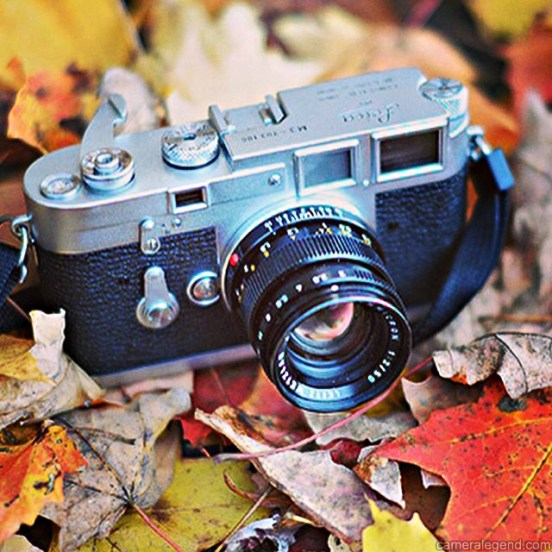
M3

In addition to the Leica I of 1925, the Leica M3 of 1954 is also profiled in the book and is perhaps my favorite M body of all time.

There are many, many fascinating cameras profiled in this book from the ones you’d expect such as the Pacemaker Speed Graphic of 1947 and the Nikon F and the Pentax Spotmatic of the 60s and 70s to the eclectic such as the Scoville Book Camera of 1892 and the Ermanox of 1924 and into the future with the Nokia Lumia 1020 which I profiled here yesterday.

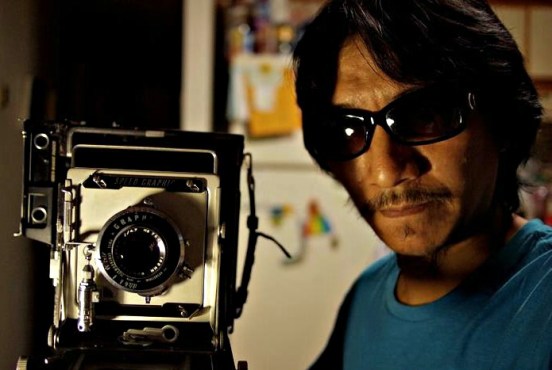
SamSGCCC

The 1947 Speed Graphic 4×5 large format camera is one of the cameras in the book as well as a look at perhaps its most famous operator Arthur “Weegee” Fellig.

One of the things I liked most about this book is the inclusion of the years the cameras were produced, the country they were produced in, and the manufacturer. I love those details!

There is a bit of a fast-forward towards the end of the book, especially when the book gets to the digital era. For example the Sasson digital camera of 1975, the world’s first digital camera was not included, although its inventor, Kodak engineer Steven Sasson is mentioned in the book.

NokiaC

“Into The Future.” The Nokia Lumia 1020 cell phone with its 41 megapixel sensor represents the future of photography and is profiled in the book. You can also find a review of this fascinating cell phone camera on this site as my most recent review before this book review.

I suppose this “fast-forwarding” has to do with trying to get only fifty cameras which I imagine, with all the cameras ever produced, would be hard for anyone writing this book. To his credit, Mr. Pritchard did a tremendous job and did make sound choices for his fifty cameras.

CONCLUSION

When I first saw the cover online, I immediately thought of a book I have called “Camera: A History Of Photography from Daguerreotype to Digital” by Todd Gustavson.

While Mr. Gustavson’s book is a large coffee table sized book, this one comes in a much smaller and more portable package. At least the copy I got.

In many ways, the books appear similar at first, especially when looking at the covers, but the truth is that there are not many good current books on cameras out there right now, so comparisons are inevitable.

While Mr. Gustavson’s book features more cameras, Mr. Pritchard does better by including a lot more information and sample photos, as well as profiles of photographers who used these cameras and/or made the cameras famous.

In summary, this is an excellent book that will not only appeal to camera lovers, but photography and history buffs as well. The cameras, photographs, and photographers highlighted in this book are well selected and the author, Michael Pritchard is about as high an authority on cameras as you can get so you know you are getting accurate information.

If you love cameras and photography this book belongs in your collection. Even if you, like I, live in a virtual world where everything is “disposable” and you no longer buy books or haven’t bought one in a while, “A History of Photography In 50 Cameras” deserves a spot on your shelf of Camera Legends.

WHERE TO BUY

The book may be bought directly from Firefly Books or AMAZON.

Pocket Power Phone: The Nokia Lumia 1020 41mp Cell Phone Camera

NokiaC

The Nokia Lumia 1020 cell phone from 2013. “Is that a banana in your pocket or are you just happy to see me?” Mae West might have said of the yellow Nokia 1020 with all of its 41 megapixel glory 🙂

It may seem out of place on this site where classic film and digital cameras are profiled but as the first cell phone camera with a headline grabbing 41 megapixels, the Nokia Lumia 1020 is actually a perfect fit here.

The Lumia 1020 was introduced in 2013 as a modern day smartphone that runs on Windows 8. It has a touch screen and is capable of doing almost anything else a phone from 2013 could do. Its main distinction from the competition was that the phone held a 41 megapixel sensor inside. Yes, 41 megapixels in a cell phone! In 2013, that was more megapixels than almost any consumer camera on the market, point and shoot or DSLR.

To keep the record straight, the Nokia 808 Pureview was the first Nokia with a 41 megapixel sensor. However, it ran on the Symbian operating system which a lot of people don’t know about, and this probably kept a lot of people away. The 1020 aimed to go after the market that the 808 missed.

When I first heard about this phone, I was interested in it, as any gadget freak would be. However, as a photographer and lover of traditional cameras, I was more than a little skeptical.

AS A CAMERA

The Nokia 1020 has a 41 megapixel sensor, a 4.5″ display, and a 26mm f/2.2 Carl Zeiss lens and optical stabilization. Just on those specs alone, it sounds killer!

The camera does have a front facing camera as well, but that one only does 1.2 megapixels of resolution.

While the camera does have a 41mp sensor inside for the main camera, the actual highest resolution that the camera churns out is about 38mp. Due to slight cropping from the aspect ratios available, some pixels are lost. There may be more to this technically, but that’s how I understand it. However, 38mp is close enough to 41mp that you’d not likely notice the missing 3 megapixels 🙂

Hey listen, I won’t claim to understand all the thingamajigger behind this technology. Wiki has an excellent page on it and there are other reviews out there that can explain it much better than I can.

For easy file sharing, the 1020 uses an over-sampling technology where the 41 megapixel images are reduced to a 5 megapixel files without loss of quality. You can get the full resolution of the camera when using Nokia’s photo transfer app.

As a camera, it is very slow. The shot to shot time, the AF, the shutter lag. All slow. You will not be taking any action shots with this camera, even at low resolution.

If you hit the “shutter” icon, it will sometimes miss its target while focusing. The best way I have found to get consistently sharp shots with the 1020 is to first tap the screen at your target to achieve focus, then hit the shutter. This will give you many more sharp shots than just hitting the shutter “button” and because the camera is slow anyway, you’re not really going to lose any more time doing it this way.

There is a definite lag between shots, reminds me a lot of the lag time in old digital point and shoot cameras.

AS A PHONE

Don’t ask. I don’t use it as a phone. I use my iPhone which is definitely more intuitive to me. I was going to say the Nokia “sucks” as a phone, but that might be unfair! Just so you know that I’m not an Apple fanboy and I don’t hate Nokia, fifteen years ago, in the early days of mass consumer cell phones, Nokia was my choice 🙂

The phone has a dual-core 1.5ghz processor, 32gb of mass memory and 4G LTE according to the official specs.

Battery life is not great and it seems to get worse over time. I’ve had the phone for over a year now and I find myself charging it more frequently. I can’t really give you numbers because everyone uses their phone differently. This is not my main phone, I don’t make phone calls or play games with it, I just use it as a camera. With sporadic usage, a charge will last about a day or so just to give you an idea.

IMAGE QUALITY

At its best, the Nokia 1020 gives an impressive output. At full resolution, images are very crisp and has amazing detail. But that’s “at its best” which means just like the Sony A7R or any high resolution camera, you don’t see the advantage all the time, especially if you’re just taking quick snapshots.

NokZCCC

“Baby’s Nest” 2015. Nokia Lumia 1020. This image shows some of the strengths and weaknesses of the Nokia 1020. On one hand it’s colorful and sharp. On the other hand, you can see the clipped and unrecoverable highlights on the sweater showing the camera’s limited dynamic range. I believe the casual viewer would not see anything objectionable with this image. As for the subject, I was walking around when I found a baby chickadee on the foot of a giant tree! 🙂

And unlike the A7R or its siblings, the images do not hold up as well at 100 percent, and I did not expect it to. Apples and oranges. You have to be realistic; I mean this is a cell phone camera with a small high resolution sensor. Not to degrade the 1020, it’s an amazing cell phone camera, but it is still a cell phone camera. The A7R is a true digital camera with a high resolution full-frame sensor. The Nokia costs roughly $180 give or take, the Sony costs $1800 give or take! Be realistic with your expectations and you will love the Nokia 🙂

NokTreesC

“Autumn Legs” 2015. Nokia Lumia 1020. The Nokia Lumia is capable of very colorful images. This one was tweaked and may be a little too funky! I am no longer using Photoshop and am still trying to hone my post processing skills on a new program, please forgive me 🙂

Ok, so it doesn’t hold up well against a high end full frame camera. How does it do against a high quality point and shoot like the Ricoh GR (16mp) or Sony RX100? I find that at 100 percent, the images from the two cameras mentioned look better than the Nokia. Tones look smoother, image definition holds up better on the high end point and shoots.

NokTreesHi

This is a 100 percent crop of the previous image straight out of the 1020. No processing was done to the image. Please click on the image for a better view. Note the softness and almost “painterly” look at 100 percent.

Taken on its own merit, the Nokia makes a fine secondary camera or even as your main point and shoot camera. While the images can be very sharp, dynamic range seems limited which means you need to be careful with exposure and the files are not highly pliable which means they won’t take a lot of messing around with in your post processing. It doesn’t take a lot to turn the files bad fast.

The files, which can be beautiful, appear to have a distinctly ‘digital’ look, perhaps due to the limitations of putting such a high res sensor on a small 2/3″ sensor.

Some of you know that I had a hard drive crash recently that knocked out a lot of my files. I was able to recover most of them and will be adding photos I took with the Lumia 1020 in 2014, so this page will get another update soon.

A lot of the readers of this site also know that I’m a fan of that elusive “film-like” digital file and this is a subjective thing, but I don’t see that with this phone. But hey, there’s nothing wrong with it. It looks digital because it is digital and yes, digital files can be fine too 🙂

Low light shots are surprisingly good. Not 5D Mark III good, but very good for a phone camera. It may sound vague, but any experienced photographer will have an idea of what I’m saying.

NokSamII

“In The Midnight Flower” 2015. Nokia Lumia 1020. An available light sample from the 1020. I tried to extract the exif info for you so we could see what ISO the camera selected, but no exif would show on the programs I used. Please click on the photo for a larger view.

BOTTOM LINE

I got this phone over a year ago primarily to use it as a camera. Once I got over the frustration of using it as a camera, I’m able live with its weaknesses because I’m attracted to its strengths, which is a sharp lens and high resolution files.

In many ways, this is the same reason why people are attracted to Sigma cameras. They are slow as a turtle, but the image quality makes up for it. Some can live with that, some can’t.

If the 1020 was my only camera phone, I probably couldn’t live with it, which is why I use the camera on my iPhone 5 more often. However, as a specialty tool for static subjects, the Nokia is fine.

Cell phone photography has come a long, long way. It is the number one method of choice for most of the world’s population today. I don’t remember the numbers, but more people take and share photos with their phone cameras than any other type of camera by a wide margin. You don’t even need a poll to know this. You can see it every day!

To me however, cell phone camera quality still lags behind the best point and shoot cameras, but it is getting there.

It may be too soon to call the Nokia Lumia 1020 a Camera Legend, but if any cell phone camera deserves a spot on the list of legends, the Lumia 1020 should definitely be considered.

WHERE TO BUY

The Lumia 1020 is now easily found and the prices very affordable. If looking for one of these, prices are trending at $100-200 on eBay, with $200 on the high end. You may even find them under $100, but these usually have cracked screens and other flaws.

Your best bet for a safe purchase on the 1020 is probably through AMAZON. Especially since today is CYBER MONDAY I would definitely check for deals if I were in the market for this phone!