Canon T90: “The Tank”

SCFA

“The Tank” 2013. My war-torn Canon T90 and 55mm f/1.2 Aspherical. They may be in “ugly” condition, but damn I love this combo!

The Canon T90 is a 35mm SLR introduced by Canon in 1986. It was their most advanced model in the classic Canon FD mount.

One look at the T90 and you can see that it was THE bridge camera to the Canon EOS line of cameras, which was introduced only a year later in 1987 with the Canon 650.

DSCF0648CanonT90MKIIC

“All In The Family.” The Canon T90 from 1986, side by side with the EOS-1D Mark II digital from 2004. Note the family resemblances, despite the incompatible lens mounts.

THE FD MOUNT OUTRAGE

Although Canon introduced a Cosina made T60 model in 1990, the FD line was effectively over with the introduction of the EOS mount in 1987.

At the time, there was a bit of outrage from loyal Canon FD owners who now had their lenses rendered useless on the new incompatible EOS mount. They felt betrayed, and many even switched to “the enemy” Nikon, pledging they’d never use Canon gear again. Even today, I still hear of people who never forgave Canon for abandoning the FD line. Talk about crazy passionate! 🙂

Anyway, as great as the FD mount was, I believe that time has proven Canon right in their decision to change to the all electric EOS mount. With this mount came super-fast and near silent “Ultrasonic” motor autofocus lenses, super telephoto lenses, and some very unique “L” lenses such as the 85mm f/1.2L, the 135mm f/2L, and the 200mm f/1.8L, which are among some of the finest lenses ever made by anyone.

The larger EOS lens mount also made it possible to mount “alternative” lenses such as Olympus OM, Nikkors, Leica R, and Contax/Yashica mount lenses to name a few, which was not possible with the FD mount.

BUILD AND HANDLING

If you ever used an EOS camera, and most of you probably have, then you’d be pleasantly surprised to see and feel how much the T90 handles like an EOS camera with its buttons and front right hand dial.

The camera is built well, although it feels a little plasticky with its polycarbonate body. It is however solid and rather heavy, especially with the required four AA batteries and a lens attached.

The body is molded as if there was an accessory battery grip built on to the camera, so if you’re one who likes those bulky add on grips, you’ve got one built-in with the T90. It’s a beast! They didn’t call it “The Tank” for nothing 🙂

PERFORMANCE

I’ve used a couple of these cameras over the years and they have always provided near perfect exposure in aperture priority or program modes.

a0033_33babyjpfa1

“Village Of Love” 2013. Canon T90, 55mm f/1.2 Aspherical on expired Kodak Ektar 100. A little bit of love going on in NYC’s Greenwich Village! This image I think has a bit of that 80s look to it. My method of creating “vintage” modern photos is to use “old” equipment vs apps or filters.

The T90 has a brilliant metering system, which included center-weighted, average, partial, and spot metering, highlighted by its famous “multi-spot” metering which will allow you to spot meter several readings in a scene and have the camera average them out for an accurate reading. You also have TTL flash with compatible Canon flashes.

There are only a handful of film cameras with multi-spot capabilities, the other two that I can think of offhand would be the Olympus OM-4/4Ti and Canon’s own EOS-3.

This is also useful if you’re one of those Ansel Adams acolytes who embrace the Zone system.
IAsleepBWPba

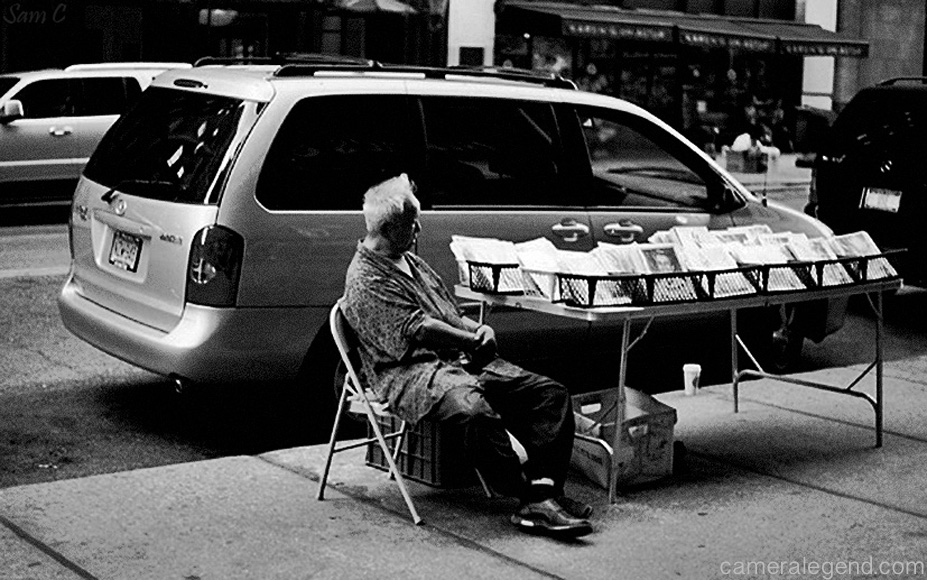
“I, Asleep” 2003. Canon T90, 50mm f/1.4 FD lens, film unrecorded. NYC is known for being a dynamic city, but with a gig this boring…hey! 🙂

I think the reason multi-spot is less of a selling feature these days is simply because with digital, you can just retake the photo if it didn’t come out the way you wanted. Progress has made life for us photo bugs easier, if not necessarily better photographers, technically anyway.

imgT9055Shaft'047Cam

“The Mac Is Back” 2013. Canon T90, 55mm f/1.2 Aspherical on expired Kodak Ektar 100. Legendary NYC photographer Louis Mendes. Lou is a well known figure on the streets of New York. Even if you don’t know him, you probably have seen him if you walk around the streets of Manhattan enough. With his throwback “Shaft” look and his iconic Speed Graphic, Lou takes one of a kind instant portraits and has made a living and a legend out of it. When I saw Lou again about a year later, he actually remembered that I shot him with a T90. Sharp man!

BOTTOM LINE

The Canon T90 and the vast line of FD and older breech mount lenses are among the best value in film photography today.

If you’re a student, new to film, or an old pro looking to rekindle your photographic passion, and you love electronic cameras, the T90 and a couple of lenses would be a good place to start.

ZJT90Cam

“That Aha Moment” 2013. Canon T90, 55mm f/1.2 Aspherical on expired Kodak Ektar 100. Colors fading and shifting…a “natural” Instagram! 🙂

If shopping for a T90, prices are dirt cheap these days and trending at $20 to $100 depending on condition. Anything more is a ripoff, unless a really good lens is included.

One problem well known with the T90 is the famous “EEE” error message which usually indicates a sticking shutter. Be forewarned that many T90’s develop this problem as they age. How do you get around this if your T90 develops this problem? Well, first I’d try putting in a fresh batch of batteries. If that does not work, the best solution is to pick up another one, preferably cheap. You’d probably pay more trying to repair it, and that is if anyone would even be able to repair the T90 these days. As I said, just pick up another one 🙂

You should also fire the shutter from time to time if the camera is not in use for long periods, as with all film cameras. This can, but is not guaranteed to help avoid the EEE error.

Despite this one potentially serious flaw, there can be no denying one thing that is true…

The Canon T90 is a Camera Legend and considered by many to be the best camera Canon ever made. At the prices they’re going for today, you could have one of the greatest, most technically advanced film cameras in your hands for the price of dinner. Not a bad deal in my book!

CANON T90

PROS: Well built and sturdy; Takes cheap and awesome FD glass; Excellent metering; Multi-spot metering capabilities; Plentiful on the used market; dirt cheap 🙂

CONS: Prone to the infamous EEE error, mostly due to a sticking shutter problem; Electronics that do not age well; A bit confusing to use without user’s manual; Bulky and heavy with lens attached and batteries installed.

The Polaroid One Step Rainbow

PolaroidOneStepC

The Polaroid One Step Rainbow. This camera is cheap AND iconic at the same time! A rare combination.

This may not be the greatest picture taking camera in the world, with its plastic lens and plastic build, but the iconic Polaroid One Step SX-70 Rainbow is one of the Polaroids to have if you collect cameras.

And they are quite cheap on eBay. Never pay more than $40 for one of these. As a Camera Legend though, that it is! I think this is the model that inspired the Instagram logo. I mean look at that Instagram logo…The Polaroid One Step Rainbow IS Instagram!

The Instagram icon.

With its fixed focus lens, and virtually no ability to manually control this camera, save for the lighten/darken switch, this camera is perfect for those “ugly” photos I wrote about here. You know, those washed out, faded, blurry photos that people find “artistic” 🙂

Note: The only thing this camera has in common with the original SX-70 I featured before is that it takes SX-70 film, which is much less common that the 600 series film. Other than that, the cameras are night and day in quality.

SX

The original SX-70. The differences in quality between the One Step and the original SX-70 are night and day. The one thing they share in common is that they both take SX-70 film, which today means film from the Impossible Project.

The Olympus Pen F/FT Series

The Olympus Pen FT with the 35mm f/2.8 Zuiko pancake lens.

Classic half-frame camera from the brilliant mind of legendary Olympus camera designer Yoshihisa Maitani.

The camera takes two frames on one 35mm frame. That’s why it’s called a “half-frame” camera. So on a 24 exposure roll, you get 48 shots.

You might be inclined to think that this would lead to inferior quality photos as compared to a full sized 35mm shot.

However, in my experience, the quality of the Zuiko lenses for the Pen F film system were so good that you really can’t tell the difference.

Mr. Maitaini was such a brilliant, brilliant camera designer and his Pen F/FT creation lives on in the Olympus Digital Pen series of cameras.

Note: Sorry this was meant to be a short post. I will be updating this with images from the Pen film cameras in the near future. Thanks for stopping by!

The Koni-Omega System

KoniC

Koni-Omega Rapid 100 and 90mm f/3.5 Super-Omegon

Awesome and affordable brute of a camera.

This was my first medium format camera back in the 90s. The system itself dates back to the 50s, although the Rapid 100 was a later production model, maybe 70s or early 80s. There are numerous bodies including the Konica Press, Rapid, Rapid M, and maybe a couple older bodies. The Rapid 100 and 200 seem to be the later models and probably better buys than the older models.

In the 90s, I became interested in medium format photography after reading a book by the late Leif Ericksenn called “Medium Format Photography.”

He had some photos from the Koni-Omega that he used on a tv production and I began to seek one out.

The Koni-Omega is a rangefinder camera system that consisted of several bodies and interchangeable lenses. The lenses are sharp. They make for excellent images on 6×7 negatives or slide film.

They are not expensive, but big, bulky and a bit fussy to use, which is probably why I sold it. However, the Koni-Omega system is capable of excellent results at a bargain price. The lenses have built-in leaf shutters and the cameras do not need batteries to operate. But again, they are BULKY and I suspect that is the reason they end up getting sold by owners who sell them.

Prices are trending anywhere from $50-200, depending on body, lens, and other accessories.

If you want to get your feet wet in medium format photography without breaking the bank, this is it.

Note: Sorry I do not have any photos from the Koni-Omega to share with you. As mentioned, I got it in the 90’s and at that time, there was no such thing as a great economical home photo scanner, at least not one that could do medium format on a budget. However, I do remember having prints that were done for me by a photo lab, and if I can find them, I’ll be sure to scan them in and update this article. Thanks for stopping by.


The Hasselblad 500C and 80mm f/2.8 Planar

HassyC

I took this shot in 2005 to sell this outfit when I was broke and desperate for money. Needless to say, it worked and off she went to a better home.

However, I have fond memories of the Hasselblad 500c and 80mm Zeiss lens. It’s a modular system and a little bit fiddly to play with, especially if you’re new to medium format film cameras, but the results were superb.

79859294.0wUnA13p.HollywoodBabyPbase1

“Hassy Baby” 2005. Hasselblad 500c, 80mm f/2.8 Planar. Do not remember the film unfortunately. I used a Softar filter to give the “glow” to this photograph.

Prices are trending at $550-800 for this outfit, and $1000 or more for the 500cm with the 80mm Planar. Find the best one you can afford because if you love film, this will be a keeper…Unless you go broke like I did 🙂

This is a tribute to the days when Hasselblad were the pinnacle of medium format cameras and not the company that today sells rebadged Sony cameras as “lunar” or “anniversary” editions for ridiculously high prices.

Hasselblad is a Camera Legend with a rich legacy that I absolutely respect, so let’s forgive the Sony rebadges 🙂

The Instagram Society And The Age Of The Ugly

Did you take a perfectly good photo or even a bad photo and “funk it up” using one of those cool Instagram filters? Come on, admit it…Yes, we’ve all done it! 🙂

In the past few years, there has been a resurgence of what I’d like to call “ugly” photographs. No disrespect intended to any one photographer, I myself have posted many “ugly” photos!

DianaCam1

The Diana F+ “Toy Camera” by Lomography. Worn out and missing its plastic lens.

So what do I mean by “ugly” photos? Well, I’m talking about photos that are blurry, have lots of digital grain or noise, vignetting, fake scratches, funky colors, HDR, and a myriad of other things that try to accentuate the actual photograph.

When I started taking an interest in photography in the early 80’s, we’d always send out our film for developing and prints. The “good” photos were sharp, clear, and well exposed. The “ugly” photos were blurred, under/over exposed, and the colors were funky. The ugly photos were relegated to the trash bin, or for me, the bottom of the stack since I never throw away photos.

MinoltaJoeDadC

“Family Classic 1985” Minolta X-700, 50mm f/1.7 MD lens. What a “real” vintage print from nearly thirty years ago looks like. Dirty, scratchy, colors getting funky, but wonderfully nostalgic…to me anyway 🙂

In the film days, I don’t remember many people looking at a blurry print with wonky colors and thinking it was beautiful. Yes, you had the occasional odd print that was technically horrible, but looked pleasing to the eyes. However, there weren’t many of them.

Today though, people relish in these things! Why? Well, I’m sure a lot of it has to do with today’s Instagram society. Of course, Instagram provided an easy way to “funk up” your photos by making them look old, faded, blurred, etc, etc, basically all the stuff I listed above.

YashicaC

The Yashica EZ F521 “Digital Holga” Toy Camera.

The main reason I believe for today’s interest in “ugly” photos and probably one of the reasons why Instagram and “Instagram-like” filters are so popular these days is simply due to one fact…

As digital cameras get better and better, the images look cleaner and cleaner. They look “perfect” at times, and as such the images begin to look homogenized, pasteurized, and sterilized. A technically perfect image begins to look bland because of how clean it is.

YashicaHydrant

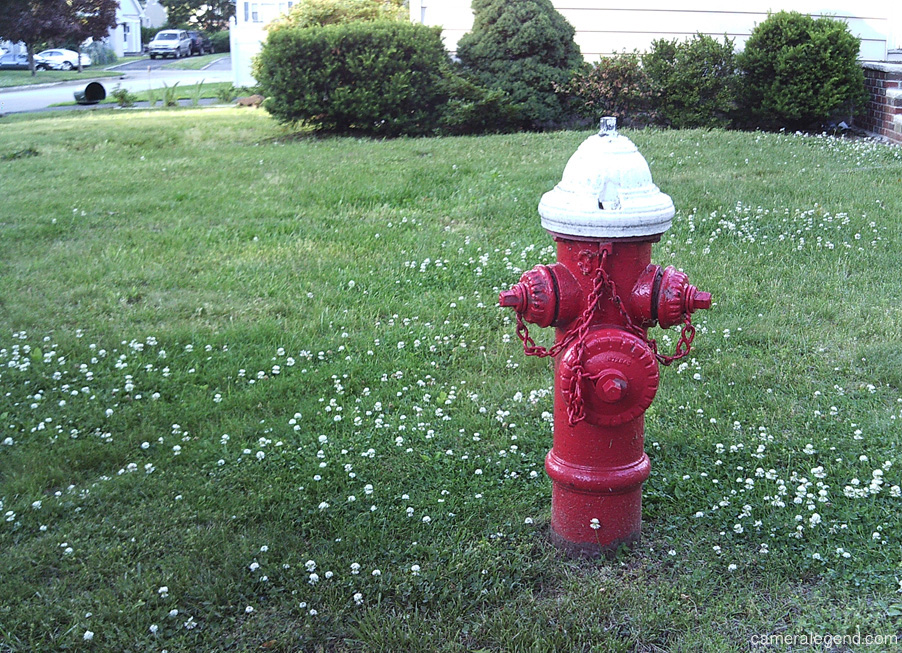
“The Hydrant” Yashica EZ F521. A perfectly bland, unremarkable image from the Yashica digital toy camera. Something that could only be appreciated by the “Age Of The Ugly” society 🙂

And with so many people into photography these days, some try to stay above the crowd by using these filters or techniques that will give that extra “oomph” to their images.

There’s also a bit of nostalgia for that film-like look. Many youngsters today are actually shooting film. Some actually love it, and some are hipsters riding on what they believe is retro cool. I suspect most are in between.

I ran into a teenager recently in Central Park shooting with a Polaroid One Step, and I thought “Dude, seriously?!” 🙂

Anyway, I was happy to see such a young person with a Polaroid, it can only be a good thing.

SX

The iconic Polaroid SX-70. Apologies for the poor quality of this photo. It was a quickie done for my Instagram stream.

Speaking of Polaroids, this is probably where it all began. Let’s face it, Polaroids were never about high technical quality. They were originally intended for quick prints and proofs. The resolution was never really high on small Polaroid prints, except for some of the oldest instant films which have not been made in years.

The Polaroid’s best distinction was the ability to give a unique “look” due to the soft prints, the unpredictable color shifts, and the best of user error. And each and every Polaroid instant print is unique because each print represents that very moment the shot was taken.

SpeedGraphicCam

“Speed Graphic” 2011. A Polaroid print, shot with the Polaroid SX-70 and Impossible instant color film.

The most ironic thing to all of this “ugliness?” Well, since I started shooting film in the 80’s I have seen 35mm film improve year after year with super-sharp films like Fuji Velvia, Kodak Ektar, and a few others. Then you needed to step up to medium format to get even better, sharper images with even less noise. And then, if you wanted to take it further, you had large format film with its superior sharpness, detail, resolution and lack of grain.

All of a sudden, digital photography comes of age in the late 90’s and early 2000’s. The cameras and lenses got progressively better and sharper. The images had less and less digital noise, distortion, and we get to cameras and lenses that can take near perfect images in almost any situation, which is where we are at today.

So as a “backlash” to all this progress, we are back to wanting “ugly” 🙂

SamC

“Underdog” 2011. Shot with the Yashica EZ F521 “Digital Holga.” Toy cameras with all their “ugliness” can be lots of fun to use and can produce unique images.

Is this a good thing or a bad thing? It can be neither or both. It can be a good thing for creativity, for something different. However, it can be a bad thing because it gives everyone a perfectly good excuse to be a sloppy photographer.

Again, I’m not knocking anybody, but trying to understand the evolution of what I’m seeing in photography today. I’m guilty as sin of posting many, many ugly photos! Personally, if an “ugly” photo is done well, it can be a beautiful thing. Some people do it really well. I am not one of them though, but I try 🙂

Butterfly

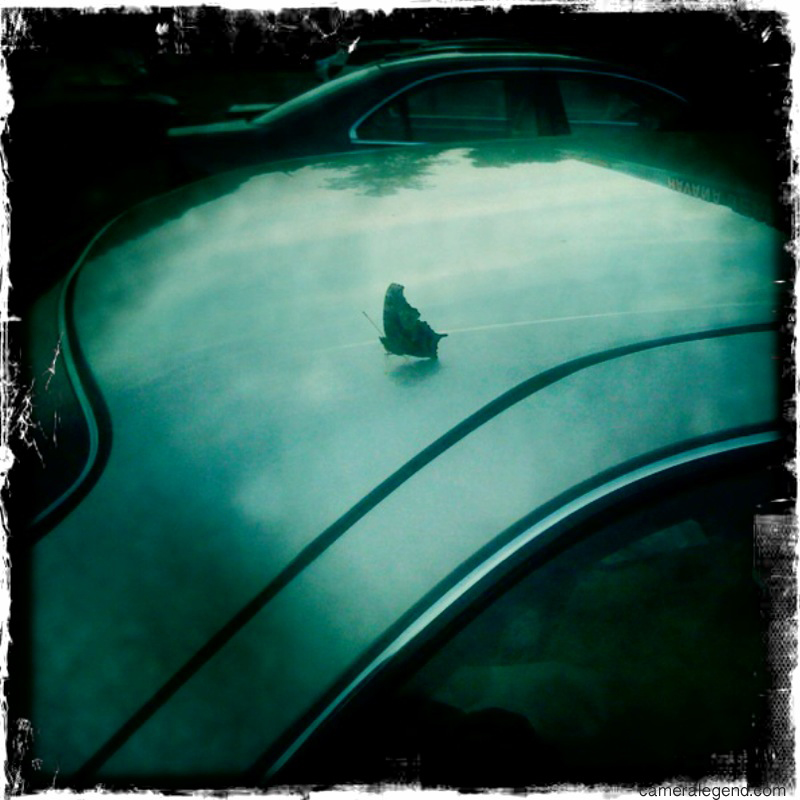
“GPS” 2010. Shot with the original 2mp iPhone and Hipstamatic.

But to understand why people would throw all this photographic and technical progress away and funk up their photos with beautiful ugliness, there is no answer. All I can think of is that line of the Michael Jackson song…”If they say why, why? Tell ’em that it’s human nature” 🙂

GinSmok1

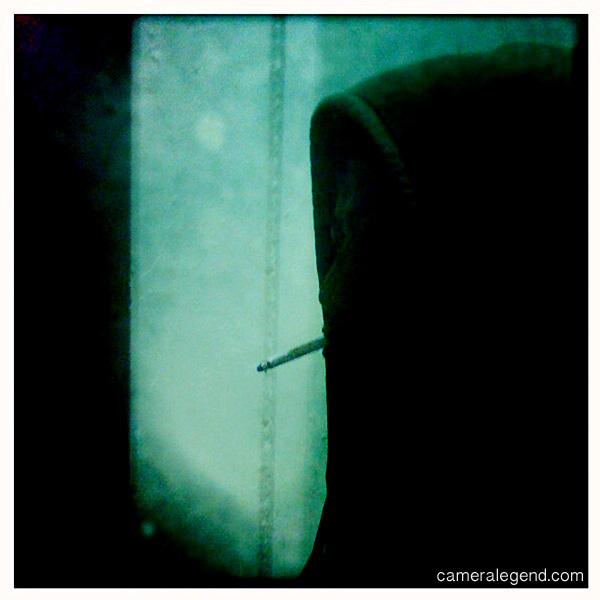
“Smoke Daddy” 2011. Shot with the original 2mp iPhone and Hipstamatic.

SXCam

“SX” 2011. Shot with the original 2mp iPhone and Hipstamatic.

Note: This is just one man’s view and commentary. I do realize that art is highly subjective. In fact, I used to say myself, “One man’s art is another man’s junk.” 🙂

However, this is about photography more so than art and when “art” begins taking over your photographs, then you’ve got something different from photography. Thanks for stopping by! I do appreciate the time you spent. Thank you.

The Pentax Auto 110

Pentax110C

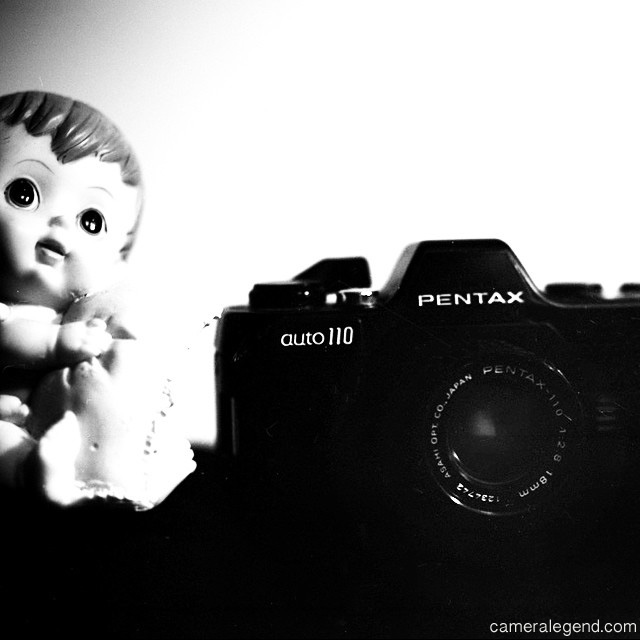
Pentax Auto 110 and Pentax 18mm f/2.8 for the Pentax System 10.

The Pentax Auto 110, introduced in 1978, is a truly iconic “little” camera. Part of the Pentax 10 system, including the Pentax Auto 110 Super, they were among the smallest interchangeable lens SLR’s ever made.

I still have memories of my Mom’s first camera which was a long, odd looking Kodak 110 camera.

Believe it or not, you can still get 110 film these days from companies like Lomography. Developing the film however, is another story! You’ll probably have to send it out to various online vendors who can develop the film for you.

As a young boy, I was fascinated by the ads I saw for the Auto 110 in the old photography magazines. When I finally saw it in real life, I could not believe it was a real camera!

There were 5 prime lenses, the 18mm f/2.8, the 24mm f/2.8, the 50mm f/2.8, the 18mm “Pan Focus,” the 70mm f/2.8 telephoto and one zoom, the 20-40mm f/2.8. Just like today’s micro 4/3’s or other small sensor interchangeable lens cameras, you have to convert the lenses to their 35mm counterparts to get the true focal length. For example, the 18mm lens would actually be a 35mm in focal length if it were a full-frame 35mm slr.

Because 110 film is pretty much dead or at best, a novelty today, you can get the Pentax Auto 110 and a few lenses pretty cheaply. Some of the lenses though, such as the 70mm f/2.8 or the 20-40mm zoom can be hard to find.

The Pentax 10 film series is no doubt the inspiration for the Pentax Q system of today and they remain a marvel of the amazing camera engineering of days gone by.

Note: Shot this a few years ago using a Speed Graphic 4×5 large format camera on Tri-X film.

Now why would anyone want to do this when you could just use your phone or digital point and shoot? I don’t know, I like to make life hard I guess 🙂

No, actually I want an easy life, as easy as possible! However, the Speed Graphic 4×5, or any large format camera requires a lot of practice to master and I was practicing the craft, so to speak.