Good Saturday you awesome WordPress camera geeks! Just keeping you guys in the loop with my latest video review.
The camera is the Minolta TC-1. It is a compact “luxury” point and shoots from what I consider the glory days of high end point and shoots cameras in the 1990s.
Its peers are other cameras you might remember such as the Nikon 35ti, the Konica Hexar AF, the Leica Minilux, and the Contax T2 & T3, and maybe a few more.
I’ve written about this camera a few times over the years here but I’ve put all my best information into this video.
The Minolta TC-1 and its peers are no doubt amongst the most desirable compact film cameras of all time but for many, many reasons I no longer consider them good buys.
I address this at the end of the video with some brutally honest commentary of which you’ve probably not heard me say before.
I thought I should do a video on all the luxury point and shoots before I expressed my true views but that would be a really cruel thing to do to the people! 😂 So I’m putting it out now so that the more sane minded can save themselves the heartache in addition to saving a lot of money 👍
I have chased these cameras and endured a lot of headaches when they eventually broke down or developed issues. Let my story be a cautionary tale. I did it so you don’t have to. But like a moth to a flame burned by the fire, if you feeling like taking a gamble that could end up in a blaze of glory I’m not going to stop you! 😂
Thank you guys for checking it out and if you’re on YouTube please comment, like, and subscribe it helps a lot with the YouTube algorithm to get the video out to more people. Thanks for your support I greatly appreciate it! 😍🙏👍
Good day you guys! Just keeping you guys in the loop. This may not be what you’re looking forward to on this channel but if you’re not already on YouTube and you’ve been wanting to do it, this is your video.
I started this YouTube channel about six years ago after years of procrastinating. I wish I had done it sooner! I hate the actual making of the videos, the editing, but I love sharing the knowledge I have gained over the years especially from reading here in WordPress, from forums like Rangefinder Forum, Fred Miranda, Photo.net etc, etc, as well as my own discoveries through real world experiences.
Just like many of you middle ages, I started life on film cameras but was young enough at the dawn of digital to love and appreciate it.
This video is directed at a certain and particular group of people but the message applies to anyone young or old or in between!
The point of this video is that there is so much knowledge out there that’s been hidden from the world. There’s things that YOU know that maybe I should know. There’s things that you and I don’t know about certain cameras and lenses that someone out there knows. They may have had the knowledge for years and years but for some reason or another they never thought to share it.
If you have a passion you should SHARE it with the world. If you have an idea that you CONCEIVED and you actually BELIEVE in it, you can ACHIEVE it!
I’m not making money from YouTube but this channel was not started because of money. I wanted to share my passion for cameras and lenses. If the money comes, it comes. If it doesn’t, it doesn’t but if you need more motivation, the potential for making money on YouTube is there. What have you got to lose?
Thanks to anyone who watched today’s video. I don’t expect a lot of views on this one but maybe you’ll surprise me Please comment, LIKE & SUBSCRIBE to help keep this channel growing! Thank you for your support!
In an effort to stay connected with this great community, I will start posting more stuff. Sometimes it might be long, sometimes it might be a short “Photo Of The Day” like this one 😂
This image was taken with a Leica M6 & 50mm f/2 Summicron-M and CineStill BWXX film, developed in HC-110. I like the look of this film! I have to shoot it more to get a real feel for it, but so far I like it a lot. Have a great weekend you guys and happy shooting! 😍❤️👍
Good day you awesome and war torn camera geeks! If you have seen any of my YouTube videos you will hear me often say that the reason you don’t know what the next Camera Legend will be is because I don’t know and that is no truer than today!
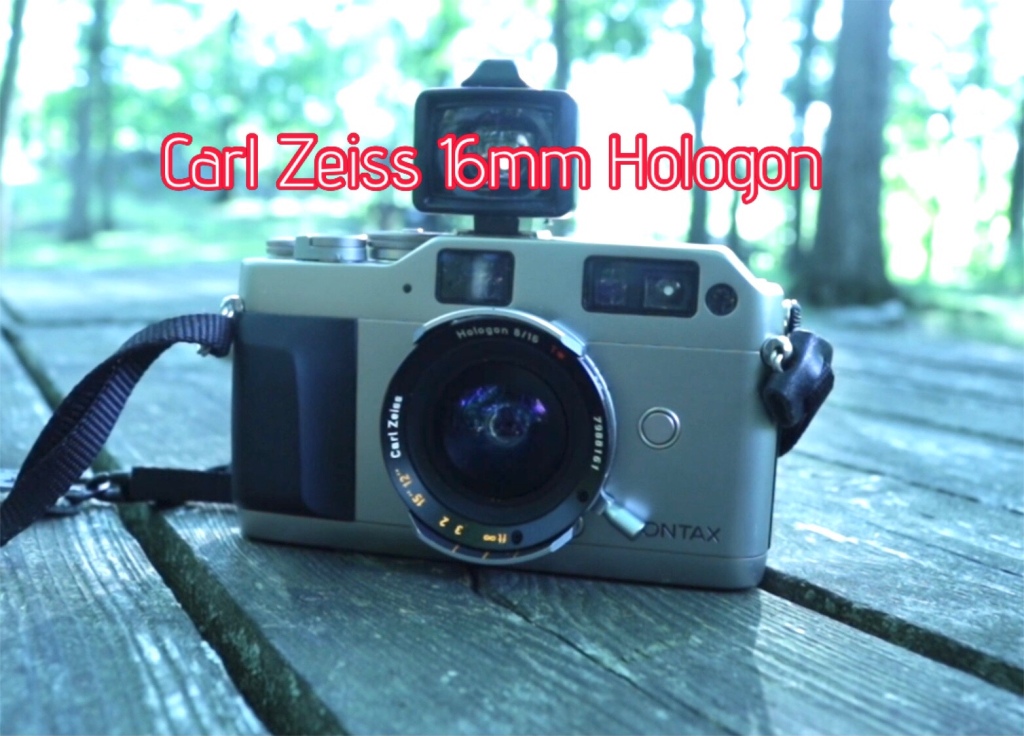
In this posting I will give you my images and impressions on the Contax G1 and the legendary 16mm f/8 Carl Zeiss Hologon ultra-wide angle lens. But first a little bit of my experiences…
THE CONTAX G1
The Contax G1 is the original Contax G legend introduced by Kyocera in 1994. It is a high end rangefinder-styled (not a true rangefinder) autofocus, interchangeable lens camera. The camera is handsomely finished in titanium and oozed appeal from nearly all camera lovers for its luxurious looks as well as for the superb line up of Carl Zeiss lenses made for it.
The G1 was followed up in 1996 by the Contax G2 which improvements and refinements such as a higher top shutter speed. The G1’s top shutter speed is 1/2000 while the G2 is 1/6000 but the most noticeable difference between the two cameras is the improved autofocus performance of the G2.
MY EXPERIENCES WITH THE G1
I lusted for the Contax G1 the first time I saw it in the photography magazines in the 1990s but I did not get my first copy till 2005. As with most people, my first lens for it was the superb 45mm f/2 Planar. I used that combo for about a year and loved the results. However, as I do too often, I sold the outfit to buy other equipment. Don’t forget the mid 2000’s were an incredible time for digital camera development and I was bit hard by the digital bug then!
I eventually got another G1 and also a G2, and I got these when the tide was low and prices were super low on film bodies.
While the main complaint about the G1 seemed to be on its autofocus performance, I never really felt it was an issue for me. Yes, the G2 has better AF but I could live with the G1 mostly adequate autofocus and its smaller size. I mostly used the G1 with the 28mm f/2.8 Biogon and the 35mm f/2 Planar.
The 16mm Hologon was never a consideration really due to its price and rather restrictive specs. It really seemed like a specialty lens.
YouTube Video
For those of you who prefer a more dynamic experience here it is! As I’ve mentioned many times, I’m not a videographer but I’m trying to improve the video production as you’ll see. It’s still low budget, don’t get me wrong, but I’m trying! 😍
The “Mystery” Of The Hologon
The 16mm f/8 Hologon is no mystery really. It’s out there and every hardcore Contax G user knows about it.
Where it is a “mystery” is the fact that while it’s a lens Contax G users know, it’s also the lens that few G users own. At least in my circles!
None of the Contax G users that I know personally has one. And if you go online in the forums you can also decipher that not many G users there have them either.
Why? Perhaps the same reasons I had. As mentioned before, it is the most expensive G lens and it’s also got a very specific and restrictive specs. That is, it’s very wide at 16mm and it has a fixed aperture of f/8.
That slow fixed aperture is not only hard on night photography but as I learned in my YouTube video, it’s also restrictive for bright daylight. As a person used to fast lenses and low light, I found myself overexposing shots. Trying to master this lens I feel will help me become a better photographer!
I bet most hardcore Contax G users had these same thoughts: They probably said to themselves (like I did) hmmm, I sure would love to get my hands on the Hologon! Then reason sets in and they might have said…well it’s too expensive and/or what am I going to do with a 16mm f/8 lens?
The Contax G users I know as well as the ones online usually stick with the popular and affordable G lenses such as the 45mm f/2 Planar and if they want wide they usually go for either the 28mm f/2.8 or 21mm f/2.8 Biogon. Both faster and more affordable lenses. Plus all three lenses I mentioned are much more suitable to traditional street photography.
So why did I get this lens? Because I got it for an insane deal at half price!!
Yes once in a while you find a rare deal and if you see it, and you got the funds, don’t forget as I always say in my videos (which I got from Steve Winwood!) “While You See A Chance…Take it!” 😎👍🏻
Sample Pics On Film
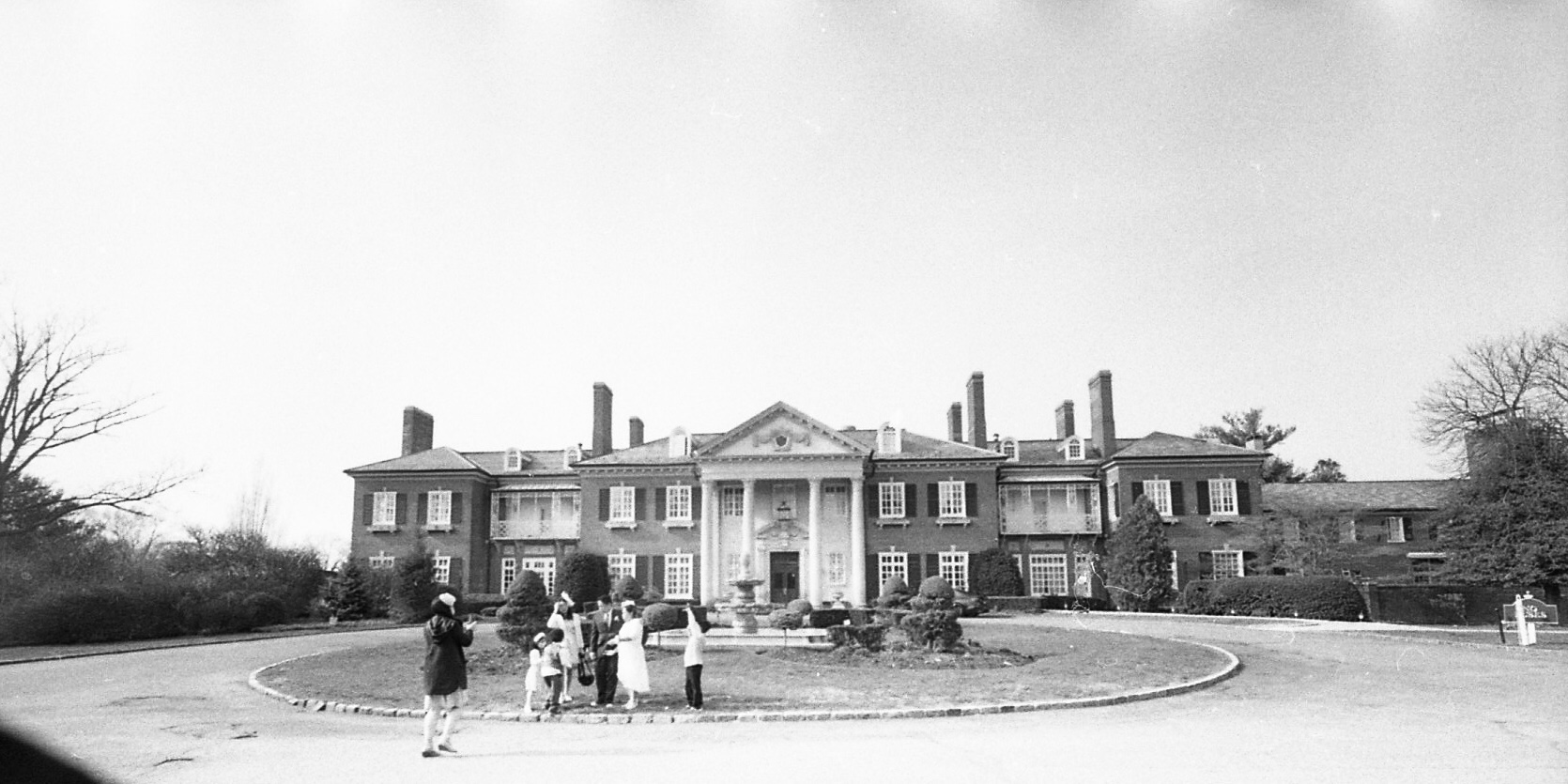
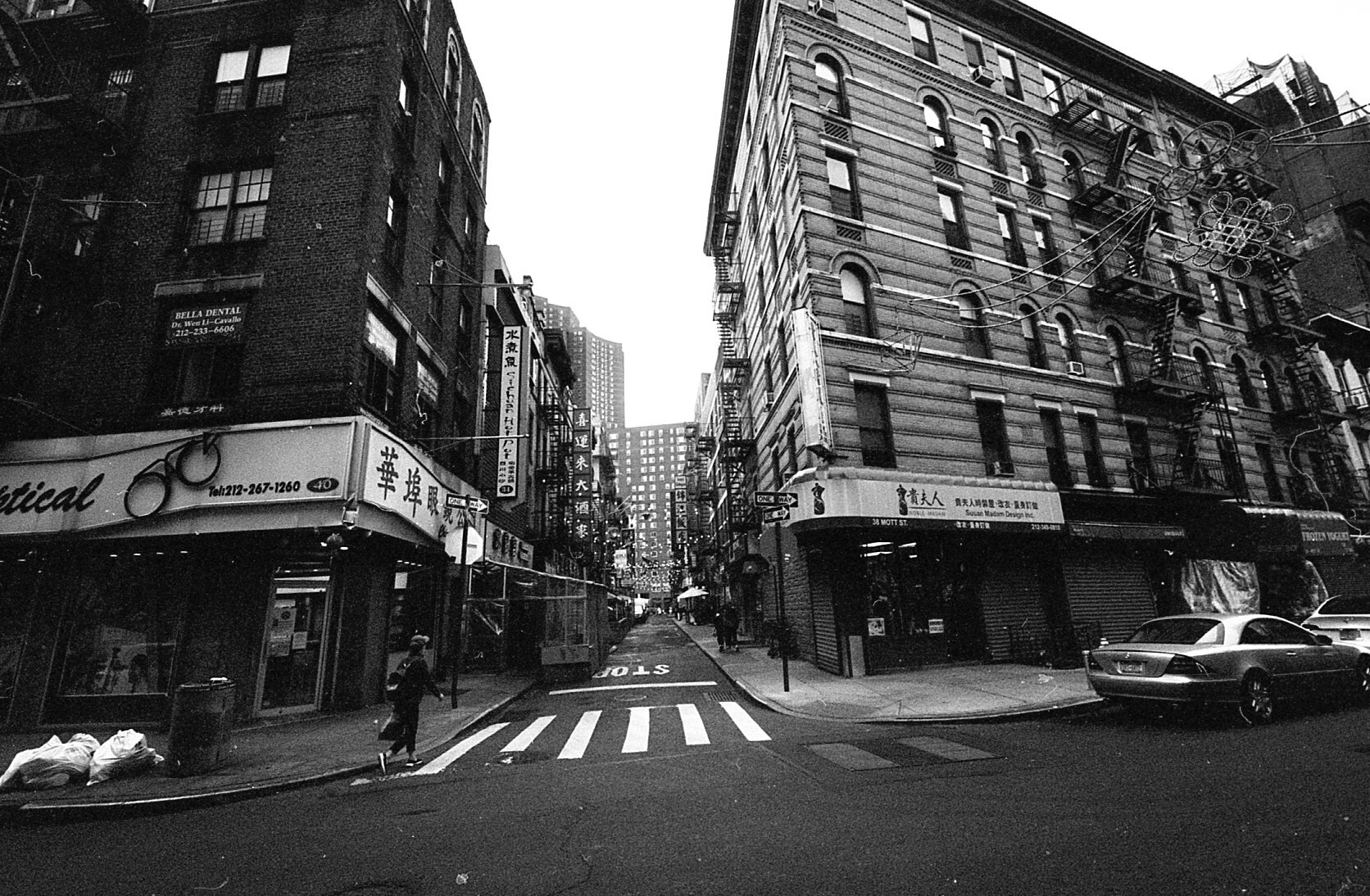
Here are some samples from my first roll. The film was Tri-X 400 and the developer was X-Tol. Keep in mind that this was the first time I ever used this lens so these photos are not going to be the best Hologon pics ever! I also just finished another roll but knowing the way I work, it would take another month for me to complete the video if I added those pics in. Plus it would make the video too insanely long! I’ll do another post here with those pics 😎📸👍🏻
Samples On Digital
Here are some samples taken with a Sony A7s and adapter. Be careful to make sure you do not damage your camera should you want to try this as the protruding rear element of the Hologon may hit the sensor in some camera models. As always, do your research! For comparison, I’ve also included images from the iPhone X which is around 28mm at its widest.
Zeiss 16mm Hologon
iPhone X from same position.
Zeiss 16mm Hologon
iPhone X
Zeiss 16mm Hologon
iPhone X from same spot
Zeiss 16mm Hologon
Zeiss 16mm Hologon
Zeiss 16mm Hologon. See if you can spot the funky color shifts and/or vignetting.
Zeiss 16mm Hologon. Shot at close range from my car!
Zeiss 16mm Hologon. The Hologon is known for its vignetting and it was more pronounced and noticeable on the Sony A7s.
Zeiss 16mm Hologon. Focusing at close range is not so easy but here’s a crop to show that sharpness is there if the lens is focused.
Still have a lot more to learn before I can master this lens!
Price & Availability
The Carl Zeiss 16mm f/8 Hologon is still relatively easy to find and the prices are trending from $1000-1400.
It is the most expensive lens in the Contax G line, the only G lens made in Germany and the showpiece of the Contax G lens system.
The prices are very much dependent on whether or not the lens comes with the finder and/or the 4x Gradation Filter. I found both necessary but at the very least get the finder if you plan to use it on film.
Bottom Line
What can I say? The 16mm f/8 Hologon is one of finest, most legendary lenses I’ve ever had the honor of using. I am a mere mortal. This lens is a Legend!
The 16mm Hologon is one of the few lenses that I really get excited about! Yet at the same time, it also proved to be one of the hardest lenses for me to master. Because of its wideness I had to change the way I think when it came to composing. I also had to learn how to deal with the fixed f/8 aperture.
This lens is not your every day lens! However after using it for the past few months I’ve come to appreciate even more what Contax and Carl Zeiss gave us in the 1990s and that is superb optics at the very highest levels.
If you like wide angles and think you can live with its limitations then I can recommend the Carl Zeiss 16mm f/8 Hologon as a Legend of a lens that you will cherish to have in your collection and better yet, as a lens you’ll really want to shoot!
Alternatives
If you can’t find the 16mm f/8 Hologon for a price you like, you are fortunate today to live in a world with many great alternatives! Here are some. Buying from these links help support this site and helps me to create more content for you. Thank you!
Voigtlander 15mm f/4.5 Wide Heliar
The Voigtlander 15mm f/4.5 is a spectacular ultra wide angle that I have personally used. Not only is it sharp but it is also marginally wider and a lot faster than the 16mm f/8 Hologon. You can get the lens in Leica M or Leica screwmount so there’s no need for mount coversion like the Hologon.
Good morning camera geeks! Today’s YouTube video is perhaps my shortest! And surprisingly no words from a guy who seems to be able to gab endlessly 😀
This is not part three of “The Lonely Art Of Film Developing.” That is part of a longer series on black and white photography. I was almost done with that video but allergies and lack of time has set me back.
But I didn’t want my subscribers to wait as long as I used to make them wait for a new posting and I had this video already made months ago. I never posted it for some reason or another. I guess I was waiting to do a full M6 review but I knew that would take forever so I posted it tonight as a way of saying thank you to the camera geek faithfuls so they have something new to watch. I have a bunch of videos I made and never posted. This is just one of them.
The Leica M6 is perhaps the most popular Leica camera in the world. They sell every one of them! Have you ever noticed an M6 go for sale on your favorite camera dealer’s website and within a day, sometimes hours, it’s guaranteed to be gone.
This is a testament to the M6. It’s a great and reliable camera. It’s an icon. It’s a Camera Legend!
However, its popularity is more complicated than just the fact that it’s a good camera. It’s a mesh of several factors, ie, the resurgence of film, it’s a Leica, it was at one time “affordable,” it’s been reviewed ad nauseam, it’s been touted as the greatest thing since sliced bread and oh yes, the hipsters love it!
All these things and more have worked in the favor of the M6 driving up the prices and continuing to cement its legend.
In many ways, the rise of the Leica M6 reminds me a lot of the Canon AE-1. Two totally different cameras I know, but both have benefited from similar circumstances. And yes, hipsters love the AE-1 as well!
Like many cameras before, I’m just so glad to have bought it at an earlier time when the prices were sub $2000.
Anyway today is not a Leica M6 review. Today’s video will show how easy it is to load the M6 and it is EASY!! It is in no way intimidating like older Leicas.
Extra Tip: Once you have the film secured in the camera, just start taking shots, no need to wind to “0” to get that first shot. If you do it this way, you may be able to get a couple extra frames from the M6!
If you are thinking of getting an M6 or just got one I hope this helps! Thanks for reading and watching and have a great week my friends!
Good Sunday morning you guys! As I revealed earlier I’m also a healthcare worker. In fact, it’s how I make my living.
So today, before I talk about our camera of the day, let me tell you a little about I got into healthcare.
In my twenties, back in the 1990s, I graduated from college with a Bachelor’s in Communication Arts, majoring in Advertising. I took advertising after much personal struggle. I’ve always had an artistic heart but I also wanted to please my parents who wanted their son to work in the business world.
And being a loyal son to my old school parents yet wanting to have some part in the decision I took advertising because I felt it was a good compromise between art and business.
Anyway, working in advertising provided me with an opportunity to use my homebrew photography skills and I worked in this field for several years until a couple of layoffs made me realize that I needed a backup field where I would always have work. I met a person who pointed me in the direction of healthcare and the rest is history. In fact, my “backup” field became my main field of work! I’ll tell you guys more about this in future postings!
THECONTAX I
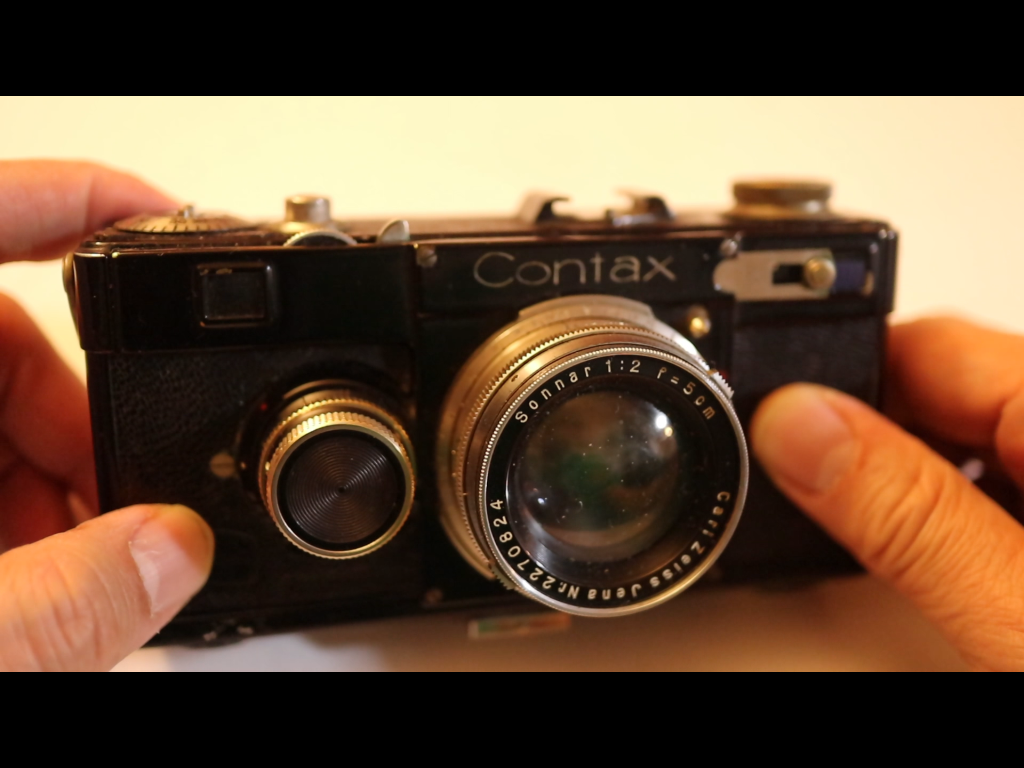
The Contax I is a 35mm rangefinder film camera introduced by Zeiss Ikon of Germany in 1932. It had a production run of four years until 1936.
As a true hardcore camera aficionado and Contax super-fan, the Contax I was always a camera on my wishlist. However, most of the cameras that I came across were either exorbitantly expensive or they were in unusable condition. Many times it was both.
In 2017, I negotiated a deal of $250 for the Contax I and Zeiss Sonnar 50mm f/2 collapsible. My particular camera is not without its problems as I’ll describe below but for $250 for the body and lens, and with a working shutter, I thought it was a deal!
My Contax I has shutter speeds of 1/25 to 1/1000th of a second plus B. Apparently there are variations that had slower shutter speeds but that was added later so mine must be an earlier model.
The best information I have seen on the Contax I comes from Stephen Gandy’s fabulous Camera Quest website. It has all the information you need on the Contax I. Since Stephen said it best, I need to shut up! Here’s the link:
For those of you who prefer a more animated experience 🙂
In this video I also talk about my experiences on the unemployment line. I understand and empathize with those of you going through hard times. Stay strong, you WILL make it!
WHAT TO LOOK FOR IN THE CONTAX I
If you are looking to add the Contax I to your collection, keep in mind that (in my opinion) the Contax I should be viewed as a collectible. In other words, don’t expect to find one to use as a regular shooting camera. It may or may not be in working condition but don’t expect it to be perfect unless it’s been restored.
View the Contax I as a collectible first and foremost. Why? Well, first of all the Contax I is really old at this point. Introduced in 1932, these cameras are close to 90 years old. Secondly, even in its day it didn’t have the best reputation for reliability. It was seen as a premium product that was rushed to market in order to compete with the Leica 1 or A as its known.
As a “premium” product, Zeiss tried to outdo Leica anyway they could. If the Leica had zone focus, the Contax would have a rangefinder. If Leica had a cloth shutter, the Contax would have a metal bladed shutter. If Leica topped out at 1/500, the Contax would top out at 1/1000.
Unfortunately, the Contax ultimately ended up as a well conceived product that didn’t quite deliver on the perception its specs conjured up. The shutter on the Contax I is said to be “fragile” or unreliable so that’s the first thing you should look for in these cameras. If the shutter blades are intact and working, that’s a big step in the right direction.
One funny side note…you guys might remember how I’ve often talked of Contax/Yashica and how I’ve always said they made great cameras that were not the most reliable? Well, it seemed Yashica was just following in the spirit of the Contax I! 🙂
Despite all the bad things I’ve read about the “fragile” shutter on the Contax I, the vertically traveling metal blades are still working on mine. I know of at least two other people shooting with the Contax I as well.
But accurate, it is probably not. The speeds feel off to me, which is to be expected for a camera this old. The rangefinder patch on mine is pretty much gone. I can barely make it out. Keep in mind the rangefinder and many other things will probably have worn out on a camera this old.
I know of a great trick where one puts a tiny black dot on the rangefinder window and it worked in the past with other cameras I had with dim rangefinders. I give credit where credit is due. I learned this trick from the website of a man named Rick Oleson, one of the early pioneers of internet photography pages.
His page is on the “tripod” platform that’s how far back it goes! My very first website in 1999 was also on Tripod. I made one page and back then it wasn’t easy like what I’m doing on WordPress today so anyway I put up one page, saw it once and never saw it again! I don’t even remember the name of my page, sad ain’t it?
Anyway, I just want to say Rick thanks for the useful tips and great articles you put on your site over the years. I hope you’re still out there doing your thing!
Ok so back to the Contax I. My rangefinder patch is so dim that even the black dot trick did little to remedy it. And it is true that not many people will attempt a repair on this camera. I reached out to a couple of renowned camera repair people and they politely declined to even attempt it.
So I have to just accept it. I use zone focus and try to compensate for shutter speeds that appear to be slower than the values.
SAMPLES?
Do you guys remember this article I wrote in early 2019?
Zone focusing. Slightly off, but close. Probably f/2-2.8 on the lens. Nice neutral bokeh!
Rabbits 🙂
Vintage haze can be seen in this shot.
Sharpness test. Shot at around f/5.6-f/8
Portrait test. Love the rendering of the 50mm f/2 Sonnar lens!
Trying to get the zone focus down!
Not the sharpest shot but I love the subjects!
Well, the mystery is solved! All those images (above) were taken with the Contax I and 50mm f/2 Sonnar collapsible. The film was Kodak Gold 400. How do I know? Well, these photos were taken in 2017. I found a memo I kept for the cameras I was using that summer of 2017 and especially because I was taking a road trip to south Jersey. The only film camera on the memo for that time frame was the Contax I. In fact, in the article I stated that I suspected it might be the Contax!
None of these images are what I would consider “winners” but considering that I was zone focusing and dealing with a less than optimal shutter, I guess I didn’t do too badly. I’m just happy anything came out! Honestly, I thought the whole roll would be unusable.
I can see the lens is suffering from flare and/or haze, maybe. Still, I do like its rendering on some the images. It’s got an old school vibe to it.
Now I’m even more inclined to put another roll in the Contax I just to verify the results.
PRICE & AVAILABILITY
As I mentioned, the Contax I should be seen as a collectible first and foremost. If you can actually use it for photography, all the better!
That said, prices are all over the place for this camera. As a collectible, there are many factors that will determine the final price. The factors include condition, mechanical and cosmetic, usable or non working, and whether it’s bundled with lenses, accessories, etc.
As a rough guide, I have seen the body alone go from $250-600, and even seen some unscrupulous overseas sellers charging up to $1000. Unless it’s really pristine, working, and has all original accessories I wouldn’t pay anywhere near $1000 for one…and I’m a hardcore Contax fan!
Again, I got mine, body and lens for $250 USD. For that price, it was not without its flaws as I said. Very dim (unusable) RF patch, shutter speeds off. But, it works! And that was the most important thing to me. The fact that I got it cheap was also a deciding factor 🙂
BOTTOM LINE
The Contax I is without a doubt a true legitimate Camera Legend. It is with the Contax I that the legend of Contax was born.
It was an ambitious attempt by Zeiss Ikon, one of the premier names in photography, to compete with Leica for supremacy and control of the then new 35mm film camera market.
Perhaps due to over ambitious and rushed execution, the Contax I is seen today as a somewhat failed product with a reputation for reliability problems. The later Contax II and III/IIIa are much better user cameras but there can only be one number one and the Contax I was the first.
I’ve talked many times about “the real Contax” and the Contax I represents this better than any other Contax I own. It is the camera that put the Contax name into the world, a name that still imprints the thought “Camera Legend” onto the hearts of camera lovers worldwide.
While the Contax II and III/IIIa and the Zeiss lenses cemented Contax as one of the world’s finest camera brands, the flawed Contax I was the first and as such it will always be the camera that started the Contax legend.
Thanks for supporting Camera Legend! Be sure to follow us on Instagram, Facebook, and subscribe to our YouTube channel to get the very latest!
Hello there you hardcore camera lovers! Now even though my postings all have a twinge of nostalgia in them, every now and then I like doing a post like this where I look back on the gear that I used at a specific point in time.
As 2019 is rapidly drawing to a close, I thought I’d go back in time and look at a some of cameras I used twenty years ago in 1999! There’s going to be about two or three of them and we’ll go through them one by one until the year is done.
PHOTOGRAPHY IN 1999
1999 can be seen as a pivotal year in photography. Film was holding strong, but digital was rising fast. As in really fast!
In 1999 the vast majority of the world were still shooting film. That’s right folks! Even though the digital photography market was making inroads in a big way, the cameras sold to the general public were 1 to 3 megapixel cameras and they were expensive so for most of the world, film was still ruler of the day. But its days were numbered.
Now it might be hard for you youngsters and hipsters who find shooting film cool and different to realize that at one time, not that long ago, film was a format that was used by their “unhip” fathers, mothers, uncles, aunties, grandparents, and heck everyone! If everyone were using it, how unhip is that? 😎👍🏻
Now if you were born in 1999, you may feel “old” but really you’re not! You’re still a baby in many ways, and I say that in the best of terms. Be happy about it! I wish I were twenty years younger! 🙂
That’s why I say 1999 was not that long ago even though sometimes it feels like it! And yet sometimes it doesn’t.
For those of you who are YouTube fanatics, and admittedly there are millions out there, here’s our video companion video. I’m trying to get these videos out sooner for you guys!
MY GEAR BAG IN 1999
Not that anyone would or should care what I was using in 1999, but I use my gear only as a reference point. I’d love to know what YOU were using back then? 😎👍🏻
Now believe it or not, in 1999 I did not even get my first digital camera yet! That would happen a year later in 2000. That means all photography I did up to the year 2000 was only done on film. That’s even hard for me today imagine living in the digital world of 2019!
And while I’m sure I had other cameras, today I am talking about what I considered to be my main camera in 1999 and that camera is the Nikon F100. There will be more to come!
THE NIKON F100
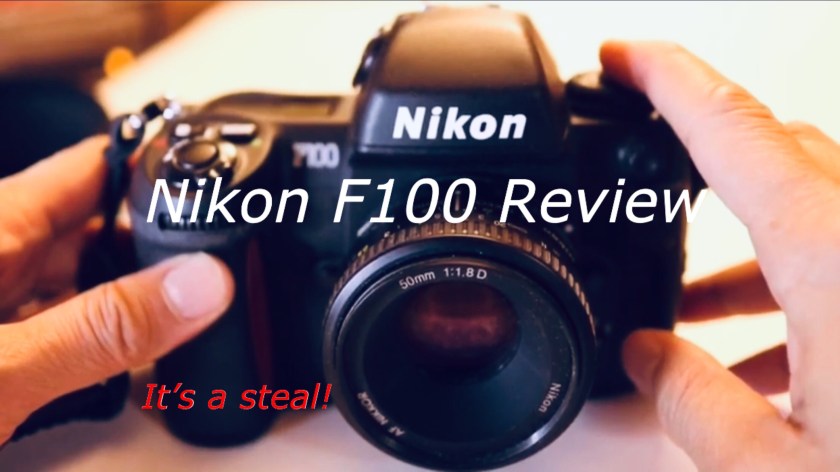
The Nikon F100 is an autofocus 35mm film SLR that was introduced in 1999 by Nikon. It was born of the legendary Nikon F5 of 1996 and indeed has the same Multi-Cam 1300 AF system.
The Nikon F100 has a shutter speed range of 30 secs to 1/8000th of a second. It has the standard P/S/A/M modes. It relies on four AA batteries.
F100 vs F5
The F5 was introduced in 1996 and in 1999, it was still the top camera in the Nikon family. The F5 and F100 both share the Nikon Multi-Cam 1300 AF module and five AF points so their AF should be similar except that the F5 can track up to 8 frames per second while the F100 can go up to 4.5fps by itself or up to 5fps with battery pack MB-15.
What it does better than the F5 is the inclusion of the familiar red AF points that the F5 did not have. Correct me if I’m wrong but I remember reading back then that this was due to patent issues.
The F5, as the pro model, offers interchangeable viewfinder prisms, and can offer up to 100% viewfinder coverage depending on the prism. The F100 offers a 96 percent coverage and the prism is not removable.
The F5 has a mirror lock-up option, the F100 does not. In 1999, this mattered more to people than it might today. Check the video for a better explanation of this.
The F5 employs 1005 pixel RGB sensor for its 3D Color Matrix Metering. The F100 uses Nikon’s “exclusive” 10 segment 3D Matrix Metering.
Now I’ve never mentioned this, but (surprise!) yes I have used an F5 as well! And in all honesty, I never saw a difference. Both cameras produced near perfect exposures in all but the most extreme lighting situations. In fact the only Nikon that I felt I had exposure issues with was the N90s. But I used only one body so I feel that could’ve just been my copy of the camera.
The F100 came in at a much lower price ($1400) than the F5 ($3000 original price!) which made it an instant hit among the photography crowd. I remember reading forums like Photo.net where folks couldn’t wait to get their hands on the camera.
In some ways, it was like a pre Nikon D3 vs D700 magic! Two cameras. One pro model, one enthusiast model. Same AF system. One much more expensive, one much less.
Note: By the way, the Nikon F100 has 22 Custom Functions and if you’re interested in them, look it up! I only ever used one function which is to leave the film leader out 🙂
F100 vs F6
I can’t comment on this because (surprise!) I have NOT used an F6. I have no doubt the F6 is the more technically capable camera but as far as results, I’m going to take an educated guess and say that, with the same lenses, same film, results will look identical 🙂
F100 AS A MAIN SHOOTER IN 1999 VS 2019 PERSPECTIVE
In 1999, even though I had other cameras, the F100 was my main shooter. In a 2019 perspective, that’s the equivalent of someone using say a Nikon D750 or D850 for example. But unlike today where you’d use a D750 and maybe have an F100 as a secondary camera for film, the F100 was my main camera in 1999.
I’m not sure who this guy is, but he looks like a little bit of a nut 🙂
That means that I used it for almost everything! I go to a party, I bring my F100. I go to restaurant, I bring the F100. I go to the beach, I bring my F100. I go to church, I bring my F100. Ok, well sometimes I brought my Pentax IQ Zoom point and shoot but you get the idea. I used the F100 the same way I use my iPhone today. That means even my lamest pictures were taken with the F100 🙂
Any of you remember the cool and handy Magic Lantern guides? I didn’t buy too many of them but I did for the F100. I thought I might need it to learn all of the cameras advanced functions. As it turns out, I never really needed the book because for basic shooting the F100 is easy to figure out!
We are so spoiled for choices today and unless you lived in a pre digital world you might not fully understand the profound effect digital photography has made on our lives, for better or worse.
I had another film body as a backup but in 1999 there were no digital backups for me! Simply because there weren’t any real digital cameras at the time capable to even delivering close to what film cameras can and even the 1 to 3 megapixel digicams were expensive!
Today, I carry a digital camera and still carry a film camera no matter where I go. Old habits die hard. Living in a world where I carry digital cameras more than capable of replacing film, it’s an amazing thought that the roles are reversed and that I’m only carrying a film camera because I love film and because it’s going to give me results that are different, maybe more artistic, moody, etc but certainly not technically better than my best digital camera bodies.
PICS
I have a lot of personally memorable images with the Nikon F100 but the majority of them are in the old school photo albums that need to be scanned.
And unless I’m showing a photo that demonstrates its autofocus in action I really don’t think it matters much because, for the most part, for example, a Nikon F100 or N80 with the same lens, same film would take the same pictures. But here are a few pictures for the sake of this article and for nostalgia 😘
“Legends” Circa 1999. Nikon F100, 50mm f/1.8 AF-D Nikkor. In 1999, the Twin Towers of the World Trade Center were still standing.
“Ho Hum Day” 2011. Nikon F100, 35mm f/1.8G AF-S DX lens, Kodak Tri-X in HC-110. The F100 is capable of working with a modern Nikon lens, even digital lenses such as the 35mm f/1.8G DX lens used for this shot!
Here’s a shot I’ve never posted anywhere. How much did I love the F100? So much that I used it at my Dad’s funeral in 2011. RIP Dad, God Bless.
HOW I CAME ACROSS THE F100
I’m not usually an early adopter but I was able to get one only because a photo forum member had bought one and sold it at a pretty steep discount. I had the money and I jumped on it. As I said in one of my videos, just like that Steve Winwood song says “While you see a chance, take it!”
Back in 1999 there weren’t as many photo forums so I’m thinking it was on photo.net but I could be wrong.
Anyway, I loved the camera then and I still do today! The build was and is superb. It’s not as bulky as the F5 yet not small in any way, especially when compared to today’s mirrorless cameras.
F100 IMPRESSIONS
The camera feels perfect in the hands. The build quality is superb. The magnesium alloy body keeps it strong yet light. Even though it is second tier to the Nikon F5, the F100 is weather sealed like a pro oriented body should be.
All the controls are where you would expect them to be, but if there’s anything that confuses you, read the manual! It is an electronic camera after all with all the complications that might go with that.
The 5 point AF is speedy and accurate. It can run on 4 AA batteries that last a long time. The shutter speed range is 30 secs up to 1/8000th of a second which is always a sign of a top camera. Even though its position was secondary to the F5 which makes it the “prosumer” or “enthusiast” model, it was also marketed to and loved by professionals.
I remember the lenses I used most with the F100 were my ever trusty Nikkor 50mm f/1.8 AF-D and the 28-105mm f/3.5-4.5 AF-D Zoom. That’s a very good general purpose zoom for film and full frame cameras.
I sold the F100 maybe two years later because I either needed the money or wanted to upgrade. Can’t remember now, but that’s usually my reasons for selling!
I must’ve gone through about three of these and my current one was bought in 2011. I still hang on to it, despite not using it as much as I should.
As much as I’ve been enthusiastic about the F100, it doesn’t mean the camera is flawless. No camera is. More attention should be paid to potential problems when the cameras are electronic in nature.
One area to keep an eye on is the rear Focus Area Selector. It’s that thing that looks like a pad from a video game controller. The controls may malfunction or not be as responsive over time. The possible culprit could be that the electrical contacts underneath may be effected by oxidation or wear out from use, just like a video game joystick. Some people try electrical spray or resetting the camera. Since I have not faced the problem, I do not have the solution. I’m just giving you leads to help you to find your own answers.
The rear focus area selector is a potential problem area.
Another thing to watch for is “ERR” or error messages from the camera. Many times it’s just the batteries or the electrical contacts may need cleaning but other times, you don’t know! Try changing the batteries first. Clean the electrical contacts on the lens mount. Try a reset. If nothing works, get a repair estimate. You might find it cheaper just picking up another F100!
The last thing I found on two of the three F100 cameras that I have used is that the rubber grip becomes sticky with time. This is due to the sweat, moisture, humidity, water, etc that wear it down over the years. This doesn’t happen with all cameras so that means whatever material Nikon used for the F100 (and F5) grips do not wear well over time. The digital Nikon D70 has become infamous for this problem!
Though she looks beautiful right here, keep an eye for sticky grip surfaces on the Nikon F100. Or “Surface Sticky” as a famous used camera dealer calls it!
If you ever looked at used camera dealer descriptions, this is what they call “Surface Sticky” as I often see at KEH Camera.
For usability, it’s a non issue, but you might want to keep an eye on it. Some possible remedies are to use an isopropyl alcohol rub, hand sanitizer, or even baby wipes! It’s really a process of experimentation and these remedies do not work for every camera.
I’ve never tried to fix the sticky surface on my F100 because it’s not that bad yet, but I have used a combination of 70 percent isopropyl alcohol and baby powder to cure the sticky surface of my other cameras.
Keep in mind you may end up doing more damage so if it’s not that bad leave it alone!
BOTTOM LINE
The Nikon F100 is a modern classic and a true Camera Legend. It took the legend of the Nikon F5 to the masses. It’s a perfect Nikon camera in my opinion!
Many people consider it Nikon’s second or third best AF film camera, behind the F5 and F6 respectively. Technically, I may agree with that but in the context of being the best choice for “the people” which is 95 percent of the world, I’d say the Nikon F100 is the BEST! And not just “for your money” but because it is a very capable camera!
CONCLUSION
I hope you enjoyed this ride back in time. What’s next? Find out in my YouTube video!
But more importantly, I’d love to know: What camera/lenses were YOU using in 1999? And if you weren’t around in 1999, then what gear has been most endearing to you on your photographic journey?
I’d love to know so leave a comment! Thank you 🙂
PRICE & AVAILIBILITY
The Nikon F100 is plentiful on the used market. Because it runs second to the F5 in the Nikon hierarchy, it’s prices have been stable over the years. And today, maybe more so because big SLR cameras in general are seen as almost passe, I hate to say it!
Prices for the F100 are trending at $150-300 USD which makes it a bargain. And indeed, when we talk about cameras like the Contax T2 (which I’ve talked about a lot) and the inflated prices for that camera, $150-300 to me is a STEAL for a camera like the F100!
If you have one or get one, I’d love to hear from you!
Hello everyone! Looking back on my writings, it seems we haven’t had one of these “Best Camera I Never Knew” postings in a while! Over a year in fact!
So today we’re back with a camera that may not be well known to the masses, but is quite popular on photo sharing sites like Flickr and elsewhere. And you guys, my dear readers, are NOT the masses! It is a cult favorite, the Super Ricohflex.
THE SUPER RICOHFLEX
The Super Ricohflex was introduced in 1956 by Ricoh of Japan. It is a Medium Format twin lens reflex camera that takes 6×6 images on 120 film.
At its heart is the taking lens which is an 80mm f/3.5 Ricoh Anastigmat. It uses a geared focusing system much like the Kodak Reflex of 1946.
The camera has a shutter speed range of 1/10-1/200 secs plus Bulb in a Riken shutter. I have read of other models with higher shutter speeds, but I have had three of them at different points in my life, from different random sellers and they all had up to 1/200. If you have a model with a higher shutter speed range, I’d love to hear about it!
“Super Ricoh Man” 2009. Super Ricohflex, Ilford HP5 Plus in T-Max Developer. More than a narcissistic selfie, I hope you can see that stopped down a little, the Super Ricohflex is capable of nicely sharp images 🙂
WHAT I LIKE ABOUT THE SUPER RICOHFLEX
When in working condition, the Super Ricohflex is capable of giving images with “character” especially wide open at f/3.5. That is the best way I can describe it.
The 80mm f/3.5 Ricoh Anastigmat is one of those lenses capable of giving you that ever popular on Flickr “swirly bokeh” look.
“Escape To Reality” 2009. Super Ricohflex, Ilford HP5 Plus in T-Max Developer. An example of the swirly “dreamy” image that the Super Ricohflex can make.
In my opinion, this usually comes from a lens that is optically not at its technical best, and the swirly bokeh is somewhat overplayed by bokeh fanatics, but that said, if used judiciously it can produce “dreamy” memorable images.
Stopped down, the images can be very sharp at f/5.6-f/8 as are most decent lenses.
YOUTUBE VIDEO
For those of you who prefer to watch a video, here is my first “The Best Camera I Never Knew” episode on YouTube starring the Super Ricohflex! 😎
It may seem like a shameless plug, and it is, but I am trying to expand your experience here and I’ll be tying in videos as I can so get used to it! 🙂
Think of it this way? Why would I want to do double work, blog and video, when I could just do one or the other? If it weren’t for you guys, my fellow Camera Lovers, I’d not bother with the videos!
And because I had received a critical comment from a reader who did not understand what this series is about, I address this in the video too. Plus trying out some new theme songs haha! 🙂
WHY IT DIDN’T JIVE WITH ME?
Simple. I had three of these cameras! I got my first one in 2009. I sold one and I still have two. All three of them ended up having the infamous “Frozen Focus” issue. And what is that?
In the introduction, I mentioned that these cameras use a geared type of focusing mechanism. What that means is the viewing lens and taking lens are geared together and by moving one you move the other.
That in itself shouldn’t be an issue, but whatever grease Ricoh put into these lenses have been known to notoriously seize up with time.
Out of my three copies, only one was working, and even that one was already on the outs when I got it. It was not perfectly smooth. I left it on the shelf for about, I’m gonna guess cause it’s been years, but approximately 3-5 months. The next time I picked up the camera…stiff as a rock!!
So as of today, the two copies I have are pretty much worthless as shooters. Thankfully, they did not cost me much!
REPAIR?
A competent camera technician should be able to repair these cameras. From what I have heard, it’s not a simple matter of taking the lenses off and regreasing them yourself. It’s a bit of a delicate process. Therefore it’s better to leave it up to the experts if you have no experience with camera repair.
One person I remember offhand that might do the repair is Mark Hansen out of Wisconsin. He’s a great repairman with a solid reputation for working on Zeiss and Rolleis. I believe he is still in business though I do not know if he’s willing to repair the Super Ricohflex and if he is, how much it will cost. If you contact him, tell him Sam from CameraLegend.com sent you!
PRICES & WHERE TO BUY?
If seeking one of these cult classics, and I’m not sure that’s a good idea, prices are trending at $20-60. Keep in mind, due to the possibility of the camera needing a CLA, the low price you might pay belie the true cost after the camera has received a CLA.
However, once you get a CLA from a good repairman, I can attest that the Super Ricohflex is a good and fun budget shooter.
BOTTOM LINE
As I love all cameras, it is not my goal to pick on the Super Ricohflex. Ricoh is a Camera Legend whose cameras I have used and praised often. I do totally understand that a camera this old may need a CLA as most cameras of this vintage would benefit from also.
However, as I mentioned in the video…This is no Rolleiflex. And it was not intended to be. It cost much less than a Rolleiflex or even most Rolleicords, the budget Rollei TLRs.
A Rolleiflex could be sitting there for 30 years and I’d be willing to bet, most would still be functioning. Not so with the Super Ricohflex. If you have one, use it often, keep exercising those gears! Whatever grease Ricoh used in these cameras are infamous for freezing up.
That said, when it worked, this camera gave me some memorable images that left me curious for more. That’s why I ended up with three of them only to find out that the Super Ricohflex is indeed, one of the Best Cameras I Never Knew! 🙂
***HUGE SAVINGS ON HOT CAMERAS!***
Right now, for a limited time, get a great deal on the hot and capable Fuji X-A3! Hurry this won’t last long, great savings just in time for Christmas!
The kit is usually $599. Buy it now through our trusted affiliates and get it for $349. That’s real savings!!
“The Fountain” 2013. Hasselblad X-Pan, 45mm f/4 Hasselblad lens. Film was probably Fuji Superia but will update for accuracy if I can find the information.
Hello folks! Still here, still standing, better than I ever did, looking like a true survivor feeling like a little kid!
Ah, is that me or is it Elton John? 😀
Here’s the honest truth about my inactivity as I hate to say sorry all the time! I run about four or five different streams other than this blog so I’m spreading myself way too thin! Not just photography but music, etc. This is my baby of course and I really should just be completely on it! My apologies for not being able to give you my best at all times!
So today’s posting is really a test. I’m working on a review of the Hasselblad X-Pan, the panoramic Camera Legend. I am wanting to see if these images appear good on your screen. I feel X-Pan images are best viewed on a computer and not a phone. X-Pan images are large and long and they simply don’t have the same impact when viewed small.
I don’t mind telling you about doing an X-Pan review before it’s published because there are some very fine reviews out on this camera already as it’s been around for some time. I don’t see myself bettering any of these reviews, just adding to them.
At the same time, I would like to make a complementary YouTube video for it. But in all honesty, making a few cents if I make it to thousands of views is not inspiring so I’m not making it for that reason. I’m going to make it for you, my fellow camera lovers!
To have used a Camera Legend like the X-Pan is a blessing that should be shared, don’t you think? Have a great day camera freaks and see you soon! 😎📷✌🏻
UPDATE: I have checked it out myself and to me the image is way too small on the computer! Have to find a work around to show you larger images!
***DEAL ALERT***
Some great lighting deals from our affiliates, please check it out! Substantial savings!
Happy Father’s Day to all you great fathers out there! While Father’s Day is generally a celebration of you, Daddy, any photographer/dad out there knows the best aspect of being a father is to be able to take photos of your greatest accomplishment life which are your kids. They are what makes you a Father in the first place 🙂
In celebration of this, here’s some photos of my beloved. While I have tried to shift to other subjects in recent postings in order to not “bore” folks who may not like kiddie photos, it’s the photos of my babies that inspire me most so please allow me today to indulge a little. In fact, it’s my tribute to these hard working kids because they are the ones who allow me to create reviews for you by being the main subjects for my camera testing 🙂
Thank you and once again, Happy Father’s Day to all you happy Papas out there and I hope you get some nice cameras and/or lenses today!!
Any Father’s Day tribute should start with Dad! This is a shot of my late Dad with Baby Zoe from 2008. Pentax K10D, Pentax SMCP-FA 35mm f/2 AL lens.
“Munchkin In The Tree” 2015. Canon EOS-1D Mark III, EF 135mm f/2L.





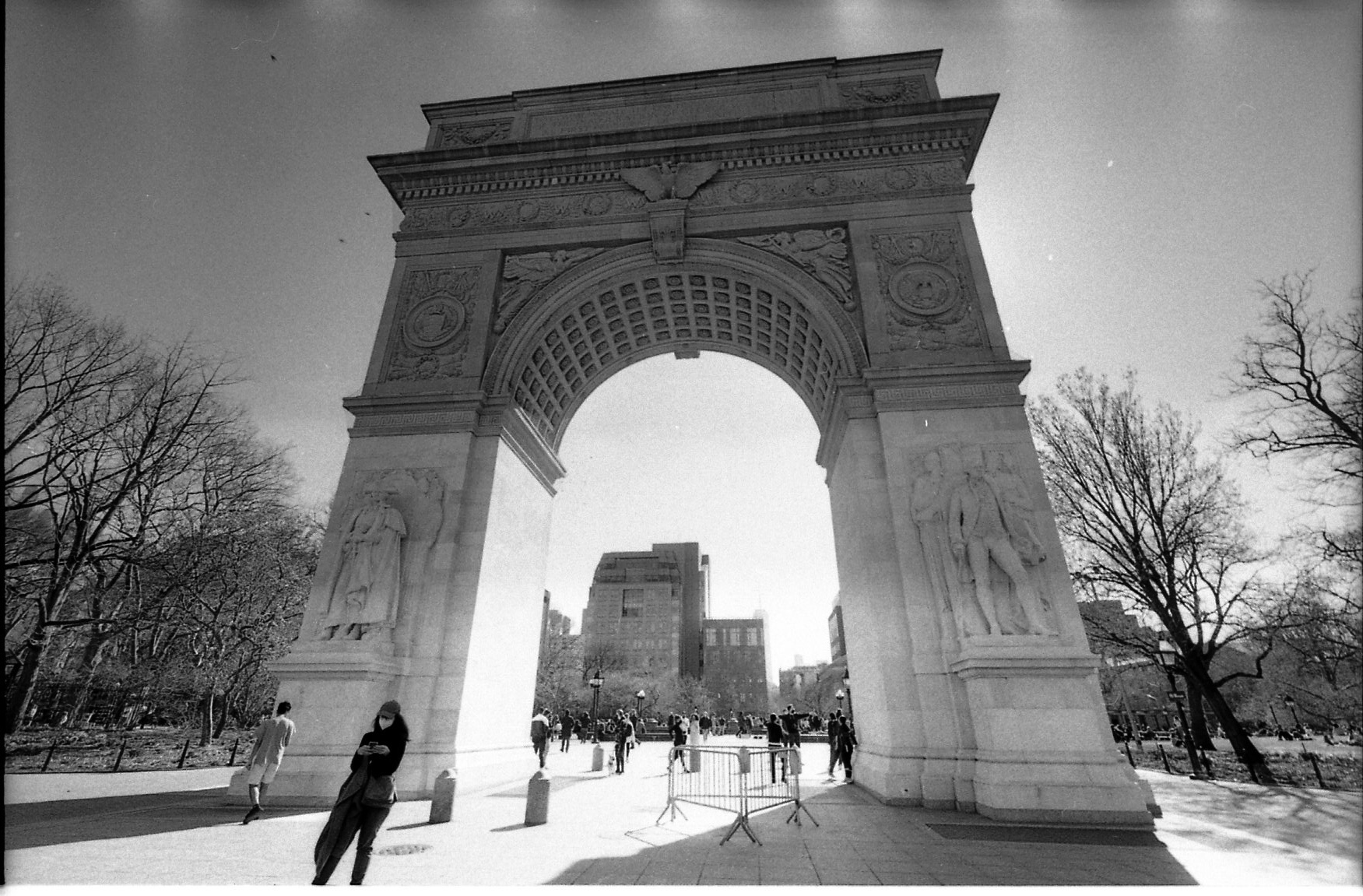

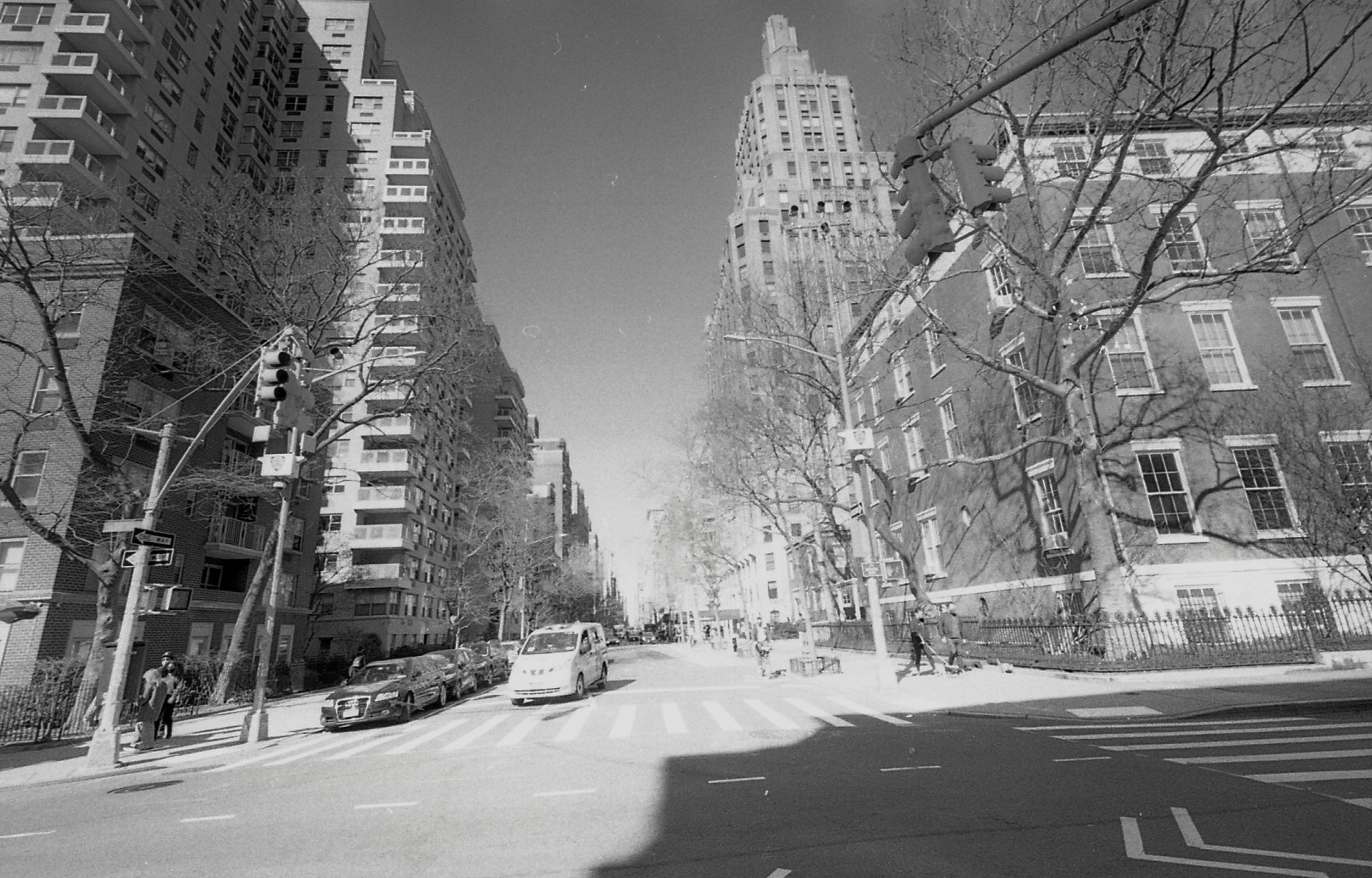




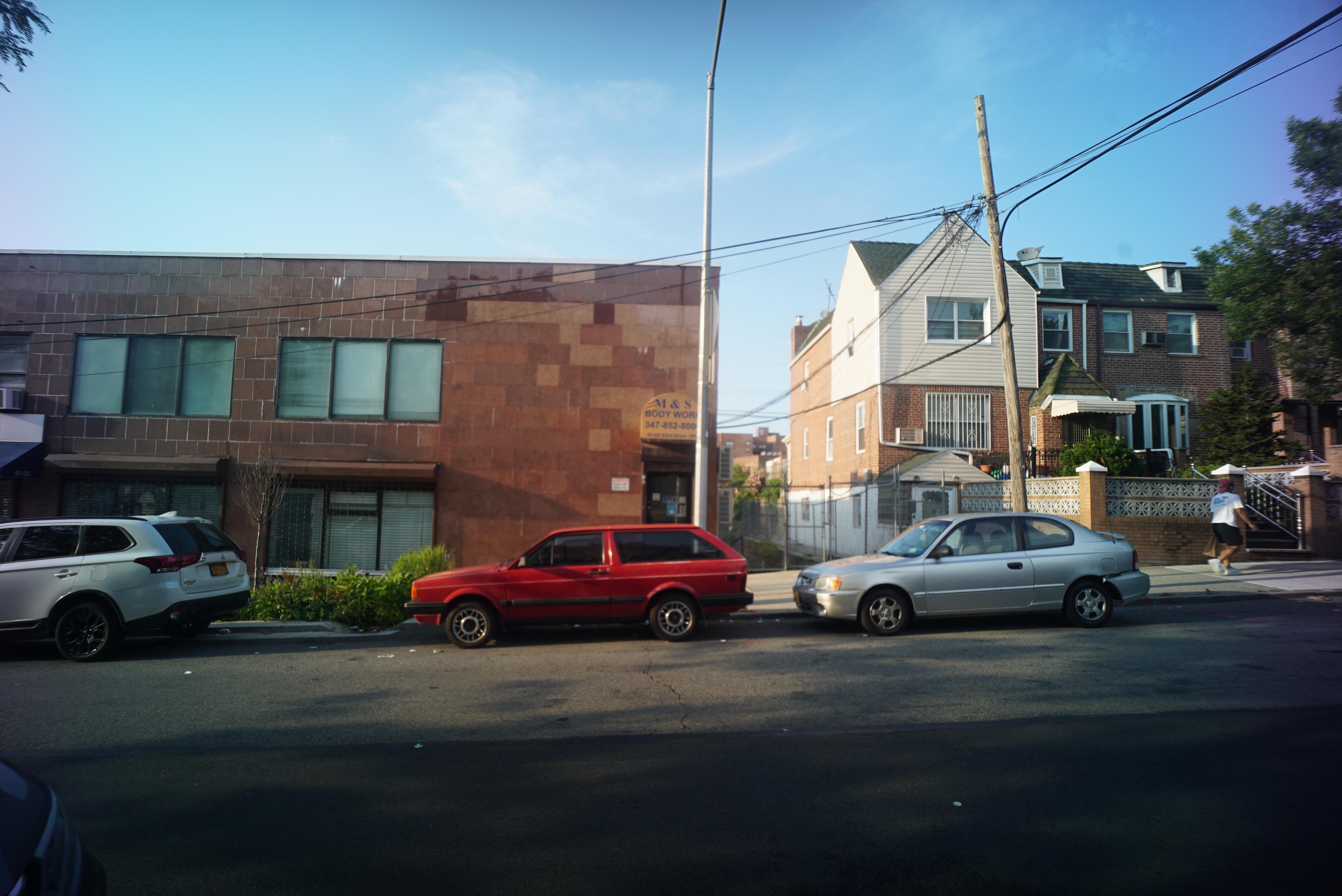









 Voigtlander 15mm f/4.5 Wide Heliar
 Voigtlander 12mm f/5.6 Ultra Wide Heliar
 Voightlander 10mm f/5.6 Hyper-Wide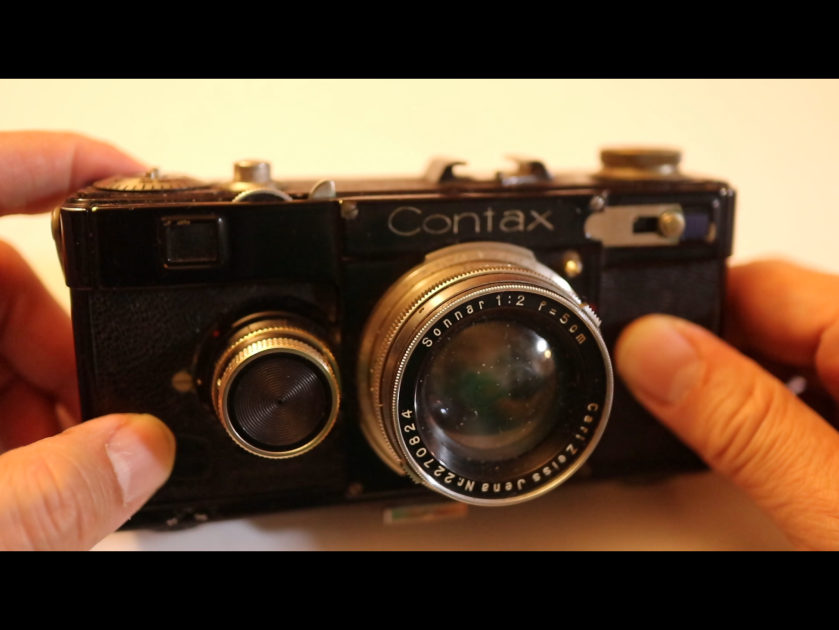


















 Instax SQ10 Hybrid Camera! Now Lower Prices
 The Sony A7RIII Today’s Ultimate Camera?







 Camera Legend