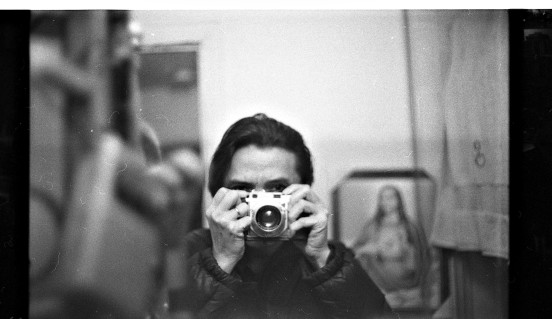
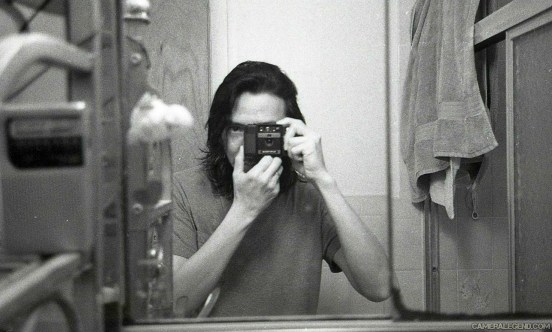
Monday Mystery Camera: The Nicca 5L aka Tower 46

img_2191_77niccac

The Nicca 5L/Tower 46 with the 5cm f/1.4 Nikkor in ltm mount. A rare combination!

The Nicca 5L is a rangefinder camera made by the Nicca Camera Company of Japan around circa 1957.

Nicca was one of several Japanese companies that brought Leica screwmount clones to the market. The most well known of these clone companies is Canon, but there were also many more companies from Japan and the USSR. Nicca is said to be the predecessor to the Canon company.

The camera pictured above is the Tower 46. It is the same camera as the Nicca 5L, but was sold in the USA by Sears Roebuck under their “Tower” brand.

NOTE: Special thanks to our readers and fellow bloggers at http://www.yashicasalorboy.wordpress.com for pointing out that the Nicca 5L and Type 5 are NOT the same camera! The article has been updated to reflect this. That’s why it’s a “Mystery Camera” to me! Thanks guys! By the way, their blog is awesome for camera fanatics! Check it out!! 🙂

AS A CAMERA

The Nicca 5L like most Leica screwmount cameras has two separate windows, one for framing and one for the rangefinder. The shutter speed range is 1/25 to 1/1000, plus B.

The Nicca’s main claim to fame is the winding lever and the Leica M type back, easier film loading than Leica’s screwmount bodies.

Stephen Gandy has a much more extensive write-up on his Camera Quest website, the online authority on rangefinder cameras. In his article, he says it “outshines Leica’s own renowned IIIg.”

I don’t have any experience with the IIIg, but compared to the IIIf I have, it is indeed better. The film loading, the winding lever, the beautiful, large and clear rangefinder all add up to a more pleasant user camera.

PRICE AND COLLECTIBILITY

The Nicca 5L is rare, but not ultra rare. Well, the Nicca version itself is quite rare. As I read on Camera Quest it’s “never been seen.” The Tower 46 (the one seen here) is the one you will usually encounter. If you ever see the Nicca version, let me know!

The Nicca is one of those cameras I bought but sold before I could use it. As I already had the IIIf, I preferred to keep the Leica, despite the Nicca being a much better user camera, as I stated above. Sold it when I needed to pay the bills. Of course, I regret it! 🙂

I got the Nicca/Tower 46 for about $130 body only, which was a bargain. I don’t see them often, but when I do, I usually see this camera on auction sites, usually paired with the 5cm f/2 Nikkor sell for around $350-500. The 5cm f/1.4 Nikkor in ltm mount is more uncommon and sells for around $300-400 by itself.

Sometimes, people will try to pull for a lot more on that auction site, but as the Leica IIIg (the apex of screwmount rangefinders) go for around $400-700 at legitimate dealers like KEH, I can only say that the Nicca should not sell for more than that.

The Nicca 5L/Tower 46 is an awesome camera to add to your collection and I’m sure, to use. Someday, I will find another and this time, I’ll keep it!

Note: Sorry for the placement of the “cameralegend.com” logo. I now put it closer to the photos because I had found some of the content of my pages used without authorization. I usually hate copyright logos, but it only takes one bad apple to ruin it for everyone and it only takes seeing your work copied to make you think twice about it.

Flashback Friday Photos

Just a quick and random posting of photos that can now be filed under “Throwback” or “Flashback.”

The years roll by rapidly my friends! Let’s cherish every moment and photograph as many of these moments as we can. Before you know it, they’re all “throwback” or “flashback” photos! 🙂

imgbroniwwzoe1832_222c

“The Beach” Part II, 2011. Bronica RF 645, 65mm f/4 Zenzanon lens, T-Max 400, Wildwoods, NJ. It’s been a mild winter so far, but with the cold weather forcasted to come soon, hmm, I think I’d rather be on the beach! Ah, I loved that RF 645, wish I could get another one.


78021490-rigc1bxn-whousepba

“White House” 2007. Sigma SD-14, Sigma 18-50mm f/2.8 EX. It’s hard to believe President Donald Trump has been in the White House for only a week! Ten years ago, I’d never imagine this man that I knew from “Lifestyles of The Rich and Famous” would be the President of the United States!

bangkok-traffic1

“Bangkok Traffic” 1995. Canon EOS 10s, Sigma 28-70mm UC lens, Kodak Gold film. This is how Bangkok traffic was in the 1990s.

FUTURE FLASH

imgprominentsamnokton103c

“Holy Prominent!” 2017. This is NOT a Flashback Friday pic. This is a “Future Flash” of a camera we plan to review for you in the near future. What is it? Ho! Why it’s the legendary Voigtlander Prominent with the equally legendary original Nokton 50mm f/1.5 lens. This was a top system from the 1950s and 1960s and still highly desirable today for collectors as well as shooters.

6samnikonmirror

“Nik Cam” 2002. An old school type “selfie” with the Nikon N8008s 🙂

The Return Of Kodak Ektachrome

kpsunrisepba_83

“Sunrise” Koh Pha Ngan, Thailand, 1995. Canon EOS 10s, Sigma 28-70 f/3.5-4.5 UC, Kodak Ektachrome. The return of Ektachrome. Perhaps the dawn of a new day for film lovers?

I’m sure many of you hardcore film fanatics have heard by now of Kodak’s decision to bring their Ektachrome slide film back from the dead.

That is the best thing I have heard out of Kodak in the past ten years!! A snippet from Kodak’s press release: “Sales of professional photographic films have been steadily rising over the last few years, with professionals and enthusiasts rediscovering the artistic control offered by manual processes and the creative satisfaction of a physical end product…”

I used Ektachrome film mostly in the 1990s and early 2000s. It was a great slide film, but also considered a lower cost alternative to Kodachrome which was Kodak’s gold standard for slide film.

If memory serves me correctly, I remember Ektachrome to produce neutral colors with perhaps a shift towards cool, strong on the blue and greens.

10341427_10205114431532779_2131041666645957249_n

“The Sun Never Sets” Krabi, Thailand, 1995. Canon EOS 10s, Sigma 28-70mm f/3.5-4.5 UC, Kodak Ektachrome. Colors shifting a bit, but this photo is almost as vibrant as that day I took it twenty-two years ago. The two beloved family members, on the far left and far right are gone. And so too did we think Ektachrome was gone. But Kodak is bringing it back from the dead. Unbelievable news in many ways.

The reasons I didn’t use Ektachrome more was because I was and am a negative shooter rather than a slide shooter. And when I did shoot slides, I always went with either Fuji Velvia or Kodachrome. I tried Ektachrome just because. Not because I wanted to, or didn’t want to, just because I had to try it.

But with Kodak’s announcement of the return of Ektachrome, I’m itching to try it again. It was an iconic film in its own right.

Again, this is the best news I’ve heard out of Kodak in ten years and it is awesome news for film in general. With the demise of Fuji’s FP-100C packfilm, this was certainly unexpected.

People, including myself, have been quite hard on Kodak in recent years. This time, let me say that they are doing something amazing. Now if they would concentrate in this direction, they might have a chance of not only reclaiming their legendary name but maybe even be the king of the hill for film again. Kodak is doing what they do best…make film. Kudos Kodak, wishing you the best of luck on this!


Monday Mystery Camera: The Minolta X-700 Chrome

minx700c

Chances are you’ve never seen this camera in person. Neither had I until recently. The Minolta X-700 in chrome finish.

THE MINOLTA X-700

Although this is not meant to be a formal review, I feel I should give you at least a little information on the Minolta X-700.

The X-700 is a manual focus SLR introduced by Minolta in 1981. In its time, it was praised for its AE modes, flash automation and ease of use. As a classic camera it is very basic by today’s standards.

The camera offers Aperture Priority and (a much praised at the time) Program mode. You can use it in manual mode as well. Shutter speeds from 4 secs to 1/1000. It runs on two S76 batteries and can accept a motor drive and other accessories.

I actually did a lengthy review on the X-700 many years back on another site and I’ll try to transfer that over here.

I have to admit I have a soft spot for the X-700 as it was my first “real” camera as a kid back in 1985.

THE X-700 CHROME

Cameras have traditionally come in either black, silver, chrome or all of the above. Of course, there are special editions like reptile, ostrich, etc, etc, but we’re not talking about those.

Some cameras were always seen in silver or chrome trim such as the Pentax K-1000. I’m not sure I ever saw a black one. Indeed, I don’t think there ever was a black one made by Pentax.

The X-700 on the other hand is almost always seen in black. I had never seen a silver or chrome (whichever you prefer to call it) version in the flesh. In fact, for many years I never even knew it existed because of the fact that I have only seen the black ones.

But here it is in the flesh! It is real and it is beautiful! Well, to me anyway.

COLLECTIBILITY

Now if you have one of these beauties, take pride that you have a pretty rare thing. However rare does not translate to valuable.

I got this one for $65 and again, I found it when I was not even looking for it. I see a couple now on eBay, and with prices around the $400 mark with lens and other items to entice you.

No disrespect intended, but I highly doubt anyone would pay that much for one unless they really, really, and I mean REALLY wanted a chrome X-700 🙂

When I got mine last year, I checked eBay auctions and found one that sold for $149 I think. That being the case, I would put the fair value on these cameras from $65-150 or $200 tops for the camera body alone.

Keep in mind that the “regular” black versions can be had anywhere from FREE to $100 and regularly averaging on eBay for around $30-60 body only and $60-90 with lens.

BOTTOM LINE

The Minolta X-700 was Minolta’s most advanced model in 1981. I would say that it could very well have been the most successful Minolta SLR ever, although SRT fans will disagree with me. It was the camera that put Minolta on the map for the 80s and within striking distance of taking the top spot from the likes of Canon and Nikon.

Of course we know that did not turn out to be the case. But man, they were close with this camera. The camera, coupled with the “Only From The Mind Of Minolta” campaign were an indelible part of 1980s camera lore for me. Never before or since have I seen a film SLR get that much press and television advertising. It was classic.

The Minolta X-700 may be a very basic camera by today’s standards, but there is no doubt the camera is a Minolta Camera Legend. And if you come across a chrome one, all the better! Take pride and keep it.

11/28/16 ***Cyber Monday Specials***

Special sales, deals, and rebates from Olympus.

$350 off Canon EOS 5D MK III Bundle.

The Contax T2: The Greatest Point & Shoot Camera Of All Time?

contaxt2picii

The Contax T2 is a high end autofocus point and shoot film camera released by Kyocera in 1990.

While many cameraphiles consider the T3 the “Ultimate” point and shoot film camera, the T2 has, over the years, developed such a cult following among camera fanatics that it might be considered THE greatest Contax camera of the Kyocera era. Is it really the greatest? 🙂

The T2 is one of the most popular point and shoot cameras of all time and there are many other reviews and testimonies better than mine. I’m just giving you my two cents on my experiences with this camera.

I have been a Contax lover since using the original Contax T back in the 1990s and have used all the cameras in the T series, including the T2, T3, TVS, TVSIII, and TiX APS film camera.

THE T2 CAMERA

As a camera the T2 features a Carl Zeiss 38mm f/2.8 T* lens, Program and aperture priority modes. Aperture range is f/2.8-f/16. Shutter speed range is 1 to 1/500th seconds in Program mode. ISO range is ISO 25 to 5000. The camera relies on one CR123A battery.

The camera is primarily an autofocus camera, but you can opt for manual focus if necessary.

One neat feature that I love on the T2 is the ability to change lens aperture via a ring around the lens mount.

The camera is rather large and long for a point and shoot, quite in line with its peers from the 1990s such as the Leica Minilux or Konica Hexar, which are all larger than most high end point and shoots of today, i.e., the Ricoh GR, Leica Q, or Sony RX100 series. The camera is not jeans pocketable, but perhaps coat pocketable depending on your coat 🙂

14079469_10209177242740520_3373351019399518504_n

The Contax T2 was one of my film companions overseas. While large, clunky and not small like today’s point and shoots, the T2 exudes that Contax charm and Zeiss power that still seduces camera lovers to this day. Please forgive this bad phone pic. It was late night and I was just giving the T2 some lovin’ 🙂

PERFORMANCE

As mentioned, the T2 is primarily an autofocus point and shoot. I have found its AF to be generally reliable in good light or when using flash, but less accurate in low or challenging light situations.

The center point AF seems to need something solid to lock on to and not just sharp edges, as many cameras do. Solid objects with good light helps.

imgcontaxt2samui073-copy-2

“Sister Samui” 2016. Contax T2, Tri-X 400. On Koh Samui island, Thailand, I met a wonderful lady whose grace and elegance made me think of her as a “Thai Lauren Bacall.” I’m getting used to going to these places now, but it’s the people I meet that keep it interesting for me.

I have mentioned many times that I do not like using manual focus on similar cameras because it’s really electronic vs real manual focus and clunky to use. It’s more like a “guesstimate” system using the distance indicators vs physically manually focusing the lens which you cannot do on the T2 and most comparable point and shoot cameras. However with the T2, using its electronic manual focus is sometimes necessary.

When the AF is in its zone however, the 38mm f/2.8 produces excellent, sharp images with lots of contrast. The high contrast is what you have come to expect and love from Contax Zeiss lenses and it accentuates the appearance of sharpness.

IMG_6255.JPG

“Pak Nam Klai” 2016. Contax T2, Tri-X 400 developed in D76. The Klai River in Nakhon Si Thammarat, Thailand. Not as famous as the “River Kwai” but just as nice and it looks just the way it did when I visited as a child.

However, in very bright lighting situations, the high contrast can be problematic and it’s easy to get blown highlights with this camera. Thankfully, due to the high dynamic range of film, I can generally bring the levels down and recover detail with post processing.

The lens seems to be more in line with the original Contax T, which produced sharp images with a more classical look that I liked as opposed to the T3 which produced bitingly sharp pics with a more modern look. Many people prefer the T3 probably for that reason, but to me, the T and T2 produces images with more “character.” Hard to explain, but I suspect many of you will know what I mean.

Oddly enough, whenever I’ve used a 40mm f/2.8 lens on my film or full frame cameras, I’ve always found that focal length a little “boring” especially because it reminds me a lot of a 35mm f/2.8 lens which is a generic old school focal length that can be found very cheaply. Yet everyone including me has no complaints about this on the T2. Hmm, perhaps it’s the T2 “legend?” It’s like seeing five apples that look exactly the same, but you were told that one was special so you believe it and it tastes better than the rest 🙂

Keep in mind I’m not saying the T2 lens is just like any other 35-40mm lens. I’m just talking about the focal length and the f/2.8 aperture which I find boring. A 35mm f/2 or 40mm f/2 is preferable to me, even if it’s less than a stop faster. Your milage may vary. That said, I do think the lens on the T2 has that special something! I loved the original T which was my first T series camera and I suspect it’s the same lens.

The tiny original T was and is my favorite of all the T series due to the lens and the ability to achieve accurate focus using its true rangefinder system. It is manual focus only, but I found I had a higher rate of keepers with the T than with the T2 and its AF.

The bokeh on the 38mm f/2.8 Zeiss Sonnar can be a bit “nervous” or “busy” and in line with what I have seen and mentioned here about most Zeiss lenses that I have used. However, you can also get very nice bokeh out of it. To achieve this, you need to get in close on your subject and make sure the background is uncluttered.

The camera is not silent, but the AF and motor advance/rewind are quite quieter than, say a Ricoh GR1. In fact, if I weren’t spoiled by other cameras like the Konica Hexar, I would say the T2 is very quiet indeed.

BOTTOM LINE

The Contax T2 has achieved an enviable status among cameraphiles and camera collectors alike. Despite Kyocera/Contax being out of the camera business for quite a while already, these cameras are still actively being sought.

There’s a lot of love, respect, and perhaps even a bit of romanticism involved in the cult of Contax T2 lovers.

The T2 is not without its flaws however. It does not have the most accurate AF that I’ve ever used, but it is generally reliable in good light. The results can sometimes be inconsistent. When the camera (or the photographer!) does get it right, the results can be superb. The good will make up for the bad with this camera, and there IS a reason it has earned its reputation. The lens can be fantastic, but you got to earn your keeps with this camera.

The T2 is a camera that I have bought and sold, and then bought again. Usually I would say that means it’s a great camera, but one could argue that if you sold it in the first place then maybe there was something about it that was not so great? No, it could just be that I needed cash at the time 🙂

Anyway the T2 is a “Bad Ass” camera! I’m on my second one and I’m glad to have it, despite its AF issues. I’m holding on to this one as long as I can this time around. I still have a couple rolls of undeveloped T2 pics, but that will be for a later time. I just wanted to give something to you wonderful fellow camera addicts 🙂

IMG_5882 copy.JPG

“Little Badass” 2016. Contax T2, Tri-X 400 developed in D76. I was just taking some test shots when this cute little “badass” stopped me in my tracks 🙂

It’s been said that the T2 was beloved by famous fashion photographers like Terry Richardson and Juergen Teller, but I haven’t seen any pictures of these guys holding one. I know Terry used a Yashica T4 and have seen pics of Juergen with a Contax G2.
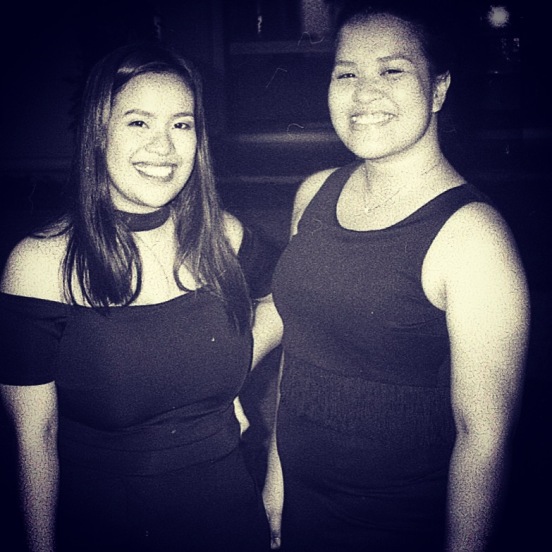
img_6256

“Double Trouble” 2016. Contax T2, Tri-X 400 developed in D76. In Manila, Philippines, I met these two beauties who I called “Double Trouble” 🙂 This was shot with direct flash in dark conditions and I was surprised it came out! This is my salute to Terry Richardson and Juergen Teller who made the “point and shoot with flash” shots hip and fashionable in the 1990s.

However, I think the main point was that cameras such as the T2 (if not the T2 itself) were made famous by photographers like Terry and Juergen who took that once dreaded “point and shoot with flash” shot and turned it into something hip, cool, and fashionable. Of course, if they can turn a point and shoot photograph into art, it doesn’t mean I or just anyone can! However, with enough savings we mere mortals can all own (or someday own) the T2 🙂

The Contax T2 is one of the most beloved 35mm point and shoot cameras of all time and certainly a Camera Legend. Is it the greatest? Well, I wouldn’t call it that, based on its AF performance, but I will say it could certainly be considered one of the greatest, if not THE greatest. However, if you’re a camera fanatic, you probably need to have one in your collection 🙂

img_6254

“Number One” 2016. Contax T2, Tri-X 400 developed in D76. Not the greatest picture, perhaps one of my worse, but I decided to post it anyway to show that yes, you can use the T2 to take those lousy pictures point and shoot cameras used to be known for and besides that, Baby Zay thinks the T2 is “Numero Uno” 🙂

WHERE TO BUY?

If seeking one of these gems, I hate to tell you that prices seem to have gone up on these babies, even from just a couple of years ago. Prices are trending at $500 and up for the camera in EX and EX+ condition on eBay.

The silver T2 is the most common and therefore quite often the cheapest ones you’ll find. There’s also black, titanium gray, gold, black, and something called “platin” (most beautiful to me). All these are much more rare than the silver models.

Contax T2 For Sale

The good news is that the T2 is almost always available on eBay. While the T3 will probably always be thought of as the ultimate Contax point and shoot, it also cost more and is harder to find, which probably adds to its appeal and iconic status.

The great thing is that the T2 is cheaper and to me, no less iconic. However, if buying one proceed with caution as these cameras are aging and no one is repairing them as far as I know. That doesn’t mean a good repair shop wouldn’t attempt to fix it, but the parts are no longer available so most shops would probably not try to repair it.

On the other hand, while I’ve been critical on Contax electronics in the past, the T2 is probably one of their more reliable and durable models. Just be sure you buy from a place where you can return it if a problem arises. For a safe purchase try here Contax T2 Silver 35mm Camera.

***HOT DEALS FOR DECEMBER 2018 YES!!!***

Check out these deals from our trusted affiliates. If you buy, please do so by going through our links. These are places I buy from and they are safe. This will also help support our site and help us bring more Camera Legend reviews for you! You will pay nothing more other than what you’re buying. Thanks very much you guys rock!!

***HUGE SAVINGS ON HOT CAMERAS!***

Right now, for a limited time, get a great deal on the hot and capable Fuji X-A3! Hurry this won’t last long, great savings just in time for Christmas!

The kit is usually $599. Buy it now through our trusted affiliates and get it for $349. That’s real savings!!
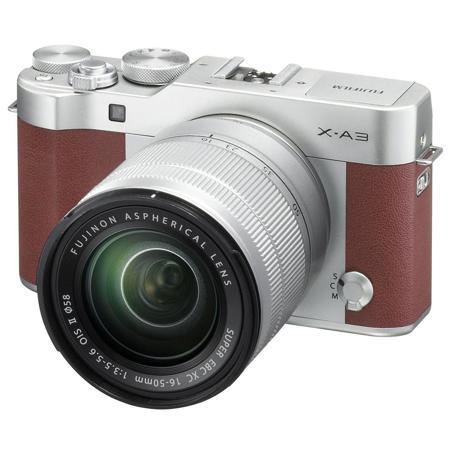
X-A3 Mirrorless Camera with XC 16-50mm f/3.5-5.6 Lens, BrownX-A3 Mirrorless Camera with XC 16-50mm f/3.5-5.6 Lens, Brown$349BUY NOWAdorama

Instax SQ10 Hybrid Camera! Now Lower Prices

***IN STOCK ALERT***

If you shoot primarily digital, the Sony A7RIII might just be considered today’s ultimate all around digital mirrorless camera. And it’s in stock through our trusted affiliate! Buying through these links helps support Camera Legend to bring you more reviews of the cameras and lenses you want to see. Thanks for your support!

Sony a7R III Mirrorless Digital Camera Body

The Incredible Sony A7III

Photo of The Day: “The Lady Of The Harbor”

13575926_10208781107637390_8169234683251568683_o

So another 4th of July has come and gone and indeed the year is more than half done. Is there any way to slow down time short of getting on a spacecraft and cruising at the speed of light? 🙂

I still remember as a kid watching on television America’s “Bicentennial” in 1976. That was a big deal the Bicentennial. Anyone remember that? Gerald Ford was the President of the United States (thanks to reader Kevin Thomas for pointing this out!). You’re telling me that was forty years ago?! Hot damn man!

Anyway, here’s one in the spirit of the 4th of July. I shot this twenty years ago in 1996, the last time I actually visited the Lady. If anything, I hear she looks better than ever!

Any New Yorker knows that you visit the Lady once or twice and then you’re content to see her from afar, i.e., from a bridge, from a boat, etc. Only tourists actually want to go there and brave the long lines 🙂

The gear I was using at that time was the Canon EOS A2E which was a semi-pro/enthusiasts camera, much like the 7D is today. It had a unique feature called “eye control” focusing which is what the “E” in A2E stood for. The camera also had a twin without the eye control feature called the A2 and was also known internationally as the EOS-5.

The camera used technology that followed your eye movements to predict focus. It didn’t work really well for me, but I heard that it was fine for others. I did try it on the EOS-3 later on and it worked much better on that body. Overall though, being somewhat of a traditionalist, I just thought it was a fun gimmick and went back to focusing the “normal” way. Choose focus point, compose, shoot 🙂

The camera was actually quite great to use. Good build quality, speedy and accurate AF. It had one fatal flaw however. That flaw was that the mode dial was prone to breaking rendering it useless. The good news is that it did take a lot of usage for that to happen. Mine happened after about five years of ownership with moderate use.

Canon did repair them at one point, but the cameras are so cheap now it’s just better to grab another one if you really want to try it.

The lens used was an el cheapo EF 75-300mm f/4-5.6 which was a decent, if not great lens. And the film I believe was Kodak Gold as it was my film of choice back in those days.

Ah those were the great days when I got by on one camera and two lenses, far from the gear lust monster I have become today. I always tell anyone starting out, if they have a decent setup like a DSLR or a mirrorless camera, to just stick to what they have and work with it. Of course, they don’t listen and I can’t blame them I guess 🙂

The Minolta AF-C

SonMinAFCCC

The Minolta AF-C is a compact, autofocus point and shoot 35mm film camera introduced by Minolta in 1983.

The AF-C comes from the late 70s/early 80s era of small, boxy compact cameras such as the Nikon L35AF or Pentax PC35AF, and just like those cameras, it features a fixed 35mm f/2.8 lens.

The camera most closely resembles the Lomo LC-A or Cosina CX-2 and like those cameras, the camera is turned on when you open the sliding cover which protects the lens. Unlike the Lomo or Cosina which rely on scale focusing, the AF-C is an autofocus camera.

THE AF-C CAMERA

As a camera, the Minolta AF-C is completely automatic. It is a point and shoot camera where to take pictures you simply point and shoot 🙂

As I’ve said in previous articles, today’s advanced point and shoot digital cameras can do almost everything. From 4k video to in-camera editing to wifi sharing. Many of these cameras have astonishing lenses, such as the Leica Q, and price tags to match. However, it seems to me that they’ve lost the soul of what it means (or meant) to be a point and shoot camera.

And what is that you might ask? Well, for me, a point and shoot camera has to be simple. It has to be humble; all you need is a good, decently sharp lens, not a lab chart killer with an astronomical price tag. And lastly, it has to be cheap. By having a good/great little lens and not a lens with some “premier” name on it, they can do that.

And they did all this with the Minolta AF-C. It meets all the criteria I stated: Simple, humble, good/great lens, cheap. The lens on the AF-C is a 35mm f/2.8 Minolta lens and it is a very good, even excellent one. There is no “Rokkor” or “Rokkor G” designation on the lens, so it has no pretenses of being anything more than it is 🙂

The lens is a 6 elements/6 group design and has an aperture range of f/2.8 to f/17 and again, all automatically chosen by the camera.

Don’t let any “premium” designation fool you. It’s not that hard for any decent camera/lens manufacturer to make a great 35mm f/2.8 lens so it’s not necessary that it be expensive. I’ve used the Nikon 35ti and it’s a better looking camera, but I do not think the Minolta lens on the AF-C gives up anything to the 35ti.

The Minolta AF-C relies on active infrared autofocus. There is no way to manual focus this camera, so tinkerers and gadgeteers get that out of your mind.

If you want some control of the camera, it will let you wind/rewind it using a thumbwheel on the rear of the camera. The camera has no autowind/rewind function. Additionally, you can adjust the ISO in 1/3 values.

The Minolta AF-C runs on four SR44 or LR44 button batteries or two CR1/3N batteries. I used the cheaper 675 hearing aid batteries bought at CVS and they worked fine, no exposure problems.

PERFORMANCE

The Minolta AF-C is small and compact, perhaps not as small as many of today’s digital point and shoot cameras, but still pocketable as long as you don’t have the accessory flash attached.

13307426_10208561580469348_5066008620393003786_n

“Princess Of Messy” 2016. Minolta AF-C, Ilford Delta 400, D76 developer. This is a crop from a larger picture. The AF-C displays good sharpness despite the film grain.

The AF-C has two leds in the viewfinder. The green light, which indicates correct focus and the red light, which is a low light warning.

When shooting with the AF-C, the autofocus is so quiet, I wasn’t sure the camera was working properly, whether it was actually focusing at all. But knowledge is power and I have read before acquiring one that this is exactly how the camera focuses and you simply have to learn to trust it.

MinBearAFCC

“Redrum” 2016. Minolta AF-C, Ilford Delta 400, D76 developer. Check out the nice contrast and range of b&w tones. It seems no one is safe from harm in NYC! Ouch, love hurts! 🙂

When I developed my first roll, any fears I had were laid to rest. Indeed, the majority of the time, the camera achieved correct focus. The shots that had blurriness were due to movement and the camera correctly choosing slow shutter speeds in low light (something I have a habit of doing to challenge my cameras and myself).

Even better was that nearly every shot on the roll was correctly exposed. Not surprising for me as I’ve always known Minoltas to provide excellent metering.

MinNYCFunk

“That Funky Building” 2016. Minolta AF-C, Alford Delta 400, D76 developer. This is the IAC (InterActive Corp building) as seen from NYC’s West Side Highway. This has always been an intrigueing eye sore for me whenever I see it.

BOTTOM LINE

The Minolta AF-C is a brilliant example of beauty and simplicity that represents the best of the early 1980s era of compact autofocus cameras.

MinSamAFCC

“The Evil Camera Boy” 2016. Minolta AF-C, Ilford Delta 400, D76 developer. He’s evil and he loves cameras. The Evil Camera Boy is back! 🙂

It delivers excellent results most of the time under the right conditions. I guess you could see the slick caveat right there “under the right conditions.” What does that mean? That means if you use the camera as it was intended, the right amount of light, the right film, flash if necessary, then the camera will generally deliver excellent results. If you try to challenge it too much, i.e., low light, slow film, you might get less than excellent results 🙂

I read somewhere that it was thought of as the ultimate film street camera by some European magazine and I can’t disagree. While some will of course refer to the Ricoh GR-1 (which I love and have reviewed here) as the “Ultimate” I have to say the AF-C betters it in some ways. The AF is much quieter and the manual winding and rewind  makes it even quieter still, both of which are benefits for unobtrusive shooting.

The Minolta AF-C takes you back to a time when “point and shoot” cameras were point and shoot cameras. Give it a little love and faith and this little camera will produce. Today, the AF-C enjoys a cult following among camera lovers, but is largely forgotten by the masses as are many of its peers. But should you come across one, get it because you will have in your hands a point and shoot Camera Legend that will deliver the goods without a lot of fuss or headaches.

WHERE TO BUY?

If seeking one of these, prices are trending at $20 to $100, with $100 being a bit on the high end. The most abundant place for the Minolta AF-C is obviously eBay.

However, you may also find them in flea markets, garage sales, and Craigslist. If you’re lucky, you may even find one for $5 or maybe free 🙂

***NEW CAMERA ALERT***

The hot new 24mp APS-C AA-less Pentax K-70 is now available for pre-order.

Pentax appears to be really upping the ante with their hot pro K-1 and now the K-70. We will keep an eye on this new Pentax, but just from the specs it appears to be an awesome new camera!


The Worst Cameras Of All Time Part I: The Nikon N70

SonNikonN70C

The Nikon N70 film camera of 1994.

In this new series, we will take a look at cameras that somehow didn’t make the cut, but beyond just that, they had something about them or their design that made them less than pleasurable to use.

What separates this from “The Best Camera I Never Knew” series? I don’t know, it’s a thin line between love and hate as the song says! 🙂

First up…

THE NIKON N70 CAMERA

The Nikon N70 (also known as the F70 overseas) is a 35mm SLR film camera introduced by Nikon in 1994.

At the time, it was Nikon’s top enthusiast model. Indeed, I think this camera set the stage for future “Number 7”  enthusiast’s models from Nikon, such as the Nikon D70/D70s digital slr of 2004, the pro/semi-pro D700 full-frame DSLR of 2008 and the D7000 of 2010, just to name a few as the “7” naming scheme continues to this day with Nikon.

As a camera, the N70 is an autofocus film camera which offers a shutter speed range of 30 seconds to 1/4000 plus bulb. The camera has a built in drive capable of 3.7 fps in high speed mode. It has matrix, center-weighted, and spot metering.

The camera is powered by two CR123A batteries.

MY RECOLLECTION OF THE N70

I got one of these in 1995 and I remember being smitten by this new toy. It came at a time when my interest in photography had been renewed after using my Minolta X-700 for ten years previously.

The N70 looked and felt nice and feels good in the hand. But that’s where it all ends, ergonomically.

The N70’s claim to fame was its unique “fan” wheel of sorts. It is actually a control panel that has become known as the FAN. But this is also its achilles heel. Now before any N70 fans (yes, there are some) out there start bashing me, I will say that once you do get the hang of the FAN it works pretty well and some like it.

SonNikonN70CS

The Nikon N70 is distinguished or perhaps cursed by its very unique, very funky electronic FAN control panel. Once you can figure it out, it will “allow” you to take good pictures 🙂

I remember being very happy with the results. The camera provided speedy AF and seemed to deliver perfect or near perfect exposures.

So why do I appear to be bashing it now? It all comes down to, once again, that FAN my friends!

Ok, yes, in 1994 I was twenty-two years younger and enjoyed fiddling around with electronic gadgetry trying to figure out how to work this camera. In 2016, I am twenty-two years older and have very little patience to try and figure this camera out again. Ok, that’s not the camera’s fault 🙂

And more so today, when you can get a camera like the Nikon N90s from the same era or even the older N8008s for the same price, anyone actually wanting to use the N70 I think has too much time on their hands!

I could try to break down how to use this “fan” shaped thingy, but that would take way too much time and I’d have to write a whole book on it!

BOTTOM LINE

Ok, it’s not the worst camera ever, I will give it that. It delivers great results, I will give it that.

I think the Nikon N70 came at a time when Nikon was facing some very strong competition from Canon’s all electronic EOS series and they allowed its designers some very liberal creative freedoms.

As I said a few times before (as in my Rollei A110 and Rollei Rolleimatic reviews), being creative is a good thing, but being too creative might not be such a good thing. And this time, I can’t even blame it on Heinz Waaske!

Nikon is known for cameras with great ergonomics that are easy to use and quick to figure out. This is one of the reasons pros love Nikons. The N70 is radically different from any Nikon economically. Its design was never seen before or since, which makes me think that even Nikon knew it was too funky!

I’ve said many times, one of my prerequisites for a good camera is a camera that you can figure out how to use without an instruction manual. Maybe not for everything, but for at least 80 to 90 percent of its functions. You will need a manual if you want to figure out all  the Nikon N70/F70 can do. That says everything!

The Nikon N70 is a camera that actually will allow its users, indeed reward its users with the ability to take a picture once you can figure it out. For that “FAN” design alone, I would call it a Camera Legend, but maybe not in a good way 🙂

It is one of my contenders for the “Worst Camera Of All Time” and indeed, it might be the worst designed Nikon ever, but being that I have a soft spot for Nikons, I don’t think it’s the worst camera I’ve ever used.

If you like funky cameras, you can’t do much better than a Nikon N70. Buy one if only for that FAN! 🙂

WHERE TO BUY?

If seeking one of these to use, and again I’m repeating to use, I’m not sure that’s a good idea, but prices are very good! They go anywhere from “free” to $50.

I recently picked up one for nostalgia’s sake for $3 dollars. I don’t intend to use it. I just marvel at the FAN 🙂

If you want one to use, you may find a good selection HERE.

***DEAL ALERT***

There are some great deals going on now on CANON gear. Interesting to me is the hot new Canon EF-M 28mm f/3.5 macro for the EOS-M series with built in ring-light! This is one lens that I’m interested in getting for myself. Check it out in the links for great deals and prices.

SPECIAL NOTE

I would like to apologize to my fellow bloggers and readers of this site. I know I come on sporadically and I know it’s slowed down quite a bit.

The truth of the matter is that I never meant this to be a daily blog. I wanted this to be a long term project, which is what it is. When writing about Camera Legends like the Polaroid 180 or the Canon T90 or the Nikon F5, for example, I realize this information will be out on the internet for a long time and with that in mind, I try to take care on what I write and what I say.

As the body of articles build up, these pages become more like a book on cameras, which is closer to my original goal.

I do want to thank the small, but loyal folks and friends who read this blog. I do this blog for me, and I do it for you too. Thanks 🙂


The Vivitar Ultra Wide & Slim Film Camera

UWSPic

The Vivitar Ultra Wide & Slim and its virtual clone, the Superheadz Yellow Peace. Cult camera favorites of toy camera fanatics.

The Vivitar Ultra Wide & Slim is 35mm point and shoot film camera made by Sunpet Industries of China and distributed by Vivitar under their own name. The camera has an almost exact clone from Superheadz in different colors and different nicknames.

The actual year of manufacture is unknown or undocumented. At least, I cannot find it in my research. I suspect it was made in the 1990s or late 1980s.

The Ultra Wide & Slim is an all plastic camera with a plastic lens and low quality build. However, the camera has achieved cult camera popularity primarily due to its 22mm f/11 “Ultra Wide” lens which is unusual for a fixed focus point and shoot, even today.

As a camera, the Vivitar “UWS” has only one aperture, f/11 and only one shutter speed, 1/125. This makes it primarily usable as a daylight camera using higher speed film.

This was and is intended to be a cheap camera. However, the camera has become very popular with the toy camera, Holga, Lomography, etc, crowd for whom lens distortion, light leaks, and imperfect photos are much desired.

If you love cameras as much as I do, you’re bound to collect some cameras that you have yet to use. This is one (or two) of them!

Actually, I did get a roll of film through the Superheadz but when I developed the film the whole roll came out black. I’m not ashamed to admit that it was probably my mistake in development. I added too much water to Ilford ID-11 which is not a developer I use often, though some say D76 (which I have used often) is the same. However, I’m can’t be 100 percent sure if it was me or the camera so I will try again.

Any camera with a 22mm lens is bound to give you some very dynamic looking photos and I don’t mind the flaws, especially for the price. If you know what to expect, you won’t be disappointed.

If seeking one of these, prices used to be very cheap, but now is trending at $25-50 for the Vivitar in used condition, and from $24-60 for the Superheadz version, price dependent on the model and seller. For example, the black version called the “Slim Devil” runs near $40 from most sellers. You may find a good selection of the Superheadz version HERE.

I got my Vivitar on eBay for under $10 and paid $25 new for my “Yellow Peace” Superheadz clone. These cameras probably cost a few bucks to make, so even buying it for $25 is probably too much in principle. But since we don’t make these cameras (and no one else does) we have no choice 🙂

Don’t go too crazy with these cameras. As I said, they were intended to be cheap and fun cameras, but now some may argue that they are Camera Legends in the toy camera department. Take that out of your head, they ARE cheap cameras. Try to find one cheap! 🙂

***DEAL ALERT***

One great thing about Spring, other than the weather, are all the photographic deals going on. Some great deals and savings on Nikon Lenses are going on right now. If you’re going to buy, please buy through the link and help support this site. I greatly appreciate it, thanks!

Fujifilm Instax Mini Instant Film, 10 Sheets x 5 packs

Olympus has a very cool Trade Up program where you can trade in virtually any used camera and get monetary value towards the purchase of new Olympus gear including the OM-D series and the awesome new Pen cameras.

Tuesday Titans: The Contax AX Film Camera

ConAXCC

The Contax AX. A camera that could “autofocus” manual focus lenses. Totally unique, but it didn’t always work well. Note the tripod attachment on the very bottom is not an original part of the camera.

Today, I present to you good readers a double whammy:

“Tuesday Titans” and “The Best Camera I Never Knew” and the recipient of this honor is the legendary Contax AX 🙂

THE CONTAX AX

The Contax AX is a 35mm single lens reflex film camera introduced by Kyocera in 1996. At the time of its introduction, the AX made camera headlines due to its unique ability to autofocus manual focus lenses.

Although probably more technical than this, in a nutshell, AF was achieved by moving the film plane, the distance from lens to film. The official company description of this was “Automatic Back Focusing.” This was a remarkable achievement and still something unmatched in the camera world today.

THE CONTAX AX BODY

The Contax AX is a big, bulky, OX of a camera! The extra bulk was needed to accommodate the mechanism that would drive the film plane to focus.

The camera feels well built, sturdy, and again, bulky. Like most Kyocera made Contax SLR cameras, it gives the feel and impression of quality.

Ergonomically, the AX is pure Contax. That is, controls are well placed with knobs and dials, things I really like on a camera.

On the left top plate you have a mode shifter for AV/TV/P/M/X/B and the shutter speed dial which runs from 4s to 1/4000. Also on the left is where you can change ISO values as well as play around with the cameras Custom Functions. I can’t remember these off hand, but I think the only one I used was the function to leave the film leader out.

On the top right plate of the camera you have the on/off switch, the film counter lcd, the exposure compensation dial, the focus switch which includes macro, manual focus, continuous, single af. Also on the right is a dial for drive, i.e., single shot, continuous, even double exposure.

Again, all these are on switches, knobs and dials that are well labeled which I really love on a camera.

WHY IT DIDN’T JIVE WITH ME?

I tried two of these. The problem? Well, the first one I got couldn’t autofocus to save my life! It would just rack back and forth. Then it would get close, but seemingly give up. I sent that one back. I eventually got another one and it did autofocus…when it felt like it 🙂

Actually, I’m being unfair. Maybe not. Anyway, it did autofocus, and when it did, I got some nice shots. However, the AF was very fidgety. On certain targets, it would be great, but in general, the AF was inconsistent. It would rack back and forth, sometimes never getting the focus, even on easy targets. Sometimes it would be so out of focus and give up. Pre-focusing the lens seemed to help, but again, it wasn’t consistent.

The autofocus was also somewhat slow, but that’s to be expected and I’m not blaming the camera for that. You have to remember this was a camera that was attempting to autofocus manual focus lenses.

ConAXJPBabyI305

“Olympians” 2011. Contax AX, 50mm f/1.4 Zeiss Planar lens, Kodak Tri-X 400 developed in HC-110. When the AX managed to focus, it focused well, but it was inconsistent. Shooting in daylight seemed to help.

And speaking of manual focus, you can do that with the AX and if you use the camera that way, it’s a pleasure to use, but maybe not to carry around due to its bulk.

ConAXZoe304

“Fix My Hair” 2012. Contax AX, 50mm f/1.4 Zeiss Planar, Kodak T-Max 400 in HC-110. Aside from trying to capture the moment, I was actually testing the autofocus system on the AX. The problem is that, with the AX, I always seemed to have to be “testing” it 🙂


BOTTOM LINE

So why does this “Titan” of a camera get a “Best Camera I Never Knew” badge? Because autofocus was its selling point. It was an admirable attempt by Kyocera, and like I said, if and when it worked, it’s great. But most of the time, for me, it didn’t hit its mark.

Ultimately though, I just could not rely on the AF to get the shots I wanted and decided that the AX was better as a manual focus camera. And if I wanted a manual focus Contax, I much prefer the (also big, but more portable) RX or the smaller ST (my favorite Contax body).

The Contax AX was a titanic attempt by Kyocera to bring autofocus to their fine line of manual focus Carl Zeiss lenses by doing something no one else had ever done before. It was made at a time when AF had already become the standard for 35mm SLR cameras.

However, company was not ready to join the AF race and wanted to keep their loyal customers happy. They eventually came out with a true autofocus SLR cameras, in 2001 with the introduction of the Contax N1 and the NX in 2002. Unfortunately, the company folded in 2005.

Kyocera and their Contax/Yashica line were something unique in the camera world. They were innovative and sought to bring the philosophy of high quality cameras and lenses to the masses and market themselves as an alternative to a “luxury” camera market that was ruled by the German giant Leica.

Kyocera and their Contax brand were the Lexus/Acura/Infiniti of the camera world. Unfortunately, many of their cameras, such as the AX, while beautiful, did not deliver the expected performance nor were they as reliable as a Lexus or Acura, or in this case, Leica.

They do, however, hold a special place in my heart and in the hearts of millions of camera fanatics around the world. The Contax brand still has a huge and loyal following. The AX may not have lived up to my expectations, but as I said it was an admirable attempt by a Camera Legend. In some ways, it was ahead of its time with technology that wasn’t quite ready for prime time. If only it worked better than it looks 🙂

WHERE TO BUY?

Due to its unique technology, the Contax AX is still quite popular among camera collectors.  I think most people will seek one out based on curiosity, as I did, only to find its headlining autofocus abilities clunky in real world use.

If seeking one of these, and I’m not sure that’s a good idea, prices have been trending steady at $200-300 dollars. Mid to low two hundreds are a good price on the AX. I got my first malfunctioning one about five or six years ago at around $300. As mentioned, I sent it back for a refund. I got my second one, which was sold as a parts camera because the battery chamber lock was broken, for $80. I replaced the battery chamber lock with a lock from a tripod and was more than happy with my $80 AX 🙂

If seeking one make sure your seller has a good return policy because I’ve said many times that the electronics in Contax cameras DO NOT age well. For a safe purchase try HERE and HERE.