Good morning you awesome blog reading camera geeks! I have so much catching up to do! I just came back from a trip about a month ago and I haven’t moved since 😂 I don’t know where to begin so I might as well start with my latest video and it is a video review of Nikon’s legendary and perhaps infamous Retro DSLR…the Nikon DF ❤️
The Nikon DF was introduced in 2013 and even though there was a lot of hype and fanfare around its introduction, the Nikon DF was received with mixed reviews.
Even today, it is a camera that some people love and some people hate.
When it came out in 2013, many people thought of this camera as “SUS” 😂 as the kids today say. That means, we were “suspicious” of its retro looks, I guess the way many people see the new “Yashica” branded retro looking digicams which are dressed up like DSLRs but have tiny sensors.
The Nikon DF however is the real thing! It looks retro but plays the part with a top level, Nikon D4 full frame sensor.
This was a dream camera for me for some time. I’ve only mentioned to a couple of you guys here that I had it 😂
But I’ve had it since 2020 and this review was long overdue.
To me, it is what I call a “Beautiful Monstrosity” 😍 It is a 16mp Full Frame CMOS Sensor camera that seemed like the by product of an experiment in Frankenstein’s lab! It has the body and chassis of a Nikon D600 and the heart or sensor from a Nikon D4.
Even though it shares the parts of these two cameras, it has its own unique features which are the knobs and dials, apparently inspired by the film camera legends the Nikon FE and/or FM.
It is a unique camera as it’s the only “Retro Inspired” DSLR in Nikon’s now discontinued DSLR lineup. The Z mount system however has two retro cameras in the ZFC and the ZF.
In fact, it was my desire to get a ZF, or shall I say my desire to talk myself out of it that inspired this video 😂
In this video I go over all of this as well as give you my opinion on whether or not it’s worth the (still) relatively high prices.
I may update this article with pictures and other information so don’t be surprised if you see that.
Thanks for reading, watching, and I hope to be back with you soon!
Good February morning you awesome camera geeks! Just keeping you guys in the loop with my latest YouTube video.
Today is the story of the camera Nikon said they would never make, the Nikon D3, their first Full Frame Digital SLR.
The Nikon D3 was introduced in 2007 and it was quite a sensation when it came out because for years and years Nikon had insisted that they wouldn’t be going full frame. But they did it with the D3!
Now had the D3 not delivered on image quality then it wouldn’t still be revered today, as it is, because as you’ll see in the video, full frame alone is not enough to guarantee image quality. But the D3 in many ways over delivered with what I consider really amazing image quality. Image quality that stands up amazingly well even with today’s cameras.
The word “legend” gets thrown around a lot, especially on this channel, but when it comes to digital cameras there are really very few legends.
The D3 is one of the rare few. It set a new standard for image quality and gave rebirth to the legend of Nikon. It rejuvenated the company and breathed new life into the company putting it on a strong and steady path forward.
In this video you’ll also see a brief history of the earliest full frame cameras and you’ll see how the D3 changed Nikon’s trajectory and how it changed the game for Nikon.
There was a time in my life when I “tried” to be a professional photographer. I shot weddings, I did stage and concert photography, I got a paparazzi gig. I might be in the minority but I never liked being a “pro” photographer. I didn’t like the pressure of having to “deliver” to clients and magazines. I liked getting paid though 😂
You’ll see some of my rarely posted paid work on this video. I’ll admit, I didn’t like the hustle but it did keep me on my A game!
Thanks for watching, and reading this, and have a wonderful weekend you guys! 😍📸👍
Good morning you awesome and voracious war torn camera geeks! Today we take a look at what time has proven to be one of the most unique and enduring digital cameras ever produced, the Epson R-D1.
INTRODUCTION
The Epson R-D1 is a digital rangefinder camera introduced by Epson in 2004. It is the world’s first digital rangefinder camera.
The R-D1 sports a 6.1 megapixel, APS-C sensor with a 1.5x crop factor. The camera has a Leica M mount. The body was built by Cosina and is based on the Voigtlander Bessa R series of film cameras.
My Experiences With The R-D1
I bought my R-D1 in 2006. Before that, I had been using a Voigtlander Bessa R3a. While I loved that camera, it was also the first camera that I learned to repair in some way.
Specifically, the rangefinder was way off on my copy and while inquiring with repair shops about getting the rangefinder fixed, I decided to try and adjust the rangefinder myself. Credit should be given to all the great tutorials I found in the photo forums. Remember, YouTube was not around in 2005-2006.
Sadly I sold the R3a shortly thereafter to fund something else. Looking back now, I should have kept it, not only because I was really proud of how well I adjusted the rangefinder but also because the camera now commands twice the price on the used camera market.
Anyway on the the R-D1! When it was introduced in 2004, I remember that the introduction took the camera world by surprise primarily because almost no one saw it coming. Everyone expected that Leica, the company synonymous with the rangefinder camera, would be the first to come out with a digital rangefinder. As history has played out, Epson did it first and Leica came in second with the M8 in 2006. The R-D1 will always be remembered for beating Leica to the punch!
Funny enough, when I had the Bessa R3a film camera, I thought it was a great camera but not something special like the Leica M bodies I had handled. Now even though the R-D1 is based on the earlier Cosina built Bessa cameras, the R3a is close enough to make this comparison. And what I can say is while the Bessa R series film bodies did not feel particularly special, somehow in the digital form of the R-D1, it feels extraordinary!
Perhaps this is because it actually feels like a film body with a digital sensor in it, which in essence is really what it is especially considering the R-D1 was introduced in 2004. At that time, some camera companies were still producing digital cameras built around or inspired by their film counterparts as opposed to later on in the decade when they started building digital cameras as pure digital cameras.
I got my R-D1 as part of a trade plus cash deal. I responded to an ad in photo.net one of the internet’s first photography sites. The seller had an R-D1 listed in excellent condition and I offered a trade with my Canon 70-200mm f/2.8L IS which was my first L lens.
I can’t remember exactly but I think the total value of the deal was close to $1600. The R-D1’s introductory price in 2004 was $2999. Thank goodness prices dropped sharply by the time I got my R-D1 in 2006.
As with many of the cameras I have bought over the years, the R-D1 was a camera I lusted for but never seriously thought I would ever acquire due to its high price tag. But somehow, some way I got the camera.
Also, contrary to several comments people have left me on YouTube, I didn’t actively seek out many of the cameras I’m reviewing now because they were legendary. Most of the cameras I have reviewed were the hot cameras of their day when I bought them, just like the R-D1. But in the case of the Epson, it should have been easy to predict this camera would be a future Camera Legend as it is the world’s first digital rangefinder.
YouTube Video
For a much more dynamic experience here’s my 16 year in depth review video!
Epson R-D1 Key Features & Issues
While there are many things that make the R-D1 so appealing I would identify three key features as the most alluring. The analog dials, the film winder/shutter cocking mechanism and the large, bright 1:1 life size viewfinder.
The analog dials were made by Seiko, Epson’s parent company and they’re not just there to look pretty, they serve a purpose.
The large hand is the “shots remaining” indicator. It goes from 0 to 500. Please remember the R-D1 and R-D1s can only take 2gb SD cards. The R-D1x can take 32gb. Otherwise they are all the same cameras.
The “R-H-N” indicator on the right is for RAW, High and Normal image quality selection.
The area on the left that starts with an “A” and has symbols below is the white balance indicator.
The main issue I have seen on the R-D1 is the loose, peeling, or missing rubber grips. While it may not look pretty, it is purely cosmetic. You can always find some camera leather to patch things up, although I must say I could not find any pre-cut R-D1 leather.
On my copy, the rear LCD has begun to fail after sixteen years and the rangefinder has had to be fixed twice for going out of alignment. I sent it to Steve’s Camera out in California, a well known shop that fixes the rangefinder on the R-D1. I’m not sure if he’s still fixing them but here’s his contact if you want to investigate:
Steve’s Camera Service Center (310) 397-0072
Please check out my YouTube video for a visual accounting of these issues as well as the R-D1’s most alluring features.
YouTube Video
Sample Pics
The photos below represent just a small fraction of the images I have taken during my sixteen years with the R-D1 but hopefully they will give you an idea of the images the camera is capable of producing.
First test shot! Epson R-D1 and 40mm f/2 Summicron-C. 2006Jupiter-8 50mm f/2. 2007Leica 90mm f/4 Elmar. 2006Leica 5cm f/2 Summar. 200940mm f/2 Summicron-CCanon 50mm f/1.2 LTM. 200940mm f/2 Summicron-C. 2022Jupiter 12 35mm f/2.8. 2009Canon 50mm f/1.2 LTM. 200940mm f/2 Summicron-C. 202240mm f/2 Summicron-C. 202240mm f/2 Summicron-C. 202240mm f/2 Summicron-C. 201640mm f/2 Summicron-C. 200940mm f/2 Summicron-C. Please check video for closer crop!Canon 35mm f/2 LTM. 202240mm f/2 Summicron-C. 2022Canon 35mm f/2 LTM. 2022Canon 35mm f/2 LTM. 2022Canon 35mm f/2 LTM. 202240mm f/2 Summicron-C. 2022Closer Crop. Six megapixels may be on the low side in today’s world but with the right lenses, the R-D1 can still pull out decent details thanks to the sharp CCD sensor. Voigtlander 25mm f/4 Snapshot Skopar. 2006Voigtlander 40mm f/1.4 Nokton Classic. 2006Canon 35mm f/2 LTM. 2022
DIFFERENCES BETWEEN THE R-D1, R-D1s, AND R-D1x
Epson produced a couple of upgrades to the R-D1. The R-D1s included a JPEG + Raw mode and a quick view function. The original R-D1 could be upgraded to have these features via firmware update.
Is It For You?
As cool as the Epson R-D1 is, recommending it as a good buy is harder than you might imagine. Why? Well, the reason is because of what I call the “Nikon D100 Dilemma.”
What is the Nikon D100 Dilemma?
The Nikon D100 Dilemma
What does the Epson R-D1 have in common with the Nikon D100? I know you hardcore camera geeks know this! But for those who don’t, these two cameras share the same 6.1mp Sony CCD sensor. The sensor is also found on the original Pentax *ist D and maybe other cameras? It apparently is not the same sensor as the D70 of 2004.
The Nikon D100 is a digital slr that was introduced in 2002. The 6.1mp APS-C sensor in this camera was considered very good in its day, but was arguably surpassed by the 6mp sensor in the Nikon D70.
So if the Epson R-D1 has the same sensor as the D100 what then is the problem?
Well, whether it’s a “problem” or not is up to you but the main quandary here is that the Nikon D100 can be found any day of the week with prices trending @ $25-50 USD. The Epson on the other hand is trending @ $1600-2500 depending on condition and on the model (R-D1, R-D1s, R-D1x).
Although as a bonafide hardcore camera geek, I would pick up another R-D1 if mine were ever to break and I had extra money laying around, but even for this camera geek who knows the specs and knows the risks, the price difference between these two cameras with the same sensor is hard to ignore.
The R-D1 is unique in everything else in comparison to the D100 except at its heart which is the sensor.
So What’s The Fuss About The R-D1?
The thing that makes the Epson R-D1 so compelling even now in 2022 is the user experience.
The Seiko made analog dials are pretty and they serve a purpose (check out the video for specifics). The analog winder serves to cock the shutter. The 1:1 viewfinder is large and glorious and sort of makes up for the R-D1’s short rangefinder base. The ability to use Leica M mount lenses from Leica, Voigtlander, and other manufacturers is topping on the cake.
All these factors add up to the most film-like experience one can get from a digital camera! And I’m saying this from the perspective of someone who grew up on film and has used digital cameras since the dawn of digital. Even today, with all the great digital cameras out there, no other digital camera gives such a unique film like experience when using it.
My Nikon DF may look retro but I will admit before doing a review that it does not really feel like a film camera to me the way the R-D1 does.
Note, I didn’t say the images from the R-D1 were inherently film like. Sure you can get film like images out of its 6.1mp CCD sensor but it would be disingenuous of me to hype it up and make it more than what it is. If it was the most film like sensor then everyone would be saying the Nikon D100 or the Pentax *ist D produces “incredible film like images” but no one says that about those two cameras.
The R-D1 can make film like images, but it’s more likely the result of the post processing skill of the user and the lenses used, rather than the sensor which is not unique to the Epson.
Is The Epson R-D1 Worth It In 2022?
Whenever someone reviews an older camera, especially on YouTube, the “in” question is “Is It Worth It?”
I’m going to go out on a limb and say that for at least 90-95 percent of the people shooting digital cameras today, the answer would be NO.
A 6mp digital rangefinder from 2004 with a 2002 era sensor with no modern amenities such as live view, focus peaking, or 4k video is hard to recommend, especially when it will cost you nearly $2000.
In a 2022 world where gas prices are sky high, with inflation, with a war in Ukraine, with people starving, etc, etc, where the same money could get you a used Leica M8 or M9 or add a little more and get an M240 or a Sony A9 or Nikon Z7 it’s damn hard to recommend the R-D1 to the general photo enthusiasts.
If it had a unique sensor, that would sway me towards a recommendation.
However, the R-D1 was never about the sensor alone. What makes it unique is the user experience.
If you are a true HARDCORE camera geek who knows the risks and are willing to take it and you know a little something about the R-D1 or if you are an old school film fanatic shooting digital then I can heartily recommend the camera!
In my opinion it is a unique camera and one of the most fun digital cameras, if not the most fun digital camera in my collection.
Bottom Line
The Epson R-D1 was an anomaly when it came out. In 2004, no one ever expected Epson, a company known for printers and scanners, to come out with a digital rangefinder. They beat Leica to it. Today, it’s still an anomaly. In my opinion it is one of the greatest digital cameras ever made yet most of the general public and even some photo enthusiasts don’t know it, thus making it one of the greatest cult cameras ever.
But there’s are reasons why it commands high prices on the used market. Many many photographers and camera collectors love this camera! Its uniqueness sets it apart.
Even now, nearly twenty years after its introduction, I feel it’s still the most film like experience one can get from a digital camera.
The Epson R-D1 is a digital Camera Legend that, while having a good but not unique sensor, offers the user a unique experience in the digital camera world.
The experience, the fun factor makes me want to shoot it. That is something that can’t be said for so many of the digital cameras I have used.
And if a camera inspires you to shoot, then it’s a good camera in my book. But the Epson R-D1 is not just good, it’s great!
Since Epson never came out with another R-D series camera, the R-D1 will always be unique as the world’s first digital rangefinder sporting the Epson name and for some people that may be a good enough reason to get it.
BEST CAMERA OF 2025? It could be this camera!
1) DJI Pocket 3 https://amzn.to/3FqEJgq This awesome little “vlogging” camera can do it all! I was skeptical at first, but now I’m convinced this will be my main YouTube camera for a good while!
Good morning you awesome camera geeks! Here’s a recent shot with the Nikon DF and vintage 58mm f/1.4 Nikkor, not the new version. I really love the look of this old Nikkor for portraits!
The DF has a beautiful 16mp sensor that I feel lends itself well to portrait work. Even though it’s an older sensor now (same sensor as D4), it’s still an amazing performer. A smooth sensor. Not so digital looking but not quite film like either. Almost unique. It’s like the D3 sensor but even better!
Here’s another photo to whet your appetite! I used an action to create a chrome like look. I’m not sure I’m ready to do a review yet but hopefully soon! Still got a lot to learn about the DF but it should be fun!
Good morning you awesome and beautiful camera geeks! Well 2020 will go down as the year Covid-19 came into the world and left a path of death and destruction.
Therefore I hate to say that, by God’s good grace, I prospered during that year.
As many of you know, my other job besides Camera Legend is in health care where I work as a physical therapist.
This photo was shot with a Nikon DF and 50mm f/1.8 Special Edition Nikkor. It’s a dream camera I’ve wanted since its introduction in 2013.
Just like many of you, my first thoughts during the initial wave of the coronavirus pandemic in 2020 was that I wasn’t going to buy any more cameras and lenses.
I saw what the virus did to people and to the economy and it scared the heck out of me.
When I saw my first Covid-19 patients last year, I have to admit I was scared shitless! I seriously thought of quitting. But I didn’t.
The more patients I saw, the more I realized these people needed me. In those early days a COVID patient was almost like a leper. I remember that same attitude towards HIV patients.
So I took on more hours as my coworkers had to quarantine from contracting COVID. Some even quit and were enjoying life on unemployment.
It got to a point where I said you know what, if I’m going to die from this thing I might as well go out with a bang!
I am grateful and really very lucky to have not tested positive for COVID thus far 🙏🏻🙏🏻
So with the extra money I made I picked up a few of the cameras and lenses on my bucket list and the Nikon DF was one of them. It also helped that prices on high end cameras were unusually low at the start of the pandemic.
Anyway I’ll tell you guys more about my experiences with the DF in future articles and videos!
I know of the negative economic impact COVID has made on so many people so I am not writing this article to brag about getting a cool camera. In fact, my sensitivity to this point is why I’ve waited so long to reveal it to you.
And even though I feel guilty for treating myself, please remember that I did WORK for it! I went into those rooms with COVID patients while some took off, quit, or enjoyed that extra $600 in unemployment money.
Anyway the Nikon DF is a fantastic camera but there are some things that I didn’t like about it. But hey that’s a topic for another day! Stay safe, stay healthy. That virus is still raging even with the vaccines. Have a blessed day my fellow camera geeks! 😍📸👍🏻
Good morning you awesome camera geeks! Over the years, I’ve catered to camera and photography lovers of every kind.
Perhaps because I’m a collector myself, I’ve written a lot for camera collectors. I’ve tried to do both film and digital reviews because I love both but there’s one group I’ve not done a lot for. That group are the humble beginners.
I actually did a video on YouTube a couple of years ago called “The Benefits Of A Cheap Camera” in which I talked about the Vivitar V3800n, a cheap and affordable 35mm slr and although I tried to give some useful advice in the video, I don’t think a lot of people liked or understood my lighthearted approach and humor 😀
So today I will try to be more gentle and serious (if that’s possible!) in my approach
YouTube Video
The bulk of my advice today will be on my YouTube video. The young film beginner today is more likely to watch a video rather than read an article. For the rest of this article I will concentrate more on things I didn’t touch on in the video.
People can be funny sometimes. I’m sure a some people might say “Ah he’s just pushing his video!”
And the funny thing is, if the video is on Camera Legend YouTube and this is the Camera Legend blog, shouldn’t I be doing that?! It would be unwise of me not to 😍
But as you’ll see, this article touches on a lot that’s not on the video so consider it an addendum to the video.
Big Beginner Mistake
As beginners we all make mistakes. Heck even when not a beginner we make mistakes! At least I do still today 😀
To me though one of the biggest mistakes I see the beginner in 35mm film photography make is the notion that they have to be an expert camera operator first.
It’s not the beginners fault really. It’s perhaps all the “super photographers” they read about or see on YouTube but it seems to me they feel the need to learn aperture, shutter speeds, lighting, flash, everything all at once!
And yes it IS important to learn those fundamentals of photography but the truth of the matter is mastering these things take time and lots of practice.
Obsessing about learning camera function so much can make you overlook perhaps the most important aspect of photography: the actual picture. Taking the picture. Learning to focus the lens. Learning to compose. Developing an eye for a good picture.
So you say Sam, if I don’t know how to operate the aperture and shutter speeds then how am I going to take good pictures?!
Fear not! Let me introduce to something I call “The 1985 Method” 😀
The 1985 Method
No this isn’t actually a “method” I came up with but it’s how I developed a love for photography.
Back in the 80s as a youngster starting out, I usually shot sight unseen. Before I really got into photography, the camera was just a way of capturing my family, my friends, my world.
All I did was shoot and shoot. I knew nothing about aperture or shutter speeds. I knew nothing about composition or the rules of photography. I learned by discovery. And that still shapes a lot of how I approach things today.
Circa 1986. A selfie of two wannabe rockstars 😂 Shot with a Minolta X-700 and 50mm f/1.7 MD lens. I knew nothing about aperture and shutter speeds but those early days of photography experimentation are the ones I cherish most.
The knowledge of light, aperture, shutter speeds, composition, that came later as I started buying books and magazines. You could say I started out photography the wrong way! Yet, some of those early photographs are the ones I cherish most.
It was photography in its purest form in my opinion before it became the “game.” A game of “you should do it this way or that way.” You should use this camera, buy this lens, etc, etc. I guess you could liken the experience to the innocence of a child before the realities of the world corrupts them.
As mentioned on these pages before, I dabbled in photography in the early 80s with my parents cameras with mixed results. It wasn’t until 1985 when Mom bought us a Minolta X-700 that I started getting (to me) great results, certainly better than I was getting previously. I’ve always considered the Minolta X-700 that I got in 1985 my first “serious” camera.
The Minolta X-700 was my first “serious” camera and served me well as my only SLR from 1985-1994 by giving me consistently well exposed images.
Even as a teen, I was getting roll after roll of consistently good results. As I got older, many of the photographers I met encouraged me to go back to all manual camera like the Pentax K1000, Nikon FM or Olympus OM-1. They told me I should do more “serious” photography. I did try those cameras and I loved them but I didn’t always get consistently good results like I got with my old Minolta.
This photo from 2009 is probably my last shot taken on my original X-700. The lens used is the 50mm f/1.7 Minolta MD lens and the film was Kodak T-Max 400 developed in T-Max Developer. Twelve years already?! My how time flies.
With time and a lot of practice, I started getting results as good or better than the Minolta. I found out why…
It was because I often used the X-700 in the green P or Program mode. In this mode, the camera figured out the exposures for me and it mostly got it right most of the time! The Minolta was doing most of the hard work for me!
I was getting good pictures consistently and that inspired me to continue doing photography. And I have the Minolta X-700 and its great Program mode to thank for it!
Doing It The“Wrong” Way!
You see it all the time. Many photographers recommending a beginner start out with an all manual camera such as the Pentax K1000 or Olympus OM-1. Heck I’m a big pusher of that “hardcore” method 😂
So it may be a surprise to hear me say that for the beginning 35mm film photographer today I am not recommending they start out with an all manual camera any more. Even though in this YouTube generation things are easier than ever, I now advocate the beginner to start with a little bit of automation.
If you’re a beginner at 35mm film photography, I recommend you get a camera with a Program mode like the Minolta X-700 and I want you to use it! In addition, your first camera should also have an aperture priority or manual mode. I’ll explain more later.
My dusty and war torn Minolta X-700 from 1985 with its legendary Program mode.
I’m not the first person to advocate using the Program mode and I won’t be the last. And although the old “hardcore” method of having the beginner start out with an all manual camera is still near and dear to my heart, I realize it is actually a little bit of a “cruel” thing to do to a beginner 😍
A True Story
As a good example, back in the late 1970s my parents had a good friend who was really into photography. He had the great cameras like the Canon F-1 and A-1.
He was especially fond of his multimode A-1 and always got these great shots. He was always showing us slides and projections of his work.
I think I’ve mentioned before that this family friend was probably more responsible than anyone else for my interest in photography, cameras and lenses!
Anyway seeing all his great work, my parents asked his advice on getting a camera. He helped them choose the Canon AT-1. That’s right folks. Not the AE-1 or AE-1 Program but the no frills, manual mode only AT-1.
Guess what? My parents knowing nothing about aperture and shutter speeds, never bothered to shoot with the camera. It was never used until it was stolen from our apartment in 1982.
To this day, I wonder why our dear family friend, God Bless his soul, I wonder why he would recommend this camera to them and not proactively try to help them use it?
But as I said that was then. Today, young beginners can find everything they need to know online!
And since I’m in a kinder “ask what I can do for you” mood I am not going to be cruel and have them start on an all manual camera the way our friend did to my parents 😍
That may change though! 😂 And yes, it will change once we get into medium and large format cameras where automation is much less available.
The World Has Changed For 35mm Film Beginners
The main reason though why I no longer recommended the all manual camera “hardcore” method is because many different dynamics have changed. But one factor above all is a game changer. I’ll explain…
Back in the late 80s and all throughout the 1990s until perhaps the mid 2000s, I had one distinct advantage that film photography beginners today don’t. And that is something we took for granted called the “One Hour Photo.”
One Hour Photo?
What is a one hour photo? There was a movie starring Robin Williams called “One Hour Photo” but that’s not what I’m talking about 😀
A few of my “one hour photo” packets. The one hour photo developers have all but disappeared in today’s world. I still have a ton of old photos that I haven’t scanned but I know it’s a treasure trove of memories.
I’m talking about the places that develop your film in about an hour. At its climax, they were everywhere in nearly every country. You remember, don’t you? Well old school photographers will remember it well but kids born after the year 2000 may have no clue.
Basically, before digital came around and shattered everything, film photography had developed to its highest point of convenience where in the USA stores like Costco, CVS, Walgreens, and even local camera shops and pharmacies offered to develop your color print films in about an hour or so. Many times it took longer than the advertised “hour” but you’d still get your prints back rather quickly.
Companies like Fujifilm and Konica often supplied the machines necessary to do this.
So if I were trying out a manual camera, I could theoretically finish the roll and get the results back the same day and I did so, often!
But as digital began to put a stranglehold on film in the mid 2000s, these one hour photo labs began to fold. Many were gone years earlier when they saw the writing on the wall.
Today, you would have to send your film to a dedicated lab. The usual time for you to get your results back is around two to three weeks for most labs. Costco stopped developing or sending out film for most of their stores but CVS and Walgreens will still send your film out for development. Sadly, a few years ago they began this bizarre policy of not returning your negatives so if you have them send out your film, the negatives are gone forever.
The disappearance of the one hour photo labs is perhaps the main reason I relearned to do my own black and white development. I couldn’t stand the wait!
For the budding beginner in 35mm film photography, it is unlikely that they would be developing their own photos and so they must wait.
Why Great Results Fast?
We live in a world where we want and usually get everything fast. I can’t just blame today’s kids for being impatient because I myself have been spoiled by the convenience of it all.
Before the internet, and even as recently as the late 1990s when there was some internet, you’d sometimes have to wait weeks for an order to arrive. Today, I get most of my online orders in two days! That’s a game changer and no one wants to go back.
But in the world of film photography, sadly 35mm film development (as far as the wait goes) has gone back to something worse than it was when it was at its best in the late 90s and early 2000s.
It is my feeling that waiting two to three weeks just to get back lousy results from that first roll of film will do nothing but curb the enthusiasm of all but the most determined beginner photographers.
So I recommend the beginner start out with the much maligned Program mode, get some good maybe even great results right away and get excited about 35mm film photography.
Yes you should know the Program mode is not foolproof. Most old cameras have center weighted metering that can be easily fooled by bright light sources. However I’m willing to bet that the Program mode is going to yield a better percentage of results than if one were going in blind or trying to remember what they read or saw in a tutorial.
Shoot in Program mode. At the same time watch some good YouTube tutorials, read a book and take notes. After a few rolls in Program mode, then start experimenting by gently going out of the Program mode.
Recommendations
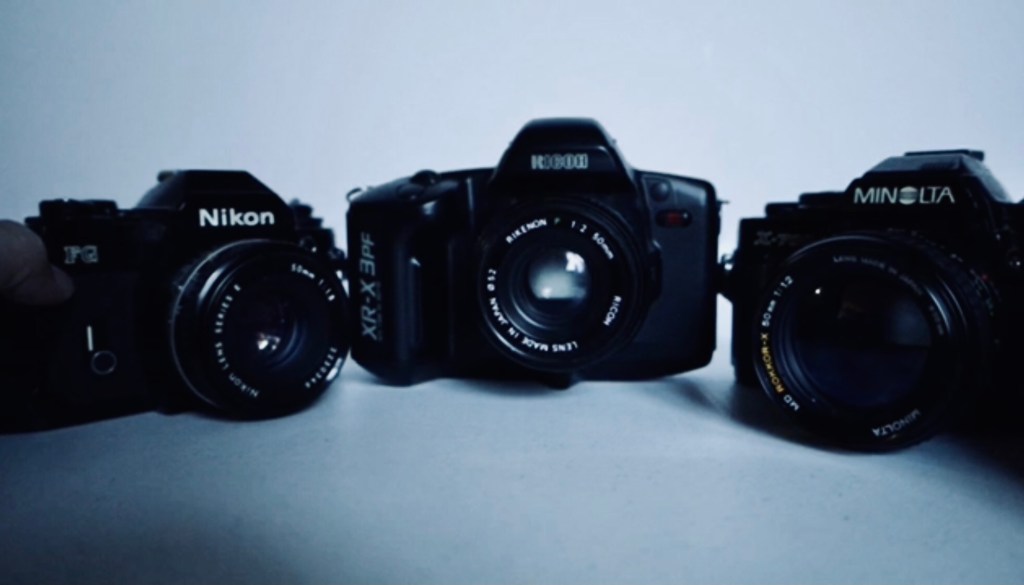
In my video I recommend and do a mini review on three cameras; the Nikon FG, the Ricoh XRX 3PF, and the Minolta X-700.
All three I have used and they all have a Program mode as well as manual mode.
I went into a lot of detail in the video so for the sake of time, I’ll just leave the details there for those interested. I also make recommendations on what to get for your first lens and also recommendations for film.
The photos below are extra samples from the humble 50mm lenses that I recommend a beginner start with.
By “humble” I’m talking about the 50mm f/1.8 or f/2 from any manufacturer and 50mm f/1.7 from some manufacturers.
The first shot was scanned with an Epson flatbed in 2010. The other two were crude iPhone X scans so they may not show the true nature of the images.
My Epson flatbed has gone caput and I’m trying to decide whether to go with a mid level scanner or a high end one. In addition to devoting time to YouTube, this one of the reasons you haven’t seen my work here. I’d really hate to continue giving you guys low quality scans! Y’all deserve the best 😍
This shot from 2010 was taken with a Nikon F3HP and 50mm f/1.8 Series E Nikkor. I am a big advocate for the good old and cheap nifty fifty. Scanned with Epson flatbed scanner in 2010. “Dark Horse” 😀 Circa 2010. Nikon FG, 50mm f/1.8 Series E Nikkor. Film unrecorded. Scanned using iPhone X. This image was shot with the Ricoh XRX 3PF and 50mm f/2 Rikenon stopped down to roughly f/4-5.6 With the humble 50mm you could shoot wide open to blur the background or stop down mid aperture for more subtle bokeh such as this. Scanned with an iPhone X.
As mentioned this article is an addendum to the YouTube video. Most of what’s on the video is not here and most of what’s here is not on the video. I’m not pushing you to the video for the sake of views. If that were the case I’d be making videos like crazy but I’m not. Note how long this article already is! 😀👍🏻
I figure those interested will check it out and those who don’t won’t.
Another point I didn’t touch on enough in the video is that it doesn’t have to be Nikon, Ricoh, or Minolta. You could get a Pentax Super Program if you like Pentax or Canon AE-1 Program if you like Canon. Any camera with a Program mode and a manual mode will do!
The main point is to get a camera with a good Program mode to start getting good results right away.
No Autofocus!
I however am NOT recommending that the beginner gets an autofocus film slr for their first film camera at this time. If you start with an autofocus camera and autofocus lenses then in my opinion you’re probably better off shooting with a DSLR.
I want you to have the Program mode for automatic exposures because exposures are probably the trickiest part for a beginner to understand, but I’d still want you to learn the “art” or the craft by learning to focus and compose. Get great results, get excited, and the rest will come to you with time, practice, and experience!
Conclusion
I can’t believe it took me all that space and time to basically say: Start out in the Program mode, get good to great results, get pumped about photography and work your way through the rest! You’ll be more interested in learning the camera when you start getting good results! 😀
Anyway this was the most I could put in one article but in future articles and videos we’ll work our way out of the Program mode so that you can work the camera and feel like a “real” photographer even though the Program mode will deliver 80-90 percent of the time! 😎
What is your opinion? Do you agree? Disagree? How did you learn 35mm photography? Leave a comment I’d love to hear it! In the end though, it’s just one man’s view so take it with a grain of salt and have a great day folks! 😍📸👍🏻
Good January morn you happy war torn camera loving people and a belated Happy New Year! The New Year is always a good time for reflection but it’s also a time for moving forward.
Well, I was getting a little misty about the end of 2019 and the end of that decade but this year I resolve to be less nostalgic (if that’s possible!) so let’s dive right in…
THE NUMBER ONE MOST SIGNIFICANT THING TO HAPPEN TO THE CAMERA WORLD IN THE LAST DECADE
Perhaps the most significant thing I have seen in the photography world as we end the years from 2010-2019 and enter the new decade of the 2020’s is this:
Smartphone and the cameras in them have taken over as the most popular means of taking pictures. It seems that Steve Jobs vision of doing everything with our phones has more wide ranging implications than anyone ever thought possible! From shopping to dating to photography, we can do it all on our phones.
It’s something you probably already know but perhaps had not thought deeply about its implications and effects. Here’s the first effect:
“REAL CAMERAS” ARE BECOMING PASSE!
Now some might even say that “real cameras” are not just becoming but are passe! And what do I mean by “real cameras?”
I saw a report on a major NYC television station about this a few months ago. The reporter spoke of how “traditional cameras” as they called it, are disappearing in light of the capable smartphone cameras. First thing I thought of when I saw the report was, oh this must be a slow news day 🙂
But secondly, I thought the reporter was just stating the obvious. Even when walking around a big city like New York, I see less and less of what I call “real cameras.”
Well, first off I’m not even talking about film cameras at this point. To the vast majority of the general public, film photography and film cameras truly are a thing of the past and so far out of their train of thought that it’s not even a consideration. It’s really only relevant to us hardcore camera geeks and their importance to us shows that we just live in our own little world.
Cameras like the Sony A7 series or Canon 5D series are awesome but to the general public, “real cameras” such as these are becoming passe as smartphone cameras get more capable.
When I speak of “real cameras” I mean anything that could be perceived as a real camera vs a cell phone camera. It could be a DSLR, a mirrorless, a digital point and shoot. Basically anything that can be viewed as a real camera is becoming passe.
“Snap Shooter” 2005. Canon EOS-20D, EF-S 18-55mm. In 2005 I posted this photo to one of the photo sharing sites and joked that one day the cell phone camera may take over the world of photography. Fifteen years later, it’s not a joke any more! 🙂
This is not just my observation, I think anyone can see that the cell phone cameras have taken over the world. They are the reason for the decline in camera sales worldwide. They just keep getting better and better and to a large majority of the world the best cell phone cameras have gotten to the point where it’s “good enough.”
THE “GOOD ENOUGH” ERA
Friends we are living in the “Good Enough” era. Just like someone told me how much better the vinyl record is versus the compact disc and I told the next person how much better the cd is from their mp3 and it went in one ear and out the other, a large majority can get by on “good enough” because of one factor: Convenience.
Just like streaming music and movies have become so popular because of their convenience so too has mobile photography. And I’m not trying to sell the people short. People are smart. They still want quality but unlike true camera fanatics the general public can stop obsessing at a certain point. Camera fanatics cannot.
The fact is, just like streaming movies and music, the quality is “good enough” for most consumers. The convenience tradeoffs between having to physically put a vinyl record on the turntable and having to sit down and listen to it, versus just downloading it and listening to your music anywhere is too great for a large majority. However I firmly believe, if the quality of the downloads really sucked it wouldn’t be as popular. But to the contrary, the quality of the downloaded movies or music are extremely good. Certainly better than anything we had in the VHS days 🙂
In 2005 or 2007 or even 2012, cell phone cameras were nowhere near good enough. That’s why cameras like the Canon EOS 7D or Nikon D7000 we’re so popular and seen often on the streets and everywhere in the real world. But today, for many people, they don’t feel the need for “big ass” (excuse my language!) cameras. The best of the cell phone cameras have gotten good enough.
***BREAKING NEWS***
January 7 2020: Oh you say you like “Big Ass” DSLR cameras? Well today Canon has announced the EOS-1DX Mark III, perhaps the greatest DSLR ever! Check out the specs and pre-order from our trusted affiliates below!
The rest of us mere mortals could probably get by on the hot new and way more affordable Canon EOS 6D MKII!
In 2016, I wrote an article on how good the cell phone cameras have become. I mentioned that I have already recommended to anyone who asked to just keep their point and shoot digital home because I felt the cell phone cameras even then could get the job done. I said it was “getting close.”
With last year’s release of phones such as the iPhone 11 and Google’s Pixel 4, it’s gotten even closer. You can now shoot low light with these phones the way a few years before people would be looking at an APS-C point and shoot like the Ricoh GR series. Plus you can now do even more with these phones, 4k video, slow motion, time lapse, etc, etc. Plus you can with some simple steps process the images or even make whole movies on the phone then upload them very quickly to your favorite social media platform. The “real cameras” are still quite clumsy in this way.
“Pine” 2020. Take a look at this night exposure from an “old” 2015 model iPhone 6s Plus. It used to be that you had to use big “serious” cameras to get this! Sure the faces are dark, but it was dark outside. I could have easily lifted it post process but that would take away from the night mood.
Now I’m not saying these phones will beat the best from Canon, Nikon, Sony, etc. Of course, if you blow up the photos, print them large or pixel peep you are going to see a difference. But a large majority of the world are not doing that.
They like what they see from their phones. They are not printing. Or if they do, it’s primarily 4×6 greeting cards. They don’t care if the bokeh is fake, they just like that they can now (in the latest phones) blur the background using some clever processing that the phones can do automatically. They like that they can use a myriad of filters on their phones to give the images are different look and feel. And they love that they can share this within minutes or seconds.
“Fire & Brimstone” 2019. Apple iPhone 6s Plus and some in camera processing made for an easy and dramatic photo.
I’m not just saying all this stuff from a generalized view of things. I see this in the real world with friends, family, coworkers etc. People I know who used to be big time DSLR shooters. You are probably seeing the same things.
And in all honesty, the phones have gotten good enough where in small prints you will not see a lot of differences. A good example, recently a friend showed me an 8×10 print from a Nikon D3300 with the 18-55mm Nikkor kit lens vs an 8×10 from an iPhone 11 of the same subject. It was really hard to spot the difference. Now if it was one of Nikon’s better lenses, maybe the differences would be more obvious but as it is I can see why to a lot of people out there, the phones have gotten “good enough.” The scary thing is that this is just beginning. The smartphone cameras will get even better!
Of course, the phone cameras still cannot compete for wildlife or sports but these are specialty segments. For a broad range of shooting, ie, street, portraits, parties, even product shots, a modern cell phone camera in the hands of a skilled photographer can get the job done.
So this explains why we see less and less people carrying around big camera gear or even little mirrorless camera gear. Especially with a big DSLR and big lens, you will look like a fossil from 2005! 🙂
I admit that I myself am guilty of not bringing out my serious gear as often these days. I’m more selective on where and when to bring them. If I’m going to a wedding or important event, I’ll bring it. For a house party with friends, I keep it home.
And the second and sad byproduct of the rise of the cell phone camera is something most other bloggers won’t tell you.
Shhh…Can you keep a secret? If yes, ok then, come closer. Let me whisper in your ear:
CAMERA REVIEWING IS PASSE!
Ok, I said it, now let’s keep it a secret ok?! Alright, in all seriousness, I’m being serious. I mean, it’s hard for me to say such a thing because this is a camera review site after all and yes from time to time I do review cameras and even more so, I’m just a camera and lens fanatic.
Even if I’m not posting as often, cameras and lenses are my passion, other than my family or music. And I’m an old school camera guy to boot.
That said, I’m realistic and I’m on with the times. I see what’s going on. The camera review thing is just getting outdated. It’s overdone, over saturated, and just too much these days.
Every day a new kid on the block is reviewing cameras and lenses. I’ve lost track and everyone begins to look and sound the same. Talking about the same cameras, same lenses. I should know. Five years ago I was the new kid on the block! A new old kid I should say 🙂
When I first showed up on YouTube in 2018 I’m sure people felt the same way about me. Like, who is this guy? Who is this jerk? 🙂
The “Night Stalker?” The “Midnight Rider?” Who is this jerk? 🙂
Funny thing is this is actually not new to me. In the mid 90s I was leaving comments which were basically like “mini reviews” on sites like photo.net because in those early days of the internet, it was something new and I found it really engaging to interact with people who had the same interests.
Photo.net was one of the original “Granddaddy” photography sites and some great reviewers like Thom Hogan come out of that site. I remember when he was just posting his opinions there! I then started sharing pictures and reviewing cameras and lenses on sites like Pbase in the early 2000s where I remember guys like Steve Huff and Sylvain Halgand starting what would eventually lead them to their current blogs or websites right now, so I’ve been around. I just haven’t gotten as famous or successful as those guys 🙂
But that’s ok. I’ve never been driven by the need to make money out of this. But in 2020, camera reviews to me seem passe. I’m not saying it’s over. I’m not saying you shouldn’t do it. I’m just saying I don’t see it as something all that interesting any more in its current state. I mean, how many reviews of the Canon R or Nikon Z do we need? Similarly, how many times can we read or look at a review of the Canon AE-1? Leica M6? Contax T2? It’s all been done folks!
The truth of the matter is the majority of the world shoots with their phone cameras or mobile devices. And if I review a relatively uncommon camera, say a Polaroid 110B or Speed Graphic who is going to be reading or watching? Two, maybe three people max? Needless to say, it doesn’t give me a lot of motivation to put the work into it, especially when I have family and other businesses to tend to.
GOING FORWARD
So if camera reviews are passé what will I do going forward. Well, for one I’m always going to try and give you guys a different perspective on things. I mean, it’s not going to be any better than any one else, but I want to use my experiences to give you a somewhat different take on things. For example, the one time I spoke of the Canon AE-1, I didn’t dwell on what a great camera it is. Everyone it’s a good (if not great) camera. Instead, I spoke of how the prices were going up because as I said…You guys are buying them up! 🙂
Same for the Contax T2. I didn’t review it in the traditional sense. I spoke of five reasons why you don’t need it. And I’m going to keep on doing it like this whenever applicable! I don’t need to repeat what all the other great reviewers have already said.
In the same token, I’d love to learn from YOU. I read a lot of blogs but don’t necessarily comment on them. I should really comment more than I do but despite looking like a guy with the gift of gab, I’m painfully shy. The great Lou Mendes, the famous NYC street photographer with the trademark Speed Graphic, once gave me his phone number and said call him and we can go out shooting. I never called. Not because I didn’t want to, of course I do! But what would I do in the presence of a true Camera Legend? I still bump into Lou every now and then so we’re good 🙂
This year I plan on going back to the roots of this blog, going back to the Camera Legends that this blog is built upon. More Contax, more Rolleis, more Leicas, more Olympus more Nikons, more Pentax, etc, etc. Plus more oddball cameras that you never knew!
Cameras and lenses like the Olympus Pen-F and the 42mm f/1.2 Zuiko are still high on my review list.
And more rare cameras. In the early days, this site was built upon cameras not many have reviewed such as the Contax N Digital and the Minolta XK Motor for example. There’s not many rarities left in my stash but there might be one or two 😊
I also plan on reviewing or spotlighting more digital cameras too. I have been neglecting them as I concentrated on film cameras, but I’ve never been a digital hater. I grew up on film but was young enough to appreciate digital when it came around. I also plan to do more lens reviews.
And speaking of YouTube, I hope to continue growing the channel. Hopefully, better production, more content. But honestly, while I love watching YouTube, I don’t necessarily enjoy producing content for it.
And lastly, above anything else, I plan on doing more personal shooting. I enjoy photography, I love photography! But I have learned over the past few years that the thought of producing content for this blog and for YouTube gets in the way sometimes. If I’m out shooting, I’m now always thinking…maybe I should write an article about this. Or maybe I can turn this into a video. With that frame of mind, I find that some of the joy of photography gets lost and that is a sad thing.
My main goal for 2020 is back to roots shooting, and maybe get more sleep 🙂
What do you think? What are your plans for 2020? I would love to hear from you! Leave a comment if you wish. Many thanks for your support and I wish every one of you a Happy Healthy and Prosperous New Year!
I attended the annual PDN PhotoPlus Expo at the Jacob Javits Convention center in New York City last week.
Just to get it out of the way so you’re not disappointed, I am NOT doing a full throttle report on everything I saw.
It may be bad for some but it’s good for me because I simply was not all that excited by the latest and greatest gear!
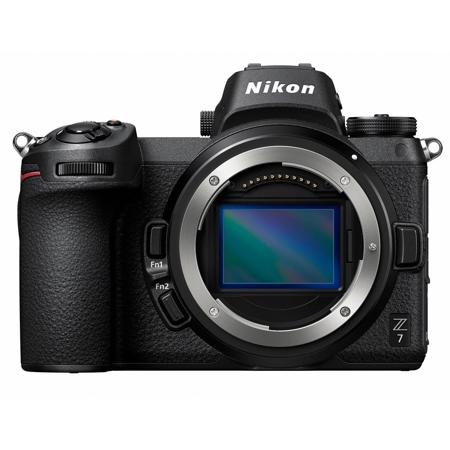
Ok, I’ll admit, I enjoyed trying out the new. Nikon Z and Canon R series full frame mirrorless cameras. But unlike in 2013 when I saw the Sony A7R for the first time, I did not feel the need to want to have them. Wow, am I free? 🙂
Ok again, lenses such as the HUGE 58mm f/0.95 Noct Nikkor (above) for the new Z Mirrorless system was exciting to see but now I say…Samster, even if you could afford it (which you can’t!) would you ever carry that thing out in the real world 😊
I thought mirrorless was about making things smaller and more compact. Perhaps it’s not possible to make a full frame lens that fast and make it smaller but I just think the big two Camera Legends Canon and Nikon are still obsessed with BIG as ever.
Anyway back to everything. I mean, I’m not going to lie. I loved it all, but now I feel it’s all for YOU to try. Not me. I think I, and perhaps some of you too, I’m at the point of gear exhaustion.
And I’m thinking realistically. What, really, is the Nikon Z or Canon R going to do for me that I couldn’t do with my “old” A7R?
By far, my favorite moment was catching up with my good man, the great Louis Mendes. If you don’t know, Lou is famous for shooting and selling portraits in the streets of NYC with a Speed Graphic large format camera.
In the past he used packfilm such as the discontinued Fuji FP series, but as a sign of the times (and because you know I’m interested in this stuff!) I found out that Mr. Mendes is now shooting with Instax Wide!! I can now say packfilm is officially DEAD if Lou stopped shooting it!
No he hasn’t given up his Speed Graphic for one of those horrible Instax monsters. He had his modified to take the Instax Wide film. It appears to me to be one of those hard to find, discontinued Belair Instax Wide backs.
It also seems he had a couple of acolytes with him learning the craft from the master.
The last shot is for all of you to see what you missed out on! Everybody loves a beautiful model! Is it ok if I call her “Sweet Sexy?” If not I’ll take it back 😊
Anyway that’s it for today. If any of you were there I’d love to hear from you, leave a comment!
***HOT MIRRORLESS CAMERAS***
Now I might not be getting the latest and greatest but if you are…
Please check the links from our trusted affiliates. If you buy from them it will cost you nothing extra and help support this site to bring you more reviews of the cameras and lenses you want to see. If you get one before I do, please report back! Thanks for your support!
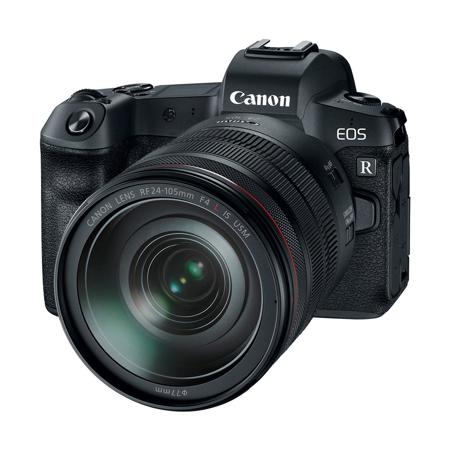
If you got the itch and want to be among the first to own the hot new Canon EOS R, get it through our trusted affiliate link below. You’ll pay nothing extra and support Camera Legend at the same time. Thanks and appreciate your support! EOS R Mirrorless Digital Camera with Canon RF 24-105mm F4 L IS Lens$3399BUY NOW
The Nikon D700 is a 12.1 megapixel, full frame Digital SLR released by Nikon in July 2008. Today, we will look back on the D700. I will share with you my impressions on its image quality, performance and its impact on the world of photography.
AS A CAMERA
There’s a lot of pages with all the specs but I’ll just list a few key features. The camera has a 12.1 megapixel full frame sensor. The shutter speed range is 30 seconds to 1/8000 plus Bulb. Flash synch at 1/250. It has a native ISO range of 200-6400 plus 100-25600 via boost.
My war-torn 200K plus D700 still kickin’ it! 🙂
The D700 also has Live View but it’s first generation and it shows. It looks a little jittery and if you move it around there’s an apparent lag, but once on target it works fine.
The camera is capable of 5fps on its own and 8fps with optional grip. The camera uses the Nikon EN-EL3e battery.
The D700 is a pro quality DSLR and for all practical purposes is a more compact Nikon D3. There are slight differences between the D700 and D3 to be sure, but image quality is exactly the same as they both use the same sensor.
The D700 arrived on the market at a lower price than the D3, increasing its appeal and affordability to both professionals and enthusiasts alike.
TIMELINE
In 2007, Nikon released the D3, a professional 12.1 megapixel DSLR, and its first full frame digital camera. Their previous kingpin was the D2X/D2Xs a with its 12.4 megapixel APS-C sensor.
After years of stating that they would not make a full frame DSLR, and getting their hardcore base to rally around that, Nikon surprised everyone with the release of the D3.
In my opinion, the Nikon D3 is the camera that saved Nikon and brought it back, alive and kicking butt into the second phase of the digital revolution. But that’s a topic for another review. Today, we are talking about the D700.
“Time Out” 2008. Nikon D700, 50mm f/1.8 AF-D Nikkor. Baby gets into a hair pulling moment as a result of having to take “time out” 🙂
MY EXPERIENCES WITH THE D700
I got my first D700 in July of 2008. Rarely do I get a camera in the same month it was released. So how did I come upon the D700? Simple, just like many of you, I climbed the ladder of camera ownership!
And what does that mean? Well, before the D700 I was using a 12.3mp Nikon D300 which was released with the D3 in 2007.
I was perfectly fine with the D300. In fact, I was impressed with its performance and the fact that it was APS-C didn’t bother me. I read about Nikon’s reasoning as to to why they were not going to make a full frame camera and even though I thought they were just in denial or just making excuses for why they wouldn’t make one, I accepted it.
Then the D3 came out and I was surprised and happy they made a full frame DSLR, but I just couldn’t afford the hefty $4999 price tag, even though the price was well in line with professional cameras of the time. So I was resigned and content to stay with the D300 as I already had a full frame Canon EOS 5D Classic.
Gear Lustin’ in 2008! My two main digital cameras in 2008, the Canon EOS 5D Classic and the Nikon D700, seem to have come full circle in 2018!
In comes the photo forums…
As I’ve said here before, I was on the forums just like you guys! Photo.net, Rangefinderforum, Fredmiranda.com, etc.
I won’t say which one, but near the end of July of 2008, I saw a fellow forum member advertise a new D700 he had just gotten and wanted to sell for whatever reason. At over $2000, it was still a hard sell for me financially, but the fellow said he was willing to take a “D300 plus cash.” Hot dog! Bang! This might be my opportunity so I PM’d the guy and since he was local, all the better.
So I go and see the guy. We had some cool camera talk, checked out the cameras, and we had a deal. I handed over the D300 plus a little cash and I walked out with a near new D700! I hate to say it, but I said to myself…wow, Samster, somehow you managed to do it again! 🙂
Anyway, the love was short lived as I used the same ladder to climb up to a D3 in 2009 when G.A.S. attacked! I sold my D700 and eventually the D3 too.
I got the D700 again in 2016 when I noticed an unusually low price online. And the prices continue to fall making this a great time to try one! If you’re interested I’ll list the trending prices down below.
IMAGE QUALITY
In my opinion, the Nikon D700 is capable of superb image quality, especially at lower ISOs.
What I liked…
“Apples” 2018. Nikon D700, 85mm f/1.4 AF-D Nikkor. The apple doesn’t fall far from the tree and by having the same 12.1mp sensor, the D700 offers the same excellent image quality as its big daddy D3.
Rich colors and tones. A certain depth to the images that might be attributed to the sensor, the processing, etc. I can’t say for sure what it is, but I call it the Magic Sensor.
“Red, Green & Gold” 2008. Nikon D700, 110mm f/2 Zeiss Planar via adapter.
There’s also a pleasing balance of sharpness and smoothness to the images which make it perfect for portraits and people photography, one of my favorite forms of photography.
Of course, if you’re a landscape shooter you’d probably be better off with a higher resolution camera but you didn’t need me to tell you that! 🙂
I call the D3/D700 sensor the “Magic Sensor” because it just seems to bring images to life. I used to think it was just the full frame sensor, but now ten years later I know it is not, or at least not exclusively a result of the sensor alone but I sure believe the full frame sensor is a factor.
“Magic” 2016. Nikon D700, 60mm f/2.8 AF-D Nikkor. The D700’s “Magic Sensor” seem to bring everything to life. Well, a happy smiling baby helps I guess! 🙂
“Uh Oh It’s Magic!” 2008. Nikon D700, 50mm f/1.8 AF-D Nikkor. The 50mm f/1.8 Nikkor already offers decent bokeh but a full frame sensor takes it a step further making f/1.8 look even smoother.
There are cameras I have used in today’s world, such as the mirrorless Olympus OM-D EM-5 that also seem to provide similar, rich and colorful images despite the much smaller sensor.
So perhaps it’s a combination of sensor plus whatever processing the camera is doing to the images. Perhaps it’s just how far we have come in digital camera technology that some mirrorless cameras can achieve a full frame “look” that I have not seen in first generation mirrorless cameras.
I know what you’re thinking…it’s all in the lenses! That’s partially true, but in this case I’m not just talking about bokeh or shallow depth of field. Just the whole image, everything in it.
In these two cameras, the magic is comparable both in Jpeg and RAW.
PERFORMANCE
The D700 offers speedy and accurate AF as would be expected from what is essentially a D3 in smaller form. The Multi-CAM 3500FX autofocus module with 51 AF points is more than enough to handle almost anything even today, in my opinion.
“Gimme A Break” 2008. Nikon D700, 70-210mm f/4-5.6 AF Nikkor.
The 12.1mp sensor might seem small in today’s world, but if you’re not shooting detailed landscapes or billboards for some ad campaign you’re going to be fine with the resolution. The sensor in my opinion is particularly well suited to portrait and people photography but is also well suited to street or any other kind of photography you might aspire to.
“Thoth” 2008. Nikon D700, 50mm f/1.8 AF-D Nikkor. A NYC Central Park mythical figure named “Thoth.” Considering this tricky lighting, the D700 Matrix metering fared well giving a usable exposure that would look even better with a little work.
The joy of taking pictures is contagious! Nikon D700, 85mm f/1.4 AF-D Nikkor. Just look at the woman’s hair and skin. The D700 offers just the right balance of sharp and smooth.
The D700 is fine with modern AF-S lenses but is also “old school” in the fact that it can drive those old AF lenses that need to be screw driven like, for example, the 85mm f/1.8 AF-D lens.
“The Kid’s American” 2018. Nikon D700, 85mmf f/1.4 AF-D Nikkor. The D700’s fast AF caught this young man before he ran off, which was a split second later 🙂
The large and clear 95% coverage viewfinder also make it a good choice for using those wonderful old AI Nikkors. Do NOT use it with Non AI lenses or you may damage the camera and/or the lenses.
“Noon” 2017. Nikon D700, 50mm f/1.2 AIS Nikkor.
“Night Buddy” 2017. Nikon D700, 50mm f/1.2 AIS, ISO 3200. The D700 does an excellent job at the “high” ISO of 3200.
Because of the superb image quality and the ability to comfortably use manual focus lenses, I view this camera today as sort of a Poor Man’s DF but without the ability to use Non AI lenses.
BOTTOM LINE
The Nikon D700 took the legend of the Nikon D3 to the masses and became a Camera Legend in its own right.
The D700 gave more Nikon users a chance to see what full frame digital was all about and in doing so, hooked users in with excellent imaging capabilities in a strong, robust body.
Even today in 2018, with all the full frame cameras Nikon has put out since 2008, the D700 is still highly regarded and is considered a digital camera classic.
If your goal is to capture great pictures and you’re not interested in 4K video, focus peaking, and whatever else today’s cameras offer, then the Nikon D700 will still deliver the goods and is one of the two cheapest full frame bodies you can get today.
ALTERNATIVES
The main alternative for the Nikon D700 is the 12.8mp Canon EOS-5D Classic. As someone who has used both extensively, I can say with confidence that you can’t go wrong with either! But if you really want me to nitpick, here’s what I have experienced with these two Camera Legend cameras.
“Brother 700” 2008. Nikon D700, 45mm f/2.8P Nikkor. The Nikon D700 does well with manual focus lenses such as the 45P seen here which is why the Brother calls it the “Poor Man’s DF” 🙂
The 5D images appear somewhat sharper, but the D700 has richer tones and colors. The D700 body is much more refined, feeling like a more mature product, as it should be for a camera from 2008 versus a camera from 2005. Autofocus is faster on the D700 as should be expected.
The D700 does better at higher ISOs. Images hold up better though I don’t mind the grit and “grain” of the 5D Classic images at IS0 3200.
At low ISOs, both cameras still deliver superb results showing that back as far as 2005 digital cameras were already awesome!
Again, if you’re invested in the Nikon system or the Canon system, that should be your main consideration and not the cameras themselves. Both cameras rock!
AVAILABILITY AND WHERE TO BUY
If you’re looking for the Nikon D700 (or the 5D Classic) this is a great time to pick one up! The D700 is plentiful on the used market so you shouldn’t have a problem getting one.
Prices for the D700 are trending now at $400-700 depending on condition, package, etc.I say just get the cheapest one you can as long as you buy from a dealer you can trust.
I’ve heard about the below $300 D700 bodies, but as of today, they are rare and most likely beater bodies. Average seems to be $450-525 USD for ones in good to excellent condition. If you’re going above $600, I would seriously consider one of the newer bodies, ie, D600, D610, or even the D3 of which prices have come down significantly in the past couple of years.
I got my latest one in 2016 for under $400. It was in cosmetically Good condition. Little did I know it had over 200K shots on it! But, knock on wood, two years later and a few thousand shots later she’s still shooting unlike my bought NEW in 2012 Olympus OM-D EM-5 which kicked the bucket last year at approximately 5K
shots.
The cheapest D700 bodies would probably be found on eBay (Direct D700 Link)
Alternatively, here’s your Canon 5D Classic link on eBay (Direct 5D Classic Link)
Another good place to find both is our trusted affiliate Here.
Thanks for reading and I’d be glad to hear from any fellow D700 owners!
The image above was shot with a Nikon D700 and 85mm f/1.4 AF-D Nikkor. This is not a gear posting however. It’s what I call a “Life” posting 😊
Friend, it’s that time of the year again! Time to pick them apples 🍎
This is the time when the “empire” state and the “Big Apple” really live up to their names 😊
The kids enjoyed picking them apples and so did I but I wondered, considering the “fill as you can” bag cost us more than what I could get at the local store, it may be a little fresher but is it really any better? 😊
Not sure but I did enjoy the apples! If you have an apple farm near you, time to go before it’s to late guys! Happy Sunday!








































 Fuji Instax SQ10 Camera













 Camera Legend