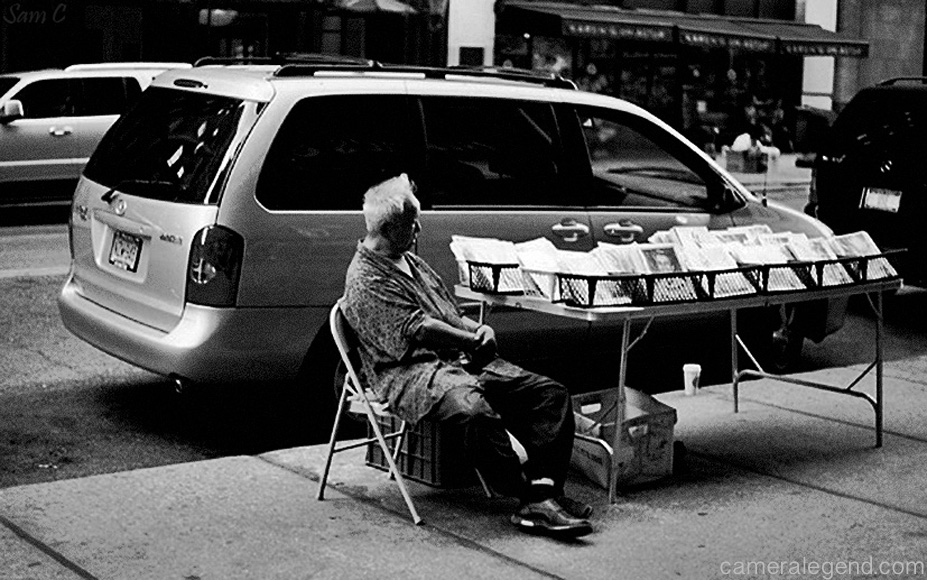
Some Film Images Part I

No dear friends and readers, I have not run out of Camera Legends to profile for you. However, from time to time, I’d like to put up some images I’ve taken over the years, if only to remind myself that I still love photography and also so that readers of this site can see that I actually DO use the gear profiled 🙂

Like many of you out there, I really love cameras and lenses. But just as importantly, I love the equipment more if it helps me take a decent picture.

The photos below are a random sampling of the gear and the photos I’ve taken with them. Some of the cameras used to take these shots have been profiled. Some are previews of possible future postings.

They are not masterworks or anything. Many are from my attempts to learn or test equipment. Most were taken for just the pure joy of photography.

I thank you for taking a look. And not to worry, I have more great gear to profile and review for you coming soon 🙂

Note: Most of these images were posted elsewhere on the web years ago, long before I knew anything about WordPress. As such, some were resized to dimensions much smaller than I’d like to show you, but as I cannot find the originals at this time, this is what I can post. Sorry about that.

139139642.TI4xz9k1.MomDC

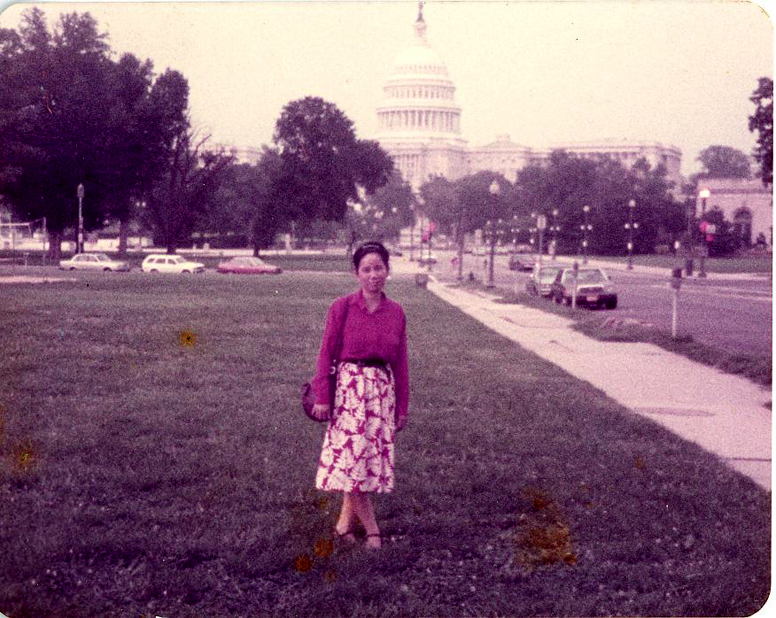
“Mom in DC” 1984. Kodak Disc Camera. This image represents one of my earliest attempts at photography, at least the ones I could find. Shot with the long defunct and defiled Kodak Disc Camera, a camera that was bashed by critics and consumers alike. However, I have to say, I really loved that camera and this image brings back a lot of memories.

80259812.xfdWo77e.JoeLit150Pba1

“Ghetto Blaster” 1985. Minolta X-700, 50mm f/1.7 MD lens. My brother and father with our Cutlass Supreme which we called the “Ghetto-Blaster” with its missing hubcap 🙂 Thirty one years in time, but I’ll be darned if that golden light on the print doesn’t still look as golden as the day I took this shot.


86420863.ICEBHFzI.CPhotogPBase

“Bangkok Bride” 2005. Olympus Stylus Epic, 35mm f/2.8, Kodak High Definition 400 film. Shot in Bangkok, Thailand.

80650042.mP0bUQUa.LotusPba

“Holy Petal” 1995. Contax G1, 28mm f/2.8 Zeiss Biogon, Fujichrome Velvia. Taken at a temple in Bangkok, Thailand.

80067916.oS3X1lKl.AddictOM1Pba

“Portrait Of An Addict” 1997. Olympus OM-1, Zuiko 50mm f/1.8, Kodak Tri-X. An attempt to self document one man’s horrible addiction to cigarettes. This photo was accepted to Flickr’s “Film Is Not Dead It Just Smells Funny” group, which is quite a selective bunch so I was honored by their acceptance of this pic.

72203117.MOYkwQ46.BMannequinsPbase1

“Mannequin Fantasy” 2006. Ricoh GR1, Fujicolor Press 800.

99388588.WRfjkUXc

“Lots Of Love” 2008. Leica R8, 90mm f/2 Summicron-R, Ilford XP2. I was honored that this image was profiled on Leica’s LFI “Analogue Masters” Gallery a few years ago.

130716115.ggt0qYRJ.3994821952_832dcc1cda_z1

“Rainy Day Blues” 2009. Leica CL, Canon 50mm f/1.2 LTM, Kodak Tri-X 400 developed in HC-110. I was sloppy and something went wrong with the development and I got the blues after seeing the ‘damaged’ roll . But since photography is such a subjective, sometimes emotional thing, I developed a liking for the look of some of the ‘ruined’ images.

995636_10204084737871081_7481577152814577026_n

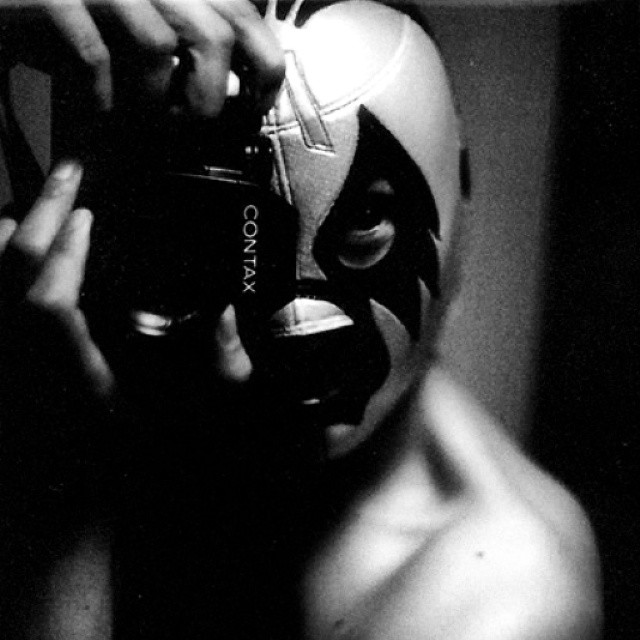
“Masked Shooter” 2008. Contax RX, Carl Zeiss 50mm f/1.4 lens. The man with the clandestine figure, the Masked Shooter, has probably shot nearly a thousand cameras 🙂


Flashback Friday: The Olympus M-1 Film Camera

DSC_0669M1CamFAC

The Olympus M-1 35mm slr. Basically an OM-1 with a few external and internal differences. The most obvious give away is the “M-1” logo on the top plate of the camera. Otherwise, the M-1 and OM-1 are cosmetically and functionally the same.

The Olympus M-1 is a 35mm SLR introduced by Olympus in 1972. It is the original OM-1.

The M-1 was originally a part of the Olympus “M System” as they called it. They were all set to go, even having a full set of lenses made to support the M-1. Only one thing they forgot…Leica already had an “M System” out!

From all accounts, Olympus changed the designation of the M-1 to the “OM-1” because Leica protested the use of the “M” and “M System” as it conflicted with their M series rangefinders and their lenses.

The M-1 is basically an OM-1, which is among the finest and most iconic systems camera ever made. A modern masterpiece from the brilliant mind of the late great Yoshihisa Maitani, the genius camera designer of Olympus.

There are some differences between the M-1 and OM-1. Main thing you need to know is that the M-1 says “M-1” on the top plate and it cannot accept a motor drive.

There is a wonderful page that tells you everything you need to know about the M-1 if you google “Olympus M-1 film camera.”

As a camera, it has an all manual 1s-1/1000s plus bulb shutter and originally took a PX-13 mercury battery, which has long been outdated/outlawed. The battery is only needed for the meter and yes, the camera can operate without a battery. You can use a replacement battery and my recommendation would be the Wein MRB625 Zinc battery which at 1.35v is closest to the original mercury cells.

RARITY, PRICE AND COLLECTABILTY

This one is not as easy as it looks. While the M-1 is certainly not as common as the OM-1, I don’t think I would call it rare either. “Rarer” would be a better word I guess.

They don’t seem to come up for sale often, but you do see them at fairly regular intervals on eBay, usually by sellers who stress that it’s “RARE.” I know that sounds like an oxymoron, but you know what I mean 🙂

I got mine for $40. It is not in perfect condition, eyepiece and focus screen looks to need replacing, viewfinder needs cleaning, but the shutter works though I haven’t tested it for accuracy. It’s going to be a fixer-upper for me which should be fun.

I have seen people asking up to $500 for this camera, usually on eBay, but they ain’t getting $500! 🙂

Most camera lovers will know or search and find out that the M-1 is basically an OM-1, a camera you can get anywhere from $10-150 dollars depending on condition and how much you want to spend.

A more consistent and fair price for this camera I think is around $150-250 in excellent condition and preferably with a lens thrown in.

SamOM

“Zuikoholic” 2009. With the black Olympus OM-1 and 40mm f/2 Zuiko lens. As far as I know, the M-1’s were only made in chrome.

Of course, for a collector with money, and if you are a true Zuikoholic you probably wouldn’t mind paying extra just to have that “M-1” in the house 🙂

BOTTOM LINE

The Olympus OM-1 is one of my favorite manual SLR’s of all time. The beautiful styling, mechanical shutter and all manual exposure makes it a pleasure to use just for the pure joy of photography.

When I gave up on my Minolta X-700 from 1985 and after trying Canon and Nikon in the 90s, I settled on a couple of OM-1’s and it carried me through the rest of the decade giving me thousands of precious memories on film. And as the 90s came to an end and digital was dawning, my first digital camera was an Olympus C-3000.

The M-1 being the “rarer” version of the OM-1 makes it just a little more special.

These cameras live on in their OM-D incarnations although I think all the OM-D’s lack the true heft and feel of the classic film OM cameras. As imagers, I think the OM-D’s are great!

DSC_0671M1OMDFAC

“Generations” 2015. The Olympus M-1 film camera on the left and the OM-D EM-5 on the right. Yes, I know that OM-D needs a little dusting off 🙂

In closing, there is no doubt that the Olympus M-1 (and OM-1) is a true Camera Legend that inspired a whole generation of photographers and continues to influence photographers and camera designers, even today.


Flashback Friday: The Linhof 220

114664261.NknMPisU.LinhofSamPba

From 2009, with a Linhof 220 and Tri-X 400 film. This one definitely flew over the cuckoo’s nest! 🙂

Originally written in 2009…

Note: I done told anyone who would listen that my film cameras are far more interesting than my digital gear, and this camera might well be the ‘oddest’ in my collection. It is a Linhof 220, a medium format camera that shoots 6×7, and comes with a fixed 90mm f/3.5 Linhof-Technikar lens.

It’s ‘weird’ not only in its looks, but for a few reasons. For one thing, it’s set up for use mainly for vertical photos, hence it’s more of a portrait camera than it is a landscape camera. I believe it was meant to be a press camera. Of course, you can shoot horizontal if you’d like, but it’s quite cumbersome. It’s also ‘weird’ in the fact that the shutter is a trigger on the pistol grip.

It’s quite a rare bird, but I got her very cheaply (as in less than $100) because she’s got “issues” so to speak. The rangefinder is a bit touch and go, and the camera has a real problem with film spacing, both of which I am trying to repair in my spare time. The times when I can get a good shot out of it, I’m impressed with the sharpness and contrast from the lens, it’s tack sharp.


Update 2015:

Prices for these in good working condition are usually around $400-500 USD. I was able to fix the spacing problem, but the rangefinder is still touch and go. It’s not the most fun camera to use which is why you haven’t seen me post a lot with it, but in my film camera collection it is a standout.

Your best bet to find one of these is on eBay. However, you may also find them through private sellers on Amazon while searching for Medium Format cameras.

The Canon AT-1: The Greatest Camera I Never Knew

CanonAT1PicFAC

In a hazy cloud of memories, I still clearly remember the first SLR I ever touched, the Canon AT-1.

This is IT. This is the camera that sparked an obsession with cameras that continues to this day. But first, let me introduce you to the camera…

The Canon AT-1 is a 35mm SLR released by Canon in 1977. It is part of the long defunct, but still highly popular Canon FD system.

The AT-1 uses the Canon FD mount and is a no frills, manual exposure only camera. It does however need a 4LR44 battery to operate, which is probably one reason it seems unpopular or overlooked by the “all manual” club of camera lovers.

The AT-1 is probably at the very low end of the classic Canon FD camera lineup, if not the lowest.

However, I have noticed a slight increase in curiosity and desirability for this camera in recent years. It could be due to the low prices these cameras command or the fact that it’s a good learning tool for the novice photographer or any number of things, but this is what I see.

I do have to admit, I am not fond of manual cameras that need batteries and the AT-1 does not just need batteries for the meter. It needs a battery to work at all 🙂

All that said, I love this camera! This is the camera that changed my life, although not necessarily for the better.

This post is not strictly about the Canon AT-1. It is not an official review of a camera a lot of people don’t know, or don’t really want to know about. It’s the story of how this humble “Plain Jane” camera played a key role in sparking the gear obsession that you see today.

FIRST ENCOUNTER

My first encounter with the Canon AT-1 was in 1981. With the help of a family friend, my parents bought a Canon AT-1 so they could take nicer pictures than what they got with their Kodak 110 camera. The funny thing is, they really weren’t interested in photography, they just wanted nice photos.

The family friend had a nice Canon system built around the highly acclaimed and (at the time) hot Canon A-1. He was really a photo-bug and was always showing people his pictures and telling us of the competitions he entered, etc, etc. He was really a very good photographer.

But to this day, knowing what I’ve come to know about cameras, I still find it questionable why this man would select the AT-1 for his friends knowing full well these two people (my parents) could not figure out an aperture or shutter speed from a door knob. Anyway, there’s more to this, but that’s a story for another posting.

Back in 1981, if any of you remember, cameras before the digital age were considered luxury items. Not everybody had a camera, and certainly not everyone could afford them, especially the SLR’s which made you look “serious.”

Today, as you can see, everyone and their Mom has a camera. Everyone is a “pro” with their DSLRs and battery grips 🙂

But back in the early 80’s this was not the case.

If you look back to cameras from the 40’s up until the mid 90’s, before the dawn of digital, you can see that many people treated them like precious jewelry. That is why you find so many with engravings.

As a collector today, I personally hate engraved cameras. Unless it was from a famous person, the engravings devalue these cameras in my opinion and makes me feel like the ghost of the person who engraved it is there with me and that’s a spooky feeling 🙂

They may still be considered luxury items today, yes, but today’s digital cameras, from the lowest to the highest of the high end cameras are known to be “disposable” inherent to their digital DNA.

My parents apparently felt the camera was so precious, they had relatives look after it and it stayed in its case and in the closet most of the time.

When we took our summer vacation in 1981, I saw the camera and asked my Mom if I could play with it. She said to “be careful” but yes.

It was one of those feelings in life that you can’t describe, that money can’t buy. It was priceless. There I was turning the shutter speed ring, twisting the knob, focusing the lens and seeing things come in and out of focus in that beautiful and bright viewfinder. Wow.

FLASHBACK TO 1982

So on our return to New York in 1981, we were allowed to bring the camera back home with us and I was thrilled.

But once back home, still a young boy not a teenager, the camera stayed again in its case in a closet for almost another year.

Now, we’re in 1982 and I was more interested in the ColecoVision video game system we just bought in the summer of 1982.

It was a clear and sunny September day in 1982. My brother and I took a ride from our humble Bronx abode to our family friend’s house in East Rutherford, New Jersey.

We always looked forward to getting away from the inner city neighborhood in which we lived. Our friends had a nice house with a backyard, plenty of space to walk and run, and the complete feeling of safety, at least to us inner city kids.

Only folks who have lived in the inner city can relate to the feeling to “being trapped” in your apartment once the night arrives. No one dared to venture out. NYC had a reputation for being BAD in the late 70’s and into the 80’s and yes, New York earned it 🙂

Anyway, after a wonderful day in Jersey, we arrived at our apartment, I’m guessing around 9-10pm.

When my mom opened the door, she was surprised it wasn’t locked. She was sure she locked it, she always did. When she flipped on the light, (whoomp!) there it is…

The house looked empty. We looked on the coffee table, the ColecoVision, gone. We looked at the stand; the stereo tuner, turntable, cassette deck, all gone.

I looked in the closet for my precious AT-1…gone.

THE TRAUMA AND THE AFTERMATH

Yes, as you can tell, we were robbed. We all stood there in shock. The place felt empty, it felt “dirty.” We were violated. Our privacy had been broken, and our property, taken.

For my brother and I, it was a shocking arrival at the reality of the world which has an effect to this day.

We all know the effect that crime and vandalism can have on our feelings of security. And we all know how much more magnified this effect can have on children. This is what happened to me.

In some ways it made me better, wiser. I’m always looking over my shoulder. Even today.

THE LEGACY OF THE CANON AT-1

So how does that Canon AT-1 fit into this? Well, after the theft and for over thirty years now, I’ve been completely infatuated with cameras.

If I were to take a psycho-analytical look at this, I would say it’s like winning a million bucks, but never getting to use even one dollar. It’s like having a fabulous meal in front of you, but dropping the plate. It’s like tasting the fruit, but getting only one bite. You want more.

So as an adult, after I started working, I started picking up cameras here and there until it got entirely out of control. I tried to remedy this by selling a bunch of cameras on eBay, but then when got the itch, I’d start buying again.

In the recent years, I have tried to curb this “sickness” with modest success. I have pretty much cured myself of the “latest and greatest” syndrome, so I’m not spending a lot of money, but I still fall deeply for old, weird, and decrepit classic cameras 🙂

In all those years that I’ve been without the AT-1, I never had a desire to buy another one until recently. I got one in 2012 for $10 bucks. I have yet to use it.

Not because I don’t want to. It feels fantastic, solid, great viewfinder, etc, etc. But at any time, I find myself using much more interesting cameras, and the AT-1 gets put in the back burner.

The Canon AT-1 is a member of the legendary Canon FD line of cameras, but it may never be a true Camera Legend as its famous and much more popular sibling, the Canon AE-1 is. However, the AT-1 had a more profound effect on me than any camera, past or present. Even if you take away the trauma of the theft, the feeling of holding my first SLR and looking through its glorious viewfinder still resonates strongly in my head today.

Still, until I am able to put a roll of film in it, you can say, without a doubt, the Canon AT-1 is the greatest camera I never knew 🙂
The Rolleiflex Black Baby 4×4 Camera

SamRolleiFACBKPS

“Black & Quack” 2015. With the “Black Baby” Rolleiflex 🙂

The Rolleiflex “Baby” models are twin lens reflex cameras made by Rollei. This particular model is the post war “Black Baby” and was made in 1963. The Rolleiflex “Baby” lineage goes all the way back to 1931 and ended around 1968.

The camera takes 127 film or otherwise known as 4×4 (cm) which is considered an obsolete or “dead” format because 127 film is no longer made, at least not in bulk or by major manufacturers.

You can find 127 film quite easily on eBay, but most of these are outdated and overpriced, and usually sold by Eastern European sellers. However, hang around and I’ll tell you where you can buy some fresh 127 film.

I have not used this camera extensively so this is by no means an official “review.” I initially got this as a collector’s piece knowing that I would not be doing much shooting with it.

THE CAMERA

The camera as is stated is pretty much a “baby” Rolleiflex TLR. You focus through the waist level finder using the knob on the left hand side and wind the film with the right hand knob. It’s basically a miniature Rolleiflex TLR.

DSC00614RolleiPSC

“Size Matters” 2015. The Black Baby Rolleiflex on the left, and the Rolleiflex 2.8C Xenotar for size comparison.

The shooting lens is a 60mm f/3.5 Schneider Kreuznach Xenar which is basically a Tessar type lens that should be quite sharp and contrasty.

In my experience, you can’t go wrong with either Zeiss or Schneider lenses and on these Rollei cameras, they are top notch.

The camera feels well built, but may be a little awkward to hold and use especially if you are used to “normal” sized TLR’s.

BOTTOM LINE

The Rollei “Baby” models are quite popular with collectors, with the “Baby Grey” being the most popular and abundant. These can go anywhere from $50 to $250 if priced fairly.

The Black Baby goes for a bit more. I personally find this one to be the most desirable model because it is the one that looks closest to a modern Rollei TLR.

I got mine for a little over $300, but I’ve seen sellers asking over $1000 for them. However, those over $1000 usually do not sell. Why? Because people aren’t stupid! They know that 127 film is virtually gone and you can get a 6×6 Rollei for that price. A fair price I would say would be from $300-450 for this particular model.

Even though 127 film is basically obsolete, you can now get 127 film, fresh, from…B&H! Yes, that’s right, good old B&H. The film is only available in ISO 100 speed and is called “Rerapan 100” and it is a little pricey at $11.99 for each roll. If you go in there, tell ’em Sam sent you 🙂

Although I would greatly prefer the added versatility of ISO 400 film and a lower price, I’m happy to have at least one source of fresh 127 film.

Some folks have taken the widely available 120 medium format film, cut it down and re-spooled it into 127 film. I have not had the time, the skills, nor the inclination to do that however, not that it seems that hard.

Needless to say, at $11.99 a roll, this camera will not be a daily shooter for me. As I said in the beginning, I basically bought it for my collection, and to be able to actually shoot it is an added pleasure.

I still have my first roll of 127 film in this camera. When I get the results, and if they’re good enough, I will update you on another posting.

While most of these “Baby” Rollei cameras are sought for collections, they are also great shooters, and they are an interesting part of the Camera Legend that is Rollei.

The Best Camera I Never Knew Part I: The Rollei Rolleimatic

SamRolleiFACBK

We can’t always have winners…

In the first post of this series, I take a look at cameras that I have come across, which may or may not be Camera Legends, but somehow they didn’t work out for me.

I’m sure there are cameras that many of you have used, that you heard a lot (or a little) about, you wanted them, and eventually got them, but for some reason or another they didn’t live up to your expectations.

First up is…

THE ROLLEI ROLLEIMATIC

The Rolleimatic is a uniquely designed camera introduced by Rollei around 1980, I believe. It was designed by the famous camera designer Heinz Waaske.

The camera features a 38mm f/2.8 Tessar type lens lens and relies on scale focusing.

The camera’s claim to fame is a rather odd design where the “flap” that covers the lens also doubles as a film advance mechanism.

The camera looked very cool to me, certainly stands out among point and shoot cameras of its era. I love anything retro, so at under a hundred bucks, I had to give it a try. With the legendary Rollei name, you would think this would be an instant winner. However, for me, it wasn’t.

WHY IT DIDN’T JIVE WITH ME

Information on the Rolleimatic is scarce on the web. One great review I read was from a cool guy named Mike Elek, also a classic camera aficionado, and he stated that the camera is a little fidgety to load film.

Well, he was right and then some! I couldn’t get one roll of film to load in this camera! 🙂

Ok, so I thought…maybe there’s something I’m doing wrong. So I found the online manual, I tried and retried, and retried…couldn’t get a damn roll to stick in this camera.

Sometimes, I would get close and it would latch on for like two winds, then the film came loose and I’d have to start over again.

The problem is there is no “slit” in the film take-up like other cameras. Instead there is a “film like thingy” in there that you’re supposed to hook the film up to. I should’ve taken a picture of it, but the best way I could describe it is that the part looks like a piece of 35mm film, but stronger, and is removable. It has “teeth” that is wrapped around the film advance roller and you’re supposed to get your film under the “teeth.” Well, that I did, but it still didn’t work!

Being that he was the only person who seemed to know anything about this camera, I emailed Mike and he was kind enough to write me back. He even made a YouTube video to show how to load the film, what a good guy!

Anyway, despite all his help, I couldn’t do it. Maybe something was wrong with my particular camera.

The camera looked awesome cool, but all it gave me was a headache 🙂

BOTTOM LINE

The camera was sent back for a refund. I’ve been using film for more than thirty years, this was the first camera that I couldn’t load. I’m convinced that it was the ‘funkiness’ of the design 🙂

Mr. Waaske, God Rest His Soul, was a brilliant and creative camera designer. A Legend. I have nothing, but respect for his creations. However, sometimes being too creative might not be such a good thing.

If hunting for one of these, and I’m not sure that’s a good idea, prices are trending at $50-160. So they are not expensive, but they do seem scarce.

The Rolleimatic is one of the Best Cameras I Never Knew. But it is not alone. There will be more to come 🙂

The Ricoh GR1 Film Camera

The Ricoh GR1 Film Camera Review

UPDATE 9/3/2018: As a companion to this 2015 review, I am adding a new video on the GR1 for those folks who enjoy watching videos more than reading, and yes, even though reading is better for your brain, I do understand the need for videos 🙂

If you’re on YouTube, I would love to hear from you! Please don’t forget to LIKE, COMMENT, SUBSCRIBE for new videos and updates. Thanks for your support!

The Ricoh GR1 is a 35mm point and shoot camera introduced by Ricoh in 1996. It was considered a high end or “luxury” point and shoot camera.

The GR1 came from a unique era in the mid to late nineties when manufacturers such as Leica, Nikon, Konica, and Contax put out several point and shoot cameras with high specifications, forever changing the way the lowly point and shoot camera was perceived. Ricoh’s first entry into this market was the GR1, and while the luxury point and shoot cameras from all the manufacturers have their own cult following, the GR series might be right there at the top, or second only to the Contax T series in terms of following and reverence.

BUILD AND HANDLING

Among the GR1’s many useful qualities, the best may be its size. It is small, light, thin, and truly pocketable which is one of the reasons why it was and is considered a great street camera.

DSCF0640RGR1FA

“Black Or Silver” 2015. Take your choice of black or silver for the GR1. Either way, you have a very capable, non-flashy point and shoot that’s perfect for street work.

As you know, the best camera is the one you have with you, and with the GR1, there’s no excuse not to have it with you at all times.

This was especially relevant in the 90’s, but maybe not so much today with the advent of high quality phone cameras now on the market. In fact, the phone cameras have largely replaced even digital point and shoots, let alone film versions. However, for the classical street photographer, film remains THE medium of choice.

The GR1’s body feels lightweight with a mix of plastic, metal, and a magnesium alloy chassis.

While the camera is really a point and shoot, with programmed AE and aperture priority only, one of the things that made the GR1 stand out from your standard point and shoot cameras was the ability to control some aspects of the shot. For example, on the top right dial, you have “P” for programmed AE, and then your aperture selection, i.e., f/2.8, 3.5, 5.6, etc, etc.

On your top left, you have an exposure compensation dial that gives you plus or minus two stops.


The original GR1 and GR1s have no manual ISO selection. The GR1s added supposedly better coatings, a backlit lcd, and the ability to use filters, but is pretty much the same camera. The GR1V has it all, plus manual ISO selection, in addition to a few other features like a more flexible SNAP mode. Of course, you also have the GR21 with its super wide 21mm f/3.5 lens, but that’s another animal altogether.

On the GR1, I will just use the exposure compensation dial should I need to make adjustments and it usually works fine for my purposes.

THE LENS

The GR1 is equipped with a super sharp 28mm f/2.8 GR lens. As a guy who lives at 50mm, I initially thought as many people do, that 28mm might be too wide for me. But I have been able to do portraits with it, and it’s perfect for street work.

129739276.Y6Sl2aBn.GR1LitP

“A Portrait Of Dad” 2006. Ricoh GR1, Kodak Gold 400. An example of using the GR1’s 28mm wide angle for portraits. Dad relaxing with a smoke while sitting on a bench in Riverside Park, NYC. After his passing in 2011, I found it hard to look at this shot, knowing that a lifetime of smoking cigarettes killed him. However, with the passing of time, I’ve come to accept that cigarettes were a huge part of his personality and they gave him immense pleasure and relaxation, despite the final outcome. RIP my Papa, I’ll always cherish our moments.

The lens is very good at f/2.8, but is extremely sharp from around f/5.6 and up. For a wide angle, the lens has very little distortion. Maybe some slight barrel, but not significant enough to worry about, especially for street work.

PERFORMANCE

Among the GR1’s great qualities are its fast and accurate AF, and a SNAP mode where the camera will set focus for 2 meters or 6.5 ft to infinity, which cuts down shutter lag allowing for quicker shots. This was a very popular feature with street photographers, and Ricoh has kept this unique feature on every GR camera ever since, including the latest GR 16mp camera.

CarWash074FAC

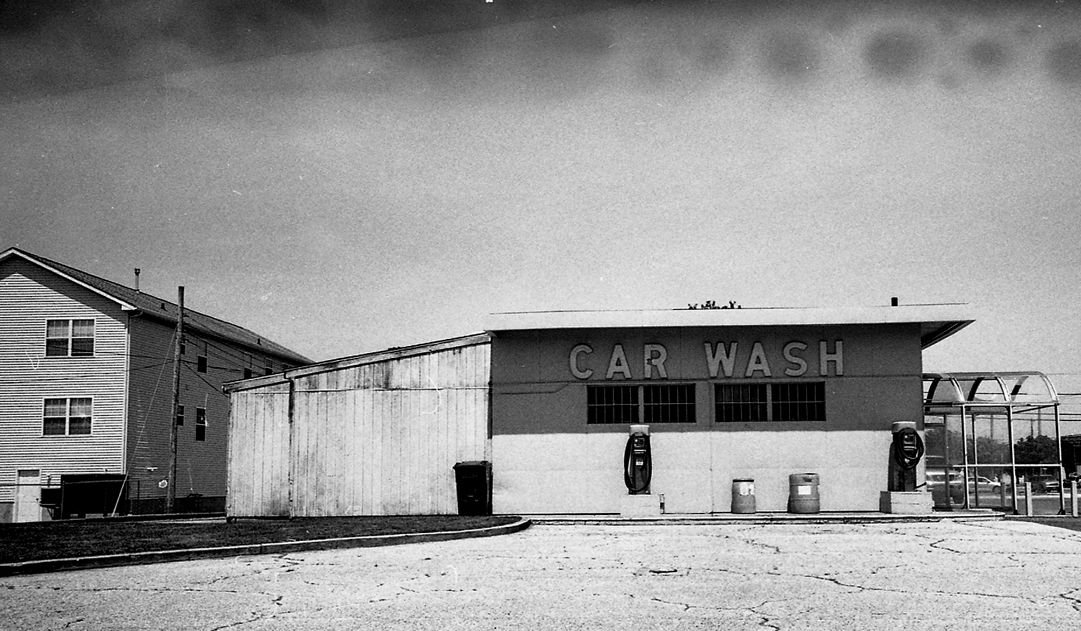
“Car Wash” 2015. Ricoh GR1, Ilford FP4 Plus 125 in D76 developer. Wildwoods, NJ. Note the flaws in the sky, a result of my imperfect developing.

The camera, while stealthy in its look and size, is certainly not quiet. In a silent room, you will hear the motor advance. However, on the streets, this is generally not a problem.

GR1FP4125HouseWW072

“Tribute NYPD Officers” 2015. Ricoh GR1, Ilford FP4 plus 125. It was good to see the unity that people in Wildwoods, NJ, feel about the recently fallen NYC officers.

ISSUES

The GR1, while certainly a classic, is not without its “issues.” Main problem I have seen on these cameras is the fact that the top lcd goes bad. It’s more common to find GR1’s with bad lcd’s than it is to find one with no lcd issues. Sometimes you will get a partially functioning lcd with missing segments. For example, you press MODE and you will get the “mountains” or infinity symbol, but press again and you’re missing the SNAP symbol. Or you will get a partial frame counter or none at all.

This seems to be a problem on all GR1’s, including the GR1s and the GR1v so inspect carefully before you buy.

This will indeed be a problem for many folks. It is too bad that Ricoh used some very poor lcd’s much like the Contax cameras of that era. All lcd’s can go bad over time, I understand that, but I definitely see this more with Ricoh and Contax. Surprisingly, the Canon EOS line had some of the most trouble free lcd’s of cameras of two decades ago or more.

imgGR1Queens054FA

“Backwards Time Traveler” 2015. Ricoh GR1, Ilford Delta 400.

Another issue is the viewfinder indicators such as the framelines, and focus confirmation goes dim and in some cameras, are barely discernible.

The last and probably most troubling issue would be if the shutter or motor are dying. If this is the case, you can forget about it because Ricoh does not service these cameras any longer. You can usually tell these problems by a shutter that won’t open or close, and a motor that gets progressively noisier.

All that said, the LCD issue which is the most common, is not really a make or break for me. As long as I can set the aperture, I’m good. I do not usually use SNAP mode anyway, and if in doubt, I’ll leave it on “P” mode and pray 🙂

I try to remember that this IS a point and shoot, and if you use it that way, you will generally not be disappointed. At 28mm, you can usually get a sharp shot if you focus on anything five feet away or more. I only worry if I’m trying close portraits.

BOTTOM LINE

The Ricoh GR line is most certainly iconic. No doubt helped by the works of legendary Japanese street photographer Daido Moriyama who helped make using a point and shoot in the streets “hip.”

1441351_10204549930660610_784127188593436077_n

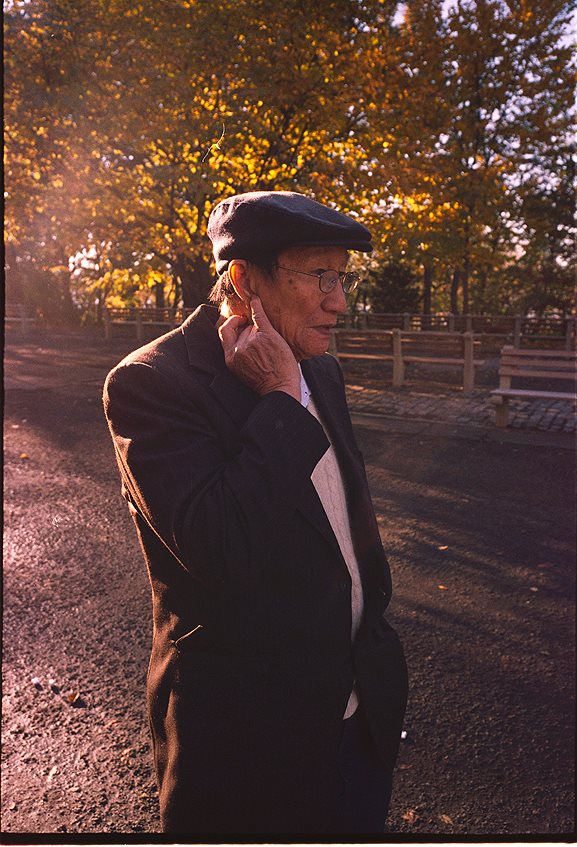
“The Golden Man” 2006. Ricoh GR1, Kodak Gold 400. I loved the light shining down on that afternoon in Riverside Park, NYC. I originally titled this “The Man With The Golden Ear” and Dad was truly a man who would listen to all my issues and offer great advice. He was there to accompany me to an interview. I got the job. He was really a man with the golden touch 🙂

If looking for one of these, prices are trending at $250-350 for the original GR1, $350 and up for the GR1s, and $450-650 for a GR1v, depending on condition.


The Ricoh GR1 is a Camera Legend, and a legend of the streets. It is THE superstar point and shoot camera of street photography. If you can find a rare flawlessly working one, or can live with its known “issues” you will have a very special camera that will reward you with the ability to take fantastic shots in a small and truly pocketable form.

imgGR1ZoeZayFA

“Softees” 2015. Ricoh GR1, Ilford Delta 400. Probably a slow shutter speed and some movement resulted in a soft image. Almost didn’t put it in the review, but I love the faces 🙂

***DEAL ALERT***

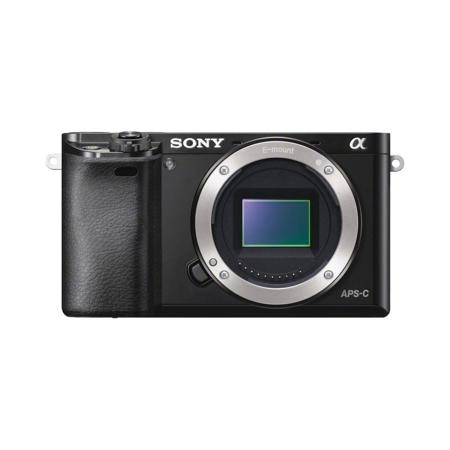
Save $100 on the HOT Sony A6000! Use the link to buy from our safe and trusted affiliates. You will pay nothing extra and support Camera Legend at the same time to help us fund more reviews and articles on the cameras and lenses you want to see. The gear other sites neglect are the ones we want to write about for you! Thanks for your support.
Alpha A6000 Mirrorless Camera Body, BlackAlpha A6000 Mirrorless Camera Body, Black$448BUY NOWAdorama

The Incredible New Fuji X-H1

Canon T90: “The Tank”

SCFA

“The Tank” 2013. My war-torn Canon T90 and 55mm f/1.2 Aspherical. They may be in “ugly” condition, but damn I love this combo!

The Canon T90 is a 35mm SLR introduced by Canon in 1986. It was their most advanced model in the classic Canon FD mount.

One look at the T90 and you can see that it was THE bridge camera to the Canon EOS line of cameras, which was introduced only a year later in 1987 with the Canon 650.

DSCF0648CanonT90MKIIC

“All In The Family.” The Canon T90 from 1986, side by side with the EOS-1D Mark II digital from 2004. Note the family resemblances, despite the incompatible lens mounts.

THE FD MOUNT OUTRAGE

Although Canon introduced a Cosina made T60 model in 1990, the FD line was effectively over with the introduction of the EOS mount in 1987.

At the time, there was a bit of outrage from loyal Canon FD owners who now had their lenses rendered useless on the new incompatible EOS mount. They felt betrayed, and many even switched to “the enemy” Nikon, pledging they’d never use Canon gear again. Even today, I still hear of people who never forgave Canon for abandoning the FD line. Talk about crazy passionate! 🙂

Anyway, as great as the FD mount was, I believe that time has proven Canon right in their decision to change to the all electric EOS mount. With this mount came super-fast and near silent “Ultrasonic” motor autofocus lenses, super telephoto lenses, and some very unique “L” lenses such as the 85mm f/1.2L, the 135mm f/2L, and the 200mm f/1.8L, which are among some of the finest lenses ever made by anyone.

The larger EOS lens mount also made it possible to mount “alternative” lenses such as Olympus OM, Nikkors, Leica R, and Contax/Yashica mount lenses to name a few, which was not possible with the FD mount.

BUILD AND HANDLING

If you ever used an EOS camera, and most of you probably have, then you’d be pleasantly surprised to see and feel how much the T90 handles like an EOS camera with its buttons and front right hand dial.

The camera is built well, although it feels a little plasticky with its polycarbonate body. It is however solid and rather heavy, especially with the required four AA batteries and a lens attached.

The body is molded as if there was an accessory battery grip built on to the camera, so if you’re one who likes those bulky add on grips, you’ve got one built-in with the T90. It’s a beast! They didn’t call it “The Tank” for nothing 🙂

PERFORMANCE

I’ve used a couple of these cameras over the years and they have always provided near perfect exposure in aperture priority or program modes.

a0033_33babyjpfa1

“Village Of Love” 2013. Canon T90, 55mm f/1.2 Aspherical on expired Kodak Ektar 100. A little bit of love going on in NYC’s Greenwich Village! This image I think has a bit of that 80s look to it. My method of creating “vintage” modern photos is to use “old” equipment vs apps or filters.

The T90 has a brilliant metering system, which included center-weighted, average, partial, and spot metering, highlighted by its famous “multi-spot” metering which will allow you to spot meter several readings in a scene and have the camera average them out for an accurate reading. You also have TTL flash with compatible Canon flashes.

There are only a handful of film cameras with multi-spot capabilities, the other two that I can think of offhand would be the Olympus OM-4/4Ti and Canon’s own EOS-3.

This is also useful if you’re one of those Ansel Adams acolytes who embrace the Zone system.

IAsleepBWPba

“I, Asleep” 2003. Canon T90, 50mm f/1.4 FD lens, film unrecorded. NYC is known for being a dynamic city, but with a gig this boring…hey! 🙂

I think the reason multi-spot is less of a selling feature these days is simply because with digital, you can just retake the photo if it didn’t come out the way you wanted. Progress has made life for us photo bugs easier, if not necessarily better photographers, technically anyway.

imgT9055Shaft'047Cam

“The Mac Is Back” 2013. Canon T90, 55mm f/1.2 Aspherical on expired Kodak Ektar 100. Legendary NYC photographer Louis Mendes. Lou is a well known figure on the streets of New York. Even if you don’t know him, you probably have seen him if you walk around the streets of Manhattan enough. With his throwback “Shaft” look and his iconic Speed Graphic, Lou takes one of a kind instant portraits and has made a living and a legend out of it. When I saw Lou again about a year later, he actually remembered that I shot him with a T90. Sharp man!

BOTTOM LINE

The Canon T90 and the vast line of FD and older breech mount lenses are among the best value in film photography today.

If you’re a student, new to film, or an old pro looking to rekindle your photographic passion, and you love electronic cameras, the T90 and a couple of lenses would be a good place to start.

ZJT90Cam

“That Aha Moment” 2013. Canon T90, 55mm f/1.2 Aspherical on expired Kodak Ektar 100. Colors fading and shifting…a “natural” Instagram! 🙂

If shopping for a T90, prices are dirt cheap these days and trending at $20 to $100 depending on condition. Anything more is a ripoff, unless a really good lens is included.

One problem well known with the T90 is the famous “EEE” error message which usually indicates a sticking shutter. Be forewarned that many T90’s develop this problem as they age. How do you get around this if your T90 develops this problem? Well, first I’d try putting in a fresh batch of batteries. If that does not work, the best solution is to pick up another one, preferably cheap. You’d probably pay more trying to repair it, and that is if anyone would even be able to repair the T90 these days. As I said, just pick up another one 🙂

You should also fire the shutter from time to time if the camera is not in use for long periods, as with all film cameras. This can, but is not guaranteed to help avoid the EEE error.

Despite this one potentially serious flaw, there can be no denying one thing that is true…

The Canon T90 is a Camera Legend and considered by many to be the best camera Canon ever made. At the prices they’re going for today, you could have one of the greatest, most technically advanced film cameras in your hands for the price of dinner. Not a bad deal in my book!

CANON T90

PROS: Well built and sturdy; Takes cheap and awesome FD glass; Excellent metering; Multi-spot metering capabilities; Plentiful on the used market; dirt cheap 🙂

CONS: Prone to the infamous EEE error, mostly due to a sticking shutter problem; Electronics that do not age well; A bit confusing to use without user’s manual; Bulky and heavy with lens attached and batteries installed.

Classic Cameras: The Nikon SP

The Nikon SP is a fantastic shooter and a Camera Legend.


The Nikon SP is a classic rangefinder camera, introduced in 1957. It is the apex of all Nikon rangefinders. Actually, the black Nikon SP 2005, a reissued limited edition of the SP would probably be considered the Holy Holy Grail! I recently saw the SP 2005 camera and 35mm f/1.8 kit come up for sale at KEH for $3799. Unfortunately, I don’t have that kind of cash. Needless to say, it sold quickly.

imgNikonSPMomZoe015PS

“Dreamtime” 2014. Nikon SP, 35mm f/1.8 W-Nikkor, Holga 400 film. It’s New Year’s Eve 2014, and ho! Looks like Grandma the babysitter is falling asleep 🙂

I used a Nikon S2 rangefinder with the 50mm f/1.4 Nikkor S mount lens a few years back and loved it, which led me on a chase for the SP. And the lens I wanted was the 3.5cm (35mm) f/1.8 W-Nikkor, which is probably the one most Nikon S users want. It took me a couple of years, but I was able to get the camera and lens separately for under a $1000. You gotta have patience! 🙂

NikonSPAmericanaFA

“Slices Of America” 2015. Nikon SP, 35mm f/1.8 W-Nikkor, Holga 400 film.

The SP is Nikon’s first professional grade camera. That alone gives it a lot of historical significance. It is the camera that precedes the pro Nikon F single lens reflex. In fact, if you look at the top plate, the SP is basically a Nikon F in rangefinder form. Shutter speeds are up to 1/1000 plus B and T. The Nikon S mount lenses and the Nikon F lenses are NOT compatible.

The SP as compared to a Leica M is a little more fidgety in use. The lenses and lens mount need to be aligned a certain way for the lenses to be attached. The focus wheel is cool, but is much slower in actual use. Fortunately, you can focus lenses the old fashioned way by using your hands on the lens.

The shutter is smooth and the build is solid, as you’d expect from a Nikon and I have been able to get sharp shots with speeds as low as 1/30th in low light on ISO 400 film.

NikonSPGyroPSI

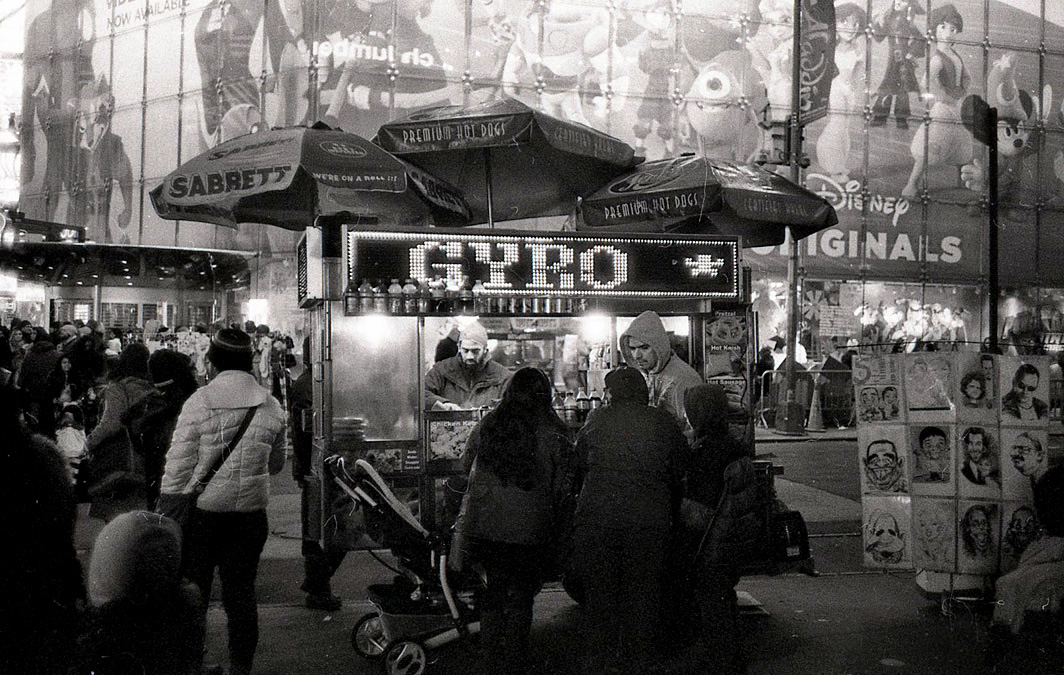
“Gyro” 2015. Nikon SP, 35mm f/1.8 Nikkor, Holga 400 film.

NikonSPJan19Papaya

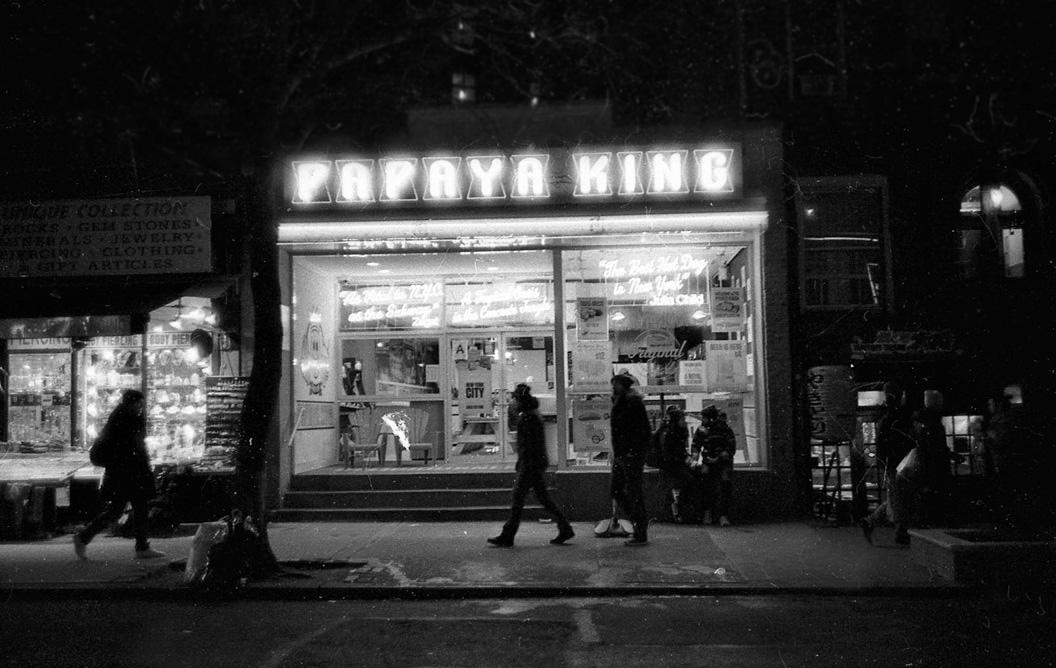
“Papaya King” 2015. Nikon SP, 35mm f/1.8 W-Nikkor, Holga 400 film.

If looking for an SP, prices are trending from $600 (plain jane chrome body only) to almost $4000 for rare editions such as the SP 2005 with the 35mm f/1.8 Nikkor.

Despite its quirks, especially when compared to the smoothness of a Leica M, the Nikon SP is one of my favorite rangefinders to use. When paired with the awesome 35mm f/1.8 W-Nikkor lens, it is a street shooters dream for film.

NikonSPCPS

“New Years Lady” 2015. Nikon SP, 35mm f/1.8 W-Nikkor, Holga 400 film.

The Nikon SP is a Camera Legend and definitely worth your time to seek one out. I haven’t shot much film in the last few months, but I noticed the last three rolls of film I shot were all on the Nikon SP. For me, that says it all.

NikonSPSam026FA

“The Crazy Duck” 2015. Nikon SP, 35mm f/1.8 W-Nikkor, Holga 400 film.

Note: The Holga 400 film was not my first choice for this camera. I had shot the first couple of rolls on Ilford XP2 (chromogenic), but just as I was done, my local C41 developer stopped developing color film! I had a roll of Holga 400 black and white film and decided to try it out. I think it’s a good film, but developed in D76, it was a bit too grainy for me. Don’t get me wrong, I love “grainy” but with the SP and 35mm f/1.8 I wanted a film that would get more out of the combo. I think the Holga film would be perfect where it belongs…in a Holga camera 🙂

The Polaroid One Step Rainbow

PolaroidOneStepC

The Polaroid One Step Rainbow. This camera is cheap AND iconic at the same time! A rare combination.

This may not be the greatest picture taking camera in the world, with its plastic lens and plastic build, but the iconic Polaroid One Step SX-70 Rainbow is one of the Polaroids to have if you collect cameras.

And they are quite cheap on eBay. Never pay more than $40 for one of these. As a Camera Legend though, that it is! I think this is the model that inspired the Instagram logo. I mean look at that Instagram logo…The Polaroid One Step Rainbow IS Instagram!

The Instagram icon.

With its fixed focus lens, and virtually no ability to manually control this camera, save for the lighten/darken switch, this camera is perfect for those “ugly” photos I wrote about here. You know, those washed out, faded, blurry photos that people find “artistic” 🙂

Note: The only thing this camera has in common with the original SX-70 I featured before is that it takes SX-70 film, which is much less common that the 600 series film. Other than that, the cameras are night and day in quality.

SX

The original SX-70. The differences in quality between the One Step and the original SX-70 are night and day. The one thing they share in common is that they both take SX-70 film, which today means film from the Impossible Project.