“Saturday In The Park” 2016. Mamiya 6, 75mm f/3.5 Mamiya G lens, Kodak T-Max 400 in D76 developer.
In my effort to be more active for you good people, here’s a shot and short article for today. Shot with a Mamiya 6 and 75mm f/3.5 Sekor. I actually shot this a couple of years ago before I sold the camera. It was in Central Park.
Speaking of “Saturday In The Park” I recently saw a CNN documentary which I think is a couple of years old, on one of America’s oldest and greatest pop/rock bands, Chicago. I loved their stuff from the 70s and 80s although admittedly they went into the “soft rock” category with the rise of (then) lead singer Peter Cetera, not that it’s a bad thing mind you.
I always thought the band broke up because of Cetera and his ever growing star in the 80s. But now I’m not so sure it was really a case of someone getting a big head or whether he and the band could just no longer get along.
Just like another great 80s band Journey, I’ll always associate Cetera’s voice with Chicago just as I associate Steve Perry with Journey.
Anyway, I’m drifting off course! Music just happens to be my other passion. I especially like rock and popular music from the 50s through the 90s. Not much for music after that 😀
The Mamiya 6 is a Camera Legend. I had a complete outfit in 2009 including the body, 75mm f/3.5, 50mm f/4, and 150mm f/4.5 telephoto. I started selling off the lenses first, then the camera and 75mm because I wasn’t using it enough and needed funds for other things. You know the deal 😊
I’ve always thought of giving the Mamiya 6 a formal write-up on these pages and I’m sure I’ll get to it one of these days, but I’m not sure I could write enough to do it justice. It’s a fantastic medium format rangefinder. In fact, if I had the funds I could easily talk myself into it again!
If you look at the photo, you’ll notice some blotches, most notably on the bottom right, a result of my imperfect developing. Not making any excuses, but many people actually do not mind, and some even “want” these imperfectons these days! Don’t believe me? You should see what people are liking on Instagram! I guess it’s part of what people today consider a part of that “film look.”
Back in the day, I don’t remember people loving imperfect pictures all that much, but since this shot is imperfect…ok, I’m cool with it! 🙂
I’ve always said and it’s worth repeating that T-Max 400 is a beautiful film that develops best in T-Max Developer. As I did not have any T-Max Developer on hand, I decided to take my chances with D76.
I’ve noticed that when in D76, the T-Max will have a tendency to produce streaks and blotches. Sometimes I get lucky and get a clean set, but T-Max 400 seems more finicky than other films and results with T-Max Developer are consistently smooth.
Well, that’s it for this morning. Oh one more thing, these are not all my kids! 😀
The Nikon D700 is a 12.1 megapixel, full frame Digital SLR released by Nikon in July 2008. Today, we will look back on the D700. I will share with you my impressions on its image quality, performance and its impact on the world of photography.
AS A CAMERA
There’s a lot of pages with all the specs but I’ll just list a few key features. The camera has a 12.1 megapixel full frame sensor. The shutter speed range is 30 seconds to 1/8000 plus Bulb. Flash synch at 1/250. It has a native ISO range of 200-6400 plus 100-25600 via boost.
My war-torn 200K plus D700 still kickin’ it! 🙂
The D700 also has Live View but it’s first generation and it shows. It looks a little jittery and if you move it around there’s an apparent lag, but once on target it works fine.
The camera is capable of 5fps on its own and 8fps with optional grip. The camera uses the Nikon EN-EL3e battery.
The D700 is a pro quality DSLR and for all practical purposes is a more compact Nikon D3. There are slight differences between the D700 and D3 to be sure, but image quality is exactly the same as they both use the same sensor.
The D700 arrived on the market at a lower price than the D3, increasing its appeal and affordability to both professionals and enthusiasts alike.
TIMELINE
In 2007, Nikon released the D3, a professional 12.1 megapixel DSLR, and its first full frame digital camera. Their previous kingpin was the D2X/D2Xs a with its 12.4 megapixel APS-C sensor.
After years of stating that they would not make a full frame DSLR, and getting their hardcore base to rally around that, Nikon surprised everyone with the release of the D3.
In my opinion, the Nikon D3 is the camera that saved Nikon and brought it back, alive and kicking butt into the second phase of the digital revolution. But that’s a topic for another review. Today, we are talking about the D700.
“Time Out” 2008. Nikon D700, 50mm f/1.8 AF-D Nikkor. Baby gets into a hair pulling moment as a result of having to take “time out” 🙂
MY EXPERIENCES WITH THE D700
I got my first D700 in July of 2008. Rarely do I get a camera in the same month it was released. So how did I come upon the D700? Simple, just like many of you, I climbed the ladder of camera ownership!
And what does that mean? Well, before the D700 I was using a 12.3mp Nikon D300 which was released with the D3 in 2007.
I was perfectly fine with the D300. In fact, I was impressed with its performance and the fact that it was APS-C didn’t bother me. I read about Nikon’s reasoning as to to why they were not going to make a full frame camera and even though I thought they were just in denial or just making excuses for why they wouldn’t make one, I accepted it.
Then the D3 came out and I was surprised and happy they made a full frame DSLR, but I just couldn’t afford the hefty $4999 price tag, even though the price was well in line with professional cameras of the time. So I was resigned and content to stay with the D300 as I already had a full frame Canon EOS 5D Classic.
Gear Lustin’ in 2008! My two main digital cameras in 2008, the Canon EOS 5D Classic and the Nikon D700, seem to have come full circle in 2018!
In comes the photo forums…
As I’ve said here before, I was on the forums just like you guys! Photo.net, Rangefinderforum, Fredmiranda.com, etc.
I won’t say which one, but near the end of July of 2008, I saw a fellow forum member advertise a new D700 he had just gotten and wanted to sell for whatever reason. At over $2000, it was still a hard sell for me financially, but the fellow said he was willing to take a “D300 plus cash.” Hot dog! Bang! This might be my opportunity so I PM’d the guy and since he was local, all the better.
So I go and see the guy. We had some cool camera talk, checked out the cameras, and we had a deal. I handed over the D300 plus a little cash and I walked out with a near new D700! I hate to say it, but I said to myself…wow, Samster, somehow you managed to do it again! 🙂
Anyway, the love was short lived as I used the same ladder to climb up to a D3 in 2009 when G.A.S. attacked! I sold my D700 and eventually the D3 too.
I got the D700 again in 2016 when I noticed an unusually low price online. And the prices continue to fall making this a great time to try one! If you’re interested I’ll list the trending prices down below.
IMAGE QUALITY
In my opinion, the Nikon D700 is capable of superb image quality, especially at lower ISOs.
What I liked…
“Apples” 2018. Nikon D700, 85mm f/1.4 AF-D Nikkor. The apple doesn’t fall far from the tree and by having the same 12.1mp sensor, the D700 offers the same excellent image quality as its big daddy D3.
Rich colors and tones. A certain depth to the images that might be attributed to the sensor, the processing, etc. I can’t say for sure what it is, but I call it the Magic Sensor.
“Red, Green & Gold” 2008. Nikon D700, 110mm f/2 Zeiss Planar via adapter.
There’s also a pleasing balance of sharpness and smoothness to the images which make it perfect for portraits and people photography, one of my favorite forms of photography.
Of course, if you’re a landscape shooter you’d probably be better off with a higher resolution camera but you didn’t need me to tell you that! 🙂
I call the D3/D700 sensor the “Magic Sensor” because it just seems to bring images to life. I used to think it was just the full frame sensor, but now ten years later I know it is not, or at least not exclusively a result of the sensor alone but I sure believe the full frame sensor is a factor.
“Magic” 2016. Nikon D700, 60mm f/2.8 AF-D Nikkor. The D700’s “Magic Sensor” seem to bring everything to life. Well, a happy smiling baby helps I guess! 🙂
“Uh Oh It’s Magic!” 2008. Nikon D700, 50mm f/1.8 AF-D Nikkor. The 50mm f/1.8 Nikkor already offers decent bokeh but a full frame sensor takes it a step further making f/1.8 look even smoother.
There are cameras I have used in today’s world, such as the mirrorless Olympus OM-D EM-5 that also seem to provide similar, rich and colorful images despite the much smaller sensor.
So perhaps it’s a combination of sensor plus whatever processing the camera is doing to the images. Perhaps it’s just how far we have come in digital camera technology that some mirrorless cameras can achieve a full frame “look” that I have not seen in first generation mirrorless cameras.
I know what you’re thinking…it’s all in the lenses! That’s partially true, but in this case I’m not just talking about bokeh or shallow depth of field. Just the whole image, everything in it.
In these two cameras, the magic is comparable both in Jpeg and RAW.
PERFORMANCE
The D700 offers speedy and accurate AF as would be expected from what is essentially a D3 in smaller form. The Multi-CAM 3500FX autofocus module with 51 AF points is more than enough to handle almost anything even today, in my opinion.
“Gimme A Break” 2008. Nikon D700, 70-210mm f/4-5.6 AF Nikkor.
The 12.1mp sensor might seem small in today’s world, but if you’re not shooting detailed landscapes or billboards for some ad campaign you’re going to be fine with the resolution. The sensor in my opinion is particularly well suited to portrait and people photography but is also well suited to street or any other kind of photography you might aspire to.
“Thoth” 2008. Nikon D700, 50mm f/1.8 AF-D Nikkor. A NYC Central Park mythical figure named “Thoth.” Considering this tricky lighting, the D700 Matrix metering fared well giving a usable exposure that would look even better with a little work.
The joy of taking pictures is contagious! Nikon D700, 85mm f/1.4 AF-D Nikkor. Just look at the woman’s hair and skin. The D700 offers just the right balance of sharp and smooth.
The D700 is fine with modern AF-S lenses but is also “old school” in the fact that it can drive those old AF lenses that need to be screw driven like, for example, the 85mm f/1.8 AF-D lens.
“The Kid’s American” 2018. Nikon D700, 85mmf f/1.4 AF-D Nikkor. The D700’s fast AF caught this young man before he ran off, which was a split second later 🙂
The large and clear 95% coverage viewfinder also make it a good choice for using those wonderful old AI Nikkors. Do NOT use it with Non AI lenses or you may damage the camera and/or the lenses.
“Noon” 2017. Nikon D700, 50mm f/1.2 AIS Nikkor.
“Night Buddy” 2017. Nikon D700, 50mm f/1.2 AIS, ISO 3200. The D700 does an excellent job at the “high” ISO of 3200.
Because of the superb image quality and the ability to comfortably use manual focus lenses, I view this camera today as sort of a Poor Man’s DF but without the ability to use Non AI lenses.
BOTTOM LINE
The Nikon D700 took the legend of the Nikon D3 to the masses and became a Camera Legend in its own right.
The D700 gave more Nikon users a chance to see what full frame digital was all about and in doing so, hooked users in with excellent imaging capabilities in a strong, robust body.
Even today in 2018, with all the full frame cameras Nikon has put out since 2008, the D700 is still highly regarded and is considered a digital camera classic.
If your goal is to capture great pictures and you’re not interested in 4K video, focus peaking, and whatever else today’s cameras offer, then the Nikon D700 will still deliver the goods and is one of the two cheapest full frame bodies you can get today.
ALTERNATIVES
The main alternative for the Nikon D700 is the 12.8mp Canon EOS-5D Classic. As someone who has used both extensively, I can say with confidence that you can’t go wrong with either! But if you really want me to nitpick, here’s what I have experienced with these two Camera Legend cameras.
“Brother 700” 2008. Nikon D700, 45mm f/2.8P Nikkor. The Nikon D700 does well with manual focus lenses such as the 45P seen here which is why the Brother calls it the “Poor Man’s DF” 🙂
The 5D images appear somewhat sharper, but the D700 has richer tones and colors. The D700 body is much more refined, feeling like a more mature product, as it should be for a camera from 2008 versus a camera from 2005. Autofocus is faster on the D700 as should be expected.
The D700 does better at higher ISOs. Images hold up better though I don’t mind the grit and “grain” of the 5D Classic images at IS0 3200.
At low ISOs, both cameras still deliver superb results showing that back as far as 2005 digital cameras were already awesome!
Again, if you’re invested in the Nikon system or the Canon system, that should be your main consideration and not the cameras themselves. Both cameras rock!
AVAILABILITY AND WHERE TO BUY
If you’re looking for the Nikon D700 (or the 5D Classic) this is a great time to pick one up! The D700 is plentiful on the used market so you shouldn’t have a problem getting one.
Prices for the D700 are trending now at $400-700 depending on condition, package, etc.I say just get the cheapest one you can as long as you buy from a dealer you can trust.
I’ve heard about the below $300 D700 bodies, but as of today, they are rare and most likely beater bodies. Average seems to be $450-525 USD for ones in good to excellent condition. If you’re going above $600, I would seriously consider one of the newer bodies, ie, D600, D610, or even the D3 of which prices have come down significantly in the past couple of years.
I got my latest one in 2016 for under $400. It was in cosmetically Good condition. Little did I know it had over 200K shots on it! But, knock on wood, two years later and a few thousand shots later she’s still shooting unlike my bought NEW in 2012 Olympus OM-D EM-5 which kicked the bucket last year at approximately 5K
shots.
The cheapest D700 bodies would probably be found on eBay (Direct D700 Link)
Alternatively, here’s your Canon 5D Classic link on eBay (Direct 5D Classic Link)
Another good place to find both is our trusted affiliate Here.
Thanks for reading and I’d be glad to hear from any fellow D700 owners!
Good morning everybody. It seems as if I closed my eyes only for a short time and we’re back here in yet another October once again! Man, I can’t shake off this feeling of getting older! And I have to remind myself that I’m not THAT old yet!
Well anyway, I just went through three rolls of new images to review and some were good and some not so good. Hmm, kinda like the good old film days! 🙂
In this set, only the bottom image “What A Rush!” is from the Contax T3. The B&W set is from another “mystery” camera 🙂
The Contax T3 was, in its time considered “The Best Point & Shoot Camera In The World” and it’s got a tremendous, and yes, even legendary cult following even today.
Does it still deliver the goods? It sure does! It always delivered the goods, but it’s not without its faults as I’ll explain in future postings. Can it still hold on to its “top dog” title? I’m not so sure just yet!
Please do not think I’m jumping on the T3 bandwagon! I certainly could NOT get one at today’s prices. However, I’ve had mine since 2006 when they were MUCH more affordable. Though I may not like getting older, there are some perks to be a “veteran” camera freak I guess 🙂
Had it all these years, somehow I never rushed to do a review on it. So you see friends, I’m not in this for any kind of blogging glory 🙂
I just want to get out good information for you. Sorry if it takes a little longer than most bloggers. I’m just SLOW haha 🙂
I got my images back from the Darkroom out in California and they did a mighty fine job. There’s a reason why people recommend them!
Though I wished their prices would be lower, I will say they can be recommended for film developing yes.
Anyway, it looks to be a busy month with lots to look at. Let’s hope I don’t burn out by the end of the first new review lol. Have a great week folks!
Ah friends, nothing quite as thrilling as working through another dusty, blurry roll of film ain’t it? 🙂
Just sharing with you guys a couple of postings I made to the YouTube channel but did not post them here till now.
These are segments I called “Tuesday Trends” where I look at topics that I feel are “trending” in the camera and photography world and even though they might not be mainstream news, I feel are interesting enough to put a spotlight on.
First up is the legendary Canon AE-1 from 1976, one of the most popular cameras of all time.
Just for you guys, I’ve cut to the chase in the above video. I came to the conclusion that the Canon AE-1 prices have been rising is because…YOU GUYS ARE BUYING THEM UP! 🙂
Not you my camera savvy readers, most of you guys probably have or have had the AE-1 at some point in your lives, but hipsters (you know who you are!), newbies, and anyone just getting into film photography. Part of the problem is because the AE-1 was, and is still so very popular, it almost always shows up during a search for film cameras.
Now first off, let me say I love the AE-1 for what it is. It’s a great camera that introduced millions of people to the wonderful world of photography. Yet, especially today, its specs are hardly earth shattering. Keep in mind, I’m just talking about the AE-1 original, not the latter AE-1 Program though when it comes to rising prices we can count that camera in too.
Shutter priority, manual mode, and relies on batteries. If you’ve read my pages here, you could probably read between the lines. Especially that last part about the batteries.
Now I’ve never been an anti-battery camera person. On the contrary, I have always found most modern cameras that uses batteries to be reliable enough not to worry,
That said, if you have a choice, especially the choices we have in today’s used market then I would say I would much rather buy a purely manual camera that doesn’t need batteries to operate, other than the meter of course.
I was quite disturbed to find the AE-1’s prices rising, after not checking for a long time. I used to periodically buy this camera to give away to friends or kids who wanted to learn photography. They never cost any more than $25-50 for a whole package of body, lens, filters, etc. Not any more. Now prices for a body alone averages $70.
This is not right! This should be a CHEAP CAMERA in terms of used prices! Anyway, my reasoning is all in the video, please check it out if you’re interested. I repeat myself a lot in this video but the point is clear…The AE-1 should be a CHEAP CAMERA and the prices should still be CHEAP 🙂
Second up is the Fuji FP-100C, the packfilm classic that Fujifilm discontinued in 2016.
I posted somewhere on social media a couple of weeks back that I was facing REALITY and giving up on packfilm. In fact, I already have a buyer for my Polaroid Land Cameras once I deplete my last few packs of FP-100C.
Even the honorable fellows at CATLABS of JP who declared two years ago: “WE WILL MAKE PACKFILM” have given up on the process as announced this week.
As I had made my decision and prepared this video before their announcement I thought it was very timely! That’s what I mean by trends!
Basically, to cut to the chase, and if you DON’T want or have time to watch the video, I’m stating that if you ever wanted to try this film this might be the time because after a period of relative stability last year, the prices for the FP-100C are rising back up which may or may not indicate that the remaining stocks are close to depletion.
A sign that it is nearly gone is that B&H and Adorama no longer show this film in stock. Even a couple of months ago, it was.
Anyway, I hope this is helpful to somebody out there. Oh please forgive me when I get into “character” lol. As I said, you kinda need “personality” when you’re doing this YouTube thing 🙂
Ah can you believe that September is here once again? I know it’s played out but the title of that old Neil Diamond track just fits.
To me, and I guess many folks, September and this Labor Day weekend represents the bittersweet end of Summer.
So here this September morn, I have a couple images from my current camera of the week and that camera is the Canon EOS-1D Mark III.
“Happy Labor Day” 2015 that is! Shot with a Canon EOS-1D MKIII and Yongnuo 50mm f/1.8 lens. The Yongnuo is a pretty good copy of the Canon EF 50mm f/1.8 II lens.
The Canon EOS-1D Mark III was released in 2006 and at that time, it was supposed to be the ultimate Canon sports and photojournalists camera.
However, that was not to be due to one fatal flaw…Unreliable AF. Reports from users and reviewers at that time revealed a camera with a seriously flawed AF system that was apparently getting a lower hit rate than the previous 1DMKIIN. Note this was mostly in AF Servo mode.
Disappointment was apparent when reading the forum postings of that time. Not just because the AF was bad, but because the image quality was so good! Such bittersweetness!
Don’t forget guys, I was on those forums just like you! Except, I stayed silent and just digested all the information 🙂
To their credit, Canon offered to fix any 1DIII cameras with these issues at that time, once they acknowledged the problem. The fixed cameras are often called the “blue dot” versions.
However, even after the fix, some people felt the camera was still having autofocus issues. And the 1DIII never quite got the accolades or respect that Canon sought. And so went down one of the potentially most amazing high speed cameras ever released.
I got my first one in 2015. I had it for a short time, but I did feel it was giving me random off focus images so I sold it quick. It may or may not have just been all in my mind! The problem with this camera is once the seed of doubt has been planted, it’s hard to get it out of your head.
Reecently, I found another one very cheap and decided to try it again. I would never make judgement on just one copy of a camera. I was very surprised when taking a series of my eldest child on her Razor, that the 1DIII kept up even as she picked up speed! It was probably too easy for this camera! I will probably put those sequences up should I do a future review on this camera.
But in case I don’t, just know that if you buy one, try to get it cheap or from a reliable dealer because there’s always a risk with this camera. However, it’s also possible that any 1DIII’s with serious issues should have been fixed by now
“Razor’s Edge” 2018. Canon EOS-1D MKIII, EF 135mm f/2L lens. I took this last week. Testing out the 1DIII. It’s a camera I’ve always wondered about, but stayed away from it due to its reputation for AF issues. I got rid of my first one due to those issues, but this one seems a keeper!
“Smile” 2018. Canon EOS-1D MKIII, EF 135mm f/2L. Zay now knows, somehow, when to give me the pose 🙂
“September Morn” 2009. Rolleiflex SL66, 80mm f/2.8 Rollei HFT Planar, Tmax 400 in Tmax Developer. Yes folks, I had one of these cameras too! Didn’t hold on to it long, but I do miss the silky smooth yet sharp images from that Planar lens!
For those of us on a more down to earth budget, Nikon has released the highly capable yet budget friendly Nikon D3500! These days, being the cheapest Nikon DSLR that you can buy new doesn’t mean sacrificing performance. For under $500, you get a modern DSLR plus the new AF-P 18-55mm f/3.5-5.6 VR Nikkor kit lens that is capable of just about anything you’d want to do in photography or videography. Click the link from our trusted affiliate to pre-order yours!
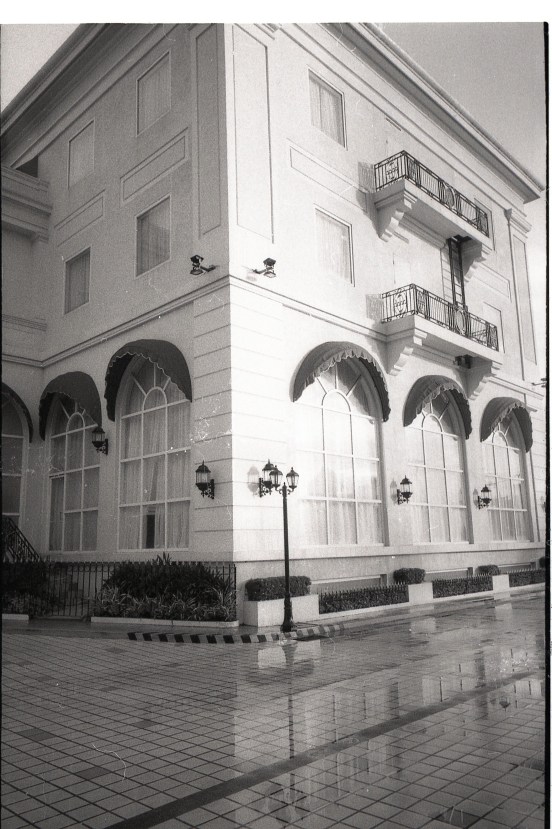
“Hotel City” 2018. Ricoh GR1, Kentmere 400 developed in D76 Developer. There are so many hotels in this city! And so many beautiful hotels at that. This one is the Rizal Hotel near Manila Bay. I was very close to the building and despite having the GR-1 with its 28mm lens, I wish I had a wider lens. Yes, there is such a thing as not wide enough! 🙂
Manila, the bustling capital of the Philippines, is a fascinating, lively, and colorful place that in my opinion is better suited to color photography than it is for black and white photography.
“Mall Town” 2018. Ricoh GR1, Kentmere 400 developed in D76 Developer. Mall culture is alive and well in the Philippines. They love their malls! I hate to admit it, but I frequented many malls during my visit and they were all great. They take their malls seriously in Manila! 😊[[[[[[[[[[[[
However, as a B&W fanatic, you and I both know that everything looks good in B&W anyway 😀
With that in mind, I couldn’t help but take my Ricoh GR1 along for this recent trip.
Now you may or may not recall, but in the last post I mentioned bringing along two of the greatest point and shoot film cameras along for this trip.
I used those cameras with color film so that means the GR-1 was NOT one of those two cameras, despite the fact that it could easily be in that same list of “greatest.” So what does this mean? It means I hope you’ll stay tuned as I have more goodies and surprises coming your way!
This article will show some photos taken with the GR-1 and Kentmere 400 B&W film. I developed this roll in D76.
Looking back on the photos, I wished I had shot more than one roll with the GR-1. That’s the problem with taking too many cameras 😊 In fact, I could’ve easily used it as my only film camera and I would’ve been happy with that.
Here are just some photos from the trip. Not meant to be an artistic showcase, just the things I saw in Manila and some thoughts on them. Where I can, I will try to give you some commentary.
“Intramuros” 2018. Ricoh GR1, Kentmere 400 developed in D76 Developer. This is the famous walled city at the heart of old historic Manila. I shot this through a dirty window using both the iPhone X and the Ricoh GR1. I was surprised at how much detail came through from both! The detail here is really limited mostly due to the film grain when compared to the iPhone photos.
“SALE” 2018. Ricoh GR1, Kentmere 400 developed in D76 Developer. I love fashion photography but mannequins are as close as I usually get to fashion models 🙂
“BGC” 2018. Ricoh GR1, Kentmere 400 developed in D76 Developer. A scene from Manila’s vibrant “BGC” district, a hip financial and social center.
“Manila Floods” 2018. Ricoh GR1, Kentmere 400 developed in D76 Developer. It rained nearly every day of the two and a half weeks I spent there. They don’t call it the “rainy season” for nothing.
“OOMA Sushi” 2018. Ricoh GR1, Kentmere 400 developed in D76 Developer. Had a good meal here. Not sure why the man is smiling, but I certainly don’t know him! I just took a quick grab shot 🙂
“Lucban Church” 2018. Ricoh GR1, Kentmere 400 developed in D76 Developer. Heading out a couple of hours southeast from Manila, I visited the small municipality of Lucban in the province of Quezon where I saw this beautiful and historic church that dates back hundreds of years. This is the San Luis Obispo de Tolosa Parish Church otherwise know as “Lucban Church.”
“Free Fall” 2018. Ricoh GR1, Kentmere 400 developed in D76. Youngsters having fun at this man made waterfall at the Vila Escudero, a resort about an hour away from Metro Manila.
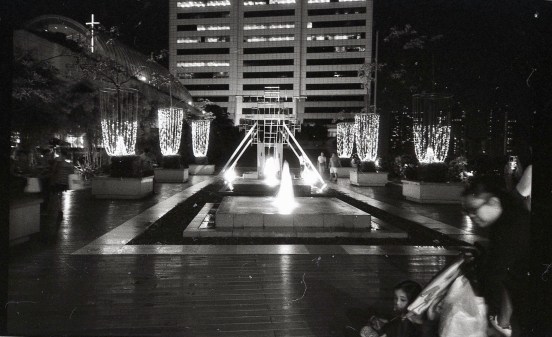
“Night Lights” 2018. Ricoh GR1, Kentmere 400 developed in D76 developer. The lights on the open air rooftop at the SM Aura mall in Manila. Considering this is ISO 400 film, I think the Ricoh GR1 did pretty good with this shot.
***DEAL ALERT***
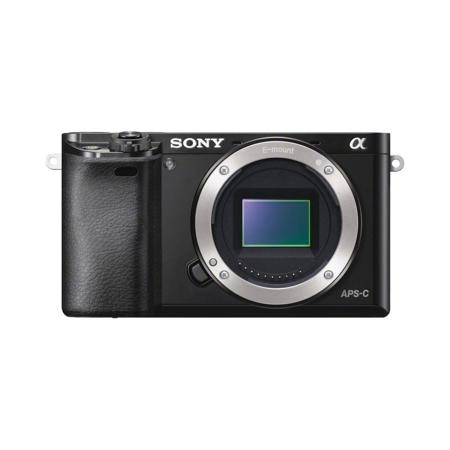
Save $100 on the HOT Sony A6000! Use the link to buy from our safe and trusted affiliates. You will pay nothing extra and support Camera Legend at the same time to help us fund more reviews and articles on the cameras and lenses you want to see. The gear other sites neglect are the ones we want to write about for you! Thanks for your support. Alpha A6000 Mirrorless Camera Body, Black$448BUY NOW
Once in a while I like to upload photos, if only to remind myself that I love the art of photography as much as the gear. Though it might not seem like it, I do really love photography as much as I do the gear! 😀
Just like most of you, I don’t just take photos for reviews or posting. I take photos FOR LIFE! I document life first, then if I can use some of the photos in a review, why not?
The vast majority of the photos I take on a daily basis just doesn’t make it in. Oh friend! Why bore you with my life? 😊 I want to know about YOUR life, Brothers and Sisters 😘
So these are some shots taken recently, and some not so recently. Nothing artistic. Just random shots. Sometimes, it’s a snap, sometimes it’s a test. Sometimes it’s deliberate. Sometimes it’s by luck or chance. Like I said, ya never know. I’m sure this is the way it is for most of us photographers, us mere mortals 😊
One thing that I’m sure is that most of these images have not been posted on these pages. I try to include technical info and tidbits for you camera nerds out there cause that’s how I would like it too 😊
I also find it interesting to see what camera and lenses I was using then as opposed to what I am using now. It’s a way of seeing how one’s tastes may or may not have changed. Sometimes I find there’s not a lot of changes!
I think theses images may give you a glimpse as to what I am pondering on doing articles and reviews on. At the same time, you may see why I’m flustered deciding what to publish 😫
Not to sweat it though. Most of you regular readers know by now that this is how I roll. Sometimes it comes in waves. Then I need a mental break haha! I can’t do it daily man, I just can’t.
Definitely got some more interesting stuff to profile for you all, and also on YouTube too. Oh yes, don’t think your “Brother from another lover” has forgotten about YouTube!
I really don’t mind starting out slow there because I don’t want to upload videos just for the heck of it. Just like here on the blog, I realize what you post may be on for a long time so let’s make it count!
Anyway I thank you all for having a look! Appreciate your patience and support over the years. I think you guys are the best readers anywhere. And those of you who also blog are some of the most prolific bloggers around! I certainly can’t do what you do, but thanks for the inspiration! Have yourselves a great weekend!
“Night Buddy” 2018. Nikon D700, 50mm f/1.2 AIS Nikkor. My late night buddy! Try writing an article with this one hanging around. At least tonight, she’s quiet…somewhat 🙂
“Noon” 2017. Nikon D700, 50mm f/1.2 AIS Nikkor. Be forewarned friend. For when the clock strikes “Noon” your heart may be broken 🙂 Actually yes, her name really is Noon! Thanks for being a good and patient model, appreciate you!
“American Girl” 2018. Sony A7r (original) with Mamiya 55mm f/1.4 lens. This is a crop from a larger image. I was just testing this lens when I saw Baby sitting there, lazy and then the spirit of the late great Tom Petty hit me and I heard him sing…”She is…an American girl” 🙂 This is a great lens by the way!
“Vogue” 2011. Bronica RF645, 65mm f/4 Zenzanon lens on T-Max 400. Every time I look back on a shot from my time with the Bronica RF, I miss it!
“Text” 2017. Agfa Ambiflex, 55mm f/2 Solagon. Kentmere 400 film. Talk about great lenses, wait till I tell you about this one! 🙂
“Sunglass” 2015. Leica M4-P, 50mm f/2 Summicron-M, Tri-X 400. This was actually a night shot near Times Square. Considering that, the sharpness and clarity is pretty good I think. Can never go wrong with a Summicron lens! You can see the smoke or vape coming out of the man’s nostrils 🙂
“Purple Rain” 2012. Ricoh GRD 8.1mp. “An ocean of violets in bloom” as the Purple One once said! The original GRD remains one of my favorites 🙂
“Smoke ‘n Java” 2007. Ricoh GRD 8.1mp. The brutal art of coffee and smoke. Over ten years later and the GRD is still on rotation in my camera bag these days!
“Baloon Man” 2006. Nikon D70s, 50mm f/1.8 AF-D Nikkor. Cebu, Philippines. In my opinion, the Nikon D70s was one of the best cameras of its era, capable of crisp detail and rich colors. I plan to write an article on this Nikon gem.
“Baby It’s You” 2017. Sony A7r with Canon 35mm f/2 SSC. New York City. Though the focus may be slightly soft in this image, the vintage Canon 35mm f/2 SSC is a great lens capable of sharp images. And if you’re reading Camera Legend, then you know this isn’t just ANY Canon 35mm f/2 lens! Of course, it’s the one with the concave front element and radioactive thorium 🙂
“Chase” 2017. Sony A7r with Canon 35mm f/2 SSC lens. The original image was dark due to underexposure. Lift the darkness in post processing and the A7r shows its legendary dynamic range. Four years later, the original 36mp A7r still delivers the goods!
“Feed Me” 2011. Contax T3, T-Max 400 film in HC110 developer. The T3 is an amazing camera! I’m sure you wouldn’t mind another review, now would you? 🙂
“Times Square” 2017. Sony A7r with Canon 35mm f/2 SSC lens. The Baby don’t care if it’s Times Square or home. She naps when nature calls 🙂
If you’re a Nikon shooter, this is the best time of the year for HUGE savings!! Please buy from our trusted affiliates and support Camera Legend at the same time. It will cost you nothing extra and help us fund more reviews of the Camera Legends you want to see. Thank you!
Nikon Rebates start on 05/06. Expires 06/02
Includes Free! Nikon MB-D16 Battery Grip | Filter Packs | Memory Card | Bag and More
“The Fountain” 2013. Hasselblad X-Pan, 45mm f/4 Hasselblad lens. Film was probably Fuji Superia but will update for accuracy if I can find the information.
Hello folks! Still here, still standing, better than I ever did, looking like a true survivor feeling like a little kid!
Ah, is that me or is it Elton John? 😀
Here’s the honest truth about my inactivity as I hate to say sorry all the time! I run about four or five different streams other than this blog so I’m spreading myself way too thin! Not just photography but music, etc. This is my baby of course and I really should just be completely on it! My apologies for not being able to give you my best at all times!
So today’s posting is really a test. I’m working on a review of the Hasselblad X-Pan, the panoramic Camera Legend. I am wanting to see if these images appear good on your screen. I feel X-Pan images are best viewed on a computer and not a phone. X-Pan images are large and long and they simply don’t have the same impact when viewed small.
I don’t mind telling you about doing an X-Pan review before it’s published because there are some very fine reviews out on this camera already as it’s been around for some time. I don’t see myself bettering any of these reviews, just adding to them.
At the same time, I would like to make a complementary YouTube video for it. But in all honesty, making a few cents if I make it to thousands of views is not inspiring so I’m not making it for that reason. I’m going to make it for you, my fellow camera lovers!
To have used a Camera Legend like the X-Pan is a blessing that should be shared, don’t you think? Have a great day camera freaks and see you soon! 😎📷✌🏻
UPDATE: I have checked it out myself and to me the image is way too small on the computer! Have to find a work around to show you larger images!
***DEAL ALERT***
Some great lighting deals from our affiliates, please check it out! Substantial savings!
Howdy good people, how are you all? Hope everyone is good!
As for me, between trying to create content for the blog and for its YouTube channel, I think I may have dug myself into a hole that’s gonna be hard to get out of 😀
That’s because now there’s double duty for me on this front, and I could barely keep up with the blog alone!
Sorry for not being able to get back to you guys. Hopefully, I can catch up to you all this weekend. I do appreciate you all!
I’ve been working on this post as well as the video, spending all my free time on both. Just one look at the length of this article will tell you why I’m burnt out 😛
Since I’m a person who does not like pressure, I found myself shutting out the world by binge watching “Forensic Files” 😀
Do not watch this program, not even one episode because if you do, you’ll be watching for hours and get nothing done!
Anyway, enough rambling on nonsense let’s talk about the topic at hand…
The Canon 50mm f/0.95 “Dream Lens.” While this may just be the latest among many reviews of this famous and legendary lens, I’ve actually had my copy for nearly ten years, using it on both film and digital bodies, and it has become one of my most cherished lenses, perhaps my favorite. And now I’m writing to share my experiences with you.
THE CANON DREAM LENS TECHNICAL INFORMATION
The Canon 50mm f/0.95 was introduced by Canon in 1961. According to the Canon online camera museum, “It had the largest aperture in the world for photographic lenses available in the market at the time.” It is affectionately known as the Canon “Dream Lens.” Today, the Dream Lens has become one of the most well known and coveted lenses of its era.
“Dreamtime” 2010. Canon 7 Rangefinder, Canon 50mm f/0.95 Dream Lens @ wide open, I believe. Film was Tri-X 400. Baby Z getting excited to read about the Dream Lens maybe? More likely, she’s excited for Elmo 🙂
The lens has aperture stops from f/0.95 to f/16. The lens has 10 aperture blades and is a Gauss type design.
When seeking this lens, you will find it usually comes in two flavors. The standard version is rangefinder coupled and was made specifically for the Canon 7/7s film rangefinders. These cameras have a special mount to take the 50mm f/0.95 and to my knowledge you cannot use the lens on other film rangefinders, Canon or otherwise.
There is also a “Canon TV Lens” version. It says “TV Lens” on the front inner ring of the lens. Pretty much the same lens, but made for C-Mount and is uncoupled. It usually comes with a C-Mount ring attached to it.
YOUTUBE VIDEO
As mentioned in my last post, I am including YouTube videos in conjunction with my postings, whenever possible to give our readers a more dynamic experience.
For those who want to cut to the chase, here’s the video from around 4:45 but if you watch the whole video, you might want to grab a cup of coffee and/or a snack because it’s nearly ten minutes!
The video is more of a summary, but this article contains much more information on the Canon Dream Lens.
Oh yes, there IS a reason for those shades and it has nothing with trying to be cool or uncool or whatever! I will divulge in a future posting I promise you!!
HOW I CAME ACROSS THE DREAM LENS
Before we go on any further, please let me say this is not meant to be a full throttle or technical review of the lens. I’m no optical expert. I have no optical bench to test optics.
I have to rely on what I see with my eyes, based upon my experiences. Between telescopes and camera lenses, I have spent over thirty years developing an eye for optics. But again, I restate that I am no optics expert. I see what I see and I leave it up to the readers to make the judgement to my opinions.
With that out of the way, let me tell you the story of how I came upon the Dream Lens.
In the early to mid 2000s, perhaps 2004 or 2005, I answered an ad on Craigslist and went to someone’s home to check out a camera collection for sale. I suspect some of our readers have been to a few of these 😊
Anyway, hidden in the pile of junk cameras was a dusty camera with a huge lens on it. That camera was the Canon 7 rangefinder and the 50mm f/0.95 Canon Dream Lens.
The fella wanted $600 for it, and me thinking it was too expensive for this dusty, dirty outfit, I passed on it.
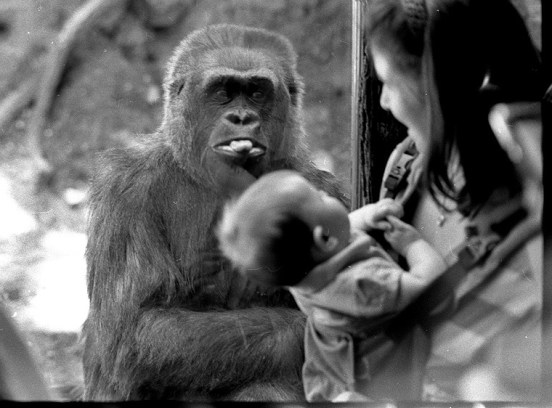
“Nightmare” 2010. Canon 7 Rangefinder, Canon 50mm f/0.95 Dream Lens on Arista EDU Premium 400 developed in T-Max developer. I was focusing on the gorilla when he stuck his tongue out! The baby and mother added to this shot, I do not know them. Considering that the rangefinder on my Canon 7 was out of alignment, I got real lucky with this shot!
As you may or may not know, that price is a bargain compared to what this lens alone goes for today!
That was the seed that set me on a wild goose chase for this lens! It wasn’t until 2009 that I was able to find and afford a copy of my own.
Although the lens is not often seen in the real world, the Canon Dream Lens is not what I’d call rare, and it wasn’t that the lens was particularly hard to find that took me so long to get one.
I guess you could say it was a bad string of finances and timing. When I had the money, I couldn’t find one. When I did find one, I didn’t have the money. But it all came together in 2009.
SO HOW ARE THE OPTICS?
This lens is meant to be used wide open at f/0.95, but here is my breakdown…
At F/0.95: There is apparent softness upon first impressions. At wide open the bokeh is most dramatic, as expected and makes up for any impression of softness. Upon closer inspection on a properly focused image, it is actually sharp.
The DOF is razor thin at f/0.95 and focussing errors may account for at least some of the softness people complain about.
“Sweet Zay Jan” 2018. Leica M8, Canon 50mm f/0.95 @ 0.95. Note, the baby started moving, as seen by her hands, but thankfully her face did not, allowing me to capture her sweet smile:-)
The “softness” possibly comes from lowered contrast and/or other optical imperfections. Images at wide open sometimes seem like they are enveloped in a thin veil of haze, but this is not noticeable in all images and most of the time, I don’t find it objectionable. This adds to that dreamy look, a glow that some have mentioned. Some of this may come from, again lower contrast wide open and/or poor flare resistance at this aperture. A lens hood helps if you’re wanting to minimize flare or trying to avoid lowering contrast further.
There is vignetting, noticeable on both film and digital. When I shot this lens wide open on the Canon 7, the vignetting was not objectionable. On the Sony A7R (original 36mp camera), it was more pronounced. I did not find it objectionable, but some might.
At F/1.4: The contrast increases, the slight haze dissapates, and the image appears quite a bit sharper than wide open. It could be comparable to other 50mm f/1.4 lenses of its era.
“Bundle Up” 2014. Sony A7R, Canon 50mm f/0.95 @ f/1.4. Sharpness is improved from wide open and the bokeh looks a lot less “funky” for lack of a better word 🙂
At f/2.8: Should be good enough for most purposes you would use any other 50mm lens for!
“The Dream Team” 2010. Rad and Frank, two great friends and photographers affectionately known as the “Dream Team.” Canon 7 Rangefinder, Canon 50mm f/0.95 Dream Lens @ around f/2.5-2.8 on Arista EDU Premium. Note the bokeh is more subdued but still funky. Can the “Dream Team” ride again? 🙂
Stopped Down Further: Honestly, I see no point in evaluating this! Why? Because this lens was meant to be used wide open or stopped down slightly to get the famous bokeh effect it’s known for. It gets sharper as do most lenses stopped down. I never objectively tested it at say f/8, f/11, and f/16. It will never achieve Otus like sharpness, but then again, that is unrealistic. It’s probably as sharp stopped down as any other 50mm from the 50’s and 60’s.
“New Dream” 2014. Sony A7R, Canon 50mm f/0.95 @ wide open! Even with ISO 100, the camera was giving me the max shutter speed of 1/4000th!
A NOTE ON BOKEH: SUPER FUNK
This lens is all about bokeh, or the background blur in the out of focus areas. Or to be even more geeky…the quality of the background blur. Honestly, there’s no real reason to get this lens for any else but bokeh!
“Radamon’s Dream” 2010. Canon 7 Rangefinder, Canon 50mm f/0.95 @ wide open! Film was Arista EDU Premium 400. I think this is a good example of the Dream Lens’ bokeh at its funkiest!
Count on me to tell it like it is, while people goo and gah over the bokeh from the Dream Lens, it doesn’t always neccessarily qualify as beautiful, to me. But everything I love doesn’t have to be beautiful, and so I love it! 🙂
“Shoot The City” 2018. Leica M8, Canon 50mm f/0.95 @ wide open! Who says the Leica M8 can’t shoot low light? With a fast lens like the Canon Dream Lens, it sure can!
Light sources, such as night lights for example, look like “coma shaped orbs” as I’ve mentioned before from similar vintage lenses. Almost like gibbous or half moon shapes.
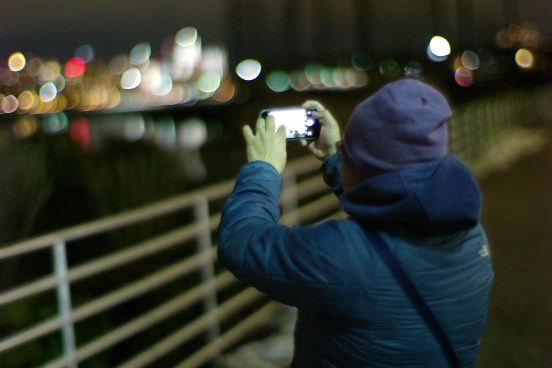
“City Lights” 2018. Leica M8, Canon 50mm f/0.95 @ f/0.95. This shot was taken across the Hudson River in New Jersey. The yellow lights in the back are lights from cars driving on NYC’s West Side Highway at night. This is an example of the “moon shaped orbs” I mentioned. This was shot at night, another reason to use a lens this fast!
It may not always be so pretty, but this is what draws people in to the images produced by this lens. In many ways, this is the closest on 35mm that you can get to that Aero Ektar f/2.5 look on a Large Format 4×5 Speed Graphic.
A lot also depends on the background. If there’s a lot of clutter, things tend to look worse. If the background is relatively clear, things will look better. I have been pleasantly surprised with some images where the bokeh looked neutral, even wide open.
“Dream Ride” 2010. Canon 7 Rangefinder, 50mm f/0.95 Dream Lens @ wide open. Tri-X 400 developed in T-Max Developer. Note the neutral background at wide open. As with most lenses, the background determines a lot as to what the bokeh will do.
I’ve heard people call the bokeh from the Canon 50mm f/0.95 as beautiful, delicious, “bokelicious,” sweet, tasty, even nasty, horrible or ugly. I call it “Super Funk” because it is all this and more. It is whatever you interpret it to be!
Although it’s one of my favorite lenses of all time, I use it sparingly. I mean, I could use this lens every day but I would never post pictures from it every day. You will just kill the effect if you do. This lens should be considered an artistic tool in your arsenal rather than an everyday lens.
VERSUS THE LEICA NOCTILUX?
The Canon 50mm f/0.95 has increased in value over the years and prices are now trending from a low of $1200 to a high of $2000 give or take. Some unscrupulous dealers are trying to sell this lens for $3000 or more. This, to me, is way too high since that is approaching Noctilux used prices. The Noctilux goes for $5500-10000 on the used market, depending on which version.
Speaking of the Noctilux, some have labeled the Canon Dream Lens as the “Poor Man’s Noctilux.” Since the Canon came first, I’d say they should change that to the Noctilux is the “Rich Man’s Canon Dream Lens” 🙂
Comparisons? Well, I never owned a Noctilux, though I have two friends that have them. Based upon what I’ve seen from the Noctilux and the Canon Dream Lens, I’d say you can’t compare the two. It’s apples to oranges.
The Leica may be the technically better lens, while the Canon may be the more artistic lens in regards to the images it renders. Just like the film vs digital debate, my answer to the Noctilux vs Dream lens question is…None are better than the other. They are different.
THE NEW GOLDEN AGE OF CHEAP AND FAST LENSES: WHY YOU REALLY DON’T NEED THE CANON DREAM LENS
As a “community service” to my fellow photo gear lovers, I need to say this to help you avoid a potentially painful and expensive episode of G.A.S with the Dream Lens 🙂
Ok, so today in my opinion, you really don’t need it. You may want it, but you don’t need it!
Let me explain…
When the Canon 50mm f/0.95 came out in 1961, it had few if any competition. People were still shooting film exclusively and back then you can forget all about “low light, high iso” shots.
Today, we have companies like Mitakon, SLR Magic, Mieke, 7Artisans, Kamlan and a whole bunch of other companies making lenses at f/0.95, f/1, f/1.1, f/1.2 and when you combine these lenses with the amazingly low light capable digital cameras we have today, you could literally shoot in the dark.
Just as I saw over ten years ago in the telescope world, let’s thank our friends (mostly in China) for bringing us these super fast and affordable glass! I remember telescopes such as apochromatic refractors and large diameter Maksutovs from American manufacturers such as Astro-Physics and Meade being optically superb, but also expensive. The wait list for Astro-Physics APO refractors was in years, not months.
Then came the Asian optics around the early to mid 2000’s that started challenging the established manufacturers. Sure, they may not have been a real match for a finely crafted Astro-Physics refractor, but you didn’t have to wait years and the the price/quality ratio was good enough for a lot of people. Love it or hate it, these overseas optical makers are giving people what they apparently want! 🙂
MY MAIN POINT ON WHY YOU REALLY DON’T NEED THE DREAM LENS…THOUGH YOU MAY WANT IT! 🙂
To me, the Canon Dream Lens was a lens of compromised optical quality when it came out in 1961. Compromised by the technology of its time, and probably optically compromised as well to create a showpiece lens for which Canon could claim as the fastest photographic lens in the world at that time.
In the same way, you could say today’s cheaper (under $1000) fast lenses are also of compromised quality. They are here to deliver the speed people want, knowing full well people love “ugly” these days. People love “Super Funk” ie, swirly bokeh, orbs, distortions, etc.
There are lenses such as the $2999 Nocturnus which may have higher quality and that might be a good option for some, but again for me, when you get that close to $5000, I’d just rather just save a little more and look around for a used Noctiux, but that’s just me!
Finally, you might say, that’s good and all, but these lenses are NOT the Canon Dream Lens…and that is true! They will not deliver the images the Dream Lens does.
“Angel” (With Horns!) 2010. Canon 7 Rangefinder, Canon 50mm f/0.95 on Tri-X 400 developed in T-Max Developer.
As a counterpoint, I would say the Dream Lens will not produce the kind of images these new and cheaper lenses do either! When it comes to beauty or even “ugly” it’s all subjective really.
But if you have the money and you want the Dream Lens, I’d say…go for it! It’s the Canon Dream Lens baby! Gotta have it! 🙂
LEICA M CONVERSION
I had mine converted to M mount in 2013 by the great Ken Ruth of Bald Mountain. I’ve heard that Ken has recently retired from camera repair and modification work. Hope he enjoys his retirement, he deserves it. Personally, I’m sad to see him stop doing his thing. Sad to see someone of his skills leave the business. He was a true camera technician, a camera wizard, a Camera Legend! He did an awesome job on the M conversion on my lens.
There are others who will do this conversion today. One I know off hand is Don Goldberg aka DAG. I initially contacted him, but his wait list was so long and I found Ken. I’ve had interactions with Don in the past and based on his reputation, I’d have no hesitation having any work done through him.
Why should you convert it to M mount? Unlike many other things in life, having the Dream Lens modified for M mount actually increases its value!
The main reason I had it converted to M mount is because it opens up so many other possibilities such as using the lens on Leica M bodies, film and digital. Using it on any digital system that will take M lenses through adapters.
“Palm Beach” 2014. Leica M5, Canon 50mm f/0.95 Dream Lens on Fuji Superia 400 color film.
In its native Canon 7/7s mount, you can still use it on digital bodies with the proper adapter/adapters. I used mine on a Sony NEX C3 (Aps-C sensor) for a few years before the conversion. I actually had second thoughts about doing the M conversion since I enjoyed using it on the Canon 7 for film, but when I looked at the possiblities available after the M conversion, I swallowed hard and went for it.
Keep in mind, once you do the conversion you can never use it on the Canon 7/7s again, unless you had it reconverted back which is impractical…or get another Dream Lens that is unconverted so that you can use it on the 7/7s…even more impractical, but I’ve thought about it! 🙂
The conversion cost me $300, but it could be lower or higher, depending on who you find to do the job. Get the best person you can because this is a precious lens and you don’t want some hobbyist screwing up your dream lens! 🙂
CONCLUSION
“Dreams” 2010. Canon 7 Rangefinder, Canon 50mm f/0.95 Dream Lens @ wide open. Film was Tri-X 400 developed in T-Max Developer. Ahh, is there anything sweeter than a little baby sleeping? Shhh…:-)
I hope these samples give you some idea of the kind of images this lens produces. As I’ve said before, it may not be a look everyone likes but it certainly has character! The Canon 50mm f/0.95 is a legendary lens that remains a highlight of lens design that helped cement Canon’s role as a Camera Legend.
It was, in hindsight, one of the first of many fast, speedy, and exotic glass that Canon would go on to produce over the years.
Please have a look at the video for additional information including why you’d want this lens and why you really don’t need it.
Sure it may sound like a shameless plug and ploy for you to watch the video but it’s not. At least it’s not meant to be!
When starting this article, I had just intended to post samples in order to save myself some work and time.
I figure if you’re really interested in this lens, you’d check the video too and if you’re not that interested, at least you’d hopefully look at the images on this post.
Instead, I ended up writing a lot more than I expected to. Kinda defeats the purpose of making the video and the article too. More work than I wanted, but I love you all so gotta do it!! 😊😘
Hey gotta go, thanks for listening and I appreciate you!
“Dream Baby” 2015. Sony A7R, Canon 50mm f/0.95 Dream Lens. With Baby Zay in the house, life is indeed a dream 🙂
WHERE TO BUY? PLUS TIPS ON GETTING ONE
If seeking the Canon 50mm f/0.95 “Dream Lens” prices are trending from a low of $1200 to a high of $2000 give or take. I did not include the $3000 plus lenses because I do not see them as legitimate prices. I do not want to help inflate the prices of these beautiful lenses because I was once in the position of someone who could only dream of such a lens so I know this feeling.
Though the lens is exotic, it is not considered rare. I see them almost every week for sale on eBay and elsewhere.
A fair price I believe will be between $1500 and $2000. To give you an idea of how these lenses have increased in value, I can only say I paid a lot less than this!
If the lens has been converted to M mount, it may fetch a little more. For the cheapest prices, seek out the unconverted version and just get a C-Mount to NEX or Micro 4/3 adapter and enjoy!
If you’re looking for this lens and can’t afford it right now, keep dreaming and be rest assured that one day, with a little luck (and save up some money, of course!) you can attain this dream of a lens! If I, a mere mortal, can do it, so too can you 🙂
ALTERNATIVES
Below are links from our affiliates to some great alternatives to the Canon Dream Lens. Buying from our affiliates is safe and cost you nothing extra to what you’re buying. It will also help us bring more reviews of the photography Camera Legends you want to see! Thanks for your support!
All of these lenses will cost you a lot less too! Again, no, they will not produce images like the dream lens. But then again, as I said, the Dream Lens won’t produce images like these lenses either!
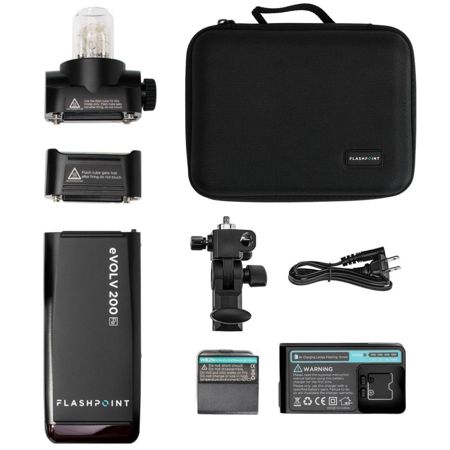
Our trusted affiliates are now having a great sale of their quality line of Flashpoint studio equipment! Here’s a chance to get the lighting you need at significant savings!
Sorry for my inactivity friends, I have been working on a new pet project which is the Camera Legend YouTube channel. Between that, the blog, and family, I’m burnt out!
It seems the next logical step to bringing a more dynamic experience to our readers.
I initially hesitated doing it…for a couple of years in fact! Afraid to take the plunge, but now we have already posted a couple of videos.
People wish me good luck and I thank them. I’m well aware that most YouTube channels don’t succeed. I’m going in expecting to fail! Starting from zero, got nothing to lose 😀
I view this blog as my model for the YouTube channel. I never expected it to go anywhere but it’s gone beyond my expectations!
It’s not the number of followers as much as people telling me they found the blog while Googling or researching certain cameras. The fact that we have become a tiny fabric of that internet search for the cameras we have profiled is a humbling experience. Very thankful to the viewers and readers.
The YouTube channel is just in experimental stage. I’m not sure if I should be reserved or show some personality so I’m trying different things. I personally think people don’t want to see a robot speaking! Anyway I’m open to your thoughts and suggestions.
I also have to admit, I’m a little shy for putting myself out there in front of the camera. There’s always the thought…”Oh, am I not who you thought I’d be?”
The production is decidedly low budget. As I’ve mentioned here many times, I’m not a video person, though I might have to start learning.
I’m a photographer who loves natural and available light. I don’t like setting up studio lights, though again, I might just have to learn.
I really wanted this to be more like you going into a camera store and chit chatting with one of the employees in there. I used to do that; go in and chat with the sales people and always had a good time talking cameras!
Anyway, please have a look, if you have the time. Honestly, the “meat” of the video, which is the camera talk, I think only true camera nerds could sit through! Thank you in advance and thanks for being part of this new venture!






 Fuji Instax SQ10 Camera



































 7Artisans 50mm f/1.1
 Mitakon 50mm f/0.95
 Mitakon 25mm f/0.95
 Camera Legend