Good Saturday you awesome WordPress camera geeks! Just keeping you guys in the loop with my latest video review.
The camera is the Minolta TC-1. It is a compact “luxury” point and shoots from what I consider the glory days of high end point and shoots cameras in the 1990s.
Its peers are other cameras you might remember such as the Nikon 35ti, the Konica Hexar AF, the Leica Minilux, and the Contax T2 & T3, and maybe a few more.
I’ve written about this camera a few times over the years here but I’ve put all my best information into this video.
The Minolta TC-1 and its peers are no doubt amongst the most desirable compact film cameras of all time but for many, many reasons I no longer consider them good buys.
I address this at the end of the video with some brutally honest commentary of which you’ve probably not heard me say before.
I thought I should do a video on all the luxury point and shoots before I expressed my true views but that would be a really cruel thing to do to the people! 😂 So I’m putting it out now so that the more sane minded can save themselves the heartache in addition to saving a lot of money 👍
I have chased these cameras and endured a lot of headaches when they eventually broke down or developed issues. Let my story be a cautionary tale. I did it so you don’t have to. But like a moth to a flame burned by the fire, if you feeling like taking a gamble that could end up in a blaze of glory I’m not going to stop you! 😂
Thank you guys for checking it out and if you’re on YouTube please comment, like, and subscribe it helps a lot with the YouTube algorithm to get the video out to more people. Thanks for your support I greatly appreciate it! 😍🙏👍
Good morning you awesome camera geeks! An old song once said “Hello stranger, it seems like a mighty long time!” Well today it’s more like Neil Diamond with “Hello Again” Hello 😂
I would like to thank my friend Frank B. from upstate NY for this post because he reminded me that I haven’t posted anything on the blog since last October! Wow, has it been that long?
On a recent flight to the Philippines.
I spent the last month traveling in the Philippines and Thailand. On this trip I decided to bring less gear but really focus on a few key Camera Legend cameras, some of which you’ll see in this post.
Multi-Tasking in Bangkok with the Minolta TC-1. I don’t multitask well but somehow I did it for this shot 😅
The trip may explain my inactivity for last month but what about the rest of the year you might ask? 😂
Well first of all let me apologize to all the great bloggers who I follow, who I haven’t dropped by to leave a comment or two. I have come to realize that I simply cannot multitask! And it gets worse the older I get.
It originally started out with me wanting to concentrate on my YouTube channel. Then my phone filled up and it automatically offloaded some key apps like WordPress and since I wasn’t posting much anyway, I very nearly forgot about it! I suck I know! 😂
Anyway with my regular day job, with Instagram and Facebook and YouTube I simply got burnt out. I apologize and I have the deepest respect for you guys who do this on a daily basis 🙏🙏
I got to a thousand subscribers on YouTube but I’m still not making any money off it. They keep upping the ante like you need a certain amount of watch time, certain amount of subs, etc. Honestly I hate making videos and I don’t really recommend it unless you’re a video-centric person.
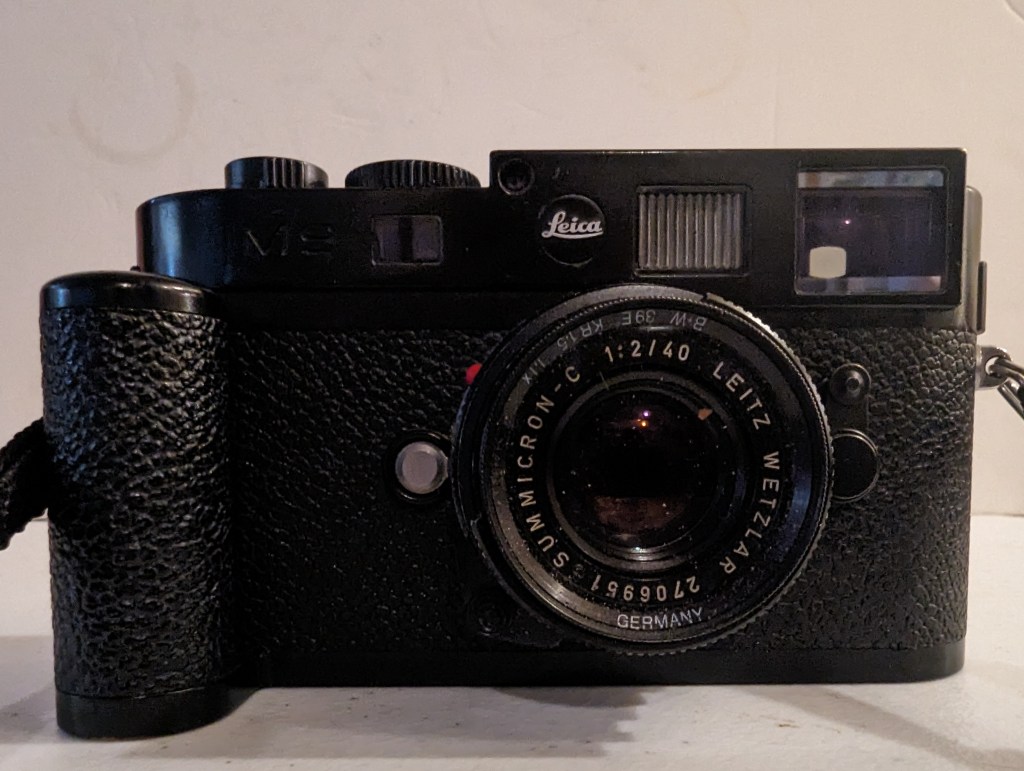
But among the legendary cameras I took on this trip, my two most used were the Minolta TC-1 and the Leica M9.
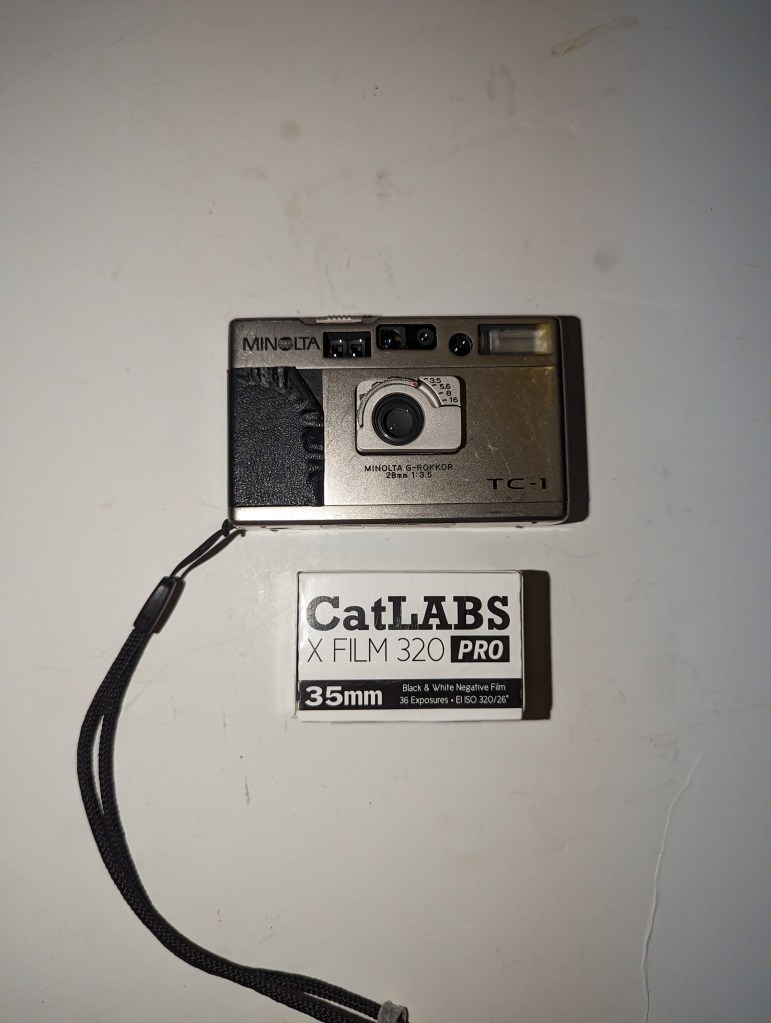
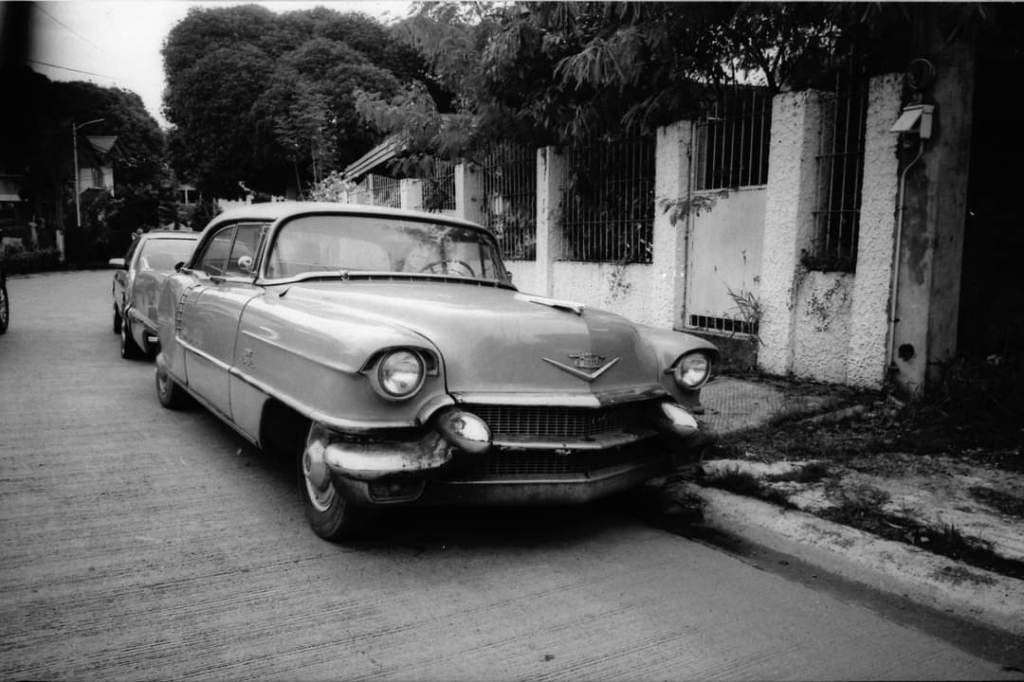
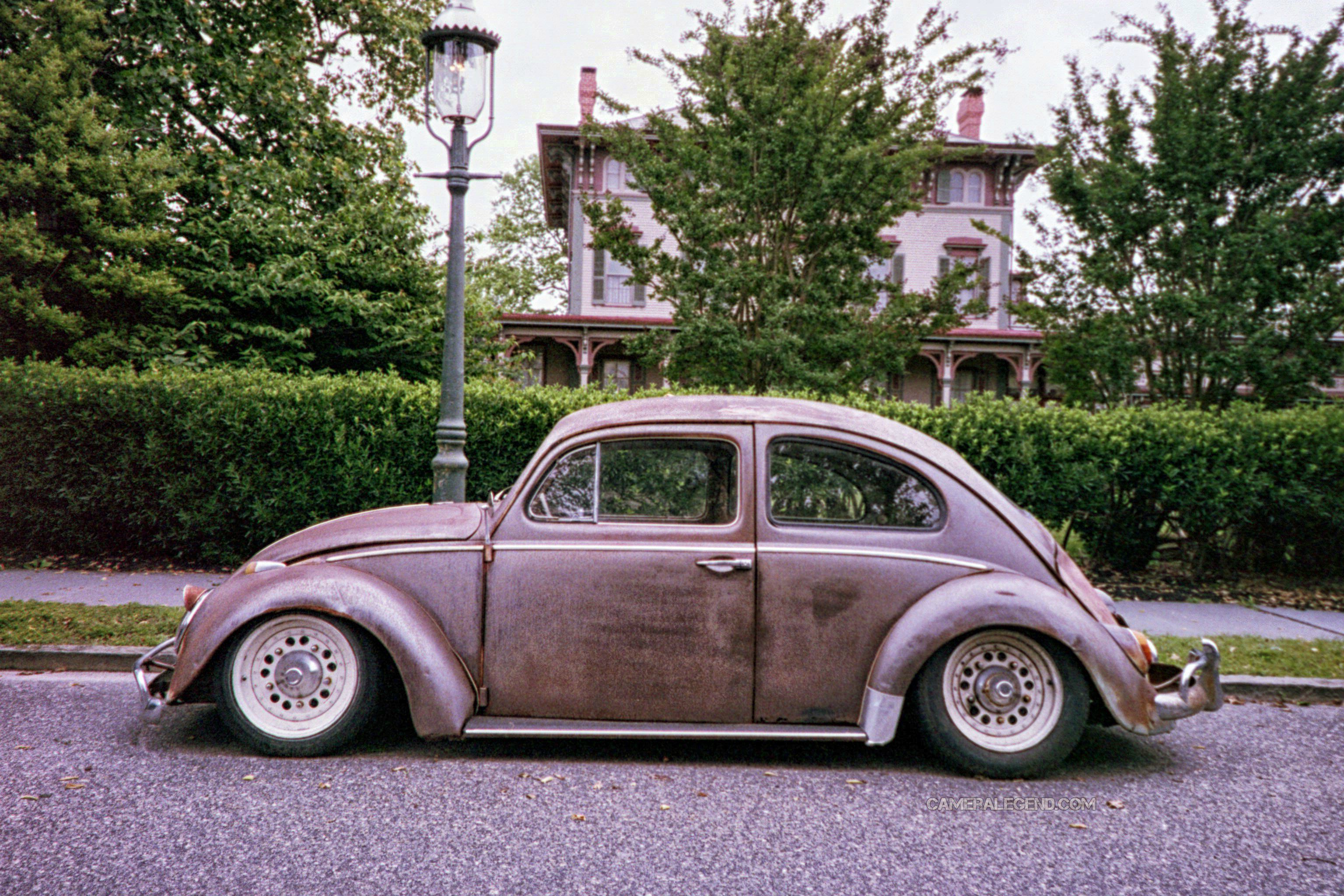
The Minolta TC-1 and CatLabs X Film 320.Classic car spotted in Manila, Philippines. Anyone know what make/model this is? Shot with the Minolta TC-1 and CatLabs X Film 320 developed in HC-110 developer
I found myself using the TC-1 a lot on this trip. Its tiny diminutive size was a plus! I’ve written about the TC-1 here before but have yet to do a full review either here or on YouTube. I hope to once I get all my film developed.
The Leica M9 is a legendary digital Leica introduced in 2009. I actually picked up mine in 2020. I got a great deal on the camera and I used the extra money I made during the COVID-19 pandemic to pay for it.
As a user of the older M8 since 2010, I felt right at home with the M9. Even though the M8 is APS-H (1.3x Crop Factor) and the M9 is full frame, they produce (mostly) similar looking files.
“Chillin'” 2023. Leica M9 and 40mm f/2 Summicron-C.“Pa Jian” A 91 year old lady in Nakhon Si Thammarat, Thailand. She reveals her secret to long life in my latest video. Shot with a Leica M9 and 40mm f/2 Summicron-C.Kodakchrome like colors are one of the hallmarks of the Leica M9.Does anyone besides me miss those cute COVID masks? 😍 Shot in the fall of 2020 with the Leica M9 and 35mm f/1.2 Voigtlander Nokton Halloween 2022. Is it almost time for Halloween again? Time moves fast my friends and I’m making up for lost time! Leica M9 and Voigtlander 35mm f/1.2 Nokton.The Leica M9 is a fantastic image maker even in 2023 but is it worth the risk? To me it is but only you can decide whether a camera from 2009 is still worth buying.
I’ve heard people describe the M9 as having an upscaled version of the M8 sensor and they indeed produce similar looking images for the most part. Although I’m not anywhere ready to write a full M9 review what I can say is imagine all the things you like about the M8 but make them better. That’s what the M9 is. Better color correction, better resolution, plus making full use of your lenses with the full frame sensor. But it has one major flaw. Sensor Corrosion!
Here’s my latest YouTube video which is part travel, part review. It’s not a complete M9 review but I think you’ll find out almost everything you need if you’re considering buying an M9.
I dedicate this video to the memory of Anthony Bourdain whose food and travel videos were an inspiration to me. In fact, although I don’t advocate smoking, I included the smoking scenes as a tribute to him, particularly the early Bourdain. I think that rawness was part of his charm.
I have been watching his shows since he was on the Travel Channel with “No Reservations.” Then he moved to CNN and did “Parts Unknown” for many years. Then seemingly at the height of his fame, he took his own life in 2018. A sad ending for a man who brought a lot of joy to many many people.
Anyway that’s it for today! I just wanted to say hi and try to get a post in. I appreciate anyone reading this. Thank you very much!
Good morning you awesome camera geeks! Over the years, I’ve catered to camera and photography lovers of every kind.
Perhaps because I’m a collector myself, I’ve written a lot for camera collectors. I’ve tried to do both film and digital reviews because I love both but there’s one group I’ve not done a lot for. That group are the humble beginners.
I actually did a video on YouTube a couple of years ago called “The Benefits Of A Cheap Camera” in which I talked about the Vivitar V3800n, a cheap and affordable 35mm slr and although I tried to give some useful advice in the video, I don’t think a lot of people liked or understood my lighthearted approach and humor 😀
So today I will try to be more gentle and serious (if that’s possible!) in my approach
YouTube Video
The bulk of my advice today will be on my YouTube video. The young film beginner today is more likely to watch a video rather than read an article. For the rest of this article I will concentrate more on things I didn’t touch on in the video.
People can be funny sometimes. I’m sure a some people might say “Ah he’s just pushing his video!”
And the funny thing is, if the video is on Camera Legend YouTube and this is the Camera Legend blog, shouldn’t I be doing that?! It would be unwise of me not to 😍
But as you’ll see, this article touches on a lot that’s not on the video so consider it an addendum to the video.
Big Beginner Mistake
As beginners we all make mistakes. Heck even when not a beginner we make mistakes! At least I do still today 😀
To me though one of the biggest mistakes I see the beginner in 35mm film photography make is the notion that they have to be an expert camera operator first.
It’s not the beginners fault really. It’s perhaps all the “super photographers” they read about or see on YouTube but it seems to me they feel the need to learn aperture, shutter speeds, lighting, flash, everything all at once!
And yes it IS important to learn those fundamentals of photography but the truth of the matter is mastering these things take time and lots of practice.
Obsessing about learning camera function so much can make you overlook perhaps the most important aspect of photography: the actual picture. Taking the picture. Learning to focus the lens. Learning to compose. Developing an eye for a good picture.
So you say Sam, if I don’t know how to operate the aperture and shutter speeds then how am I going to take good pictures?!
Fear not! Let me introduce to something I call “The 1985 Method” 😀
The 1985 Method
No this isn’t actually a “method” I came up with but it’s how I developed a love for photography.
Back in the 80s as a youngster starting out, I usually shot sight unseen. Before I really got into photography, the camera was just a way of capturing my family, my friends, my world.
All I did was shoot and shoot. I knew nothing about aperture or shutter speeds. I knew nothing about composition or the rules of photography. I learned by discovery. And that still shapes a lot of how I approach things today.
Circa 1986. A selfie of two wannabe rockstars 😂 Shot with a Minolta X-700 and 50mm f/1.7 MD lens. I knew nothing about aperture and shutter speeds but those early days of photography experimentation are the ones I cherish most.
The knowledge of light, aperture, shutter speeds, composition, that came later as I started buying books and magazines. You could say I started out photography the wrong way! Yet, some of those early photographs are the ones I cherish most.
It was photography in its purest form in my opinion before it became the “game.” A game of “you should do it this way or that way.” You should use this camera, buy this lens, etc, etc. I guess you could liken the experience to the innocence of a child before the realities of the world corrupts them.
As mentioned on these pages before, I dabbled in photography in the early 80s with my parents cameras with mixed results. It wasn’t until 1985 when Mom bought us a Minolta X-700 that I started getting (to me) great results, certainly better than I was getting previously. I’ve always considered the Minolta X-700 that I got in 1985 my first “serious” camera.
The Minolta X-700 was my first “serious” camera and served me well as my only SLR from 1985-1994 by giving me consistently well exposed images.
Even as a teen, I was getting roll after roll of consistently good results. As I got older, many of the photographers I met encouraged me to go back to all manual camera like the Pentax K1000, Nikon FM or Olympus OM-1. They told me I should do more “serious” photography. I did try those cameras and I loved them but I didn’t always get consistently good results like I got with my old Minolta.
This photo from 2009 is probably my last shot taken on my original X-700. The lens used is the 50mm f/1.7 Minolta MD lens and the film was Kodak T-Max 400 developed in T-Max Developer. Twelve years already?! My how time flies.
With time and a lot of practice, I started getting results as good or better than the Minolta. I found out why…
It was because I often used the X-700 in the green P or Program mode. In this mode, the camera figured out the exposures for me and it mostly got it right most of the time! The Minolta was doing most of the hard work for me!
I was getting good pictures consistently and that inspired me to continue doing photography. And I have the Minolta X-700 and its great Program mode to thank for it!
Doing It The“Wrong” Way!
You see it all the time. Many photographers recommending a beginner start out with an all manual camera such as the Pentax K1000 or Olympus OM-1. Heck I’m a big pusher of that “hardcore” method 😂
So it may be a surprise to hear me say that for the beginning 35mm film photographer today I am not recommending they start out with an all manual camera any more. Even though in this YouTube generation things are easier than ever, I now advocate the beginner to start with a little bit of automation.
If you’re a beginner at 35mm film photography, I recommend you get a camera with a Program mode like the Minolta X-700 and I want you to use it! In addition, your first camera should also have an aperture priority or manual mode. I’ll explain more later.
My dusty and war torn Minolta X-700 from 1985 with its legendary Program mode.
I’m not the first person to advocate using the Program mode and I won’t be the last. And although the old “hardcore” method of having the beginner start out with an all manual camera is still near and dear to my heart, I realize it is actually a little bit of a “cruel” thing to do to a beginner 😍
A True Story
As a good example, back in the late 1970s my parents had a good friend who was really into photography. He had the great cameras like the Canon F-1 and A-1.
He was especially fond of his multimode A-1 and always got these great shots. He was always showing us slides and projections of his work.
I think I’ve mentioned before that this family friend was probably more responsible than anyone else for my interest in photography, cameras and lenses!
Anyway seeing all his great work, my parents asked his advice on getting a camera. He helped them choose the Canon AT-1. That’s right folks. Not the AE-1 or AE-1 Program but the no frills, manual mode only AT-1.
Guess what? My parents knowing nothing about aperture and shutter speeds, never bothered to shoot with the camera. It was never used until it was stolen from our apartment in 1982.
To this day, I wonder why our dear family friend, God Bless his soul, I wonder why he would recommend this camera to them and not proactively try to help them use it?
But as I said that was then. Today, young beginners can find everything they need to know online!
And since I’m in a kinder “ask what I can do for you” mood I am not going to be cruel and have them start on an all manual camera the way our friend did to my parents 😍
That may change though! 😂 And yes, it will change once we get into medium and large format cameras where automation is much less available.
The World Has Changed For 35mm Film Beginners
The main reason though why I no longer recommended the all manual camera “hardcore” method is because many different dynamics have changed. But one factor above all is a game changer. I’ll explain…
Back in the late 80s and all throughout the 1990s until perhaps the mid 2000s, I had one distinct advantage that film photography beginners today don’t. And that is something we took for granted called the “One Hour Photo.”
One Hour Photo?
What is a one hour photo? There was a movie starring Robin Williams called “One Hour Photo” but that’s not what I’m talking about 😀
A few of my “one hour photo” packets. The one hour photo developers have all but disappeared in today’s world. I still have a ton of old photos that I haven’t scanned but I know it’s a treasure trove of memories.
I’m talking about the places that develop your film in about an hour. At its climax, they were everywhere in nearly every country. You remember, don’t you? Well old school photographers will remember it well but kids born after the year 2000 may have no clue.
Basically, before digital came around and shattered everything, film photography had developed to its highest point of convenience where in the USA stores like Costco, CVS, Walgreens, and even local camera shops and pharmacies offered to develop your color print films in about an hour or so. Many times it took longer than the advertised “hour” but you’d still get your prints back rather quickly.
Companies like Fujifilm and Konica often supplied the machines necessary to do this.
So if I were trying out a manual camera, I could theoretically finish the roll and get the results back the same day and I did so, often!
But as digital began to put a stranglehold on film in the mid 2000s, these one hour photo labs began to fold. Many were gone years earlier when they saw the writing on the wall.
Today, you would have to send your film to a dedicated lab. The usual time for you to get your results back is around two to three weeks for most labs. Costco stopped developing or sending out film for most of their stores but CVS and Walgreens will still send your film out for development. Sadly, a few years ago they began this bizarre policy of not returning your negatives so if you have them send out your film, the negatives are gone forever.
The disappearance of the one hour photo labs is perhaps the main reason I relearned to do my own black and white development. I couldn’t stand the wait!
For the budding beginner in 35mm film photography, it is unlikely that they would be developing their own photos and so they must wait.
Why Great Results Fast?
We live in a world where we want and usually get everything fast. I can’t just blame today’s kids for being impatient because I myself have been spoiled by the convenience of it all.
Before the internet, and even as recently as the late 1990s when there was some internet, you’d sometimes have to wait weeks for an order to arrive. Today, I get most of my online orders in two days! That’s a game changer and no one wants to go back.
But in the world of film photography, sadly 35mm film development (as far as the wait goes) has gone back to something worse than it was when it was at its best in the late 90s and early 2000s.
It is my feeling that waiting two to three weeks just to get back lousy results from that first roll of film will do nothing but curb the enthusiasm of all but the most determined beginner photographers.
So I recommend the beginner start out with the much maligned Program mode, get some good maybe even great results right away and get excited about 35mm film photography.
Yes you should know the Program mode is not foolproof. Most old cameras have center weighted metering that can be easily fooled by bright light sources. However I’m willing to bet that the Program mode is going to yield a better percentage of results than if one were going in blind or trying to remember what they read or saw in a tutorial.
Shoot in Program mode. At the same time watch some good YouTube tutorials, read a book and take notes. After a few rolls in Program mode, then start experimenting by gently going out of the Program mode.
Recommendations
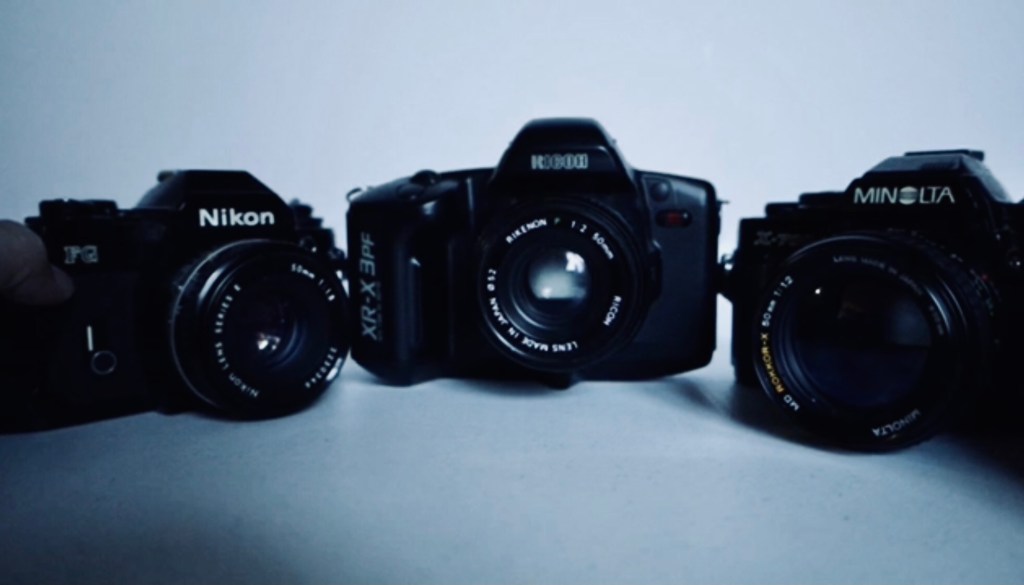
In my video I recommend and do a mini review on three cameras; the Nikon FG, the Ricoh XRX 3PF, and the Minolta X-700.
All three I have used and they all have a Program mode as well as manual mode.
I went into a lot of detail in the video so for the sake of time, I’ll just leave the details there for those interested. I also make recommendations on what to get for your first lens and also recommendations for film.
The photos below are extra samples from the humble 50mm lenses that I recommend a beginner start with.
By “humble” I’m talking about the 50mm f/1.8 or f/2 from any manufacturer and 50mm f/1.7 from some manufacturers.
The first shot was scanned with an Epson flatbed in 2010. The other two were crude iPhone X scans so they may not show the true nature of the images.
My Epson flatbed has gone caput and I’m trying to decide whether to go with a mid level scanner or a high end one. In addition to devoting time to YouTube, this one of the reasons you haven’t seen my work here. I’d really hate to continue giving you guys low quality scans! Y’all deserve the best 😍
This shot from 2010 was taken with a Nikon F3HP and 50mm f/1.8 Series E Nikkor. I am a big advocate for the good old and cheap nifty fifty. Scanned with Epson flatbed scanner in 2010. “Dark Horse” 😀 Circa 2010. Nikon FG, 50mm f/1.8 Series E Nikkor. Film unrecorded. Scanned using iPhone X. This image was shot with the Ricoh XRX 3PF and 50mm f/2 Rikenon stopped down to roughly f/4-5.6 With the humble 50mm you could shoot wide open to blur the background or stop down mid aperture for more subtle bokeh such as this. Scanned with an iPhone X.
As mentioned this article is an addendum to the YouTube video. Most of what’s on the video is not here and most of what’s here is not on the video. I’m not pushing you to the video for the sake of views. If that were the case I’d be making videos like crazy but I’m not. Note how long this article already is! 😀👍🏻
I figure those interested will check it out and those who don’t won’t.
Another point I didn’t touch on enough in the video is that it doesn’t have to be Nikon, Ricoh, or Minolta. You could get a Pentax Super Program if you like Pentax or Canon AE-1 Program if you like Canon. Any camera with a Program mode and a manual mode will do!
The main point is to get a camera with a good Program mode to start getting good results right away.
No Autofocus!
I however am NOT recommending that the beginner gets an autofocus film slr for their first film camera at this time. If you start with an autofocus camera and autofocus lenses then in my opinion you’re probably better off shooting with a DSLR.
I want you to have the Program mode for automatic exposures because exposures are probably the trickiest part for a beginner to understand, but I’d still want you to learn the “art” or the craft by learning to focus and compose. Get great results, get excited, and the rest will come to you with time, practice, and experience!
Conclusion
I can’t believe it took me all that space and time to basically say: Start out in the Program mode, get good to great results, get pumped about photography and work your way through the rest! You’ll be more interested in learning the camera when you start getting good results! 😀
Anyway this was the most I could put in one article but in future articles and videos we’ll work our way out of the Program mode so that you can work the camera and feel like a “real” photographer even though the Program mode will deliver 80-90 percent of the time! 😎
What is your opinion? Do you agree? Disagree? How did you learn 35mm photography? Leave a comment I’d love to hear it! In the end though, it’s just one man’s view so take it with a grain of salt and have a great day folks! 😍📸👍🏻
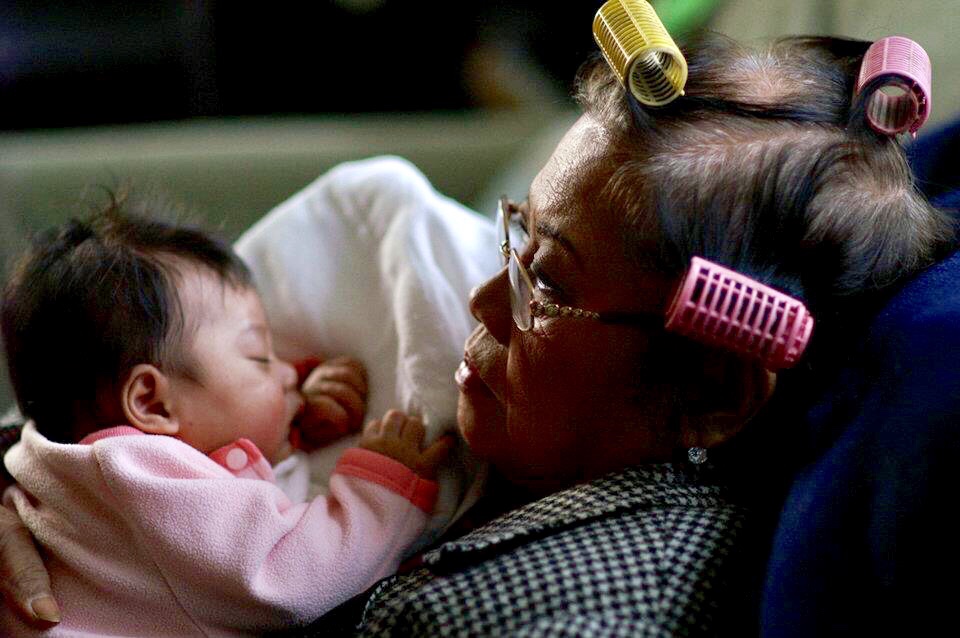
Good morning everyone! For your #flashbackfriday here’s a real flashback from almost 12 years in time! It’s 2007. Grandma sits with her granddaughter. She’s someone who has always kept up appearances, I was happy I finally caught Grandma with her rollers 😀
I don’t think Grandma ever saw this photo, and if she did she probably wouldn’t like it but I love the shot because it’s a candid shot of a loving moment which I’m always trying to do with people portraits 😍
For this shot I used a Minolta Maxxum 7D which used the amazing Sony 6.1mp sensor. As you may or may not know, this sensor or variations of it were used in other famous models most notably the Nikon D70 and the Epson R-D1. Perhaps even the Pentax 100D among others.
But just as amazing is the Minolta 85mm f/1.4 G lens which to me was as good or better than any 85mm out there! I’m not talking technical quality, but on an aesthetic level it was made for portraits!
To me, Minolta came closest of any of the Japanese companies to getting that third spot with Canon and Nikon. They fought hard and gave us some great cameras and lenses.
Unfortunately Minolta as we know it, folded camera production in 2006 with the camera division sold to Sony. But guess what? With Sony hugely popular in the camera game, and by some accounts number three behind Canon and Nikon, “Minolta” lives on after all as Sony! 😎👍🏻
Get some shooting this weekend guys, time moves fast! 😎📷😘✌🏻
This weekend will mark the 34th anniversary of Wrestlemania, the big wrestling extavaganza promoted by the WWE, aka World Wrestling Entertainment. Even though the next Wrestlemania is 35, the event began in 1985 which would be 34 years ago.
In 1985 they were known as the WWF or World Wrestling Federation, a company which was universally known until they had to change it to the WWE in 2002 due to a lawsuit by the other “WWF” or World Wildlife Fund. To this day, I still think the WWF sounds better than WWE for wrestling!
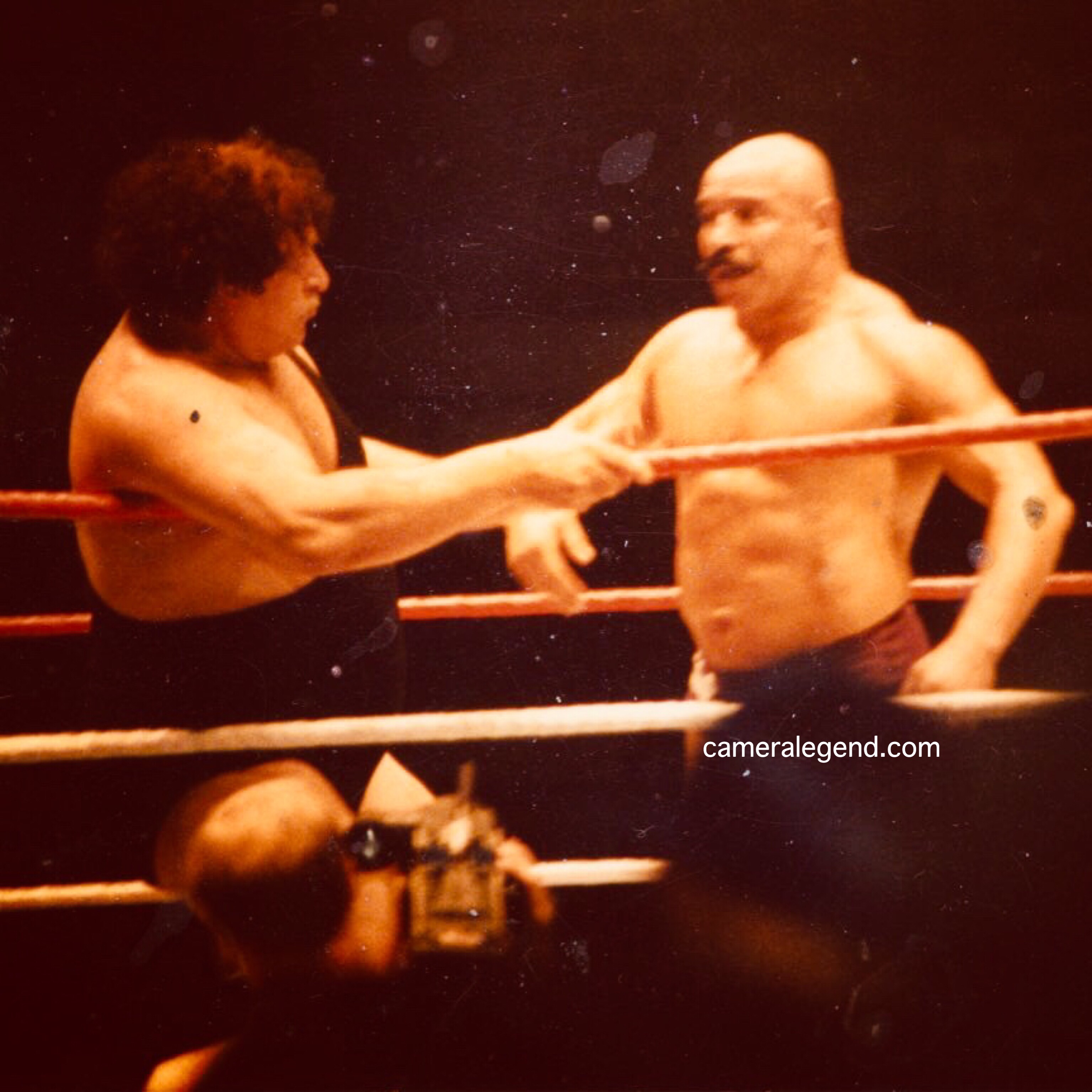
The above photo was taken in 1985 in Madison Square Garden, NYC. I was a geeky kid who was just blessed with a Minolta X-700 a few months earlier and I took it nearly everywhere. Sure, it’s not the best photo you’ve ever seen but I was a geeky teen with a new camera and cheap lens. Cut the kid some slack! 🙂
I was usually in the bleacher seats but this time I got a little closer. I still however, needed a zoom for this shot and I used a super cheap Zykkor 80-200mm zoom. If you want to know how bad it was, we bought it from one of those horrible “electronics/luggage” shops right near 34th Street. It’s the kind of shops people warn you not to buy from! Still I don’t remember that it cost us much more than $40-50. Then again, in 1985 maybe that was like $300? 🙂
The Zykkor is the kind of lens you can find today used for like $3.00 or even “free” with a camera. But it’s the kind of lens you probably wouldn’t take even if it was free! 🙂
I tell you man, I was just starting out in this wonderful world of photography and I didn’t know any better. In some ways, I like the innocence of those times. And I did get some decent shots out of the cheap Zykkor lens!
My brother and I were just teens but we did attend Wrestlemania. However because Madison Square Garden was sold out we had to watch it via closed circuit television at the Felt Forum which was part of MSG but that doesn’t count cause it’s like watching it on pay per view!Anyone remember the Felt Forum? Or even closed circuit television? 🙂
The above photo was not taken at Wrestlemania but at another WWF card in MSG also in 1985.
The wrestlers were the Iron Sheik and Big Swede Hanson. Swede was a “jobber” as they might say. He was there to lose.
The Iron Sheik was a transitional character in the world of professional wrestling. He was the man chosen to take the WWF Championship from six year champion Bob Backlund and then he would also lose the title a month later to Hulk Hogan setting up for Hulkamania, and eventually Wrestlemania. And the rest is history as we know. Wrestling became a billion dollar industry some years thereafter but the moment Hulkamania was born was the catalyst.
I was in the Garden for both Bob Backlund’s title loss and Hulk Hogan’s title win. And both matches involved the Iron Sheik.
It’s funny how time changes things. Back in those days, I never saw the Iron Sheik as anything more than a somewhat “goofy” villain. I knew he did the job by losing to Hulk Hogan but he wasn’t one of those villains who really got me excited despite the fact that he is a very good wrestler, apparently with a true amateur wrestling background.
Today, he has resurrected into a Twitter icon! He regularly spews out vile profane stuff that’s funny as hell at times. And he’s held in higher regard in the wrestling world than I would’ve thought.
Well, I was a teen! But when you’re living through the actual times you don’t think that twenty, thirty years from now this might be a historic event or maybe this wrestler might become a Legend.
And I’m not just talking about wrestling! It could be anything. For example, the late great George H.W. Bush is getting a lot of love these days, in the years before and now after his passing. However, when I was growing up I couldn’t shake off the “wimp” label that was given to him. I didn’t see him as a strong leader like Ronald Reagan, even when he went after Saddam Hussein in Iraq. I just thought he was trying to be tough. Today, knowing his history and military service I know he’s anything but a wimp and I have greater respect for him and his legacy.
Sorry for the long write-up. This was not meant as an article that reflected so much on the photography. It was meant as a trip down memory lane.
And yes, I KNOW wrestling is fake!! Even then I knew, but it was more raw back then that it could almost fool you into believing. Today, I no longer watch wrestling. I will not be watching Wrestlemania on April 7th unless it was free haha. But whenever I think of my younger years, pro wrestling and the boom it experienced in the 1980s will always be a part of my memories.
“The X-Man” 2009. One of my last shots with the X-700! People I knew used to call me the “X-Man” but it has nothing to do with the comic book characters. It has everything to do with me carrying around my X-700 everywhere. Can you believe it’s been ten years since I’ve used it?
Here’s a topic thats very near and dear to my heart! But first, a fair warning: Collecting cameras can be ADDICTIVE and EXPENSIVE!
The former (addictive) is incurable, the latter (expensive), well it doesn’t have to be. And you couldn’t do better or cheaper than these two cameras I am profiling today.
I specifically chose these two specific cameras based on their prices, availability and their importance as Camera Legends. Especially for the beginning collector, these two are the easiest to find and buy.
The two cameras profiled today are the Minolta Maxxum 7000 and the Canon EOS 650.
MINOLTA MAXXUM 7000
The Minolta Maxxum 7000 is the camera that launched the autofocus revolution back in 1985. And it was revolutionary!
Before it, “autofocus” cameras were clunky things such as the Nikon F3AF of 1983 which attempted to autofocus the “easy way” by using an AF motor in the special lenses designed for these cameras while retaining the classic Nikon F mount.
Though I say the “easy way” maybe I should have said the “logical way.” After all, if you consider the technology at that time and the boxy, mechanical nature of cameras, it just seemed easier to put the autofocus motor in the lenses right?
Well, as is often the case, the idea was better than the execution. I don’t want to go full length into this topic right now, though I would agree it would make for a fascinating discussion!
YOUTUBE COMPANION VIDEO
For those of you who would prefer watching a video version of this topic, here’s our latest video:
MAXXUM 7000 CONTINUED
In many ways, they were on the right track because as you may or may not know, when the EOS system was released in 1987, one of the selling points was indeed lenses with AF motor in them! But Canon had to ditch their old FD mount and make a whole (then) new EOS mount to accommodate this.
Anyway, Minolta too had to create a new mount. A mount which we know today as the Alpha mount or more specifically in today’s world, the Sony Alpha mount. Not the Sony E mirrorless mount. Yes, folks your Sony Alpha cameras carry the rich legacy of the legendary Minolta Maxxum 7000! 😊
Anyway, today’s topic is camera collecting and the Minolta Maxxum 7000 is a true Camera Legend that can be had VERY cheaply these days.
As a camera the Maxxum 7000 has Program, Aperture Priority, Shutter Priority, and Manual mode. Basically all you need! AF is ok but first generation. It’s good enough to get the job done, if the subject/subjects are not moving much! The camera runs on four AAA batteries.
PRICES AND WHAT TO LOOK FOR
Although one of the most important cameras of the autofocus revolution of the 1980s, perhaps the most important, today the Maxxum 7000 is also one of the cheapest on the used market.
Prices are trending at $3.00 to $50 USD average seems to be around $25. I got mine for $3 bucks! It cost me a lot more than that in the 90s!
I believe the Maxxum 7000 prices are so low because they are plentiful and they do not age well.
The grips become white and sticky or powdery. The LCD goes bad or bleeds.
The good news is many are perfectly usable as it is. In my opinion, it is unrealistic to expect to find a Maxxum 7000 without any flaws today. If you do have one without flaws I’d love to hear from you!
THE CANON EOS 650
The Canon EOS 650 was released by Canon in 1987 and is the very first EOS camera.
Its claim to fame is the introduction of the EOS Mount. I believe the EOS 650 prices are so low simply because it’s just not the most exciting camera to look at or shoot 🙂
No offense, it’s a nice looking and shooting camera. Just not super exciting compared to anything else EOS you could shoot with. But it has one very important thing on its side…It’s the first. The first EOS camera! And that has to count for something right? 🙂
It has Program, Aperture Priority, Shutter Priority, and Manual mode just like the Maxxum 7000 so that means it has everything you need. It runs on one 2CR5 battery. AF is ok but first generation. Not good for running subjects but ok for static.
PRICES AND WHAT TO LOOK FOR
Just like the Maxxum 7000, the Canon EOS 650 is also dirt cheap on the used market.
Prices are trending from $10-50 with an average of $25 body only. I got my current copy for $10 bucks!
Generally these cameras have stood the test of time so your chances of a working model is pretty good.
Sometimes you’ll find one with no power, doesn’t turn on. Sometimes parts have come loose or the buttons and dials may be sticky.
Even at the highest average prices they’re cheap get the best one you can!
BOTTOM LINE
I hope with these two cameras I have shown you that collecting Camera Legends does not have to be expensive!
With these two, you have cameras with history and a story to tell about the evolution of autofocus.
And on the Used Market you can get them dirt cheap. And if that wasn’t enough, they’re actually pretty good shooters! Good luck on your journey to camera collecting nirvana!
ADDITIONAL RESOURCES
If you are interested in these two Camera Legends, there are a ton of additional resources on the internet. To cut through the bunk and junk, I recommend these two reviews by my blogging buddy and a prolific blogger Mr. Jim Grey. I can’t speak for a lot of bloggers but I unquestionably trust Jim’s reviews and opinions.
Plus I also recommend you check out Mike Eckman’s blog…
This is the best new review I have seen on the Maxxum 7000 in years, written by Mike Eckman, a passionate photographer and camera reviewer whose passion for photography and film cameras is contagious and whose dedication I admire. I’ve enjoyed his work for years and his Maxxum 7000 review is much more thorough and much better than mine, I happily admit that! 🙂
Mike’s review is HERE and as I said, if you love film cameras his whole site is worth checking out. I guarantee it will keep your reading for hours!
Tell them Sam sent you! 🙂
***MODERN EQUIVALENTS***
It’s been said that the new Canon EOS-R Mirrorless is the incarnate of the EOS 650. In a way, many things from its looks to its use for the introduction of the EOS-R mount, I’d say they might be right! Anyway, the EOS-R can do things the 650 could’ve only dreamed of in 1987! If you decide to buy one, please do so from our trusted affiliates simply by clicking on the photos or links. You will pay nothing extra other than what you’re buying, and help support Camera Legend at the same time. Putting these articles, reviews, and videos take time and work. We do appreciate all you support, thank you very much!
***HOT NEW IPAD PRO***
I’m sure many of you are relying more than ever on your phones and tablets. Well from what I have seen and read, the new iPad Pro just released a few days ago is actually capable of running Photoshop CS without a hitch! Wow, have we come that far? If true, this tablet can finally free you from your desktop AND laptop!
Please check our trusted affiliates for more information through the links below. Also further down, save up to $300 on selected items only on sale through Sunday. Hurry, when it’s gone, that’s it!
Sorry for my inactivity friends, I have been working on a new pet project which is the Camera Legend YouTube channel. Between that, the blog, and family, I’m burnt out!
It seems the next logical step to bringing a more dynamic experience to our readers.
I initially hesitated doing it…for a couple of years in fact! Afraid to take the plunge, but now we have already posted a couple of videos.
People wish me good luck and I thank them. I’m well aware that most YouTube channels don’t succeed. I’m going in expecting to fail! Starting from zero, got nothing to lose 😀
I view this blog as my model for the YouTube channel. I never expected it to go anywhere but it’s gone beyond my expectations!
It’s not the number of followers as much as people telling me they found the blog while Googling or researching certain cameras. The fact that we have become a tiny fabric of that internet search for the cameras we have profiled is a humbling experience. Very thankful to the viewers and readers.
The YouTube channel is just in experimental stage. I’m not sure if I should be reserved or show some personality so I’m trying different things. I personally think people don’t want to see a robot speaking! Anyway I’m open to your thoughts and suggestions.
I also have to admit, I’m a little shy for putting myself out there in front of the camera. There’s always the thought…”Oh, am I not who you thought I’d be?”
The production is decidedly low budget. As I’ve mentioned here many times, I’m not a video person, though I might have to start learning.
I’m a photographer who loves natural and available light. I don’t like setting up studio lights, though again, I might just have to learn.
I really wanted this to be more like you going into a camera store and chit chatting with one of the employees in there. I used to do that; go in and chat with the sales people and always had a good time talking cameras!
Anyway, please have a look, if you have the time. Honestly, the “meat” of the video, which is the camera talk, I think only true camera nerds could sit through! Thank you in advance and thanks for being part of this new venture!
Hmm, does this look familiar? If it seems like something I posted before, well yes, yes it is! It’s THIS picture.
Same VG “Evil” Buggy. Different camera. The previous was shot with a Canon G1X, digital point and shoot. This one was taken with a Minolta TC-1 point and shoot film camera. The film was Fuji Superia 400 color print film.
Other than the slight graininess of the film version and the art filter I used on the digital version (which caused the color differences), do you see any differences? If anything, it’s very slight. Some might prefer the G1X version, some might prefer the TC-1 version but to my eyes they’re nearly identical. The fact that I shot them both within the same minute from my car might have something to do with that, but photographically, I don’t see a lot of differences.
I’m re-testing the TC-1 because while I have a short write up on this classic film camera from a couple years back, I didn’t have any photos in that article and as I always say…Pics or it didn’t happen!
Anyway, being that I tend to favor film cameras it might surprise you that I was this close to saying save your money and stick with your digital camera but I won’t say it right now until I evaluate my next roll of film from the TC-1.
All I can say right now is, the TC-1 is a beautiful little camera, a classic, a Camera Legend. However, today, your digital point and shoot is likely to give it a run for its money and probably cost less too.
Chances are you’ve never seen this camera in person. Neither had I until recently. The Minolta X-700 in chrome finish.
THE MINOLTA X-700
Although this is not meant to be a formal review, I feel I should give you at least a little information on the Minolta X-700.
The X-700 is a manual focus SLR introduced by Minolta in 1981. In its time, it was praised for its AE modes, flash automation and ease of use. As a classic camera it is very basic by today’s standards.
The camera offers Aperture Priority and (a much praised at the time) Program mode. You can use it in manual mode as well. Shutter speeds from 4 secs to 1/1000. It runs on two S76 batteries and can accept a motor drive and other accessories.
I actually did a lengthy review on the X-700 many years back on another site and I’ll try to transfer that over here.
I have to admit I have a soft spot for the X-700 as it was my first “real” camera as a kid back in 1985.
THE X-700 CHROME
Cameras have traditionally come in either black, silver, chrome or all of the above. Of course, there are special editions like reptile, ostrich, etc, etc, but we’re not talking about those.
Some cameras were always seen in silver or chrome trim such as the Pentax K-1000. I’m not sure I ever saw a black one. Indeed, I don’t think there ever was a black one made by Pentax.
The X-700 on the other hand is almost always seen in black. I had never seen a silver or chrome (whichever you prefer to call it) version in the flesh. In fact, for many years I never even knew it existed because of the fact that I have only seen the black ones.
But here it is in the flesh! It is real and it is beautiful! Well, to me anyway.
COLLECTIBILITY
Now if you have one of these beauties, take pride that you have a pretty rare thing. However rare does not translate to valuable.
I got this one for $65 and again, I found it when I was not even looking for it. I see a couple now on eBay, and with prices around the $400 mark with lens and other items to entice you.
No disrespect intended, but I highly doubt anyone would pay that much for one unless they really, really, and I mean REALLY wanted a chrome X-700 🙂
When I got mine last year, I checked eBay auctions and found one that sold for $149 I think. That being the case, I would put the fair value on these cameras from $65-150 or $200 tops for the camera body alone.
Keep in mind that the “regular” black versions can be had anywhere from FREE to $100 and regularly averaging on eBay for around $30-60 body only and $60-90 with lens.
BOTTOM LINE
The Minolta X-700 was Minolta’s most advanced model in 1981. I would say that it could very well have been the most successful Minolta SLR ever, although SRT fans will disagree with me. It was the camera that put Minolta on the map for the 80s and within striking distance of taking the top spot from the likes of Canon and Nikon.
Of course we know that did not turn out to be the case. But man, they were close with this camera. The camera, coupled with the “Only From The Mind Of Minolta” campaign were an indelible part of 1980s camera lore for me. Never before or since have I seen a film SLR get that much press and television advertising. It was classic.
The Minolta X-700 may be a very basic camera by today’s standards, but there is no doubt the camera is a Minolta Camera Legend. And if you come across a chrome one, all the better! Take pride and keep it.
The Minolta AF-C is a compact, autofocus point and shoot 35mm film camera introduced by Minolta in 1983.
The AF-C comes from the late 70s/early 80s era of small, boxy compact cameras such as the Nikon L35AF or Pentax PC35AF, and just like those cameras, it features a fixed 35mm f/2.8 lens.
The camera most closely resembles the Lomo LC-A or Cosina CX-2 and like those cameras, the camera is turned on when you open the sliding cover which protects the lens. Unlike the Lomo or Cosina which rely on scale focusing, the AF-C is an autofocus camera.
THE AF-C CAMERA
As a camera, the Minolta AF-C is completely automatic. It is a point and shoot camera where to take pictures you simply point and shoot 🙂
As I’ve said in previous articles, today’s advanced point and shoot digital cameras can do almost everything. From 4k video to in-camera editing to wifi sharing. Many of these cameras have astonishing lenses, such as the Leica Q, and price tags to match. However, it seems to me that they’ve lost the soul of what it means (or meant) to be a point and shoot camera.
And what is that you might ask? Well, for me, a point and shoot camera has to be simple. It has to be humble; all you need is a good, decently sharp lens, not a lab chart killer with an astronomical price tag. And lastly, it has to be cheap. By having a good/great little lens and not a lens with some “premier” name on it, they can do that.
And they did all this with the Minolta AF-C. It meets all the criteria I stated: Simple, humble, good/great lens, cheap. The lens on the AF-C is a 35mm f/2.8 Minolta lens and it is a very good, even excellent one. There is no “Rokkor” or “Rokkor G” designation on the lens, so it has no pretenses of being anything more than it is 🙂
The lens is a 6 elements/6 group design and has an aperture range of f/2.8 to f/17 and again, all automatically chosen by the camera.
Don’t let any “premium” designation fool you. It’s not that hard for any decent camera/lens manufacturer to make a great 35mm f/2.8 lens so it’s not necessary that it be expensive. I’ve used the Nikon 35ti and it’s a better looking camera, but I do not think the Minolta lens on the AF-C gives up anything to the 35ti.
The Minolta AF-C relies on active infrared autofocus. There is no way to manual focus this camera, so tinkerers and gadgeteers get that out of your mind.
If you want some control of the camera, it will let you wind/rewind it using a thumbwheel on the rear of the camera. The camera has no autowind/rewind function. Additionally, you can adjust the ISO in 1/3 values.
The Minolta AF-C runs on four SR44 or LR44 button batteries or two CR1/3N batteries. I used the cheaper 675 hearing aid batteries bought at CVS and they worked fine, no exposure problems.
PERFORMANCE
The Minolta AF-C is small and compact, perhaps not as small as many of today’s digital point and shoot cameras, but still pocketable as long as you don’t have the accessory flash attached.
“Princess Of Messy” 2016. Minolta AF-C, Ilford Delta 400, D76 developer. This is a crop from a larger picture. The AF-C displays good sharpness despite the film grain.
The AF-C has two leds in the viewfinder. The green light, which indicates correct focus and the red light, which is a low light warning.
When shooting with the AF-C, the autofocus is so quiet, I wasn’t sure the camera was working properly, whether it was actually focusing at all. But knowledge is power and I have read before acquiring one that this is exactly how the camera focuses and you simply have to learn to trust it.
“Redrum” 2016. Minolta AF-C, Ilford Delta 400, D76 developer. Check out the nice contrast and range of b&w tones. It seems no one is safe from harm in NYC! Ouch, love hurts! 🙂
When I developed my first roll, any fears I had were laid to rest. Indeed, the majority of the time, the camera achieved correct focus. The shots that had blurriness were due to movement and the camera correctly choosing slow shutter speeds in low light (something I have a habit of doing to challenge my cameras and myself).
Even better was that nearly every shot on the roll was correctly exposed. Not surprising for me as I’ve always known Minoltas to provide excellent metering.
“That Funky Building” 2016. Minolta AF-C, Alford Delta 400, D76 developer. This is the IAC (InterActive Corp building) as seen from NYC’s West Side Highway. This has always been an intrigueing eye sore for me whenever I see it.
BOTTOM LINE
The Minolta AF-C is a brilliant example of beauty and simplicity that represents the best of the early 1980s era of compact autofocus cameras.
“The Evil Camera Boy” 2016. Minolta AF-C, Ilford Delta 400, D76 developer. He’s evil and he loves cameras. The Evil Camera Boy is back! 🙂
It delivers excellent results most of the time under the right conditions. I guess you could see the slick caveat right there “under the right conditions.” What does that mean? That means if you use the camera as it was intended, the right amount of light, the right film, flash if necessary, then the camera will generally deliver excellent results. If you try to challenge it too much, i.e., low light, slow film, you might get less than excellent results 🙂
I read somewhere that it was thought of as the ultimate film street camera by some European magazine and I can’t disagree. While some will of course refer to the Ricoh GR-1 (which I love and have reviewed here) as the “Ultimate” I have to say the AF-C betters it in some ways. The AF is much quieter and the manual winding and rewind makes it even quieter still, both of which are benefits for unobtrusive shooting.
The Minolta AF-C takes you back to a time when “point and shoot” cameras were point and shoot cameras. Give it a little love and faith and this little camera will produce. Today, the AF-C enjoys a cult following among camera lovers, but is largely forgotten by the masses as are many of its peers. But should you come across one, get it because you will have in your hands a point and shoot Camera Legend that will deliver the goods without a lot of fuss or headaches.
WHERE TO BUY?
If seeking one of these, prices are trending at $20 to $100, with $100 being a bit on the high end. The most abundant place for the Minolta AF-C is obviously eBay.
However, you may also find them in flea markets, garage sales, and Craigslist. If you’re lucky, you may even find one for $5 or maybe free 🙂
***NEW CAMERA ALERT***
The hot new 24mp APS-C AA-less Pentax K-70 is now available for pre-order.
Pentax appears to be really upping the ante with their hot pro K-1 and now the K-70. We will keep an eye on this new Pentax, but just from the specs it appears to be an awesome new camera!























 Camera Legend