The Contax T2: The Greatest Point & Shoot Camera Of All Time?

contaxt2picii

The Contax T2 is a high end autofocus point and shoot film camera released by Kyocera in 1990.

While many cameraphiles consider the T3 the “Ultimate” point and shoot film camera, the T2 has, over the years, developed such a cult following among camera fanatics that it might be considered THE greatest Contax camera of the Kyocera era. Is it really the greatest? 🙂

The T2 is one of the most popular point and shoot cameras of all time and there are many other reviews and testimonies better than mine. I’m just giving you my two cents on my experiences with this camera.

I have been a Contax lover since using the original Contax T back in the 1990s and have used all the cameras in the T series, including the T2, T3, TVS, TVSIII, and TiX APS film camera.

THE T2 CAMERA

As a camera the T2 features a Carl Zeiss 38mm f/2.8 T* lens, Program and aperture priority modes. Aperture range is f/2.8-f/16. Shutter speed range is 1 to 1/500th seconds in Program mode. ISO range is ISO 25 to 5000. The camera relies on one CR123A battery.

The camera is primarily an autofocus camera, but you can opt for manual focus if necessary.

One neat feature that I love on the T2 is the ability to change lens aperture via a ring around the lens mount.

The camera is rather large and long for a point and shoot, quite in line with its peers from the 1990s such as the Leica Minilux or Konica Hexar, which are all larger than most high end point and shoots of today, i.e., the Ricoh GR, Leica Q, or Sony RX100 series. The camera is not jeans pocketable, but perhaps coat pocketable depending on your coat 🙂

14079469_10209177242740520_3373351019399518504_n

The Contax T2 was one of my film companions overseas. While large, clunky and not small like today’s point and shoots, the T2 exudes that Contax charm and Zeiss power that still seduces camera lovers to this day. Please forgive this bad phone pic. It was late night and I was just giving the T2 some lovin’ 🙂

PERFORMANCE

As mentioned, the T2 is primarily an autofocus point and shoot. I have found its AF to be generally reliable in good light or when using flash, but less accurate in low or challenging light situations.

The center point AF seems to need something solid to lock on to and not just sharp edges, as many cameras do. Solid objects with good light helps.

imgcontaxt2samui073-copy-2

“Sister Samui” 2016. Contax T2, Tri-X 400. On Koh Samui island, Thailand, I met a wonderful lady whose grace and elegance made me think of her as a “Thai Lauren Bacall.” I’m getting used to going to these places now, but it’s the people I meet that keep it interesting for me.

I have mentioned many times that I do not like using manual focus on similar cameras because it’s really electronic vs real manual focus and clunky to use. It’s more like a “guesstimate” system using the distance indicators vs physically manually focusing the lens which you cannot do on the T2 and most comparable point and shoot cameras. However with the T2, using its electronic manual focus is sometimes necessary.

When the AF is in its zone however, the 38mm f/2.8 produces excellent, sharp images with lots of contrast. The high contrast is what you have come to expect and love from Contax Zeiss lenses and it accentuates the appearance of sharpness.

IMG_6255.JPG

“Pak Nam Klai” 2016. Contax T2, Tri-X 400 developed in D76. The Klai River in Nakhon Si Thammarat, Thailand. Not as famous as the “River Kwai” but just as nice and it looks just the way it did when I visited as a child.

However, in very bright lighting situations, the high contrast can be problematic and it’s easy to get blown highlights with this camera. Thankfully, due to the high dynamic range of film, I can generally bring the levels down and recover detail with post processing.

The lens seems to be more in line with the original Contax T, which produced sharp images with a more classical look that I liked as opposed to the T3 which produced bitingly sharp pics with a more modern look. Many people prefer the T3 probably for that reason, but to me, the T and T2 produces images with more “character.” Hard to explain, but I suspect many of you will know what I mean.

Oddly enough, whenever I’ve used a 40mm f/2.8 lens on my film or full frame cameras, I’ve always found that focal length a little “boring” especially because it reminds me a lot of a 35mm f/2.8 lens which is a generic old school focal length that can be found very cheaply. Yet everyone including me has no complaints about this on the T2. Hmm, perhaps it’s the T2 “legend?” It’s like seeing five apples that look exactly the same, but you were told that one was special so you believe it and it tastes better than the rest 🙂

Keep in mind I’m not saying the T2 lens is just like any other 35-40mm lens. I’m just talking about the focal length and the f/2.8 aperture which I find boring. A 35mm f/2 or 40mm f/2 is preferable to me, even if it’s less than a stop faster. Your milage may vary. That said, I do think the lens on the T2 has that special something! I loved the original T which was my first T series camera and I suspect it’s the same lens.

The tiny original T was and is my favorite of all the T series due to the lens and the ability to achieve accurate focus using its true rangefinder system. It is manual focus only, but I found I had a higher rate of keepers with the T than with the T2 and its AF.

The bokeh on the 38mm f/2.8 Zeiss Sonnar can be a bit “nervous” or “busy” and in line with what I have seen and mentioned here about most Zeiss lenses that I have used. However, you can also get very nice bokeh out of it. To achieve this, you need to get in close on your subject and make sure the background is uncluttered.

The camera is not silent, but the AF and motor advance/rewind are quite quieter than, say a Ricoh GR1. In fact, if I weren’t spoiled by other cameras like the Konica Hexar, I would say the T2 is very quiet indeed.

BOTTOM LINE

The Contax T2 has achieved an enviable status among cameraphiles and camera collectors alike. Despite Kyocera/Contax being out of the camera business for quite a while already, these cameras are still actively being sought.

There’s a lot of love, respect, and perhaps even a bit of romanticism involved in the cult of Contax T2 lovers.

The T2 is not without its flaws however. It does not have the most accurate AF that I’ve ever used, but it is generally reliable in good light. The results can sometimes be inconsistent. When the camera (or the photographer!) does get it right, the results can be superb. The good will make up for the bad with this camera, and there IS a reason it has earned its reputation. The lens can be fantastic, but you got to earn your keeps with this camera.

The T2 is a camera that I have bought and sold, and then bought again. Usually I would say that means it’s a great camera, but one could argue that if you sold it in the first place then maybe there was something about it that was not so great? No, it could just be that I needed cash at the time 🙂

Anyway the T2 is a “Bad Ass” camera! I’m on my second one and I’m glad to have it, despite its AF issues. I’m holding on to this one as long as I can this time around. I still have a couple rolls of undeveloped T2 pics, but that will be for a later time. I just wanted to give something to you wonderful fellow camera addicts 🙂

IMG_5882 copy.JPG

“Little Badass” 2016. Contax T2, Tri-X 400 developed in D76. I was just taking some test shots when this cute little “badass” stopped me in my tracks 🙂

It’s been said that the T2 was beloved by famous fashion photographers like Terry Richardson and Juergen Teller, but I haven’t seen any pictures of these guys holding one. I know Terry used a Yashica T4 and have seen pics of Juergen with a Contax G2.
img_6256

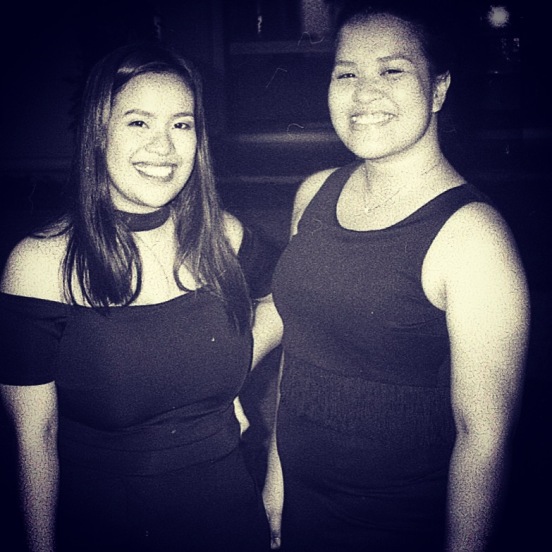
“Double Trouble” 2016. Contax T2, Tri-X 400 developed in D76. In Manila, Philippines, I met these two beauties who I called “Double Trouble” 🙂 This was shot with direct flash in dark conditions and I was surprised it came out! This is my salute to Terry Richardson and Juergen Teller who made the “point and shoot with flash” shots hip and fashionable in the 1990s.

However, I think the main point was that cameras such as the T2 (if not the T2 itself) were made famous by photographers like Terry and Juergen who took that once dreaded “point and shoot with flash” shot and turned it into something hip, cool, and fashionable. Of course, if they can turn a point and shoot photograph into art, it doesn’t mean I or just anyone can! However, with enough savings we mere mortals can all own (or someday own) the T2 🙂

The Contax T2 is one of the most beloved 35mm point and shoot cameras of all time and certainly a Camera Legend. Is it the greatest? Well, I wouldn’t call it that, based on its AF performance, but I will say it could certainly be considered one of the greatest, if not THE greatest. However, if you’re a camera fanatic, you probably need to have one in your collection 🙂

img_6254

“Number One” 2016. Contax T2, Tri-X 400 developed in D76. Not the greatest picture, perhaps one of my worse, but I decided to post it anyway to show that yes, you can use the T2 to take those lousy pictures point and shoot cameras used to be known for and besides that, Baby Zay thinks the T2 is “Numero Uno” 🙂

WHERE TO BUY?

If seeking one of these gems, I hate to tell you that prices seem to have gone up on these babies, even from just a couple of years ago. Prices are trending at $500 and up for the camera in EX and EX+ condition on eBay.

The silver T2 is the most common and therefore quite often the cheapest ones you’ll find. There’s also black, titanium gray, gold, black, and something called “platin” (most beautiful to me). All these are much more rare than the silver models.

Contax T2 For Sale

The good news is that the T2 is almost always available on eBay. While the T3 will probably always be thought of as the ultimate Contax point and shoot, it also cost more and is harder to find, which probably adds to its appeal and iconic status.

The great thing is that the T2 is cheaper and to me, no less iconic. However, if buying one proceed with caution as these cameras are aging and no one is repairing them as far as I know. That doesn’t mean a good repair shop wouldn’t attempt to fix it, but the parts are no longer available so most shops would probably not try to repair it.

On the other hand, while I’ve been critical on Contax electronics in the past, the T2 is probably one of their more reliable and durable models. Just be sure you buy from a place where you can return it if a problem arises. For a safe purchase try here Contax T2 Silver 35mm Camera.

***HOT DEALS FOR DECEMBER 2018 YES!!!***

Check out these deals from our trusted affiliates. If you buy, please do so by going through our links. These are places I buy from and they are safe. This will also help support our site and help us bring more Camera Legend reviews for you! You will pay nothing more other than what you’re buying. Thanks very much you guys rock!!

***HUGE SAVINGS ON HOT CAMERAS!***

Right now, for a limited time, get a great deal on the hot and capable Fuji X-A3! Hurry this won’t last long, great savings just in time for Christmas!

The kit is usually $599. Buy it now through our trusted affiliates and get it for $349. That’s real savings!!
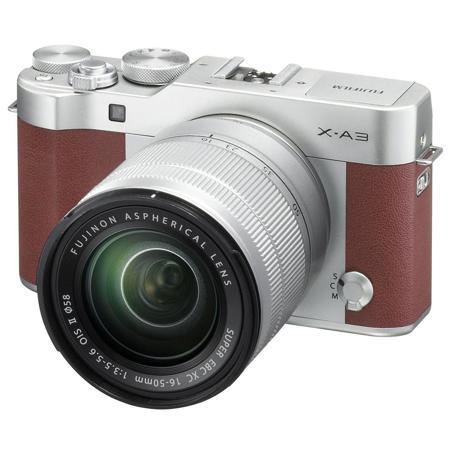
X-A3 Mirrorless Camera with XC 16-50mm f/3.5-5.6 Lens, BrownX-A3 Mirrorless Camera with XC 16-50mm f/3.5-5.6 Lens, Brown$349BUY NOWAdorama

Instax SQ10 Hybrid Camera! Now Lower Prices

***IN STOCK ALERT***

If you shoot primarily digital, the Sony A7RIII might just be considered today’s ultimate all around digital mirrorless camera. And it’s in stock through our trusted affiliate! Buying through these links helps support Camera Legend to bring you more reviews of the cameras and lenses you want to see. Thanks for your support!

Sony a7R III Mirrorless Digital Camera Body

The Incredible Sony A7III

The Extended Trip


14237556_10209356790189094_671872154324574527_n

“Sisters Sa Kaeo” 2016. iPhone 6s Plus. The girls found themselves on a lovely, but lonely local unpopulated, undeveloped beach in the tiny village of Ban Sa Kaeo in the province of Nakhon Si Thammarat, Thailand.

Where the heck in the world are we?! I’m not sure many out there care, but based on the stats there are at least some who do. And I do appreciate that. I know we have been away for long periods before, but this is by far the worst and I do apologize. Some of you have left comments and messages and I promise to get back to all of you.

I have been away vacationing as well as visiting elderly relatives in SE Asia. While the trip is primarily to pay homage to relatives who are not in the best of health, any trip to SE Asia is a potential gold mine for photography. Not to mention a chance to actually use the gear I review here 🙂

14361474_10209374279746322_3245675647397085047_o

“The Mean Lady” 2016. Olympus OM-D EM-5, Zuiko 45mm f/1.8 in Nakhon Si Thammarat, Thailand.

One thing while overseas is that I always get minimal use of my phone and the internet due to lack of good wifi access and the high roaming charges I incur from my provider. As such I was barely on the internet, but the good thing is I finally know what it feels like to get a good night’s sleep 🙂

On this trip, as opposed to previous trips, I kept my camera gear at a minimal. I kept it light. Two digital cameras, two film cameras and a phone camera. While it may still seem like a lot for some, it’s not for me as I’ve lugged medium format gear and large lenses on my overseas trips in the past. Not this time. A sign that I’m getting old? Perhaps. Or maybe I’ve just learned to maximize from minimal gear? Maybe a combination of both.

14324172_10209374332707646_4187209815612040095_o

“Cool Blue Pool” 2016. Kids enjoying a splash in a small but cool, blue pool. Olympus OM-D EM-5, Zuiko 45mm f/1.8 in Paranaque, Philippines.

Above are just a few shots from the trip. I haven’t developed the film yet so we’ll see how those came out, fingers crossed. Anyway, just saying Hi! and thanks to all who still visit this site, I appreciate you, I really do!

Best, Sam


Photo Of The Day: “The Wacky Bunch”

12901527_10208127113367942_6646974305405231931_o

“The Wacky Bunch” 2016. Lomo’Instant Wide, 90mm f/8 lens.

This is a recent photo from the Lomography ‘Instant Wide camera. I reached out to Lomography to see if I could get a sample camera for review, but I never heard back from them. I didn’t expect to, but it would’ve been nice. Fortunately, when you love cameras you usually have friends who do too 🙂

Just some brief general impressions: the camera looks great, but feels less great than it looks. I’ll reserve judgement on its build and durability until I can have more time with it.

The camera relies on zone focusing which isn’t really my thing, but I’ve been pleasantly surprised at the shots I got. The lens is slowish at f/8 and you will be using the built-in flash a lot, but these factors also help to keep the shots sharp.

The lens cap which doubles as a self-timer/remote control is a brilliant touch! That’s what I used to take the shot above after placing the camera on a tripod.

Lomography Instant Wide Camera

The main thing about the Lomo’Instant Wide that appeals to many people (and to me) is that it takes the widely available and larger sized Fuji Instax Wide film, plus it offers a bit more manual control over the picture taking process than any Fuji Instax camera to date.

I have read some reviews on this camera on the net and read many comments about its image quality. I think I have a good idea now of what the lens quality is and I have some thoughts about the Lomo’s  overall image quality, but to be fair I’ll save them until I can take further test shots.

It’s one of the more interesting instant film cameras to have come out in recent years and I hope to get one for a longer period of time. Heck, I might even get one of my own! 🙂

Photo of The Day: “The Lady Of The Harbor”

13575926_10208781107637390_8169234683251568683_o

So another 4th of July has come and gone and indeed the year is more than half done. Is there any way to slow down time short of getting on a spacecraft and cruising at the speed of light? 🙂

I still remember as a kid watching on television America’s “Bicentennial” in 1976. That was a big deal the Bicentennial. Anyone remember that? Gerald Ford was the President of the United States (thanks to reader Kevin Thomas for pointing this out!). You’re telling me that was forty years ago?! Hot damn man!

Anyway, here’s one in the spirit of the 4th of July. I shot this twenty years ago in 1996, the last time I actually visited the Lady. If anything, I hear she looks better than ever!

Any New Yorker knows that you visit the Lady once or twice and then you’re content to see her from afar, i.e., from a bridge, from a boat, etc. Only tourists actually want to go there and brave the long lines 🙂

The gear I was using at that time was the Canon EOS A2E which was a semi-pro/enthusiasts camera, much like the 7D is today. It had a unique feature called “eye control” focusing which is what the “E” in A2E stood for. The camera also had a twin without the eye control feature called the A2 and was also known internationally as the EOS-5.

The camera used technology that followed your eye movements to predict focus. It didn’t work really well for me, but I heard that it was fine for others. I did try it on the EOS-3 later on and it worked much better on that body. Overall though, being somewhat of a traditionalist, I just thought it was a fun gimmick and went back to focusing the “normal” way. Choose focus point, compose, shoot 🙂

The camera was actually quite great to use. Good build quality, speedy and accurate AF. It had one fatal flaw however. That flaw was that the mode dial was prone to breaking rendering it useless. The good news is that it did take a lot of usage for that to happen. Mine happened after about five years of ownership with moderate use.

Canon did repair them at one point, but the cameras are so cheap now it’s just better to grab another one if you really want to try it.

The lens used was an el cheapo EF 75-300mm f/4-5.6 which was a decent, if not great lens. And the film I believe was Kodak Gold as it was my film of choice back in those days.

Ah those were the great days when I got by on one camera and two lenses, far from the gear lust monster I have become today. I always tell anyone starting out, if they have a decent setup like a DSLR or a mirrorless camera, to just stick to what they have and work with it. Of course, they don’t listen and I can’t blame them I guess 🙂

Recent Items

11879209_10206716226216645_7059890197031429166_o

“Patriots” 2015. Canon EOS-1D Mark III and Yongnuo 50mm f/1.8 EF lens clone. The Yongnuo deserves a review in its own right! 🙂

1N4V0577

“The Razor’s Edge” 2016. Canon EOS-1D Mark III, EF 85mm f/1.8

Hello my friends, I hope you are enjoying your Fourth Of July weekend! Just quickly a couple of items.

About ten years ago, 2006, Canon released perhaps their most controversial 1D body and that body is the 1D Mark III. Many of you will remember the whole AF “controversy” which involved the camera not focusing correctly, sometimes even on easy shots. This was a no-no for a pro sports/journalism market that had come to rely on Canon’s renowned autofocus.

Anyway, people sent in their cameras for a fix, sometimes multiple trips to Canon repair. It was a mess. Although Canon apparently fixed the issue, many are convinced even today that the camera was never “right.”

Well, you know I’m probably the king of doing the unexpected, so I got one about a year ago as the prices have come down to a price one could afford. I plan to do my own review of this camera shortly after having ample experience with it.

DSC00842

“Say Cheese” Sony A7R and Vivitar 35-105mm f/3.5 low budget lens.

I’ve also been trying out a lot of oddball lenses such as the Vivitar 35-105mm f/3.5 on my A7R. I got this lens for $5 dollars and was attracted by the constant f/3.5 aperture and of course, the low price 🙂

I have to say that I’ve been pleasantly surprised by it! It may not be the sharpest knife in the drawer, but it is sharp and has a surprisingly useful “macro” or “close range” mode which I used for the portrait above. The lens flares like crazy outdoors however and not necessarily the prettiest flare.

The lens was apparently built by Tokina, which may explain its hefty build. It’s the current “in” lens on my A7R so I hope to post more pics from it soon.

Anyway, please enjoy the rest of your holiday weekend and don’t let it pass too fast! 🙂


Photo Of The Day: “The Beach”

126201481.u153YzWj.BroniRFZoeBeachPS

Oh yes my friends, Summer is now officially here! If it sound a little late, it’s because I actually started this draft on June 20th! Almost a week late and seven dollars short 🙂

Anyway, this is the time all kids look forward to. Do you remember your summers as a kid? Parents, while they may not happy having the rowdy kids home full time, they too will enjoy the summertime as an excuse to bring their kids somewhere that they too may have wanted to go to.

I used to love summers as a kid, but now as an adult I much prefer the spring time. I don’t really enjoy hot weather and from a photographic perspective, I also think the spring is prettier.

Anyway, this is a shot from 2010 taken with a Bronica RF645, 65mm f/4 Zenzanon lens on Kodak T-Max 400 film and developed in T-Max developer. The Bronica Rangefinder or RF (as most people call it) was one of those cameras that I did not expect to like, but ended up loving.

Why did I not expect to like it? As some of you may know, I love fast lenses. The fastest lenses for the RF start at f/4. Of course, you can still get shallow DOF and that medium format look, but f/4 is still f/4 as fas as light transmission goes and I’m always shooting in less than ideal light conditions.

On this shot however, it was in the late afternoon sun and it was good enough for the Zenzanon lens to do its thing.

Also there aren’t many lenses for this system. You’re limited to about three lenses, I think. Having used a Fuji GA645 before, I also was not fond of the default “portrait” orientation on these cameras even though I do a lot of portraits. I’ve gotten used to tilting the camera vertically when I want to do a portrait.

The Bronco RF645 was made during the period when Tamron owned the company so I’ve always wondered if Tamron made the lenses since they are also a well renowned lens manufacturer. Tamron has always made great lenses, most of which were sharp with a modern look. I was concerned that if Tamron made these lenses, they would be sharp but perhaps lack character.

The only reason I got this camera was because I got a very good deal as part of a trade with a photo forum member. I also remember being impressed with some portraits from this camera from some talented shooters on Flickr. I wouldn’t have bought this camera as an outright purchase, but buying and selling works if you want to try other stuff!

I ended up loving the camera and Zenzanon lens because they gave me that “look” that few cameras deliver consistently. The camera and lens, especially when shot on Kodak T-Max 400 always delivered for me.

To me, the shot above has a good balance of sharp focus and just the right amount of bokeh to show the environment. In this case, you can see the hotels on the left side of the picture, in the bokeh zone. If you look hard enough, you may also just barely make out the famous Wildwoods roller coaster in the far distance to the right of the baby. See how the  Zenzanon lens’ focus “melts” from the foreground to the background without getting too “nervous” like some lenses can get. This was shot on Wildwoods Beach on the Jersey Shore.

While I love super shallow bokeh, it is somewhat overplayed in my opinion. The Bronica RF645 and 65mm f/4 Zenzanon is great for environmental portraits which show your surroundings while still giving a very nice and smooth transition from sharp to soft.

This is one combo that I regret letting go! Well, there are quite a few I regret, but I will say again that this combo gave me very consistent results that I loved. Consistent is the key word here! I have a large print of this image on my wall an it looks just as it does here, maybe even better as details are more apparent.

If funds permit and I can find the right one, I may give it another go in the future. I also plan to do a more in depth review of this camera so keep an eye out if you’re interested in the Bronica RF645.

Thanks for looking and enjoy your Summer weekend everybody!


The Minolta AF-C

SonMinAFCCC

The Minolta AF-C is a compact, autofocus point and shoot 35mm film camera introduced by Minolta in 1983.

The AF-C comes from the late 70s/early 80s era of small, boxy compact cameras such as the Nikon L35AF or Pentax PC35AF, and just like those cameras, it features a fixed 35mm f/2.8 lens.

The camera most closely resembles the Lomo LC-A or Cosina CX-2 and like those cameras, the camera is turned on when you open the sliding cover which protects the lens. Unlike the Lomo or Cosina which rely on scale focusing, the AF-C is an autofocus camera.

THE AF-C CAMERA

As a camera, the Minolta AF-C is completely automatic. It is a point and shoot camera where to take pictures you simply point and shoot 🙂

As I’ve said in previous articles, today’s advanced point and shoot digital cameras can do almost everything. From 4k video to in-camera editing to wifi sharing. Many of these cameras have astonishing lenses, such as the Leica Q, and price tags to match. However, it seems to me that they’ve lost the soul of what it means (or meant) to be a point and shoot camera.

And what is that you might ask? Well, for me, a point and shoot camera has to be simple. It has to be humble; all you need is a good, decently sharp lens, not a lab chart killer with an astronomical price tag. And lastly, it has to be cheap. By having a good/great little lens and not a lens with some “premier” name on it, they can do that.

And they did all this with the Minolta AF-C. It meets all the criteria I stated: Simple, humble, good/great lens, cheap. The lens on the AF-C is a 35mm f/2.8 Minolta lens and it is a very good, even excellent one. There is no “Rokkor” or “Rokkor G” designation on the lens, so it has no pretenses of being anything more than it is 🙂

The lens is a 6 elements/6 group design and has an aperture range of f/2.8 to f/17 and again, all automatically chosen by the camera.

Don’t let any “premium” designation fool you. It’s not that hard for any decent camera/lens manufacturer to make a great 35mm f/2.8 lens so it’s not necessary that it be expensive. I’ve used the Nikon 35ti and it’s a better looking camera, but I do not think the Minolta lens on the AF-C gives up anything to the 35ti.

The Minolta AF-C relies on active infrared autofocus. There is no way to manual focus this camera, so tinkerers and gadgeteers get that out of your mind.

If you want some control of the camera, it will let you wind/rewind it using a thumbwheel on the rear of the camera. The camera has no autowind/rewind function. Additionally, you can adjust the ISO in 1/3 values.

The Minolta AF-C runs on four SR44 or LR44 button batteries or two CR1/3N batteries. I used the cheaper 675 hearing aid batteries bought at CVS and they worked fine, no exposure problems.

PERFORMANCE

The Minolta AF-C is small and compact, perhaps not as small as many of today’s digital point and shoot cameras, but still pocketable as long as you don’t have the accessory flash attached.

13307426_10208561580469348_5066008620393003786_n

“Princess Of Messy” 2016. Minolta AF-C, Ilford Delta 400, D76 developer. This is a crop from a larger picture. The AF-C displays good sharpness despite the film grain.

The AF-C has two leds in the viewfinder. The green light, which indicates correct focus and the red light, which is a low light warning.

When shooting with the AF-C, the autofocus is so quiet, I wasn’t sure the camera was working properly, whether it was actually focusing at all. But knowledge is power and I have read before acquiring one that this is exactly how the camera focuses and you simply have to learn to trust it.

MinBearAFCC

“Redrum” 2016. Minolta AF-C, Ilford Delta 400, D76 developer. Check out the nice contrast and range of b&w tones. It seems no one is safe from harm in NYC! Ouch, love hurts! 🙂

When I developed my first roll, any fears I had were laid to rest. Indeed, the majority of the time, the camera achieved correct focus. The shots that had blurriness were due to movement and the camera correctly choosing slow shutter speeds in low light (something I have a habit of doing to challenge my cameras and myself).

Even better was that nearly every shot on the roll was correctly exposed. Not surprising for me as I’ve always known Minoltas to provide excellent metering.

MinNYCFunk

“That Funky Building” 2016. Minolta AF-C, Alford Delta 400, D76 developer. This is the IAC (InterActive Corp building) as seen from NYC’s West Side Highway. This has always been an intrigueing eye sore for me whenever I see it.

BOTTOM LINE

The Minolta AF-C is a brilliant example of beauty and simplicity that represents the best of the early 1980s era of compact autofocus cameras.

MinSamAFCC

“The Evil Camera Boy” 2016. Minolta AF-C, Ilford Delta 400, D76 developer. He’s evil and he loves cameras. The Evil Camera Boy is back! 🙂

It delivers excellent results most of the time under the right conditions. I guess you could see the slick caveat right there “under the right conditions.” What does that mean? That means if you use the camera as it was intended, the right amount of light, the right film, flash if necessary, then the camera will generally deliver excellent results. If you try to challenge it too much, i.e., low light, slow film, you might get less than excellent results 🙂

I read somewhere that it was thought of as the ultimate film street camera by some European magazine and I can’t disagree. While some will of course refer to the Ricoh GR-1 (which I love and have reviewed here) as the “Ultimate” I have to say the AF-C betters it in some ways. The AF is much quieter and the manual winding and rewind  makes it even quieter still, both of which are benefits for unobtrusive shooting.

The Minolta AF-C takes you back to a time when “point and shoot” cameras were point and shoot cameras. Give it a little love and faith and this little camera will produce. Today, the AF-C enjoys a cult following among camera lovers, but is largely forgotten by the masses as are many of its peers. But should you come across one, get it because you will have in your hands a point and shoot Camera Legend that will deliver the goods without a lot of fuss or headaches.

WHERE TO BUY?

If seeking one of these, prices are trending at $20 to $100, with $100 being a bit on the high end. The most abundant place for the Minolta AF-C is obviously eBay.

However, you may also find them in flea markets, garage sales, and Craigslist. If you’re lucky, you may even find one for $5 or maybe free 🙂

***NEW CAMERA ALERT***

The hot new 24mp APS-C AA-less Pentax K-70 is now available for pre-order.

Pentax appears to be really upping the ante with their hot pro K-1 and now the K-70. We will keep an eye on this new Pentax, but just from the specs it appears to be an awesome new camera!


Photo Of The Day: “Olive Oil”

13320566_10208569458626297_6053719926781960611_o

“Olive Oil” 2016. Apple iPhone 6s Plus.

Ah olive oil. The not so secret ingredient to the much touted Mediterranean Diet. So good for you. So good for your body!

Now wait a minute you might say. Isn’t this site about cameras? Well yes indeed it is. And today, I just want to say a little about the 12mp camera on the iPhone 6/6s/6s Plus. In fact, this might apply to nearly all of today’s high quality cell phone cameras.

First, about the shot. It may seem like a fancy restaurant, but I took this shot at a local Singa’s Pizza. Good, maybe even great pizza, but the joint itself is far from elegant.

Anyway, I spotted this on the wall and the light was hitting it in that wonderful way that only light can.

After nearly six years of iPhone shooting, starting with the original 3G, then 3Gs, then the 4, then the 5, now the 6, I must say that the cameras on the iPhone have evolved to a point where I really don’t need any of my fancy point and shoots for nearly ninety percent of what I shoot, especially if it’s going to be in daylight or in good light.

The above photo, I think, is a good example. The color, the detail of the olives inside the bottles, and a wonderful balance on the shadows, highlights, and mid-tones.

But this is not a surprise to anyone who has been shooting iPhones. Most of us already know the wonderful qualities which makes shooting them such a pleasure. Deep rich color and tones, excellent sharpness, and super speedy shooting. The last part makes it perfect for street shots. Negatives? Can be mushy when viewed at 100 percent, especially on low light images. But that also happens on a lot of “real cameras.”

But one more very big positive. Of course, the ability to edit in camera and share your photos right away to your friends/fans on Facebook, Instagram or what have you, that seals the deal for most people. Yes, I know camera companies have incorporated wifi and sharing to their DSLR’s and mirrorless cameras, but the few I tried were very clunky in operation and not yet close to the smooth operation found in modern phones.

As great as I’m making it sound, there is still one BIG negative about shooting with an iPhone. The negative is just that; the fact that it’s a phone first and not thought of as a “camera” even if there is a very advanced camera in there.

You won’t get a lot of cred for still shots, no matter how nice, taken with an iPhone or any other phone. People may say, “Ooh ahh” about the great pic you shot with your phone, but they are also silently saying…”Phone camera? Ah ok” then they move on. You simply won’t get a lot of photo-nerd love by using a cell phone camera 🙂

It may be bad, but in a good way, people still respect you more if the shots were taken on an actual camera, even if the cell phone cameras have blurred the lines on what a “real camera” is. To most people, even the ones who will like your pics, the cell phone camera is just too easy. They know it. So it’s also easy to dismiss.

That’s why film shooters still get a lot of cred. It’s film. It’s an old medium and yes, it does require a little (and sometimes, a lot) more work than it does with a modern DSLR, mirrorless or a high end cell phone camera.

But if you put all this aside, take it out of your mind, there will come a time when you’ll have to say, you know what? This phone takes pictures as good as any other digital camera I’ve used in the past ten years.

Again, not for every shot or every situation, but for ninety percent of what most people shoot, it’s perfect. No wonder more images are uploaded from the iPhone than any other “real camera” out there.

No my friends, I’m not trying to convince you that the iPhone is better than say, a Leica Q. And no, I have not lost my love for vintage cameras. I am and will continue to use them as long as film is around.

What I am saying is for me, I got to face reality. Shooting the iPhone may not be as cool as say, shooting a Ricoh GR, but it often will get the shots that under normal viewing distances, and certainly when posting small pics, will be indistinguishable from each other. That says a lot about how far cell phone cameras have come.

Have a good day my friends and don’t worry, there will certainly be more Camera Legend reviews! 🙂

***IN STOCK ALERT***

I have been notified by my good friends at Adorama that the Nikon D5 and D500 are now in stock!! If you’ve been waiting patiently for these awesome cameras, here’s your chance to grab one before they sell out the first batch. You may find them in the links below. Thanks for supporting Camera Legend and enjoy your new camera, I’d sure love to hear about it!

Nikon D5 (CF Version)

Nikon D5 (XQD Version)

Nikon D500

Nikon D500 with 16-80 f/2.8-4E VR lens

Photo Of The Day: “The Sea”

IMG_6323

Baby Z playing in the water off the beach in Wildwood Crest, New Jersey. 2012. Contax 645, 80mm f/2 Zeiss Planar, Kodak Portra 400.

In my Contax 645 review I stated that I would be uploading pics from the camera if I found them, so here’s one from 2012 when I still had the camera.

As with most American families, we typically start our summers on Memorial Day Weekend, which is considered the unofficial start of the summer season here.

For a quick getaway, we travel a few hours to the Jersey Shore. The beaches are generally clean and the towns are usually family friendly.

While I wouldn’t consider it very exciting for singles looking for a hookup, the Jersey Shore makes a quiet and relaxing getaway. The kids enjoy the beach, the pool, and the boardwalk. I do too, if I were to be honest. I realize these will be my kids’ memory of summers past when they are grown, so I always bring some kind of camera with me, even if my iPhone will do most of the time.

I remember taking this shot. The Sun was shining down brightly and while I normally aim for a fast aperture for shallow depth of field in portraits, I think I stopped down the 80mm f/2 Planar to maybe f/2.8 or f/3.5 and still got the top shutter speed of 1/4000 on the Contax 645 in AV mode.

Still, the lens I think provided a distinctive look and good exposure. It was a great camera/lens combo and I do miss it!

This also marked the last time I took such a big bulky camera to the beach and the last time took such a camera so close to the water.

This year I took an Olympus OM-D EM5 with me. Did it give me technically better, sharper, less grainy pictures? Yes, yes indeed. Did it give me images with that 80mm f/2 Zeiss and Kodak film look? No, no it didn’t. But what’s “better” really comes down to personal preferences.

Have yourselves a great weekend good people, and if you’re going to the beach, be sure to bring that camera along, but take care because the sand and water are camera killers! Anyway, take your best shots because these are the memories your family will return to again and again.

Photo Of The Day: “Classic Junker”

RD1CarPic

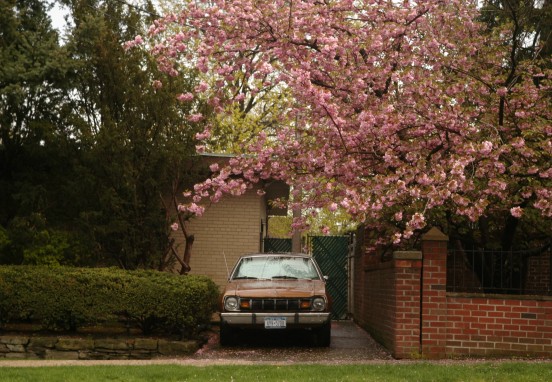
I shot this a couple of weeks ago. I was driving to see some friends when I spotted this “classic” junker underneath some spring blossoms. The contrast of the old car and the color of the buds struck my eyes. Right away, I said HO! I have to get some shots! 🙂

I actually had to turn the car around to come back and take the shot. I’m not so good on cars, but it looked to me like a Ford? If any of you out there can identify it, please do so! I did not come out of my car to take this shot. I respect people and did not want anyone freaking out! I know I probably would be disturbed if I saw someone coming up and taking shots of my car. But this is a vintage old car and it stands out in today’s world, so if I were the owner, I would probably have to expect it.

I shot this with my trusty and old Epson R-D1 and 40mm f/2 Summicron-M. I got this camera in 2006 and if you had told me then that ten years later I’d still be shooting with it, I’d probably say you were crazy! For one, I didn’t think I’d hold on to it for this long. Secondly, I didn’t think it would last this long. But I still have it, and it’s been surprisingly reliable.

I guess I’m still one of those crazy guys (and there’s lots of us out there) who still carries a camera with them everywhere, even when a good cell phone camera will do. I don’t know, I guess I’m still old school.

The Epson R-D1 is the world’s first digital rangefinder camera. It was introduced in 2004. Somehow, Epson beat Leica (well known as THE rangefinder icon) to the punch with this digital body which was made by Cosina and based on their own line of Voigtlander Bessa rangefinder film cameras.

The R-D1 sports a 6.1mp sensor. It is, or is a variation of the very popular Sony sensor found in the Nikon D70/D70s, Pentax *ist D series, Konica Minolta Maxxum 7D/5D series and more. It may be digital, but no it’s not like an outdated computer where it’s unusable. It is a very dated sensor, but it was one of the best of its era and it still produces beautiful pictures.

If you look to at the brick wall to the right of the car, you can see very nice and subtle shadow detail transitions. Very smooth, not harsh. This might have more to do with the 40mm Summicron as well, but I have to give the sensor credit too.

So if you don’t have an R-D1, don’t worry. Just get one of the above mentioned cameras cheap and you’ll have pretty much the same sensor. The thing you won’t have is the ability to use Leica M lenses and the wonderful tactile feel of the R-D1, plus its glorious optical viewfinder.

I’ve spoken, written, referenced this camera many many times, though I’ve never done a full or even partial review of it. As I’ve told many people, this camera truly feels and looks like its film camera equivalent (the Bessa R/R2/R3). It’s kind of funny because compared to a Leica, the Bessa film cameras do feel kind of cheap.

Yet, in digital form, it feels better and more substantial than most digital cameras out there! It’s just normal with digital/analog camera comparisons, and I’ve come to accept it. As an example, take the Olympus OM-1 film camera and then hold a OM-D camera next to it. As much as I love the OM-D’s image quality and shooting capabilities, there’s just no comparison. The OM-1 feels solid and hefty, the OM-D feels light and dinky. And the OM-1 was actually one of the lighter film SLR cameras.

The 40mm f/2 Summicron has always been one of my favorite performers. It provides beautiful sharpness and tonal range. The lens is beautifully small, much like a pancake lens. Normally I find the 40mm focal length, especially the pancakes a little boring, but that’s because most pancakes start at f/2.8. The 40mm Summicron gives me an extra stop of light which opens up more possibilities, not only for the low light shots I take, but for the shallow depth of field I need for portraits. On the R-D1 it’s equal to around 60mm which makes it a little longer than a 50mm standard lens.

It was introduced with the Leica CL, which was a collaboration with Minolta in the 1970s. The Summicron is made by Leitz although a Rokkor-M version, made by Minolta in Japan, is also available. Due to this collaboration, there has always been some debate among camera nerds as to whether the lens is really a Minolta or a Leica? All I can say is that it’s a great lens and that’s all I need to know.

As you can see, I’m actually shooting more than I’m writing, which I guess is a good thing in some ways. If this was ten years ago when I was a single man with no family or responsibilities, I’d probably be doing this blog like crazy. These days, I do it when it strikes my fancy, though I really should be doing it more. Ah, sorry for the rambling. Have a good day friends and happy shooting always! 🙂

***IN STOCK ALERT***

I have been notified by my good friends at Adorama that the Nikon D5 and D500 are now in stock!! If you’ve been waiting patiently for these awesome cameras, here’s your chance to grab one before they sell out the first batch. You may find them in the links below. Thanks for supporting Camera Legend and enjoy your new camera, I’d sure love to hear about it!

Nikon D5 (CF Version)

Nikon D5 (XQD Version)

Nikon D500

Nikon D500 with 16-80 f/2.8-4E VR lens